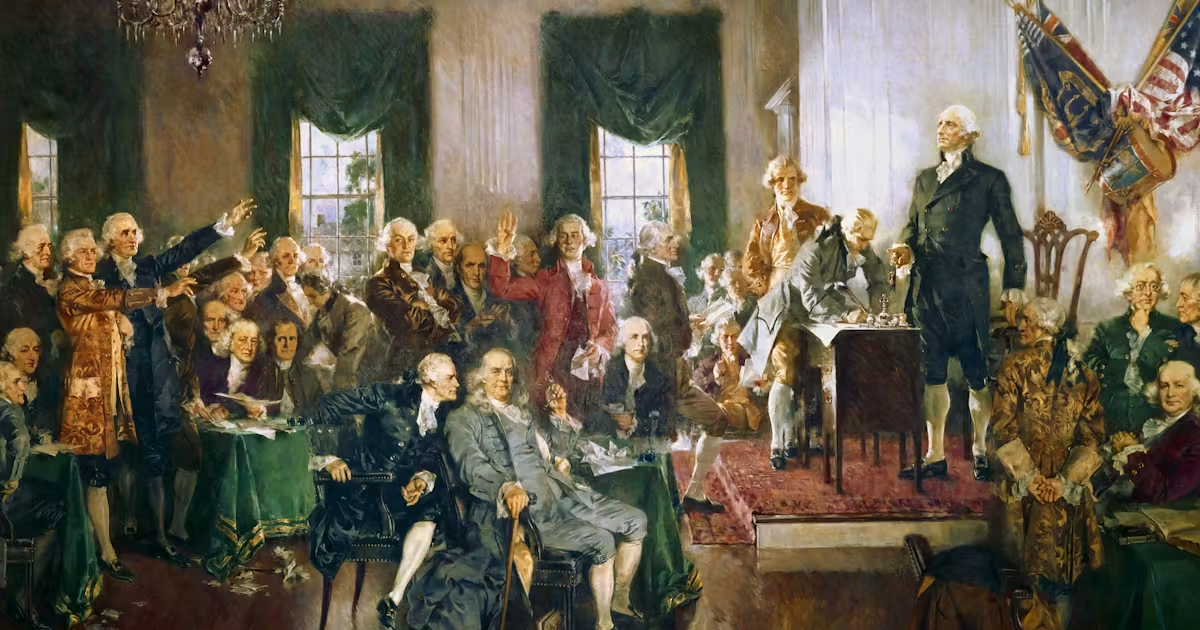
It may seem like an awful long time since the Founding Fathers took steps toward creating the United States by signing their names to the Declaration of Independence on July 4, 1776. And 250 years of nationhood is definitely something to celebrate.
Yet the history of the land — and the people who have resided on the vast expanse that became the United States — stretches back much further.
It includes colonial times and the pre-Columbian era with its mosaic of Native American cultures, plus the long-ago days when giant reptiles roamed the Earth and the first humans made their way onto the North American continent across the Bering Land Bridge.
One of those reptiles was “Sue” the Tyrannosaurus — one of the world’s largest, best preserved Tyrannosaurus rex skeletons. Dating back some 67 million years, Sue is now a permanent resident of Chicago’s Field Museum of Natural History.
And in southern New Mexico, fossilized footprints in a remote corner of White Sands National Park attest to human movement long before the colonists. Embedded in hardened gypsum soil, the footprints were surrounded by ancient grass seeds radiocarbon dated to between 21,130 and 22,860 years ago.