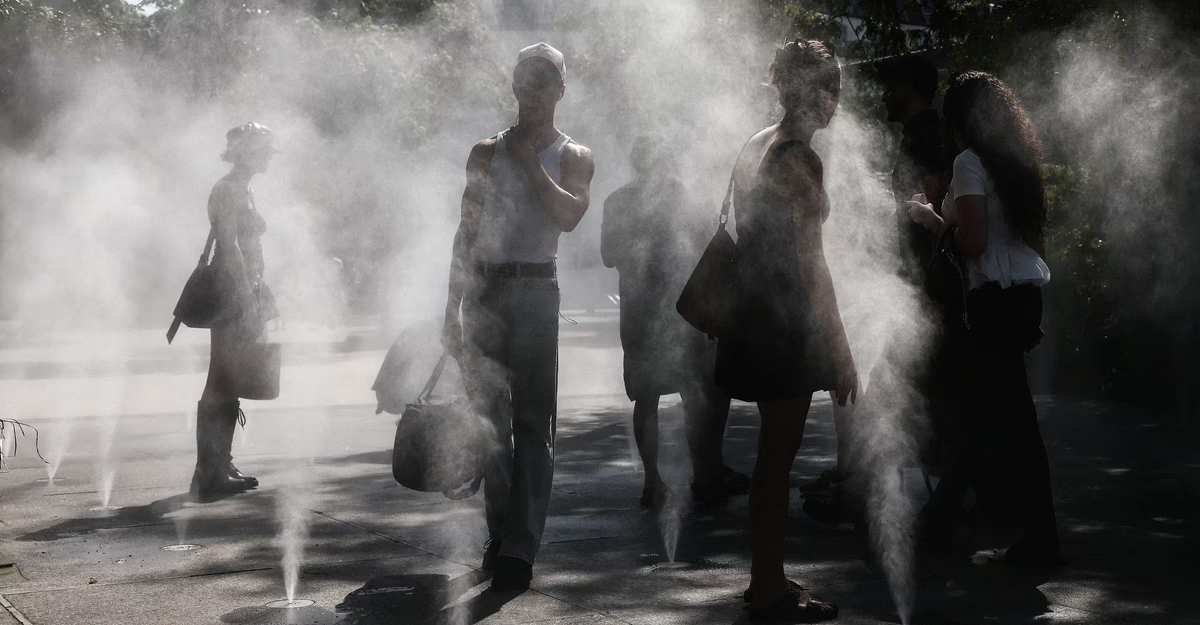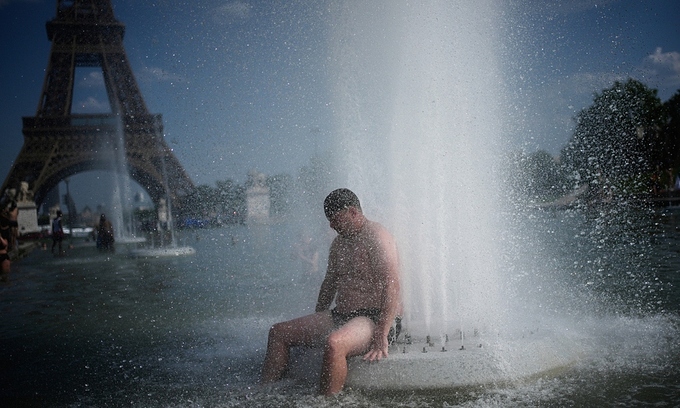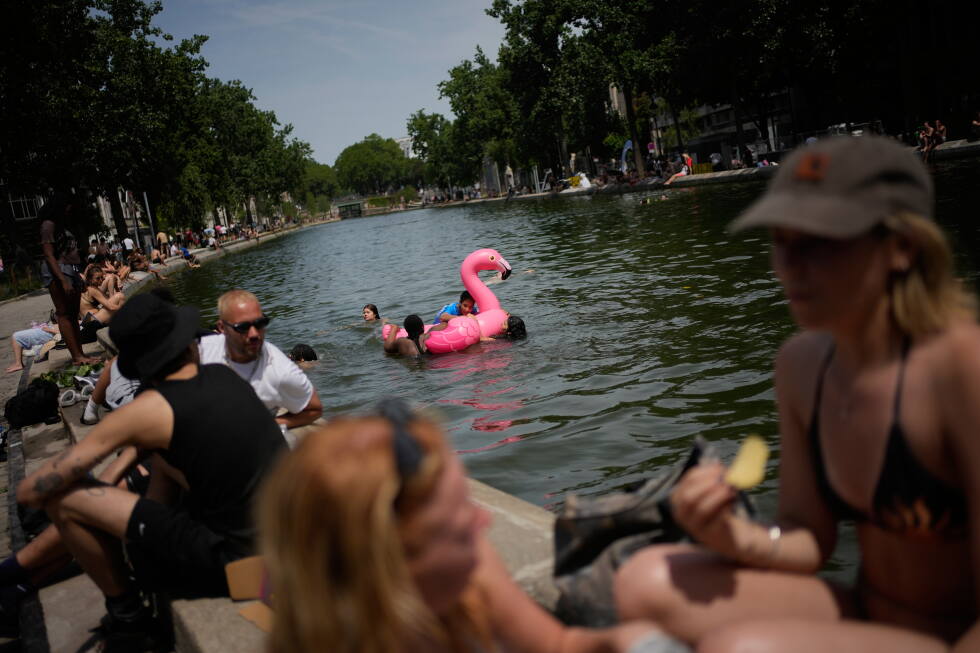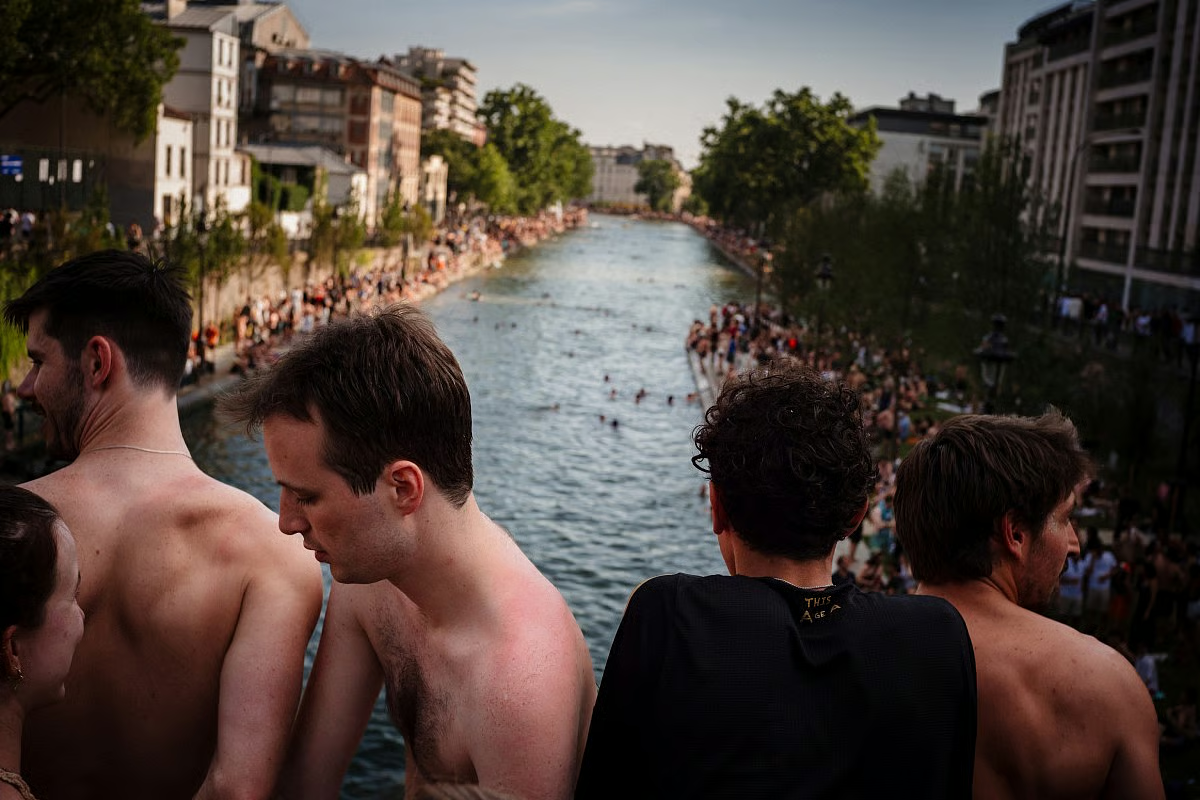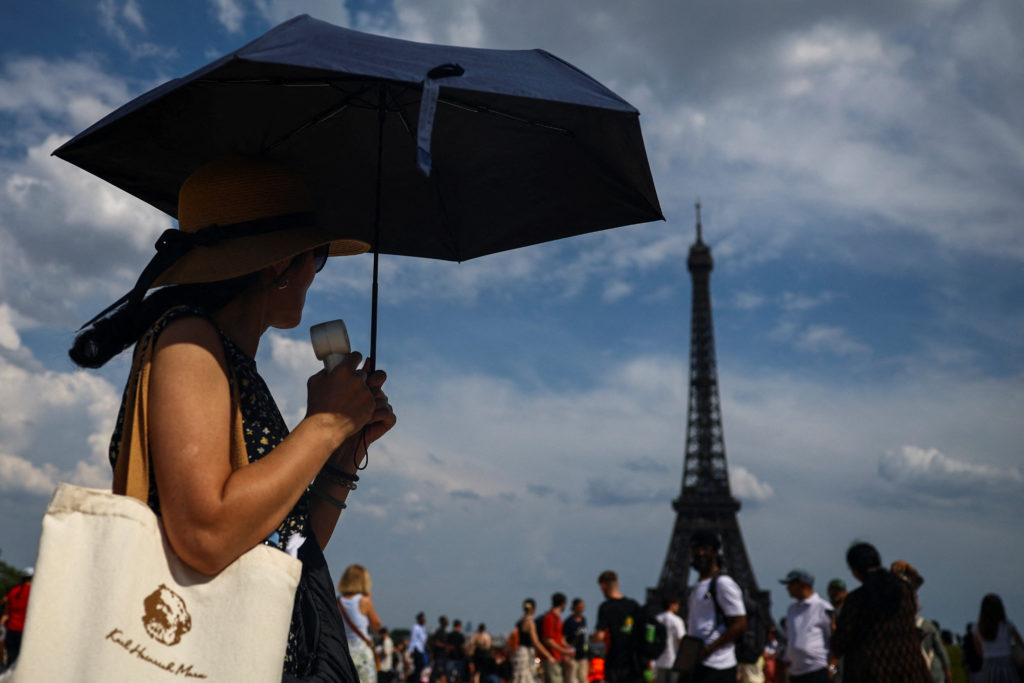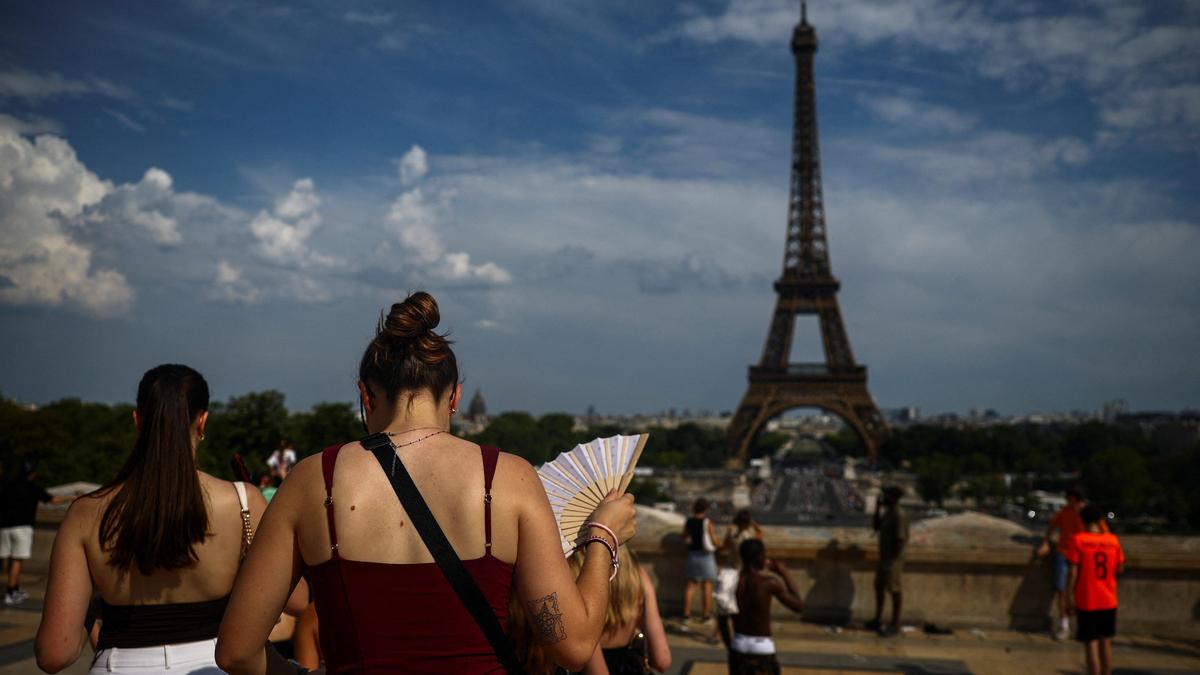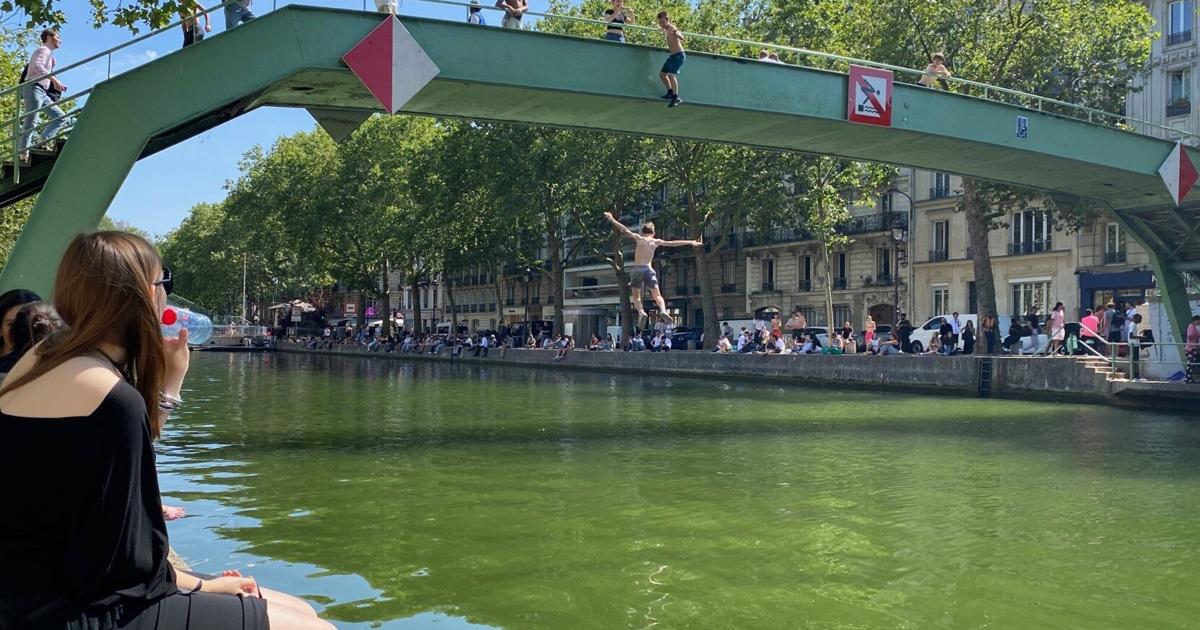
Cooling off in the Trocadero Fountain near the Eiffel Tower, Paris.AFP via Getty ImagesEurope’s summer heat is doing more than driving tourists to water—it’s also prompting resort towns to draw a line between swimwear and streetwear. As temperatures soar, some French destinations are again tightening dress rules and issuing fines to remind visitors that what’s acceptable on the sand may not be in town.Europe is the continent heating the quickest in the climate crisis, and it’s currently in the grips of a fierce heatwave, where 40 people have drowned in France alone over the past week, many teenagers, swimming in unsupervised areas, according to The New York Times. Indeed, France recorded its hottest nights since records began in 1947, and in that context, many people are stripping down.Being topless for men and women is allowed on all French beaches, and the country has a long history of nudist beaches where it’s actually more polite to be naked, rather than clothed, across its 500 or so nudist sites. It isn’t illegal to be naked anywhere in France, which follows the French tenet of liberté, but it is illegal to cause a public disturbance, and so, for that reason, topless sunbathing is mostly enshrined on beaches, but not city beaches, such as those along the Seine in Paris, where you must be in swimsuits or clothes. Several resorts have put in place bylaws to regulate clothing in town areas in Arcachon in the south-west, Palavas-les-Flots and La Grande-Motte, near Montpellier, plus Nice, Cannes and Saint-Tropez.Narbonne in France was once a Roman port and is home to a 13th-century cathedral—Cathédrale Saint-Just et Saint-Pasteur—and an Archbishop’s palace, now a museum. It is now known for one more thing: being the latest town to introduce a dress code that runs through the summer until 30th September. It is now forbidden to wear swimwear in the town center, encouraging people to put on clothes when they leave the sandy palm-fringed beach, for both men and women, and shoes are also expected. The fine for non-compliance is €150 (around $171).It’s not dissimilar to the French seaside resort of Les Sables d’Olonne, which began issuing fines last summer to tourists in states of undress outside the designated beach areas. The Mayor of the town, Yannick Moreau, published the town's poster on Instagram saying, "200 years of Sablaise elegance wasn't meant for us to end up in the streets in our underwear." Moreau told The New York Times at the time, “If you go to a market to buy local food, fruits, vegetables, meat, you cannot be half-naked with hair falling onto the vegetables," adding, "It’s a matter of decency." The town has 11 kilometers of sandy beaches (nearly 7 miles). The fine is $150 (around $175).The Spanish city of Malaga likewise set up billboards around the city to crack down on anti-social behavior, predominantly by British tourists, and focusing mainly on wearing more clothes and singing less at night.Along Italy’s coast, Sardinian authorities recently turned heads—not by banning toplessness but by banning umbrellas on its beaches for people aged 10 to 65. As reported by The Guardian, the move at Punta Molentis beach in Villasimius, on the south-east coast of Sardinia, is intended to protect its coastal environment. It has prompted social media commenters to ask, “To put up an umbrella, I have to rent a child?” People are also banned from erecting other forms of sun shelters, such as gazebos and tents, until the end of October. The beach charges €10 per person to use the beach, but those who are eligible can pitch a parasol for free.MORE FROM FORBESForbesWhy Literary Travel Is Surging In 2026By Alex LedsomForbesWild Swimming In Europe—Discover 4 Natural Spots In Unusual PlacesBy Alex Ledsom
As Europe Swelters, Travelers Are Reminded Where To Wear Clothes
As France scorches under its hottest evenings on record and search for water, more towns are regulating what people wear away from the water.
622 words~3 min read