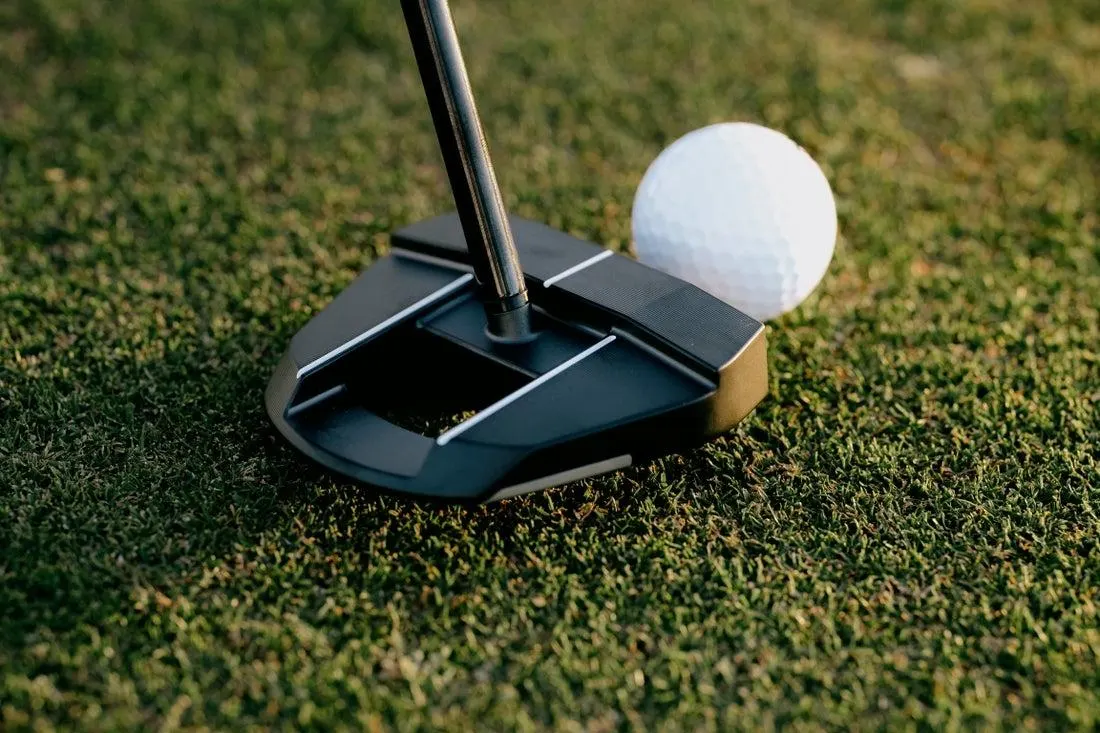
When J.J. Spaun won the 2025 U.S. OPEN at Oakmont with a dramatic display of putting prowess, thousands of golfers ran out to buy the odd looking L.A.B. Golf brand putter he was using (Photo by Andrew Redington/Getty Images)Getty ImagesThe former longtime editor of Golf Magazine once told me that they usually put out the same two cover headlines annually, a tradition like having a photo of turkey on the November cover of every food publication. The headlines are subtle variations of “Cure That Slice” and “Make More Putts” and were almost guaranteed to be the annual bestsellers, because these are the two issues most afflicting golfers, who as a whole, are suckers for the hope of quick fixes. The dirty secret is that almost none of these tips, now daily fixtures as “instructional” segments on just about every golf television show and social media outlet, work. Sit in front of a clubhouse TV long enough and you can cycle through half a dozen different “experts” giving you half a dozen different answers to the same question—none of which help. The good news is that while the golf industry still can’t cure your slice, they now can help you make more putts, as new technology has changed the putter paradigm. And there is a lot of truth in the old golf adage, “Drive for show, putt for dough.”Make More PuttsWhat Is The New Putter Technology?All L.A.B. putters, such as the newest VZN.1 model, are fully-customizable for perfect fit and distinctive color.L.A.B. GolfI recently played as an invited guest at one of the more prestigious private clubs in the country, which I am not supposed to name, in an unusual fivesome that I am not supposed to name, but it included a billionaire, the top executive of one of the world’s foremost management consulting firms, a hedge fund manager, and a foreign businessman. It was an eclectic group, and I was a world apart from my playing partners in many respects, but we all had one thing in common—all five carried a relatively new L.A.B. putter, all loved theirs, and all putted well. So did the club’s professional who told me they couldn’t keep them in stock.When JJ Spaun won the 2025 US Open at Oakmont and sealed his victory with a dramatic (and not needed) 64-foot birdie putt on the final hole, many fans watching were curious about the odd looking putter he used, which was the original L.A.B. model, the bulky DF3. This singular moment sparked massive sales of the putters nationwide and led private equity firm L Catterton to value the nascent putter maker at more than $200 million, according to Front Office Sports. Other winners and top Tour players including Adam Scott, Will Zalatrois, Lucas Glover and Dustin Johnson have all sported the until recently niche brand.MORE FOR YOUHaving the face square at impact is the most important part of putting, and that's what the lie angle balanced technology does.LAB GolfThe technology in question is the lie angle balanced (LAB) putter design, which L.A.B. Golf pioneered just a few years ago and is now being “flattered” by other companies. In fact, it has become so popular so quickly that the design is now an entire category widely called anti-torque or zero-torque putters (especially by any company other than L.A.B. Golf). To try your putting on some fantastic golf vacations this summer, check out my latest golf travel feature here at Forbes.Make More Putts With Zero-Torque, Low-Torque or Lie Angle Balanced PuttersWhichever name you choose, this is no longer a well-kept secret or “hidden gem,” and if you search zero-torque putters you will see stories and reviews by every major golf media outlet. As Today’s Golfer magazine put it in their best equipment of the year reviews, “It is impossible to have a conversation about the best putters of 2026 without discussing zero-torque (and low-torque) putters. Whether you love them or loathe them, zero-torque putters are here to stay! Designed to be super-stable and help you keep the face pointing at your intended start line, zero-torque putters have gone from niche to mainstream in recent years – with substantially more models available and more being used on tour and among amateurs. If you struggle on the greens or just want to benefit from the biggest advance in putter technology for years, it’s worth testing a zero-torque putter.” Many LAB putters like the image above are center shafted, but for a more traditional feel, they offer blades and the OZ.1 mallet shown here in a heel-shafted version.LAB GolfThe magazine tested 37 zero and low-torque 2026 models (like I said they have quickly become popular from just about every manufacturer). The winner? “The results are in...The L.A.B. Golf OZ.1 is the best zero-torque putter of 2026.” This just happens to be the one I use (read more below). Major UK magazine Golf Monthly and top gear testing site My Golf Spy did similar zero-torque putter of the year evaluations and both also picked the OZ.1 as the best. US Open Champion Spaun recently switched from his DF3 to the OZ.Not all gear that helps the best players in the world helps amateurs and sometimes it has the exact opposite effect. But this is different and if you want to be a more consistent putter—and who doesn’t?—you should probably try zero/low torque. Here’s why:If you play golf and are not an exceptional putter (they do exist) you have almost certainly hit a poor putt, knew it immediately, and exclaimed “pulled it” or “pushed it.” This most commonly happens on a shorter putt, say 3-6 feet, which mentally though not correctly inspires an abbreviated stroke, and especially under pressure (say for birdie). Instead of moving the putter face squarely and getting the ball on line you “push” or “pull” the putt right or left of the intended target. This commonly missed putt is not caused by poor aim or a poor read, both of which can also cause missed puts, it is caused by twisting the putter head so it is not square at impact, and originates in your mind, body and nerves. Twisting is torque, torque is bad, and now there is anti-torque, which is great.L.A.B. has been best known for its mallet putters, but for those who prefer the blade style, they have a couple of options.LAB GolfL.A.B. is a science driven innovative company in a golf niche that is vitally important to scoring yet in terms of design, has largely been unchanged for a century. For almost all of the forty plus years I’ve been playing, and the thirty plus years I’ve been writing about golf, you chose between a mallet and blade head style based on feel and personal preference, and the tweaks that came from the putting industry were beauty, precision milling and consistent manufacturing , with some variations in face inserts which affected feel but not putter path. Other than the short lived belly putter which was extra-long and anchored against your belly for stability, there was almost no change in fundamental putter design. For some golfers the belly putter did help, so the rules of golf banned it (longer putters are still legal, but anchoring is not).Better Putters, Custom PuttersSo the founder of L.A.B. Golf went to the R&D drawing board and studied the situation and concluded that 83% of putting success comes from the face angle at impact. As they say, “The hallmark of great putting is returning the putter face to ‘square’ at impact, or perpendicular to the target line. That’s not our opinion; it’s science. The latest research shows that 83% of a putt’s starting direction is influenced by the direction of the putter face at impact. The other 17% is influenced by the path of the putter head.” To address this, they designed a new kind of putter that almost automatically stayed square through your stroke and did the heavy lifting for you. Sure, it is still possible to twist the putter and hit poor shots, but it’s much harder—you almost have to try to overpower the quality of the design.The first generation lie angle balanced putter had a huge and somewhat unsightly head, but it worked, and what further set the company apart was its bespoke approach. L.A.B. customized every putter for the customer, including proprietary grips, calculating the perfect mix of length, lie angle, grip and shaft to take the torque out of your stroke. Now that they have become more popular you can order one online off the rack, but you should not, you should still get it customized. As a bonus, they offer a wide array of vivid colors not usually found in putters, so yours will be extra personalized and distinctive.If you're investing in your golf game, it pays to consider a custom-fitted putter.LAB GolfOne oddity of the original design is that they were all center shafted, meaning the shaft was inserted in the top of the middle of the club putter head, whereas it’s typically at the heel. I found this visually awkward, and while I liked the way the putter struck the ball, I couldn’t really get used to the set up. I’ve now spoken to many L.A.B. users and a small subset struggle with my issue while most quickly get used to it. Fortunately, as they introduced newer designs with more “normal” looking heads, including the OZ, a fairly standard mallet, and a couple of blades, they also added some heel shafted options. My second L.A.B. putter was the Oz.1i HS (heel shafted) and I have since tried a few even newer models, but it’s the one I play with. Why? Because I make more putts. It’s that simple. People I have not played with in a while are surprised and have asked me, “When did you get good at putting?” as the transformation is that shocking. The truth is I didn’t get better, but my putter did.While it’s nice to feel confident over four footers, the real success is two putting, since amateurs on par-4s face an average first putt distance of 28 feet, a range from which they three putt far more often than one putt and make these considerably less than one in ten attempts. You cannot reasonably (or statistically) expect to make 28 footers with regularity, so the key to scoring is to two-putt, which usually requires getting your first putt close to hole. Sounds simple right? If so, you probably don’t play much golf. Since switching to the lie angle balanced or zero-torque tech, I’ve become a much better lag putter, probably due to the confidence in the quality of the stroke. And yes, the better your first putt and the closer to the hole you get it, the more long putts you will actually make. In a recent 9-hole round I lipped out four putts from around 30 feet, and while I was reflexively annoyed none of them dropped, missing by an inch or two is much better than by four feet.As I said, there are now a lot of zero/low torque models to choose from on the market and just about any good golf shop will have multiple options, so go check them out. To me, the only reason to stray from the industry and technology leading L.A.B. and a custom putter perfectly made fit to your stroke would be price, as their customized models run $5-600. In comparison, one of best rated value models, the Wilson Infinite Zero Torque The 606, can be had for under $200. If you want to make more putts, going custom is the best high-end solution, and this could be done in person at their headquarters in Oregon, at one of countless authorized L.A.B. outposts worldwide, or by virtual fitting where you record a video of your putting stroke and take some measurements, all of which is fairly easy to do and explicitly detailed on the L.A.B. website. But in person is ideal, and it’s pretty easy to find a fitter almost anywhere in the U.S. (and Europe, etc.). I punched in a New York City zip code to the site’s locator and set distance to 25 miles and got dozens of options, including country clubs, retail golf shops, indoor golf centers and learning facilities, and national fitting specialists like Club Champion and True Spec Golf. Now if they could only cure that slice.
Make More Putts—Golf Technology Has Finally Delivered The Game’s Holy Grail
Putter design in golf has been largely unchanged for a century, but technology has finally made a difference that can help your game-a big difference.
2,064 words~9 min read