When the United Arab Emirates appointed Omar Sultan Al Olama as the world's first minister of state for artificial intelligence in 2017, he promised to turn the United Arab Emirates into the world's most prepared country for AI. Only six years later, Al Olama was listed on TIME magazine's inaugural TIME100 AI list and Abu Dhabi was well underway in implementing its digital strategy.
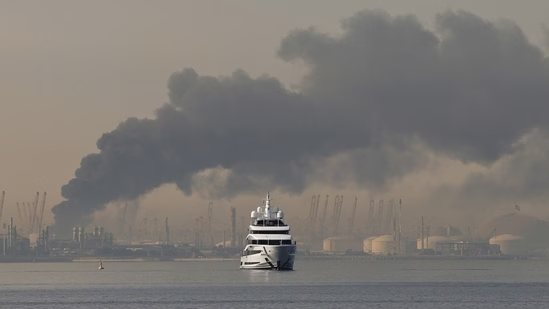
However, after the United States and Israel attacked Iran in February, the UAE became one of Iran's key targets: Over the course of the war, thousands of Iranian missile and drone strikes were aimed at local offices and data centers operated by global companies such as Amazon, Google, Microsoft and Nvidia.
The news magazine The Conversation reportedthat the war also raised questions about the safety of undersea cables which are essential for data centers and other digital infrastructure. Furthermore, the blockade of the Strait of Hormuz by Iran, and later by the United States, has delayed hardware deliveries.
Analysts point out that data centers need to be protected as critical infrastructureImage: Nic Bothma/Matrix Images/picture alliance
"Data centers have long become critical infrastructure and need to be better protected just like oil refineries or desalination plants," Sebastian Sons, a senior researcher at the German think tank CARPO, told DW.Faced with crises, UAE shows 'high level of resilience'