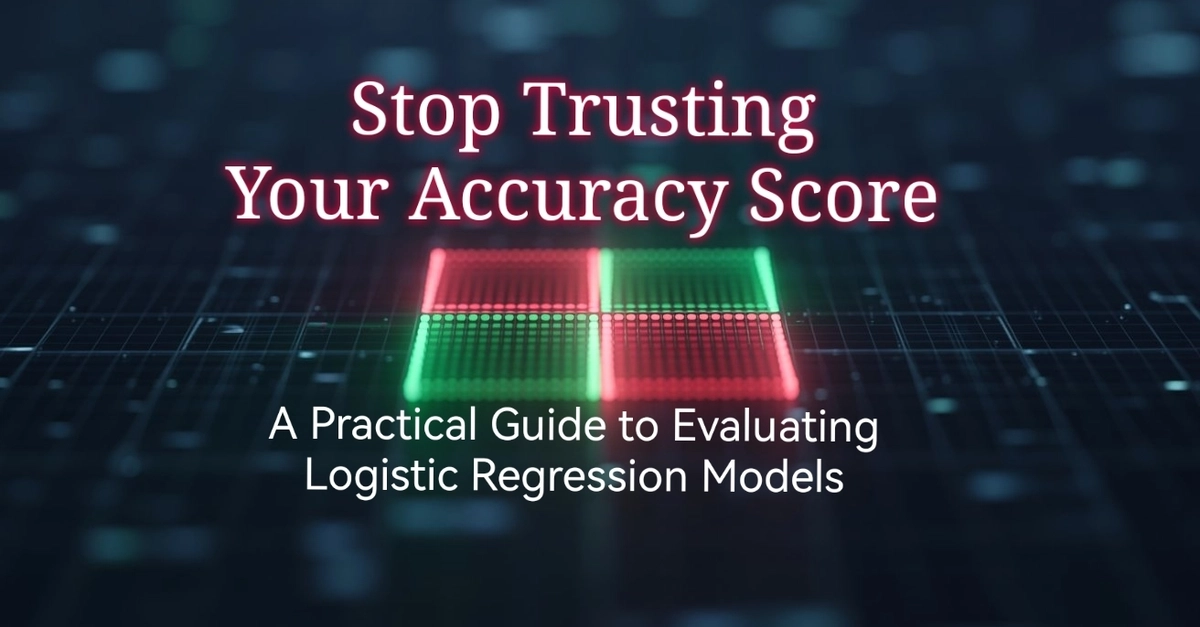
You split your data 80/20, get 91% accuracy, and ship it. But was that 91% luck or skill? A single split can fool you. Cross-validation gives you a trustworthy number. Here's k-fold, visualized.
The problem with one split
One train/test split is high-variance: a lucky test set flatters your model, an unlucky one trashes it. You're judging on a single roll of the dice.
k-fold cross-validation
Split the data into k equal folds. Then, k times: train on k−1 folds, validate on the held-out one. You get k scores — report the mean ± std. Every data point gets used for both training and validation (in different rounds), so the estimate is stable.