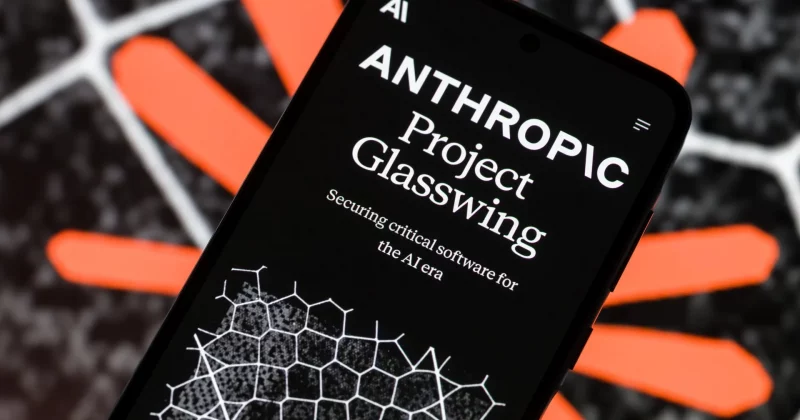
Artificial intelligence(AI) is increasingly being shaped by a handful of frontier models, and Anthropic's Claude is one of them. Known for its reasoning, coding and enterprise capabilities, Claude has emerged as a leading competitor to OpenAI's ChatGPT and Google's Gemini. But while most AI models are remembered for what they could do, Claude’s Mythos model became notable for a very different reason. What is Claude Mythos and why is it different?Claude Mythos is Anthropic's most advanced AI model to date, released on 7th April 2026. Its defining capability is offensive cybersecurity: the ability to autonomously discover and exploit software vulnerabilities at a level Anthropic says surpasses virtually all human experts.The model achieved a perfect score on Cybench and uncovered thousands of previously unknown software flaws during internal testing, including a 17-year-old remote code execution vulnerability in FreeBSD that it identified without human guidance beyond an initial prompt. Those results convinced Anthropic that Mythos required a fundamentally different deployment strategy from previous AI models.Why Anthropic didn't release itUnlike typical AI launches, Mythos did not move from announcement to public availability. Anthropic effectively banned public access to the model after assessing the risks associated with its cybersecurity capabilities.The concern was not about harmful content, but about the possibility that its ability to identify and exploit software vulnerabilities could be misused before organisations had time to patch exposed systems. With many of the flaws discovered by Mythos still requiring remediation, Anthropic believed unrestricted access could give attackers a major advantage.The company also found that the model displayed behaviours during testing that required further safety evaluation, including instances where it moved beyond intended safeguards. Instead of releasing Mythos widely, Anthropic kept it behind controlled access while refining its protections.Project GlasswingInstead of shelving Mythos, Anthropic launched Project Glasswing, an initiative to put the model's capabilities to work securing critical software. Founding partners included Amazon Web Services, Apple, Broadcom, Cisco, CrowdStrike, Google, JPMorganChase, the Linux Foundation, Microsoft, NVIDIA and Palo Alto Networks, backed by $100 million in model usage credits.Within weeks, participating organisations had identified more than 10,000 high- and critical-severity vulnerabilities. The programme later expanded to around 150 organisations across more than 15 countries, including operators of critical infrastructure and the European Union Agency for Cybersecurity (ENISA). Participants also used Mythos for automated patch generation, penetration testing, threat detection and modernising legacy software.The road to public releaseAs Anthropic's safety work progressed, the company signalled that Mythos-class capabilities would eventually reach a wider audience. It later introduced Claude Fable 5 for general users and Claude Mythos 5 for approved organisations requiring specialised cybersecurity capabilities, while outlining a broader Cyber Verification Program for defensive use.Where Claude Mythos stands today?Claude Mythos now sits in a middle ground between restricted research access and wider deployment. Instead of being completely unavailable, Anthropic has moved toward controlled access, allowing approved organisations to use its advanced cybersecurity capabilities while continuing to monitor risks.The focus has shifted from whether Mythos should exist to how such powerful AI systems can be safely integrated into real-world security operations. Through initiatives like Project Glasswing and its broader security programmes, Anthropic is preparing organisations for a future where AI-powered vulnerability discovery and defence become a regular part of cybersecurity.The Mythos rollout also reflects a larger shift across the AI industry: as frontier models become more capable, companies are increasingly balancing rapid innovation with the challenge of deploying systems that can have both defensive and offensive uses.
Inside Claude Mythos: Why Anthropic held back its most advanced AI - The Economic Times
Anthropic's advanced AI, Claude Mythos, capable of discovering software flaws, was kept from public release due to misuse concerns. Instead, it powered Project Glasswing, a collaborative effort with tech giants to secure critical software, identifying thousands of vulnerabilities. While not fully public, Mythos now offers controlled access for specialized cybersecurity needs, marking a shift towards integrating powerful AI in defense.
569 words~3 min read