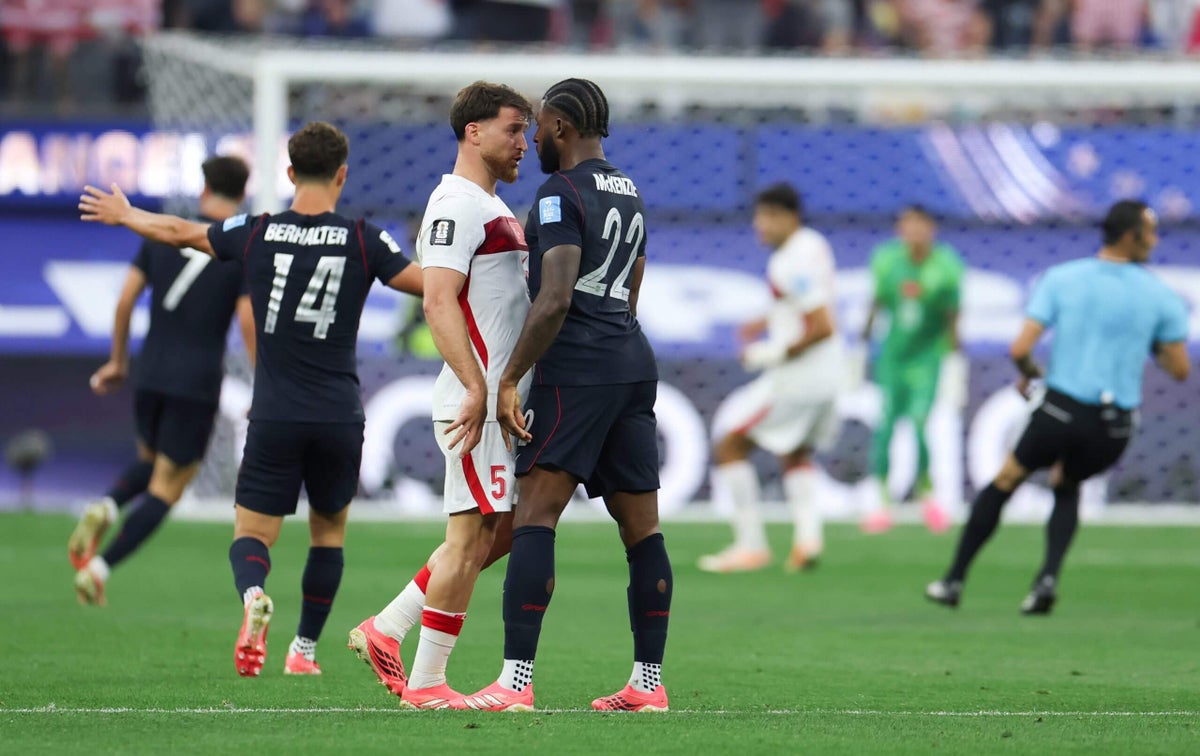
Get free access to the most comprehensive World Cup coverage in The Athletic app.IRVINE, Calif. — Tim Ream, at age 38, is the “grandpa” of the U.S. men’s national team, and he could talk for hours about how proud he is of his USMNT sons. He has raved about their togetherness, about their character, about their soccer so far at this 2026 World Cup. As a keen, serene leader, he also has a unique perspective on why they’ve been so poised when World Cup games get fractious and intense.“Ever heard of rage-baiting?” Ream said last week. “We have a lot of guys who are very good at rage-baiting.”His younger teammates, when asked about Ream’s line, burst out laughing. “Tim Ream said that?” defender Chris Richards, 26, said with a smile. “I’m surprised Tim knew that word.”But they agree it’s apt. Over the past two years, under Argentine coach Mauricio Pochettino, U.S. players have learned to rile up opponents while maintaining composure themselves, as they did against Australia and Turkey.“We’ve learned over the course of the last 20 months, with Mauricio and his staff, how to touch the line without crossing the line,” Ream said. “And we’ve also learned that if teams want to get chippy, we’re going give it right back — to a certain point.”Does that qualify as “rage-baiting”?The term, popularized by Gen Z over the past decade or so, is internet slang that often describes inflammatory content posted online to attract engagement.But in a soccer sense, it fits.“I would say we got a few rage-baiters in this team,” defender Mark McKenzie, 27, said.USA continue to dream ahead of the round of 32Tom BogertMcKenzie, on Thursday, went nose-to-nose with Turkish midfielder Salih Ozcan (pictured above) after a rough challenge. Sebastian Berhalter stood over and talked smack to Turkish star Arda Güler. Six days earlier against Australia, just before halftime, Alex Freeman jawed with and stared back at Jordy Bos after stonewalling the Australian wingback; Richards watched on and smiled gleefully.Several U.S. players have mastered the art of baiting opponents into tussles in a way that tempts the opponent to cross a line or, when necessary, breaks their rhythm.The “rage-baiting” has been on display throughout the USMNT’s first three World Cup games, and could be crucial as the knockout rounds begin against a tough Bosnia and Herzegovina team on July 1.Sometimes, it is subtle — an aggressive half-step toward a wound-up opponent, or a few cheeky words of provocation.
A Gen-Z slang term has become USMNT’s buzzword as it gleefully riles World Cup opposition
Mastering the dark arts — but knowing where the line is — has been part of the USMNT's reformed identity
1,122 words~5 min read