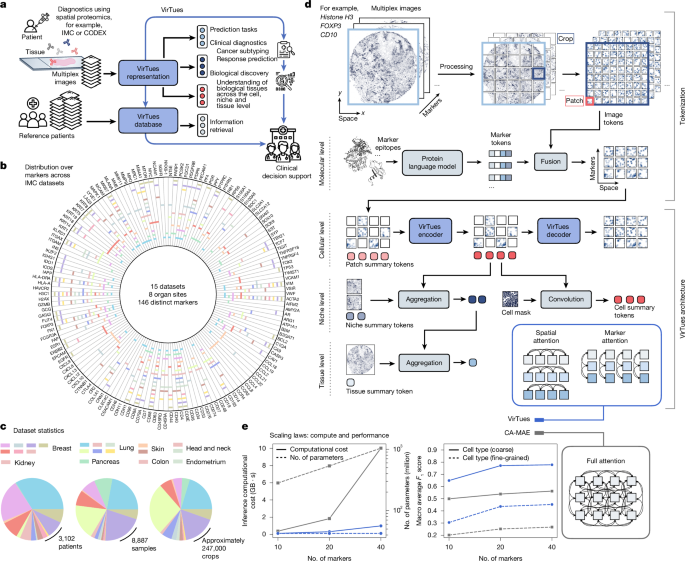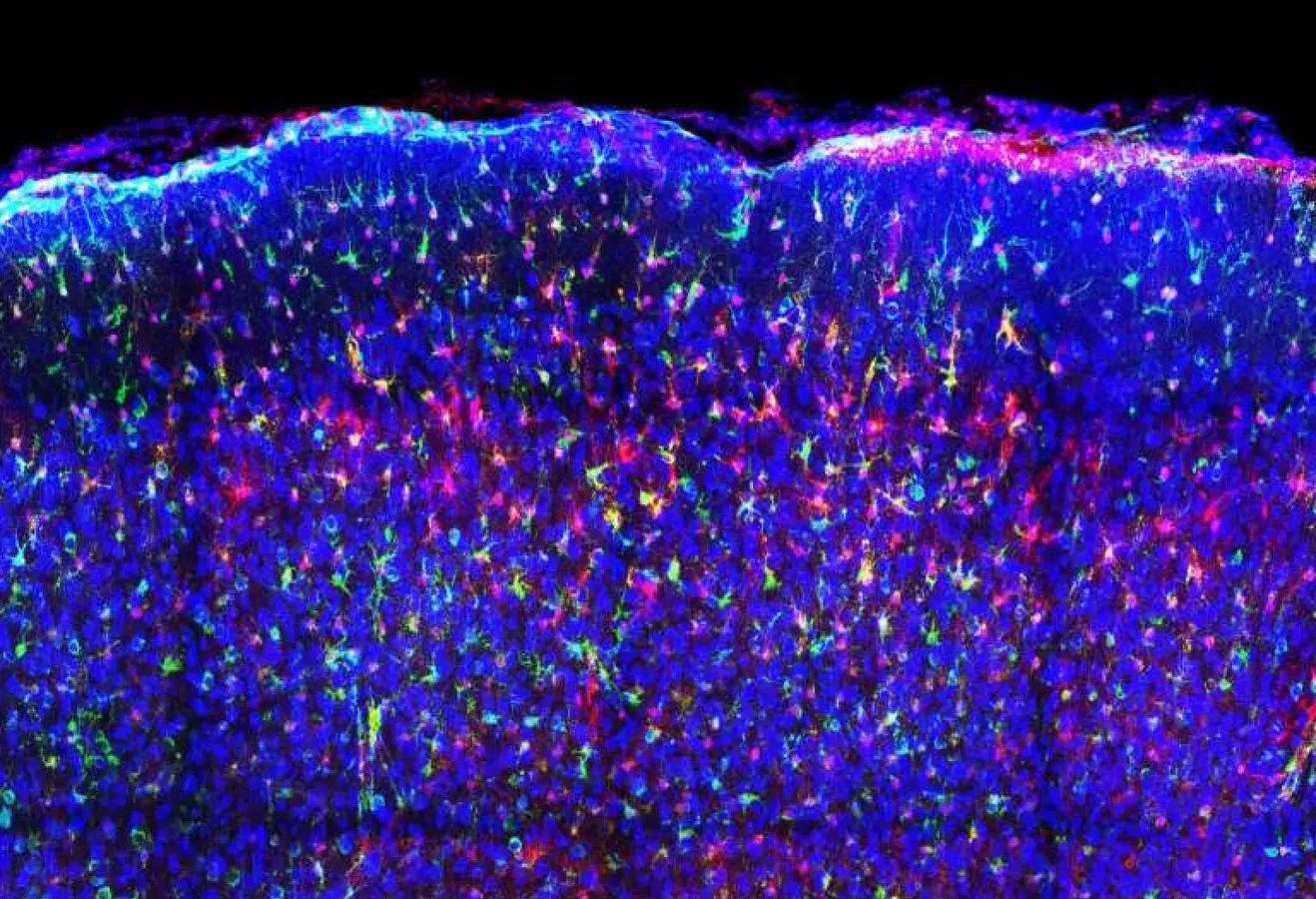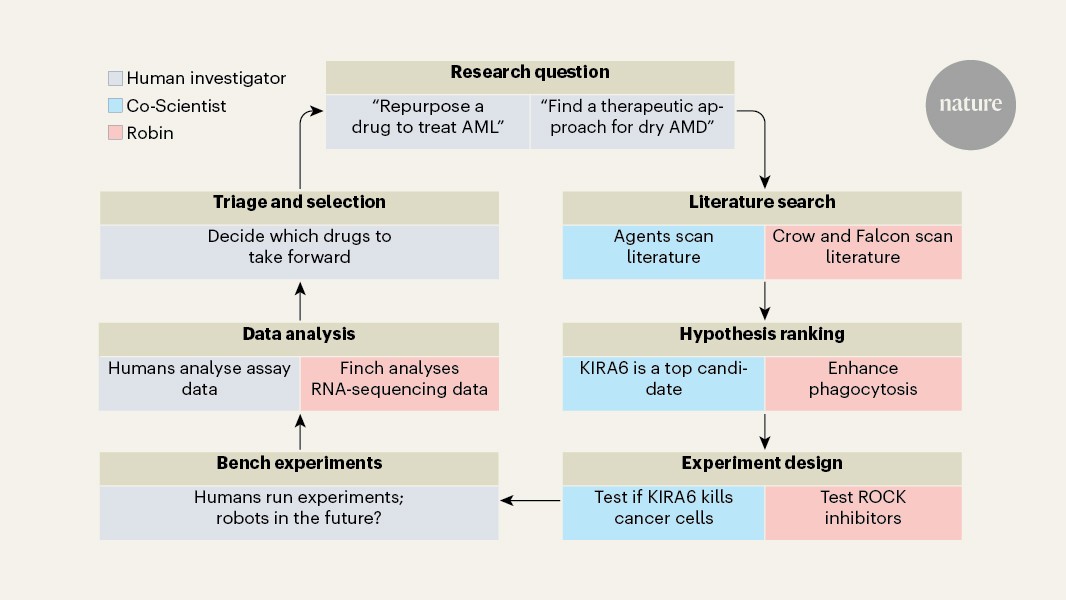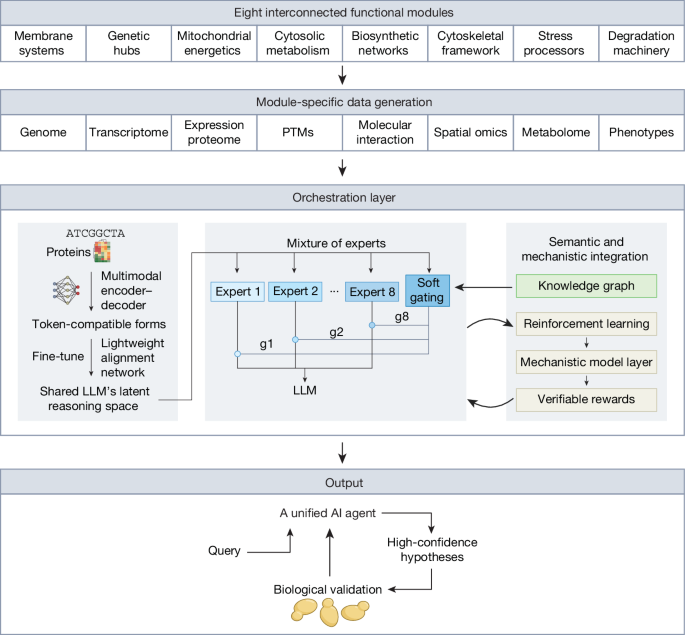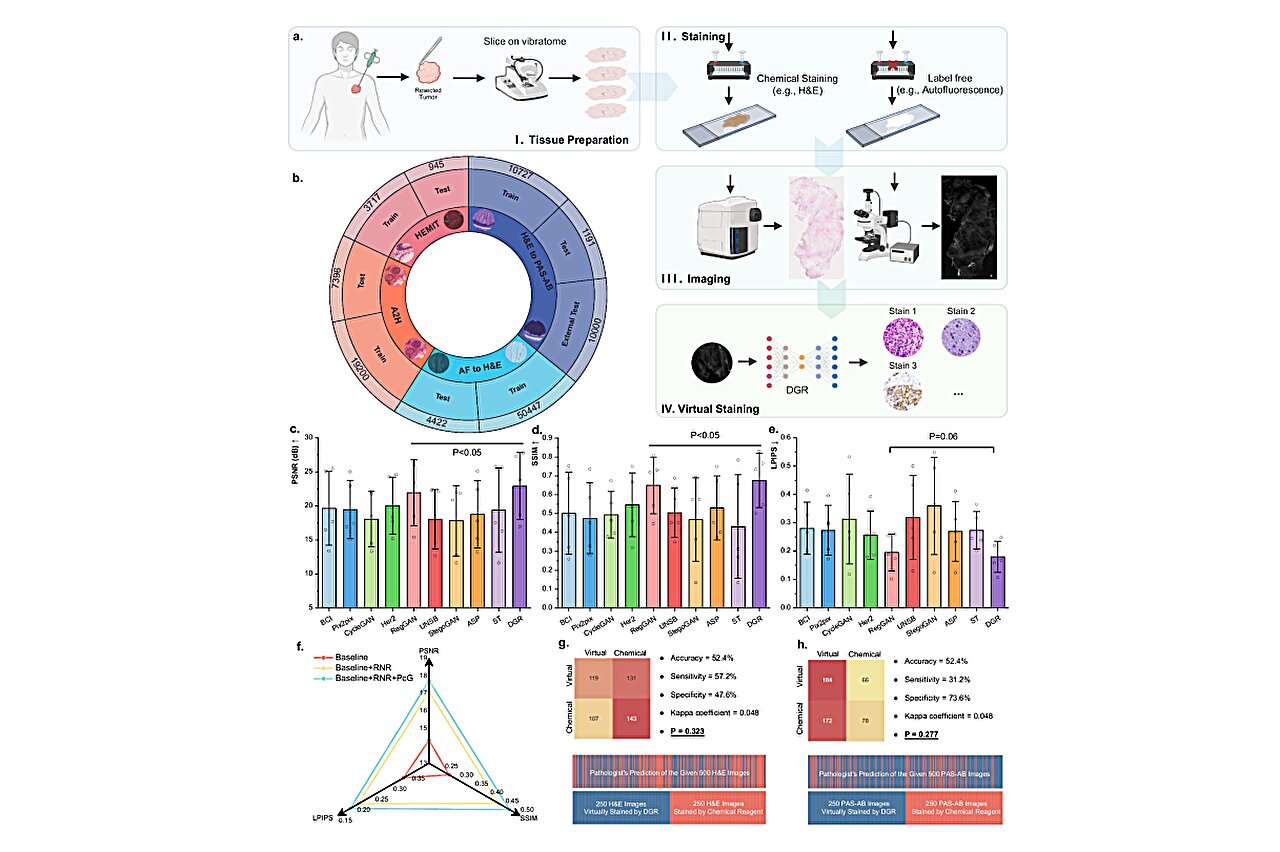
Overview of the virtual staining workflow and performance evaluation. Credit: Nature Communications (2026). DOI: 10.1038/s41467-026-71038-2
Histopathology is a cornerstone of clinical diagnosis, especially in cancer care. However, conventional chemical staining is often time-consuming and labor-intensive and may consume precious tissue samples.
A research team from the School of Engineering at the Hong Kong University of Science and Technology (HKUST) has developed a novel generative artificial intelligence (GenAI) framework that can produce high-fidelity virtually stained images even when training image pairs are imperfectly aligned, paving the way for faster, more tissue-saving histopathology workflows.
The study, titled "Generative AI for misalignment-resistant virtual staining to accelerate histopathology workflows," is published in Nature Communications.
The study is led by Chen Hao, assistant professor in the Department of Computer Science and Engineering, director of the Collaborative Center for Medical and Engineering Innovation and SmartX Lab, in collaboration with Terence Wong, associate head and associate professor in the Department of Chemical and Biological Engineering and associate director of the Collaborative Center for Medical and Engineering Innovation, along with researchers from Southern Medical University in Guangzhou, the Chinese University of Hong Kong and other collaborative partners.