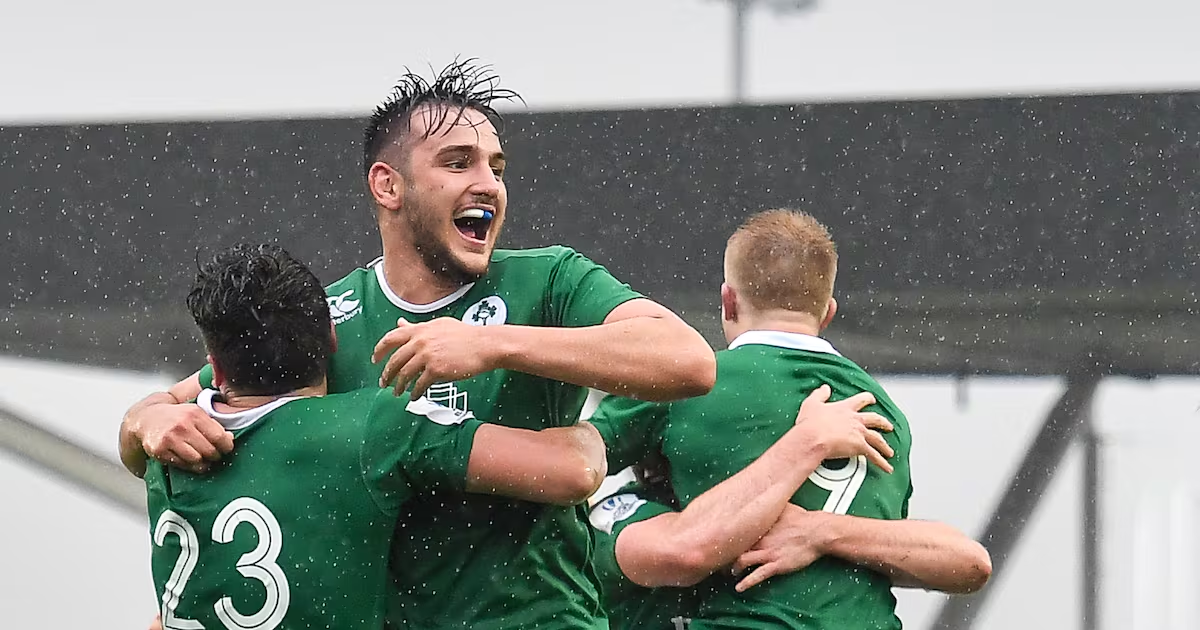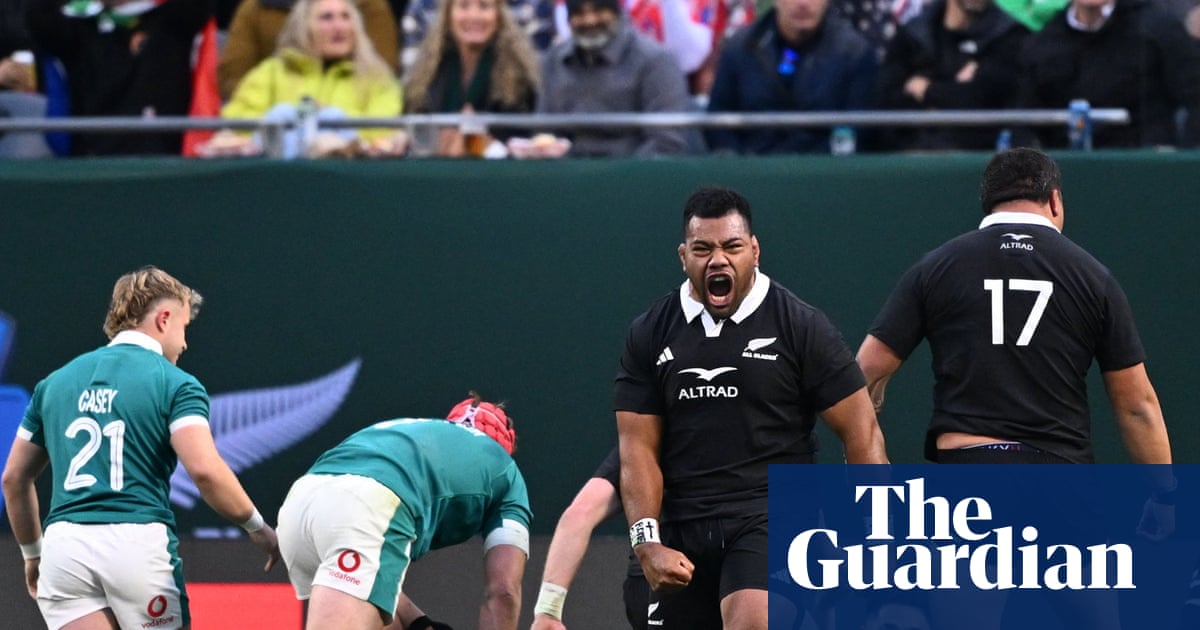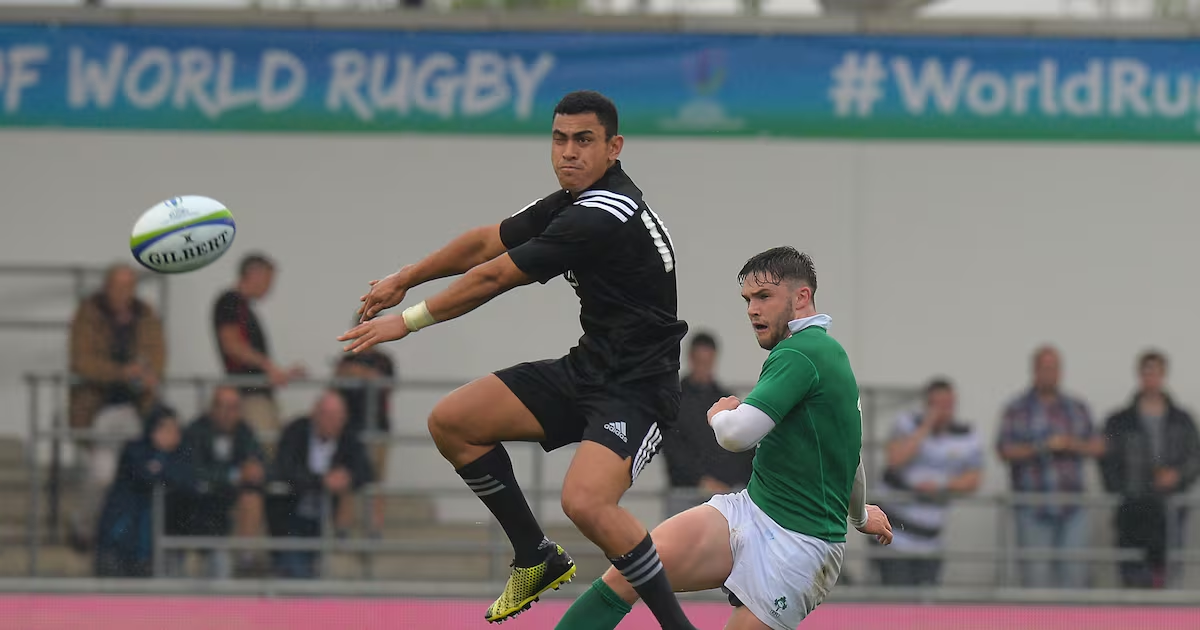
On June 11th, 2016, Nigel Carolan’s Ireland under-20 team triumphed 33-24 in a Junior World Championship pool match at the Manchester City academy stadium, thereby becoming the first men’s national side to beat New Zealand.Ten years later, two of the principals, head coach Carolan and outhalf Bill Johnston, recall some of the events and characters surrounding the milestone occasion.Let’s start on a tangential note. After Leinster’s defeat at Scotstoun last March, Carolan, the Glasgow attack coach, caught up with some of his former age-grade charges after the game: Jimmy O’Brien, Hugo Keenan, Max Deegan and Will Connors.Conversation there turned to a former 20s team-mate, Peter Claffey, star of the Game of Thrones spin-off, A Knight of the Seven Kingdoms, in which he plays the titular character. Who knew that they were rubbing shoulders back then with future Hollywood royalty.Galway native Claffey played a prominent role in the Six Nations championship of that year, but picked up a head knock that ruled him out of the end of the tournament and the Junior World Championship.[ Then and now: What happened to the Irish under-20s who defeated New Zealand in 2016? ]Carolan says: “Peter was a great character and a great character in the group. A little bit of a messer, class joker, but in a good way. He’d get on well with everybody. He liked to make people laugh. One of his breakthroughs came in the Connacht academy.“As part of this trying to be creative, they came up with a video where they took off all members of the academy staff and he took on my character. It was quite impressive. He was [poking fun], laughing at my idiosyncrasies, had a little bit of my run and my walk down to a T.”Ireland opened the 2016 World Cup with a 26-25 win over Grand Slam champions Wales, coming back from 17-points down in the process before taking on a Scott Robertson-coached New Zealand side that included Jordie Barrett, an early try scorer in a game played in heavy rain.“Watching New Zealand in their previous game [against Georgia], they were lashing the ball around. They played that old kind of 2-4-2 shape where you keep playing to the middle and find space on the edges,” Carolan says. “The weather being the way it was, we changed up our defence a little bit. We put a lot more pressure on to the middle of the field and that pushed them backwards in the conditions. We played more of a conservative game, which I think annoyed Scott Robertson. One of the things he mentioned after the game was that we didn’t play rugby.“But we played the conditions. It would be foolish of us to try and lash the ball around in the rain and try and take them on where they were strong. So, we took them on in a different way. And obviously, whatever chances that we got, we took. “Max Deegan was head and shoulders above everyone on the pitch. He took the whole team and brought them with him.”There were others who stood out. Andrew Porter, James Ryan, Jacob Stockdale, Shane Daly and later Hugo Keenan, but a player who came with a reputation and an impressive pedigree was outhalf Bill Johnston. He didn’t disappoint. He missed the Six Nations after dislocating his shoulder in a warm-up game against a Munster Development XV in the January before.He returned in time for the opening match against Wales in the Junior World Championship. Carolan says: “He was very clever, very good rugby IQ, so even in the chats it wasn’t like you were talking to an 18- or 19-year-old; it was like you were talking to a coach who’d been in the saddle for 30 years. “He had a very deep understanding of the game and he communicated quite well, so our expectations got to the point where if we’d Bill leading the charges we were excited by the prospects.” Nigel Carolan went on to coach teams including Glasgow Warriors. Photograph: Dan Sheridan/INPHO Clonmel native Johnston stepped in and stepped up impressively in the Wales match. He’d watched the team and was struck by the fighting spirit during the Six Nation, especially in adversity.Friends and family flew over for the New Zealand match. He recalls the feeling of calm. “I remember it was quite a drizzly, warm day. I remember being calm and confident before the game. Nigel [Carolan] and [captain] James Ryan were outstanding leaders. Both have reached great heights [in different disciplines of coaching and playing],” Johnston says.“They just were able to manage the emotion and the positivity of the squad well. Nigel got us in the right time space around the game plan.”The Haka. “We had a plan to fan across the field, covering the 50-metre line, the full width of the field,” Johnston says. “They wanted New Zealand to be aware of Ireland’s superior support, to make them feel that little bit further away from home. It gave us a good sense of being bigger than the moment and the occasion.“We took a small bit of control. We had total respect for it, but we also knew it wasn’t something to be feared or intimidated by.” Johnston went short from the kick-off, a riskier play but a statement of intent. Ireland won the ball.Overcoming a 14-6 deficit, the young outhalf steered his team around the pitch and kicked his goals until the 37th minute. Having erred defensively, he raced back into the line and ploughed into a much bigger human being. His motto was to rectify a mistake at the next opportunity. He knew immediately. Not the pain, just the sensation.His shoulder popped out and back in as he tried to regain his feet. “A whole wave of emotion that had built up over the last six months, the initial disappointment, going through surgery and rehab to get back, it washed over me at that moment. My family had obviously observed what had happened. I think my dad had made his way down to the sideline and we hugged it out.“And for everyone it worked out to be a great day, but just for me personally at that moment it wasn’t fantastic.” He remembers the support of the team, the arms around him. It meant so much. “I’d felt I’d done my bit in the first half-an-hour. I could walk off with a head held high knowing that I had an impact on the result. And then Johnny [McPhillips] came on and did fantastically in that game and for the rest of the tournament,” Johnston says.“I just remember then maybe the last five minutes when he kind of knew we’d win. And, you know, I’d watch the highlights back maybe once a year just to remember it. I always see myself run on with the sling off and just like jumping over the lads.“Those scenes at the end were just incredible. Seán O’Connor is one of my best mates and he was on the field at the end. And, yeah, if you look at the video, we’re all just running around like kids. I knew my tournament was up, but it didn’t matter. It was bigger than any individual.” Hugo Keenan is tackled by Mitchell Jacobson of New Zealand during the game. Photograph: Dave Howarth/INPHO Johnston’s career with Munster, Ulster, Ealing Trailfinders and Richmond was bedevilled by injuries. He went on to share a pitch and a house with his halfback partner Stephen Kerins and they became fast friends.The interaction is warm and friendly when he bumps into former 20s team-mates. There’s no WhatsApp group, no talk of a reunion. He’s not surprised by those who went on to brilliant senior careers, but reserves special praise for Hugo Keenan.“A fantastic athlete with a fantastic heart. It’s been incredible to watch him rise through the ranks. He’s just the nicest person you’ll ever meet. You’d be particularly happy to see someone like that, who from a very early age was extremely humble, hardworking and [had the] heart of a lion to come through in the way he has done, even when it wasn’t easy. He deserves all the good things that have come his way since,” Johnston says.“They were very good team-mates, natural leaders as well. It was a fantastic squad to be in. There was no hierarchy, there was no ego, there were no favourites, there was none of those things. It just felt that there was a singular purpose that we were all there for, and Nigel and James deserve huge credit in just bringing that all together.“It’s very difficult to do that when you have just a week or two of camp before you go. It’s not a long time to embed it. But when you’re that age, you just need to give the young men confidence and give them a bit of a structure. But more so, more importantly, give them the confidence to just express themselves and do what they’ve been doing their whole lives.”After six years in London, Johnston is back living in Dublin and is working with Salesforce. He’s planning to play a bit of club footie next season. And perhaps catch up more frequently with former team-mates. It won’t be a hardship. They’ll always be the first.
‘The scenes were incredible’: When Ireland under-20s made history by beating New Zealand
Nigel Carolan, who was head coach, and outhalf Bill Johnston recall that momentous day in June 2016
1,545 words~7 min read