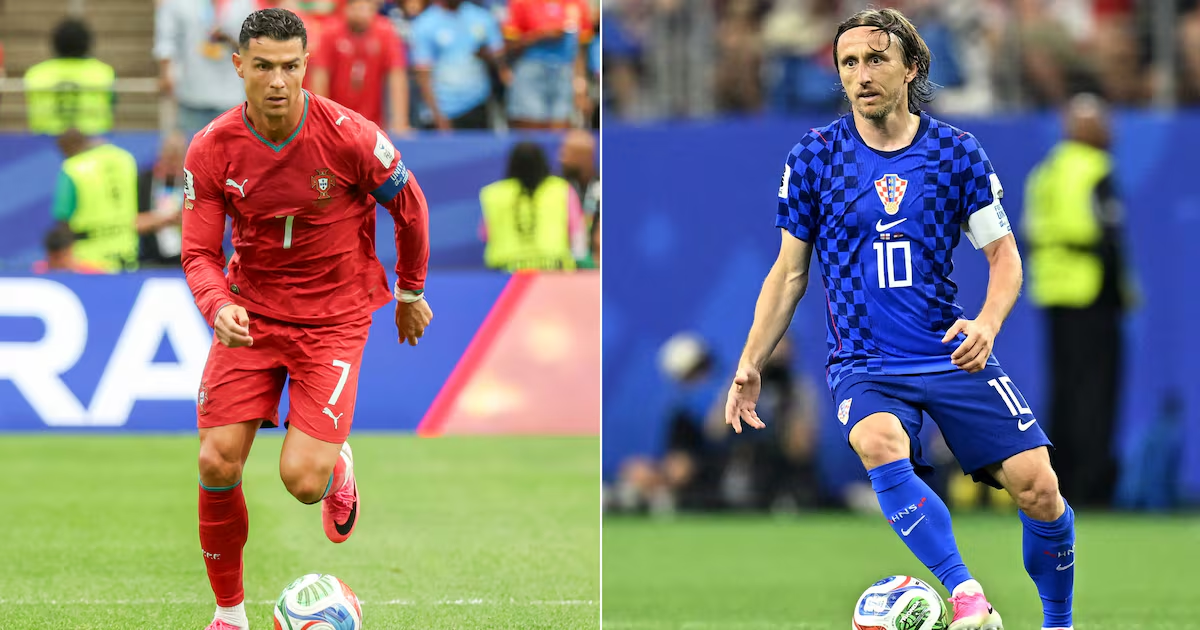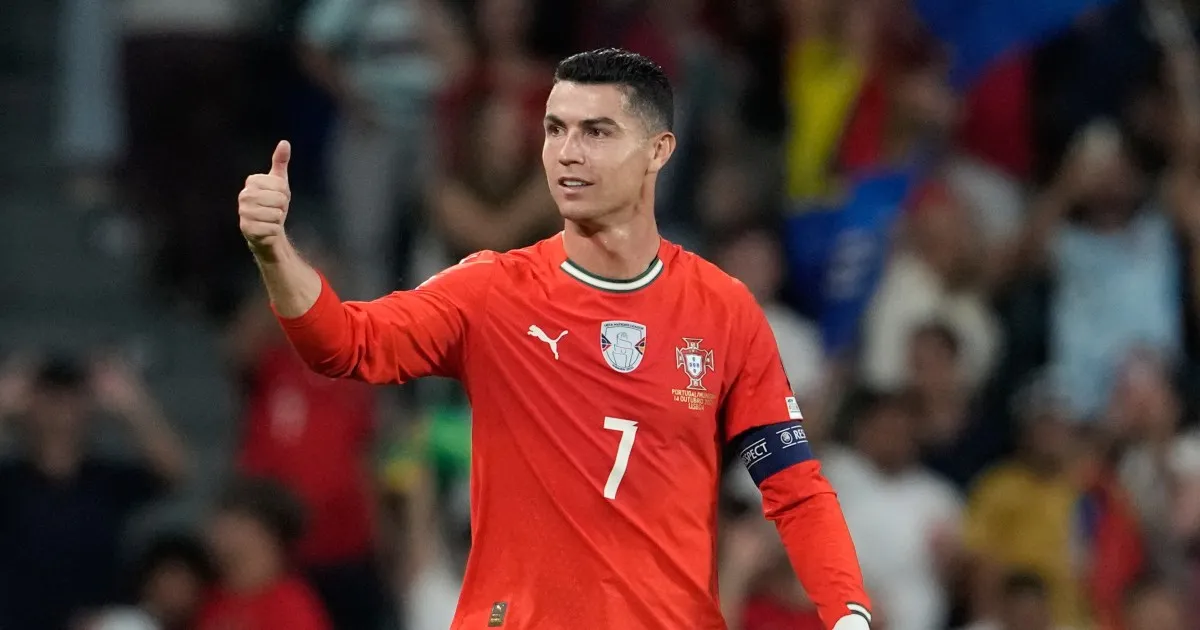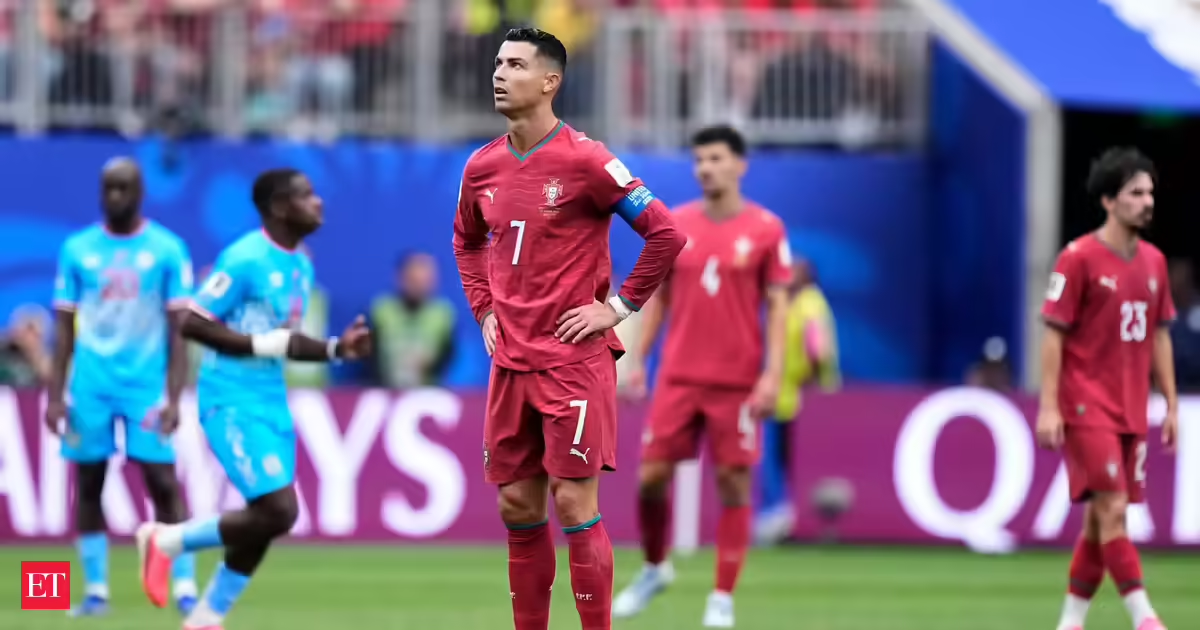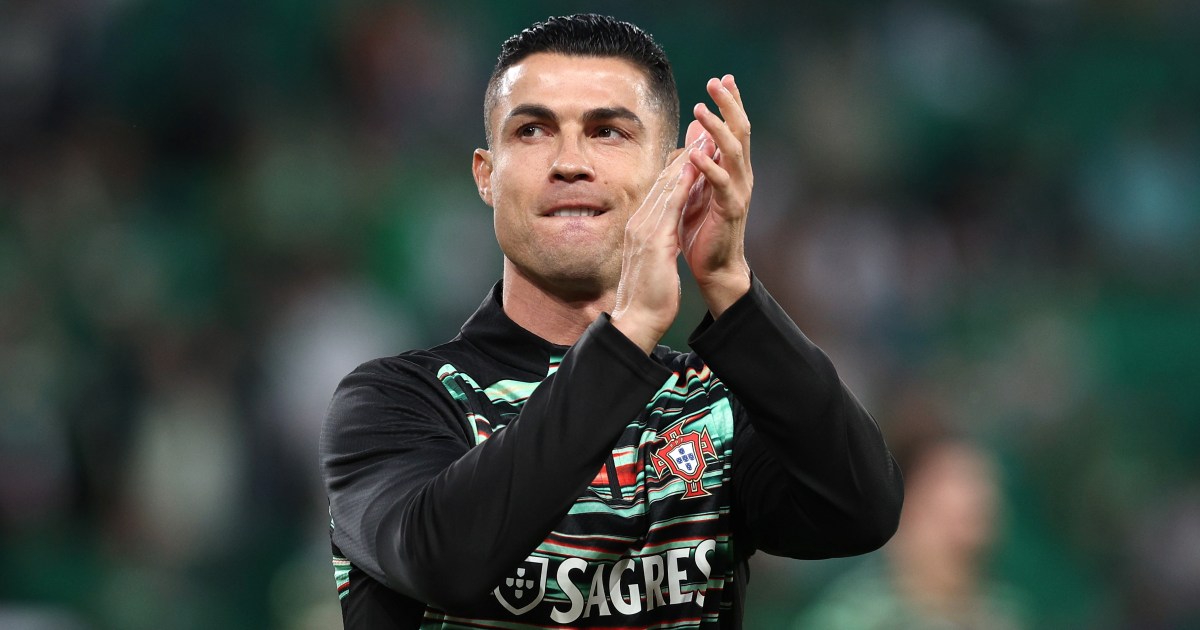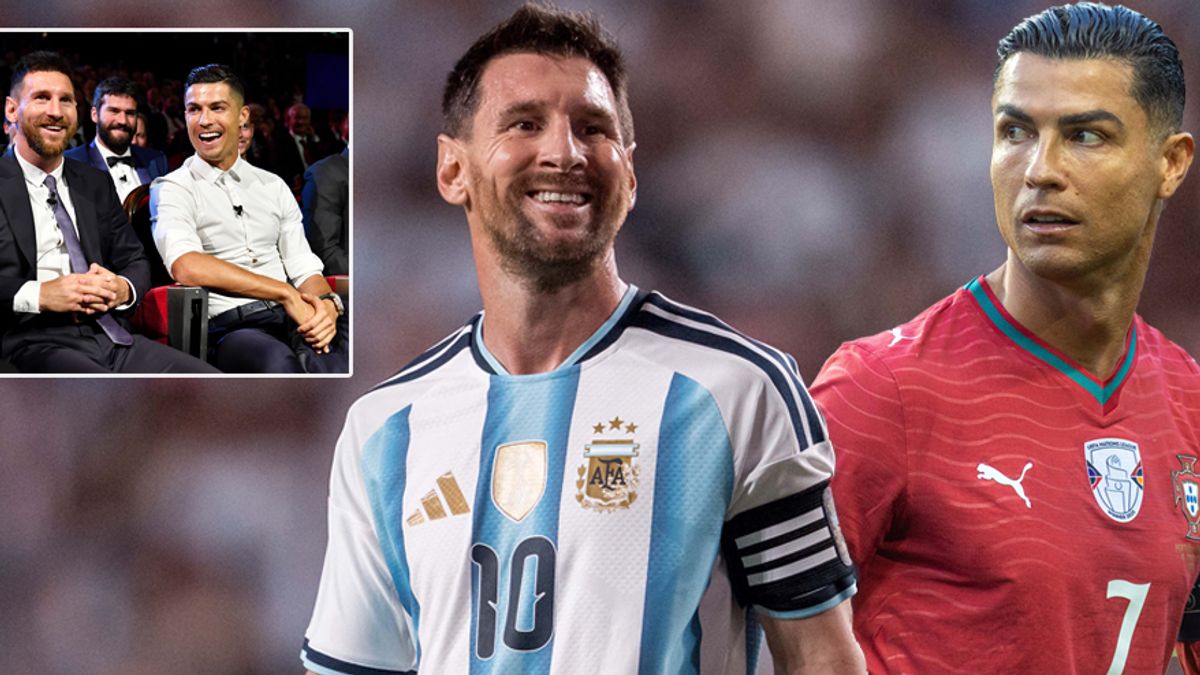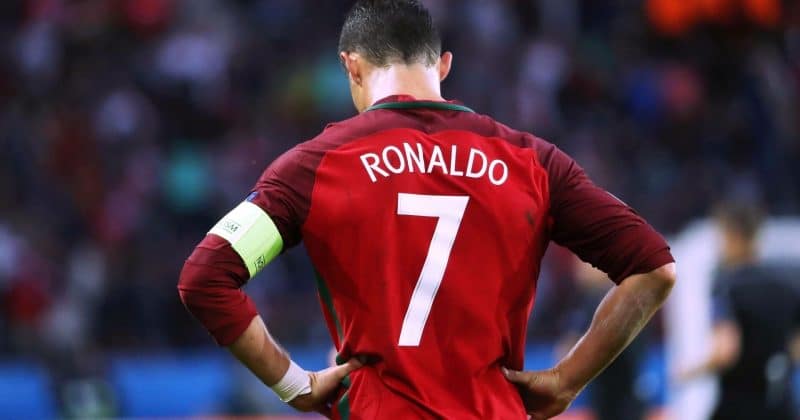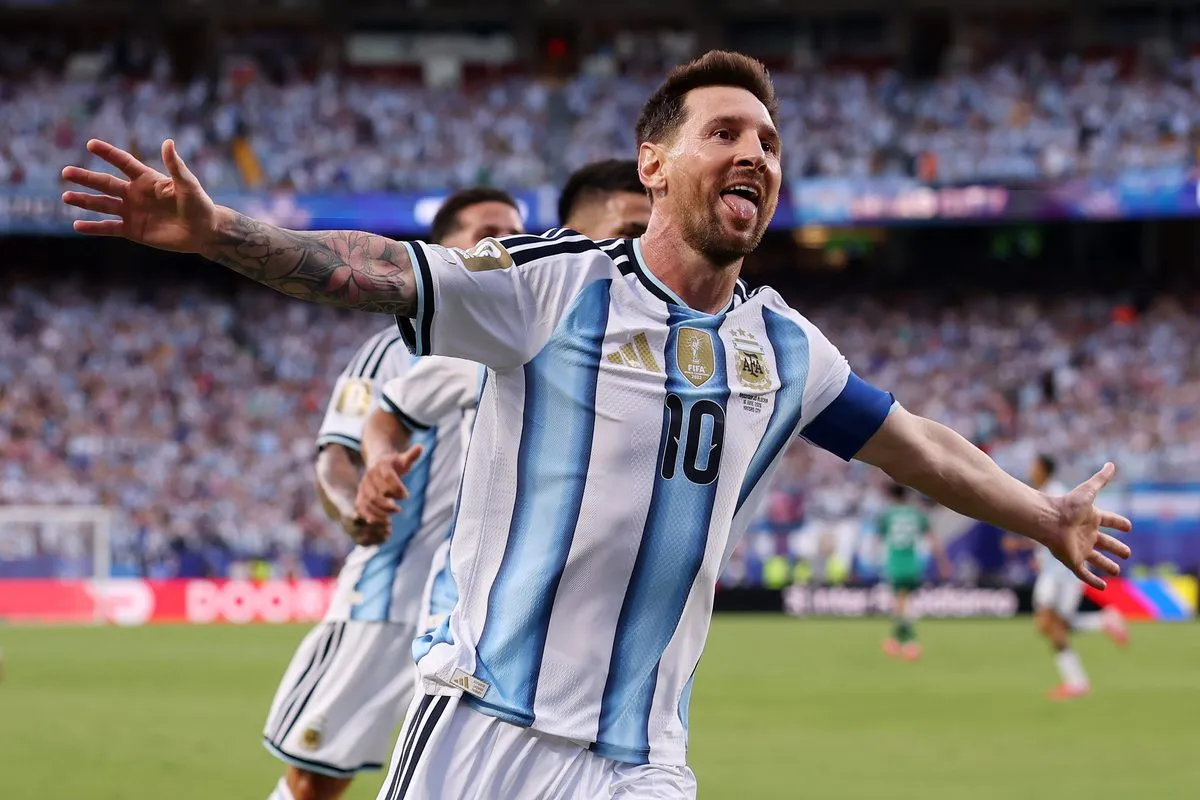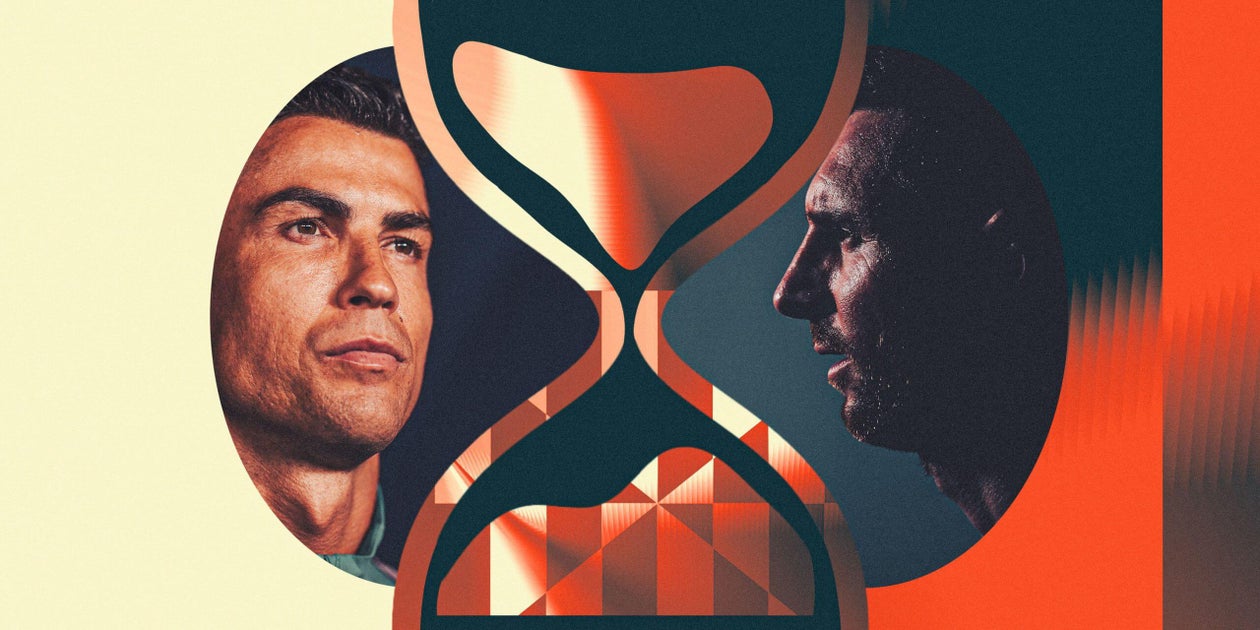
Cristiano Ronaldo can see the last grains of sand falling inside his footballing hourglass and is prepared for the tears to flow.“It will be tough,” Ronaldo told Piers Morgan when outlining his retirement plans in an interview last November. “Probably I will cry… but I think I will be prepared.”There is still no clear indication of when the day will arrive but at the age of 41, it is coming for Ronaldo, just as it is for Lionel Messi, his great adversary who turned 39 this week, and Luka Modric, his 40-year-old former Real Madrid team-mate.Get free access to the most comprehensive World Cup coverage in The Athletic appThree Ballon d’Or winners — national statesmen, who have each passed 200 caps — are working through their last dances at this World Cup. All have endured at an elite level far longer than most, but there will soon come an acceptance that races have been run in international football. It’s a fate that could also befall Manuel Neuer, also 40, whose place in the Germany team is under scrutiny following a shaky performance against Ecuador in their final group match.The signs have certainly been there for Ronaldo, who toiled in Portugal’s opening 1-1 draw with DR Congo before scoring two goals in the 5-0 victory against Uzbekistan, marking it by screaming, “I’m back!” into a pitchside TV camera.Cristiano Ronaldo roared back to form against Uzbekistan (Paul Ellis/AFP via Getty Images)Modric, too, has looked his age. He was replaced in the second half of Croatia’s 4-2 loss to England, their first group match, when it became apparent the pace of play had become too much. That trademark Modric control from midfield had vanished.Messi is the outlier, repeatedly inspiring Argentina as though it were still 2022, but those Peter Pan-like qualities will abandon even him eventually.The impossible dilemma is knowing when to stop. Physiology provides pointers, but it is an individual’s mind that often has the decisive say.“The main factor for any athlete is knowing they can still compete,” says Dan Abrahams, a leading sports psychologist.“How much control over a game have they got? You can begin to feel less control because, on the perceptual side of the game, they can’t see things as quickly. The cognitive and physical sides are linked. It’s those physical and mental signatures that are the tell-tale signs to inform a player it’s over.”It is not a fate that is always readily accepted. Even after retiring.Serena Williams, the highest-earning female athlete of all time, has not let go of her tennis career. She stepped away from the sport in 2022 but is now preparing to compete at Wimbledon again, aged 44, after being granted a singles wild card this year.Other greats have been through similar battles.Michael Jordan twice retired from basketball, first in 1993 and again for good in 1998, while Steve Redgrave, one of the great Olympians, once encouraged anyone who saw him near a rowing boat after winning gold in 1996 to shoot him. Four years later, he was back, earning a fifth Olympic title in Sydney.The combat sports are littered with retirement U-turns, from Floyd Mayweather to George Foreman, Conor McGregor to Ronda Rousey. Heavyweight boxer Tyson Fury has retired at least five times.Footballing exits, however, tend to be more definitive — a trend not uncommon in team sports.“Retirement is a point in time when certain forces come together,” explains Martin Perry, a sports psychologist for the past 20 years. “For example, a diminishment of powers, longer post-game recovery time, a loss of enthusiasm for training and games. As if the lights are starting to turn off. It just doesn’t feel the same any more.“Letting go can be extremely hard: there will be no more days in the sun, special moments that are hard to replicate outside the game — and, most of all, the camaraderie. The banter, the brotherhood or sisterhood. And if you’re an elite player, you know you can dig deep to find that something special. At least you think you can. But can you?”Lionel Messi is still scoring freely for Argentina at this World Cup, at age 39 (Francois Nel/Getty Images)Plenty have doubted the legitimacy of Ronaldo’s self-belief at this World Cup. The DR Congo stalemate depicted him more as a hindrance than a help to a Portugal team not short on attacking alternatives. Much like at the European Championship two years ago, it has felt that his place in the side owes more to past glories than his current goalscoring exploits in the Saudi Pro League with Al Nassr.One more World Cup has clearly been a motivation, with that brace against Uzbekistan making Ronaldo the first player to score in six editions of the FIFA tournament, a run that started in 2006. Lamine Yamal of Spain, perhaps the next on his way to footballing greatness, was not born until the following summer.“Personality can come into it, plus the perception of career and who you think you are,” explains Abrahams. “Some players are intent on leaving some legacy at a club or with their international team. It’s a matter of how strongly one embeds that into one’s identity as a player.“You find that in boxing, when they retire but soon have a comeback. They can’t leave it, because that’s where a person gets their confidence, their admiration, and there’s an addiction around the ego.“Leaving that behind isn’t easy. You don’t just love football, you love the identity of being a footballer.”Timing can be everything but even then, living out the greatest moments, there can be an intent to go on.Messi might have concluded winning the 2022 World Cup final was his crowning glory but shunning international retirement after Qatar brought more silverware at the Copa America two years later. The coming weeks might yet see a second straight World Cup lifted if he keeps carving open defences.“It’s the grand exit,” says Perry. “The recognition, leaving on a high to the acclaim from the galleries. If you’ve built a special career, then you feel you’ve earned the right to close the curtain on your terms. But you’re also aching for a special moment to end on.”The alternative is the slow decline and the threat of a tainted legacy.Ronaldo, for all his bravado, has walked that tightrope in Portugal’s attack, just as he did when returning for a second spell with Manchester United in 2021 and eventually falling out with their caretaker manager Ralf Rangnick. Modric, too, has carried the forlorn look of someone who went round one too many times in the quest to reach two centuries of senior caps.“Leave football before the football leaves you,” was an assessment delivered by former Liverpool and England defender Jamie Carragher during a stinging assessment of a then 32-year-old Casemiro’s ageing legs on the UK’s Sky Sports in 2024. “The football has left him. At this top level, he needs to call it a day and move.”Casemiro defied that conclusion with Manchester United last season, doing enough to retain a place in Brazil’s midfield at this World Cup, but Carragher’s general point was valid. Minds can be made up by one adverse performance, that point when an opponent or game becomes too fast to keep up.“There’s a phenomenon in psychology called a flashbulb memory, which is very emotionally driven,” says Abraham. “You can think about your own life and there will be emotionally driven memories, like the day you got married or the day a child was born. These are flashbulb memories that we easily recall. I’m shoehorning the notion in here because it’s a highly emotional sport for the players.“You think about the consequences and what happens. There will also be that identity and legacy, not wanting to embarrass ourselves. We create meaning around situations and there can be times when a player will stop and think, ‘Wow, I’m embarrassing myself now’. It can be a moment that acts as a flashbulb to really push the decision to retire.”Is the criticism getting to Ronaldo?Joe DevineAny clarity in knowing what comes next inevitably helps iron out doubts. Ronaldo has said he has been planning for retirement “since 25” and has outlined his wish to spend more time with his family. The elite athletes will never be short on offers for media work or, should they wish, coaching opportunities after they walk away. Their names alone will open doors.They also need not worry about financial taps being turned off. If there was a cliff-edge quality to footballers’ earning capabilities before the turn of the 21st century, the commercial power of the biggest names can actually increase in retirement.Take David Beckham and this World Cup as a case in point.The former England captain had a fine playing career, but it fell well short of Messi and Ronaldo levels. Yet he is the omnipresent commercial force in this summer’s tournament, co-hosted in the United States, where he finished his career with MLS team LA Galaxy. As well as international campaigns with Lay’s/Walkers, Adidas and McDonald’s, there have been targeted American campaigns with Home Depot and Bank of America.The same opportunities will surely await Messi and Ronaldo in 2030 and beyond, regardless of their playing status.“Messi and Ronaldo transcend the sport,” says Steve Martin, founding partner at MSQ Sport and Entertainment. “They’re not these classic footballers where their careers are just going to stop. They’re more enduring than any of them just because of their sheer scale and profile.“They’re still playing at a high level and training every day, so when they’ve got more time on their hands, as Beckham has, they’ll be building their commercial empires more than ever.Lionel Messi has conquered the World Cup Tom Williams“They can have the same commercial impact after they stop playing. You’d put them up with athletes such as Roger Federer, who is iconic. And once you have iconic status, these are lifetime careers commercially. They’ll be enduring for 20, 30, 40 years.”That insulated earning power is reserved for the greats, including Usain Bolt, Jordan and Williams, who Martin considers a trailblazer for female athletes. Williams’ performances at Wimbledon this summer will have no impact on her gilded commercial status.Yet Williams’ story underlines the anguish and indecision that often accompany thoughts of retirement. Even at 44, there was a wish to give it another go.“It’ll be a cocktail of things when the time comes,” says Abraham. “It’s disappointment, it’s devastation, it’s relief, it’s excitement for what the future might hold, it’s emptiness. They’ll feel a whole raft of emotions. You need to make sense of your situation.”This World Cup might end up being where the international ride finally ends for Messi, Ronaldo and Modric, and how these weeks play out will help decide if timing matched their immense talent.
Ronaldo, Messi and the question that haunts sporting superstars: When do you stop?
Some football titans are having their last dance at a World Cup
1,787 words~8 min read