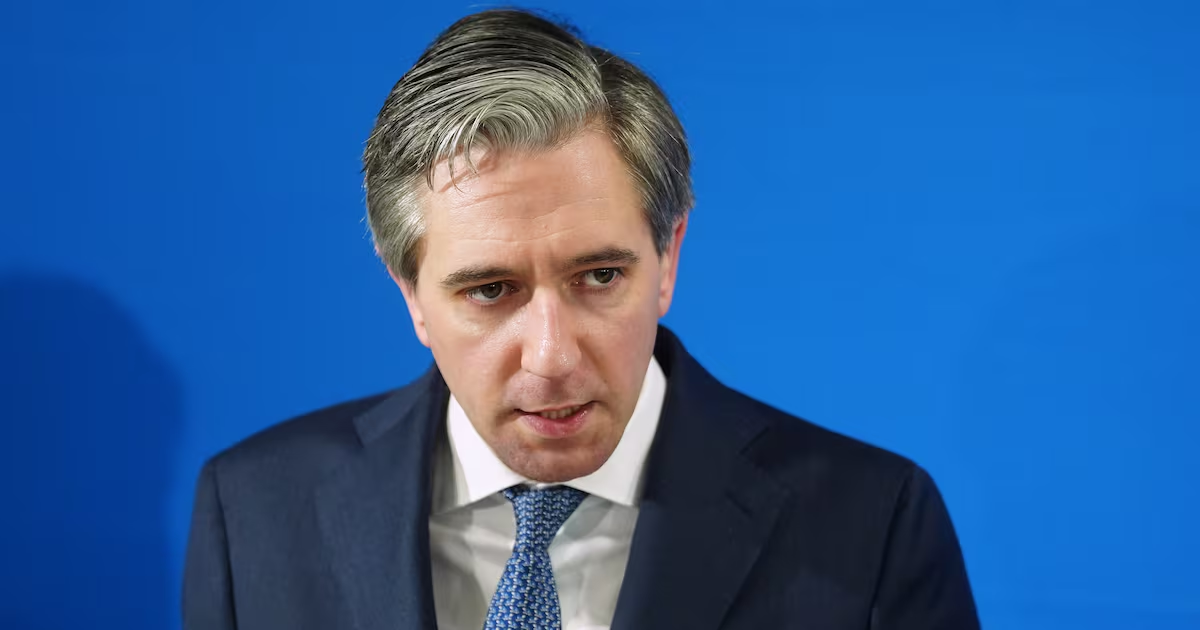
Lower costs and more favourable tax treatment are the two things most likely to boost the numbers in Ireland choosing to invest, according to a new survey.The study for investment platform IG also found that the biggest financial regret for over one in four Irish adults was not starting to invest sooner.The survey comes against a backdrop of a promised new, stripped down investment account option from Minister for Finance Simon Harris. He has yet to firm up details of the scheme which is expected to be announced formally in Budget 2027 in October, although he did brief a number of influencers earlier this week.IG says investment platforms require significant lead time to build the infrastructure needed to offer the new accounts and that, without timely decisions on the final rules, a 2027 launch date cannot be guaranteed.It is understood one key element of the scheme will be a low tax structure, or flat annual fee. Ireland’s current exit tax is levied at 38 per cent and payable either when funds are drawn down or on the eighth anniversary of the investment, whichever comes sooner. Losses on one investment cannot be set against gains elsewhere.That tax regime is seen as a significant disincentive for Irish savers who have an estimated €170 billion sitting on deposit in Irish banks, earning little or nothing.With IG’s research highlighting poor tax treatment as a big barrier to investing, it is calling on the Government to provide greater clarity on the plans for the new investment account.“While many investors wish they had started sooner, significant barriers continue to prevent others from taking the first step,” Michael Healy, UK & Ireland managing director at IG, says. “Government policy is keeping hundreds of thousands of potential investors on the sidelines.”Among those who do not currently invest, 30 per cent say they lack sufficient knowledge about investing, while almost one in five say they simply do not know where to begin.Despite these barriers, IG says the research suggests there is significant untapped appetite for investing among Irish consumers. While one in three adults currently invests outside of their pension, 35 per cent of those who do not say they would start investing if Ireland introduced a tax-free investment account.“The Tánaiste has said Ireland is a laggard on retail investing and he is absolutely right. And every month of delay means lost opportunities for people to put their money to work and benefit from long-term compounding,” Healy said.“We are ready to build the systems required to offer these accounts, but we need certainty on the final rules. Ireland does not need another forum or consultation.”
Cost and tax treatment helping deter people from investing their savings, survey finds
Study shows 35% of adults who do not currently invest would do so if tax-free investment account introduced
436 words~2 min read