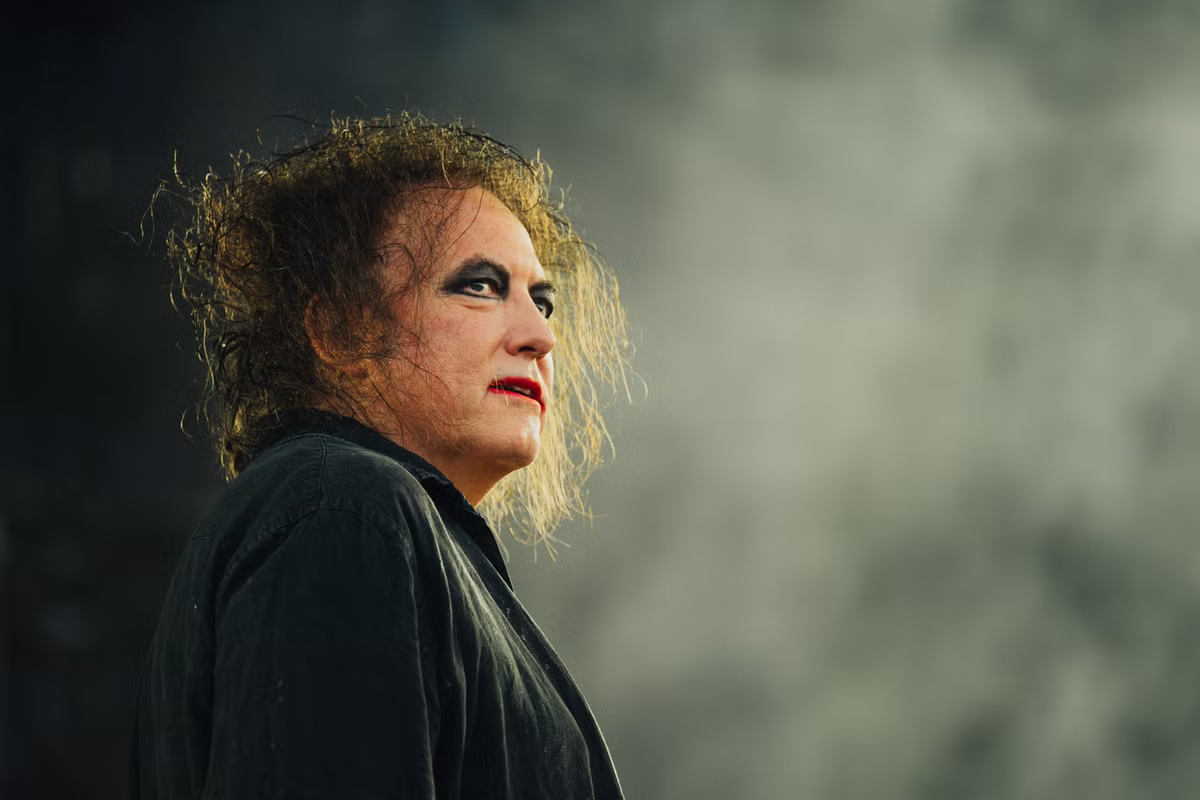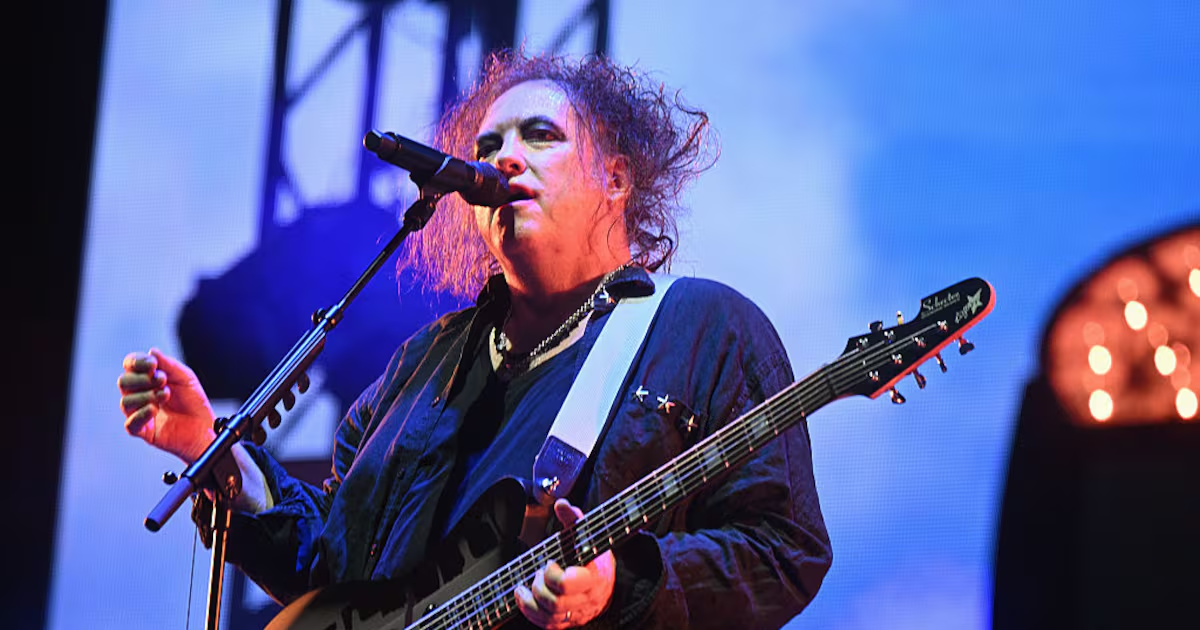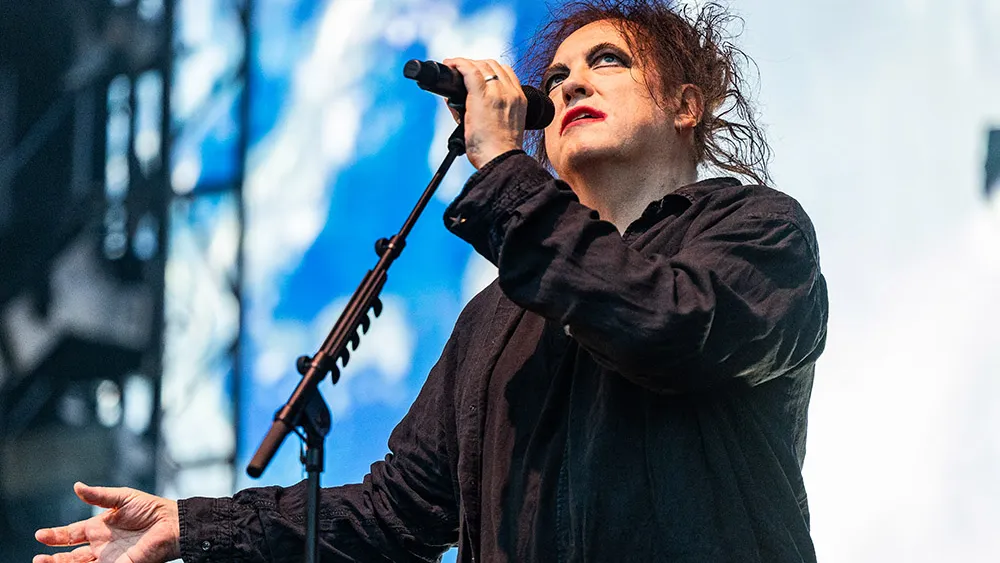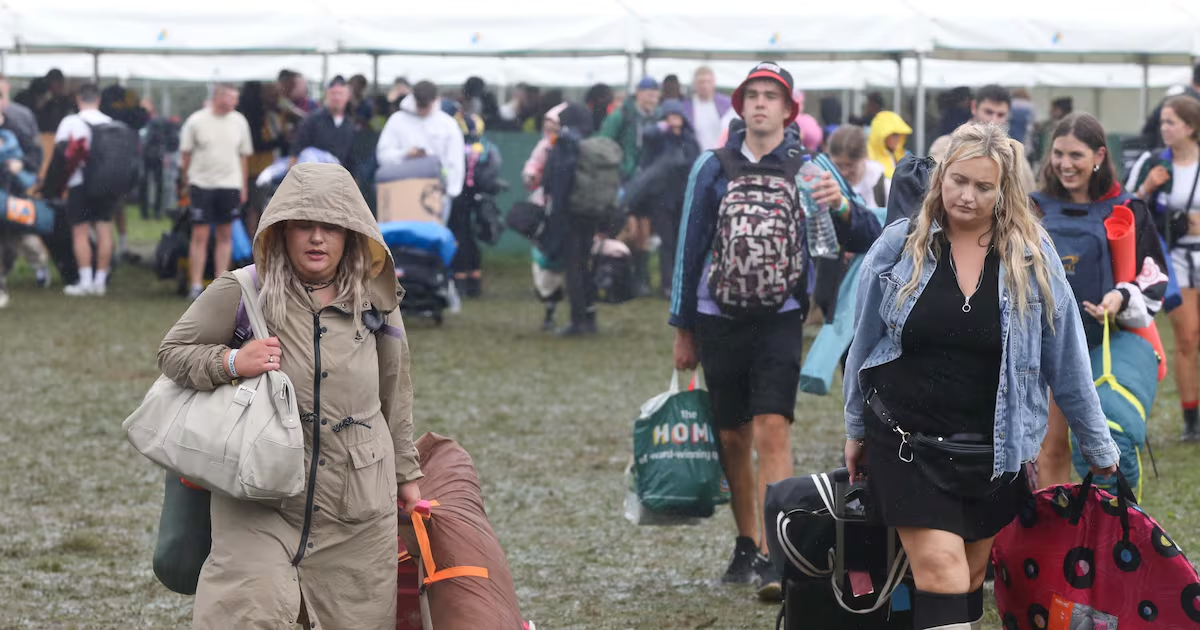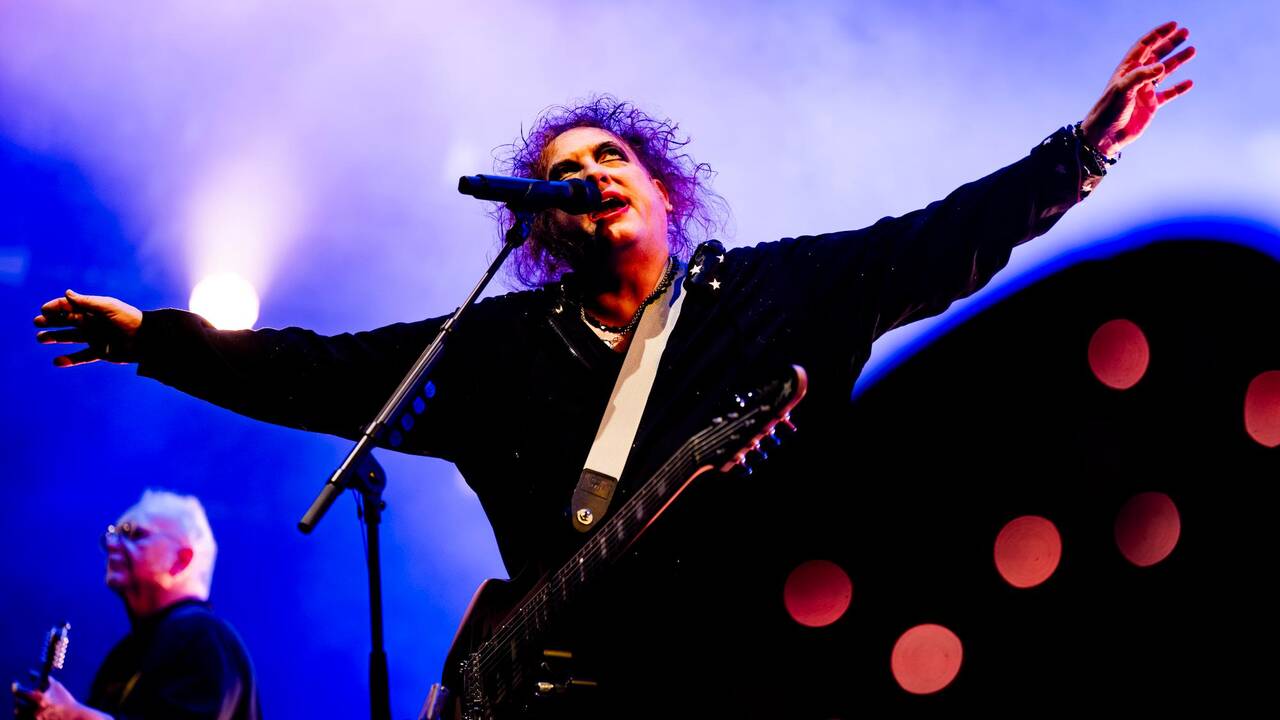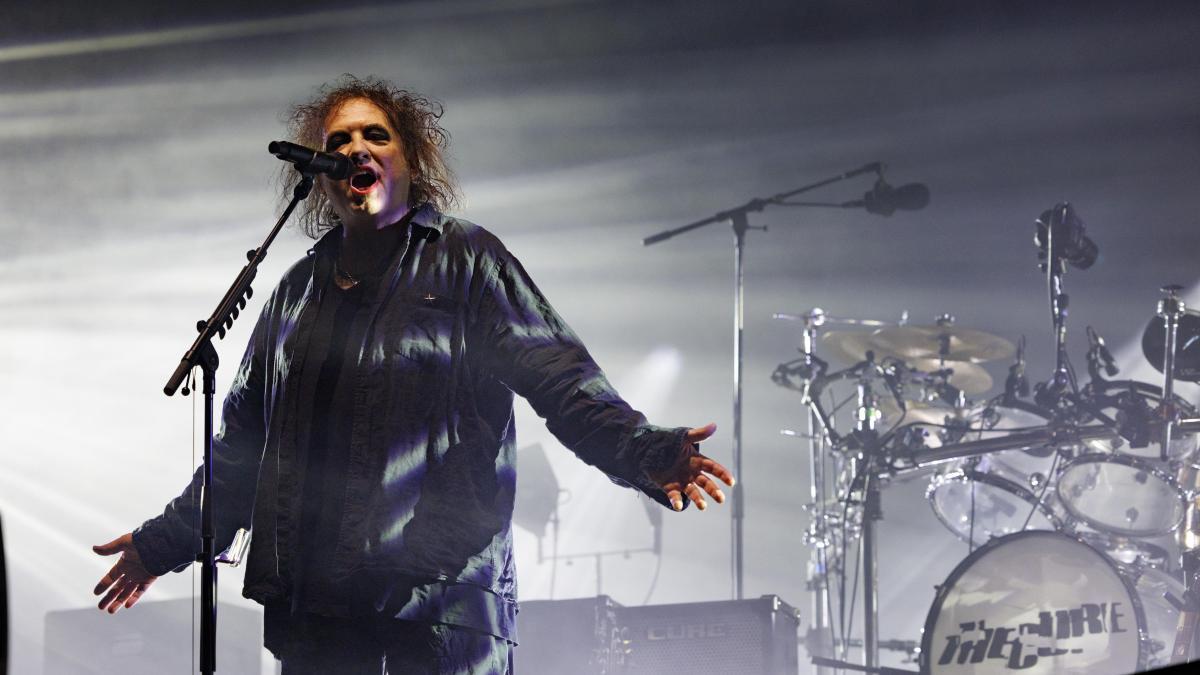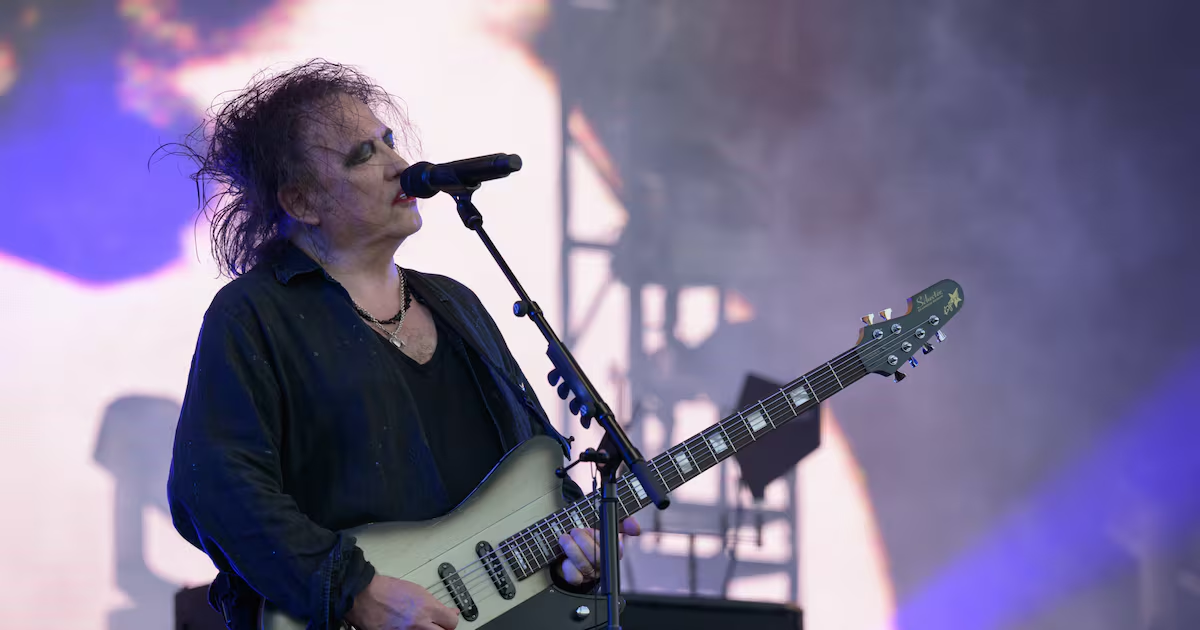
The CureMarlay Park, Dublin★★★★☆The Irish summer has played the ultimate trick on The Cure by unleashing an apocalyptic heatwave as pop’s ultimate chroniclers of rainswept gloom arrive in Dublin for a concert. Like speedos worn at a funeral, there is no denying the novelty of the pairing – but is it a good idea? The irony of singing about loneliness and the eternal winter of the soul while your audience basks in a mellow 22 degrees is not lost on Cure frontman Robert Smith. “I hate daylight. I know the world will end without it but there’s a time and a place,” he says early on, projecting the mischievous aura of a beloved eccentric uncle. Later he expresses the fear that he is about to “be overcome by the ghosts of sheep” – adding that there is no time to explain further.In between the daze of seeing Robert Smith singing in the sunshine, this magnificent performance is testament to The Cure’s uncanny ability to connect with the angst and vulnerability we all experience growing up and which, for some, never entirely goes away. The sky’s an aching blue and yet The Cure make you feel like you’re a misunderstood teenager in your bedroom, taking refuge from a world that doesn’t care to understand you. Much of the crowd have arrived dressed in black, the many Gen Z-ers in attendance having perhaps discovered The Cure via Smith’s unlikely friendship with Olivia Rodrigo. But regardless of sartorial preference or age there is something for Cure fans of every hue. There are hits, beloved album tracks and some of the most toweringly dark music of the past 40 years. If two hours of Smith’s brilliantly catchy misery doesn’t send you home in a good mood, nothing will. One surprise is the thoroughness with which the band have glossed over their 2024 masterpiece, Songs of a Lost World. Recorded in the aftermath of the death of Smith’s brother, and of his parents, the record is a stunning meditation on grief and ageing and other things you probably don’t want to think about while enjoying the balmy breeze buffeting Marlay Park. So it’s hits all the way – padded out with deep cuts from a catalogue that spans six decades, plus the toe-curling The Lovecats, which The Cure have rightly shunned for years. In the evening light, Smith looks as if he’s crashed a party as a fancy dress version of himself. He wears smudged eyeliner and smeared lipstick, his hair a fantastically rumpled crow’s nest. Behold, the eternal Curehead, standing before us in the gilded rays of that great non sequitur of the natural world: relentless Irish sunshine. Never a band to hurry, The Cure proceed through the set with grace and majesty. A graceful Pictures of You is held aloft by gauzy guitars. A keening riff drives Lovesong; Smith whips out a flute for Burn; the vast open spaces of Marlay Park are the perfect framing for Just Like Heaven – one of the best songs ever written about being young and idiotically in love. Smith returns to Dublin having briefly become an unlikely champion for the hard-pressed punter when he complained about Ticketmaster’s outrageous service charges for The Cure’s 2023 US tour. Good on him for speaking out but let the record show that to see The Cure at Marlay Park I had to pay €116 for a €98 resale ticket – ie a service charge mark-up of nearly 20 per cent of the original price. So well done for standing up for the concertgoing masses, Robert, but be under no illusion that more needs to be done. The Cure finish back where it started with early single Boys Don’t Cry – a song about masculine fragility that dared to be vulnerable amid the fury of punk. In Marlay Park it catches light as the sun is going down – one final sigh of darkness before the night descends in earnest.
The Cure at Marlay Park: Rainswept gloom purveyors shine in an apocalyptic heatwave
Robert Smith and co deliver magnificent performance for black-clad fans under aching blue sky
659 words~3 min read