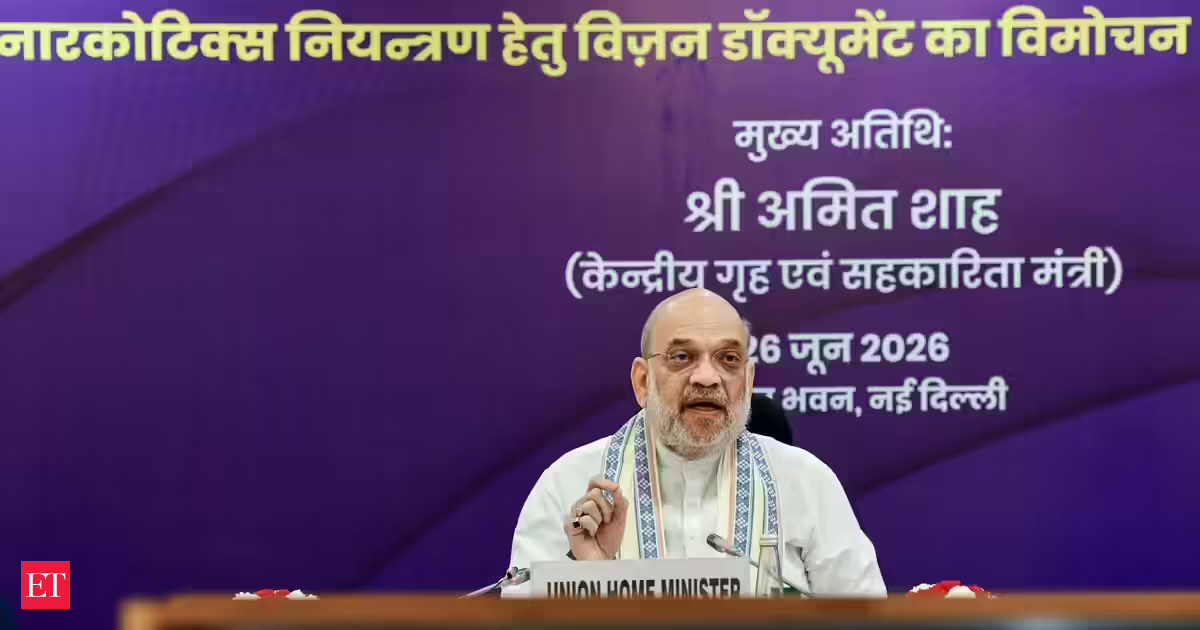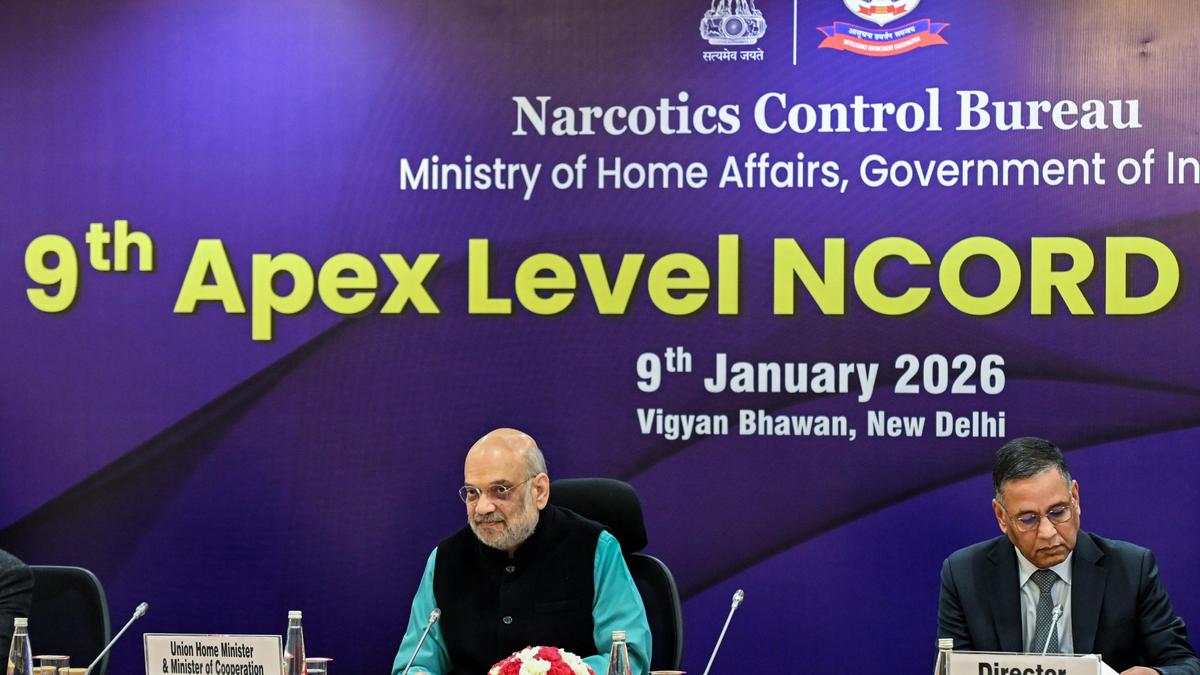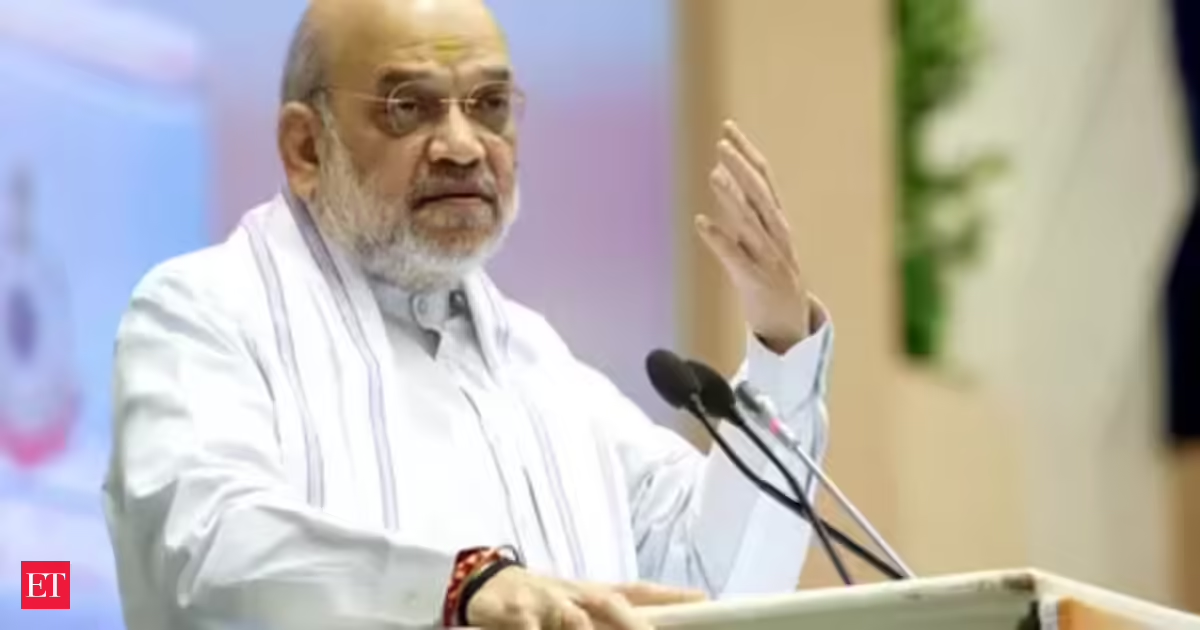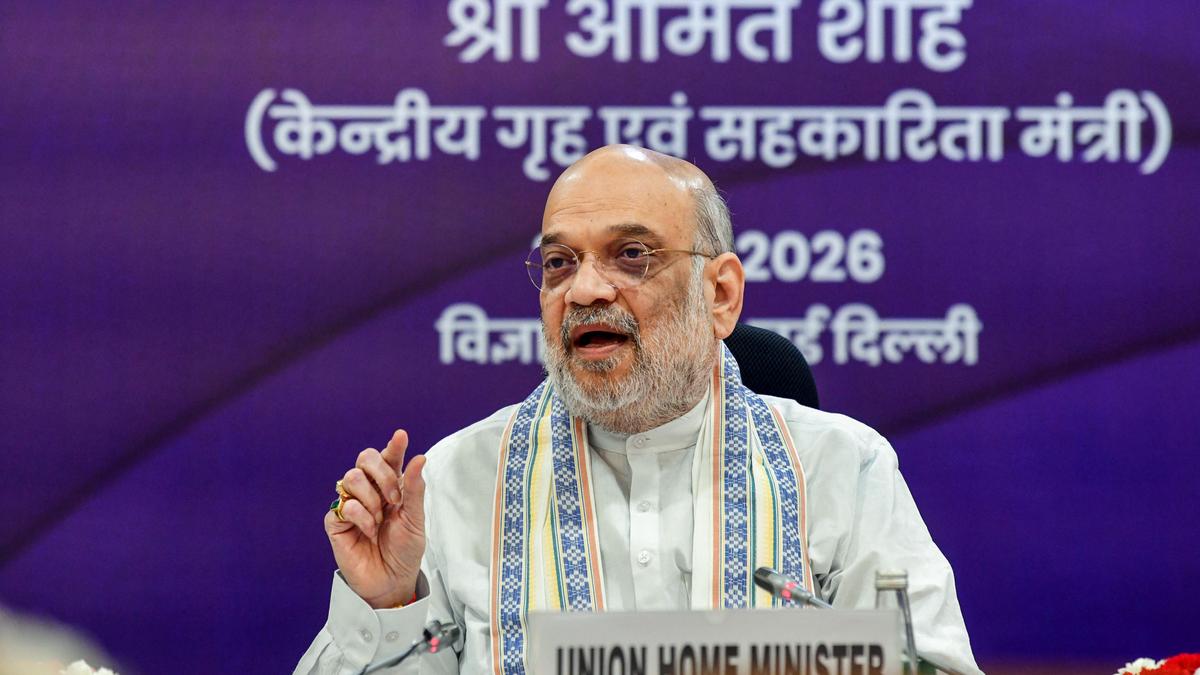
Union home minister Amit Shah on Friday released the government’s Vision Document on Drug Control (2026-2029) and the Narcotics Control Bureau Annual Report-2025, while unveiling a three-year national roadmap to dismantle drug trafficking networks, saying the Centre would target the entire narcotics ecosystem so decisively that “it will not be able to recover for decades.”Shah unveils 3-yr plan to end drug tradeThe plan, involving more than 40 ministries and departments, aims to target the entire narcotics ecosystem through coordinated enforcement, intelligence, prevention and rehabilitation. Shah also said the Centre is reviewing loopholes in the Narcotic Drugs and Psychotropic Substances (NDPS) Act and re-examining the scheduling of precursor chemicals and psychotropic substances used to manufacture drugs.Chairing the 10th apex-level meeting of the Narco-Coordination Centre (NCORD), Shah said the government has set a target of making India drug-free by 2047 and described the next three years as “crucial.”He said the roadmap is built around four pillars — enforcement, intelligence and operations; precursor and synthetic drug control; demand reduction and rehabilitation; and capacity building and coordination.“Today our country stands at a critical turning point in the fight against narcotics, where the next three years will decide whether the drug trade will defeat us or we will defeat it. For the future of the country, we must win this battle… Under the leadership of PM Narendra Modi, we will strike the entire drug trade ecosystem so decisively over the next three years that it will not be able to recover for decades,” Shah said.“Our aim is to conduct targeted intelligence-led action against the entire network and destroy it completely. We have to adopt a strategy to stop drugs at the production stage itself,” he added.The Centre’s strategy shifts the focus from arresting individual couriers to dismantling entire trafficking networks. It aims to take down 100 major interstate and transnational drug cartels by following financial trails and attaching illicit assets.The plan also focuses on curbing synthetic drugs, reviewing the list of chemicals and substances used in illegal drug manufacturing, strengthening border surveillance through AI-enabled systems and anti-drone technology, tightening checks on diversion of pharmaceutical drugs, expanding de-addiction and rehabilitation services, and involving more than 40 ministries, state governments, educational institutions and civil society in a nationwide anti-drug campaign, according to the home minister.It also calls for a nationwide drive against methamphetamine and mephedrone, including action against illegal laboratories.Shah said the Department of Revenue was working to plug loopholes in the NDPS Act that drug syndicates exploit and sought suggestions from states. He also said state governments should make financial investigations mandatory in all major NDPS cases and strengthen anti-narcotics task forces.“Our fight has been very clearly articulated under four pillars, and sub-pillars under each pillar have also been clearly defined. Targets have been set for each sub-pillar along with the timelines to achieve them. We will review this plan after one year, redefine it as needed, and then move forward with renewed strength for the final two years of this battle,” he said.The home minister also asked every state to establish a dedicated unit in the office of the director general of police to coordinate with the Centre in tracing and bringing back fugitives operating drug cartels from abroad.“I also urge all state governments that those drug traffickers and gangsters from your states who are hiding abroad should be targeted by issuing Red Corner Notices, utilising the CBI and other agencies to initiate the process of bringing them back. There should be a separate mechanism in every DGP office within the state tasked to identify such fugitives running cartels from outside, and bring them back,” Shah said.He added that while the campaign aims to destroy trafficking networks through intelligence-led enforcement, reducing demand would require public awareness, education and rehabilitation.“The Ministry of Social Justice and Empowerment must expand the Nasha Mukt Bharat campaign, public awareness drives, community participation, and treatment & rehabilitation services. Only then can we successfully reduce demand. We must approach affected youth with a sympathetic approach. The Health Ministry must ensure strict monitoring of pharmaceutical diversion and online pharmacies. Under the Ministry of Education, the Departments of School Education and Higher Education must adopt the Drug-Free Campus framework. Along with this, we must ensure awareness among parents and teachers by taking this concept forward with everyone’s consensus,” Shah said.EOM
Shah unveils 3-yr plan to end drug trade
Amit Shah launched a drug control plan aiming for a drug-free India by 2047, targeting trafficking networks through coordinated enforcement and rehabilitation efforts. | India News
716 words~3 min read