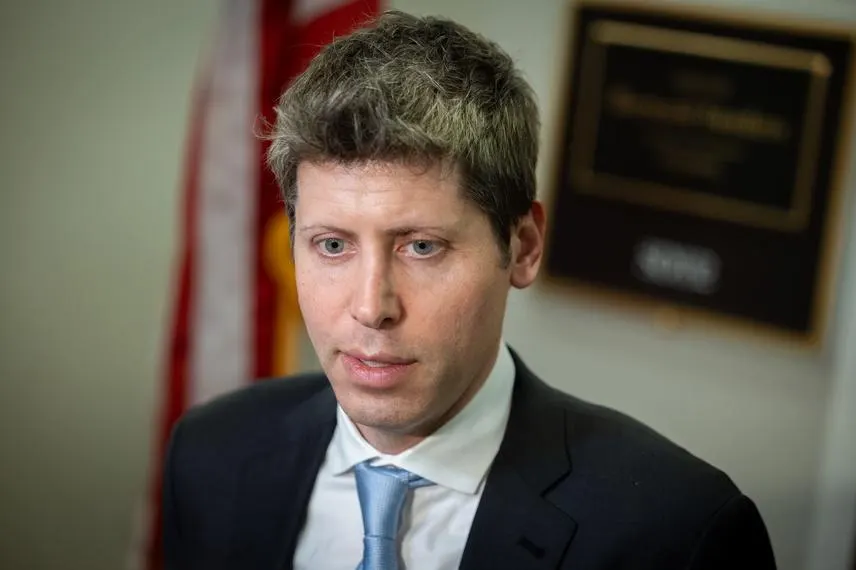
ToplineOpenAI said Friday it is rolling out three new AI models in the company’s GPT-5.6 series on Friday—but the advanced technology is only available to select “trusted partners” at the request of the U.S. government ahead of a larger rollout in the coming weeks.OpenAI's GPT-5.6 technology is only available to select users approved by the U.S. government. (Photo by Nathan Posner/Anadolu via Getty Images)Anadolu via Getty ImagesKey FactsOpenAI on Friday announced the rollout of Sol, the flagship GPT-5.6 model, alongside Terra, a model for daily work, and Luna, a more affordable version.The company said a broader rollout will follow in the coming weeks, but said it is starting with a “limited preview for a small group of trusted partners” approved by the U.S. government.Multiple news outlets reported Thursday the Trump administration had requested OpenAI limit the release of its GPT-5.6 model to government-approved users due to concerns about the models’ advanced capabilities. OpenAI said in its Friday announcement that government approval for its AI models should not be the “long-term default,” saying it “keeps the best tools from users, developers, enterprises, cyber defenders, and global partners who need them.”The GPT-5.6 rollout comes weeks after President Donald Trump signed an executive order that asked AI companies releasing advanced models to first share the technology with the government to assess their capabilities and select partners who can access the technology before a wider release. What Do We Know About The New OpenAI Models?OpenAI described Sol as its “strongest model yet.” The company said the model shows advanced capabilities in “coding, biology, and cybersecurity,” and it claimed the Sol model outperformed Anthropic’s powerful Mythos technology on Terminal‑Bench 2.1, an AI benchmark that measures how well a model can complete complex tasks. The company also said the new models were built with its “most robust safeguards to date,” also claiming Sol is its “most capable model yet for cybersecurity.”How Has The Trump Administration Increasingly Regulated AI?Weeks after signing the executive order earlier this month requesting early access to powerful AI models, the Trump administration reportedly directed Anthropic to disable access for all foreign nationals to its powerful Mythos models, citing national security concerns. In response, Anthropic disabled access to those models for all customers, saying in a post on X the move was necessary to ensure full compliance. The New York Times reported last week some Anthropic employees and cybersecurity experts believe the Trump administration is unfairly targeting the company. Anthropic and the Trump administration faced off earlier this year when the company’s CEO Dario Amodei objected to the Defense Department using Anthropic technology for mass domestic surveillance and to power autonomous weapons. Secretary of Defense Pete Hegseth, in response, designated the company a supply chain risk to national security, and in March, Anthropic sued the administration alleging it illegally retaliated against the company for its position on AI safety. what to watch forOpenAI is preparing to go public, but reports earlier this week indicate it may delay its initial public offering until 2027. OpenAI is one of a trio of companies—alongside SpaceX, which went public earlier this month, and Anthropic, which is also planning to go public—planning a blockbuster IPO. The New York Times reported SpaceX’s stock price, which has slid since its debut on the public market, was a factor that influenced OpenAI to delay its IPO plans. further readingTrump Administration Asks OpenAI to Stagger Release of New Model Over Security Concerns (The Information)Anthropic Employees Accuse Trump Administration of Targeting Them (The New York Times)
Only Users Approved By U.S. Can Access OpenAI’s New ChatGPT Model
OpenAI said the GPT-5.6 technology is first rolling out to select “trusted partners” at the request of the U.S. government.
583 words~3 min read