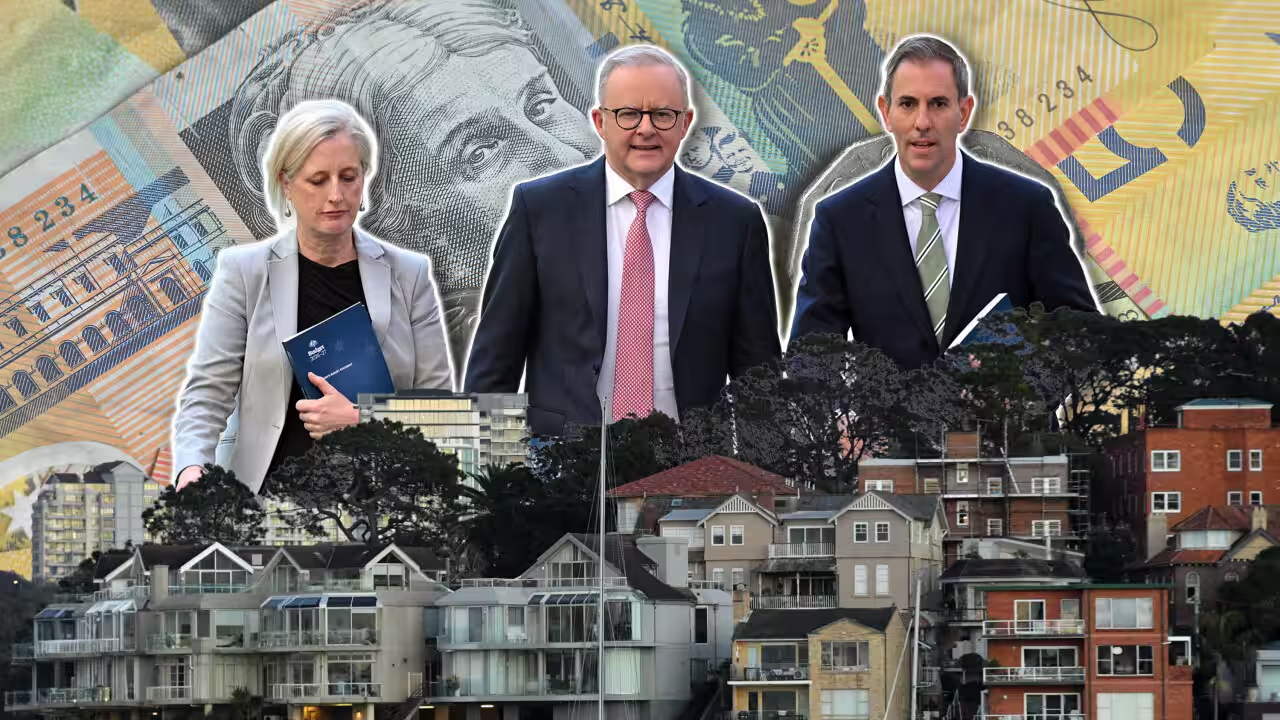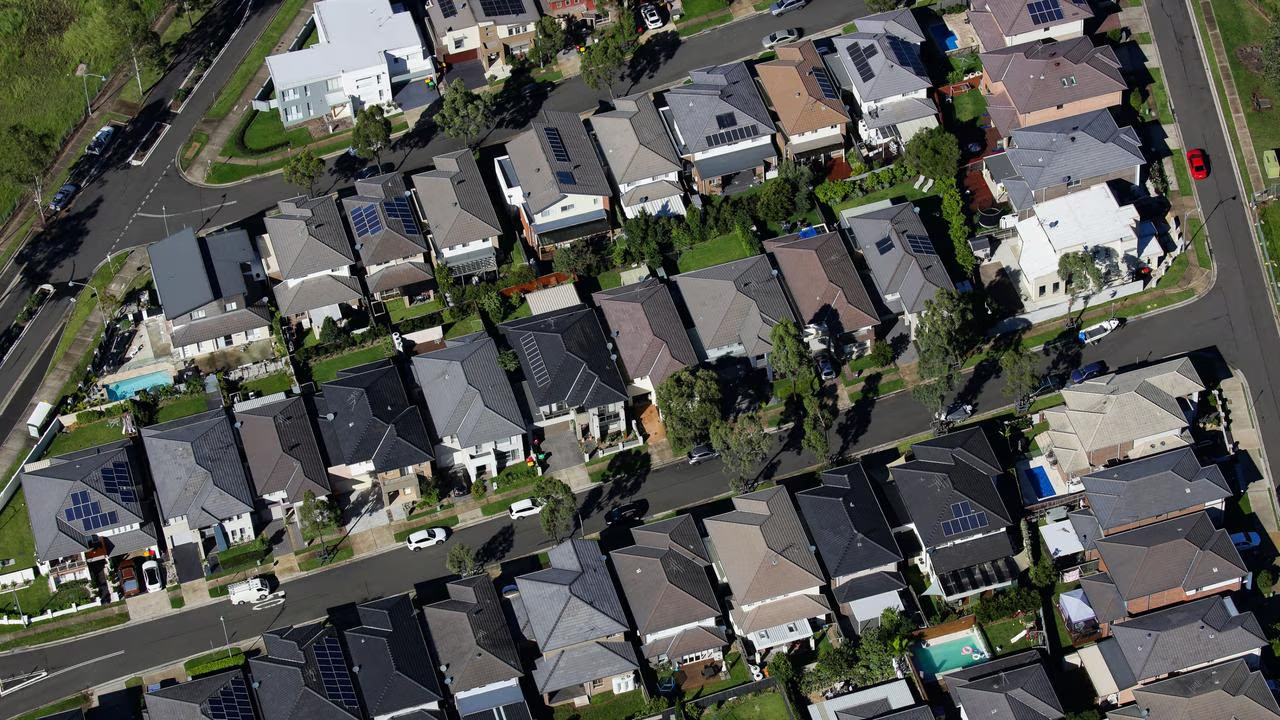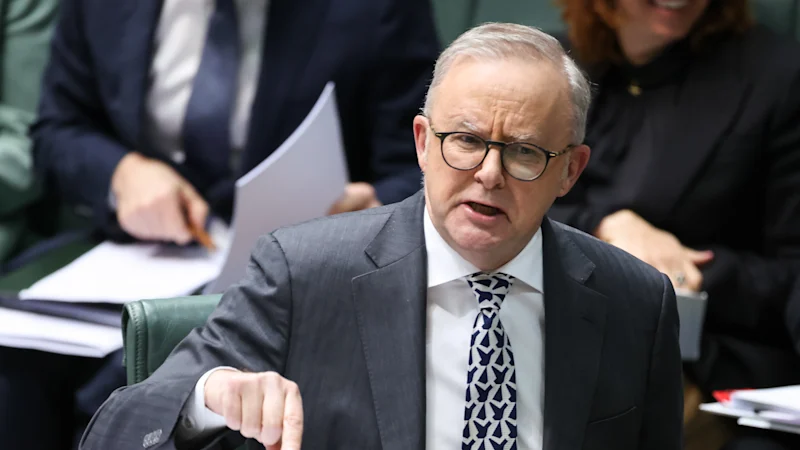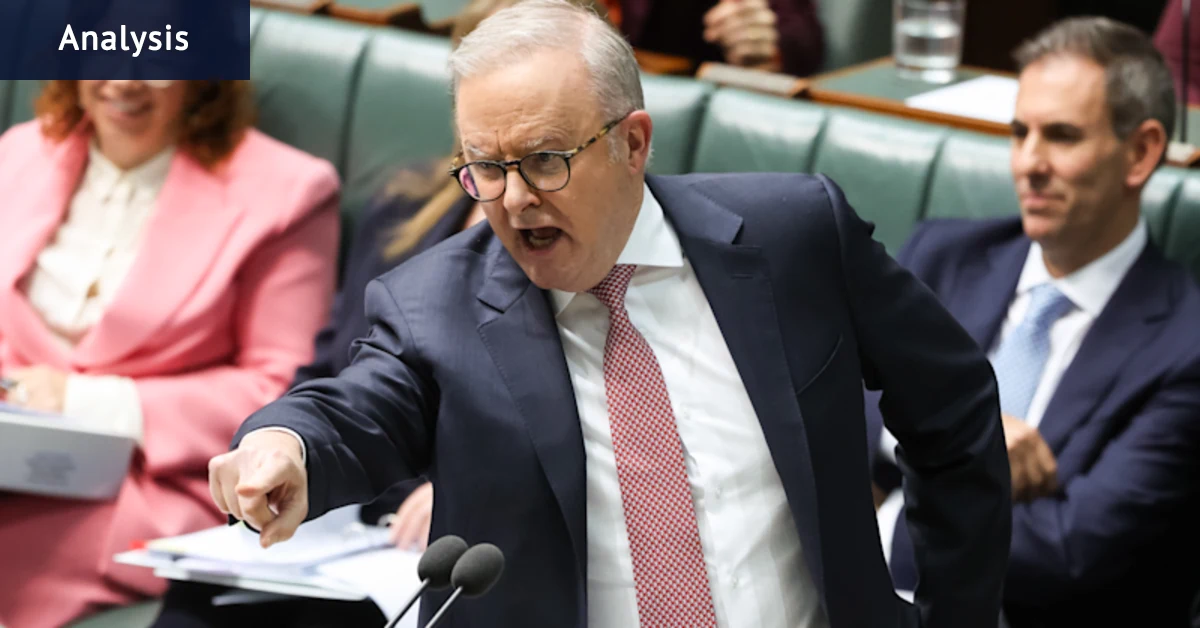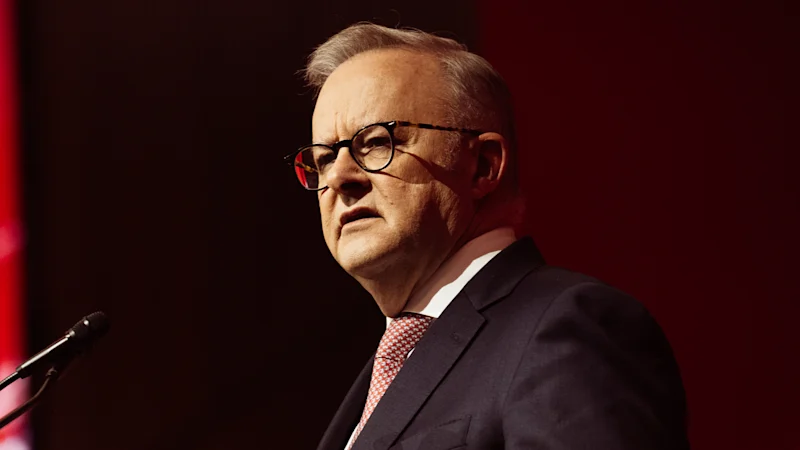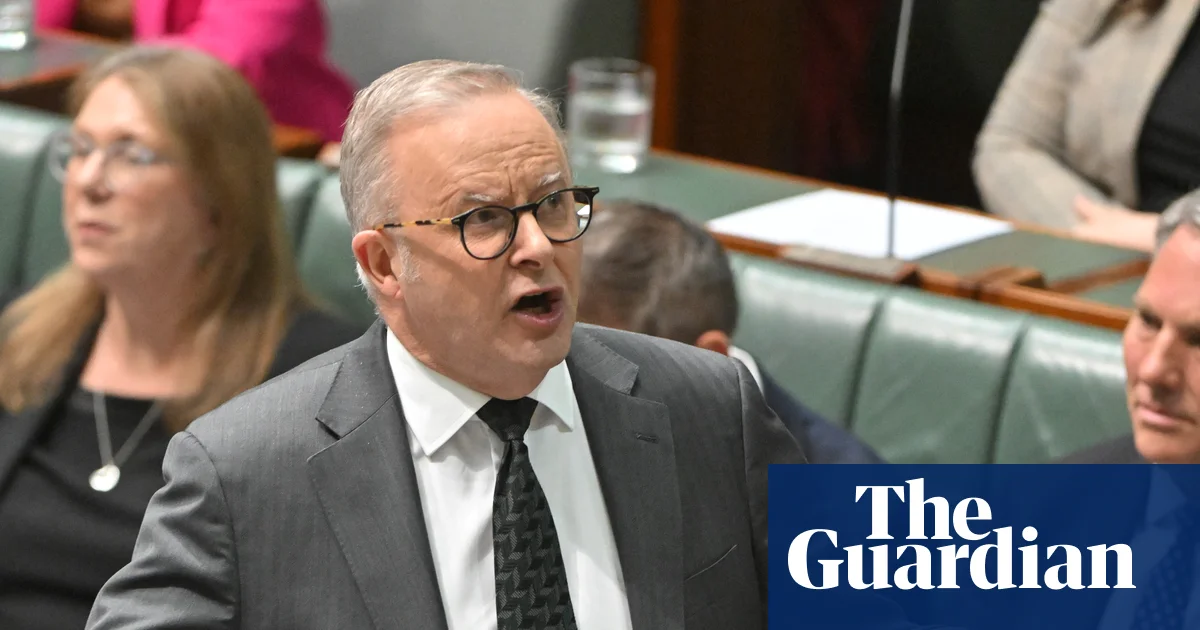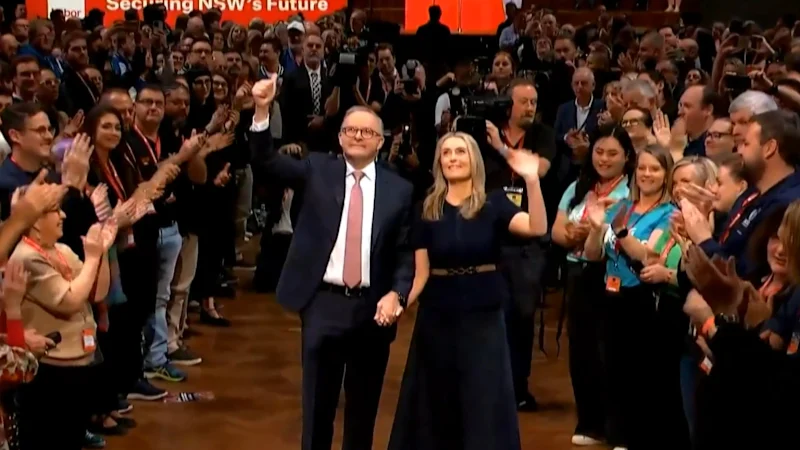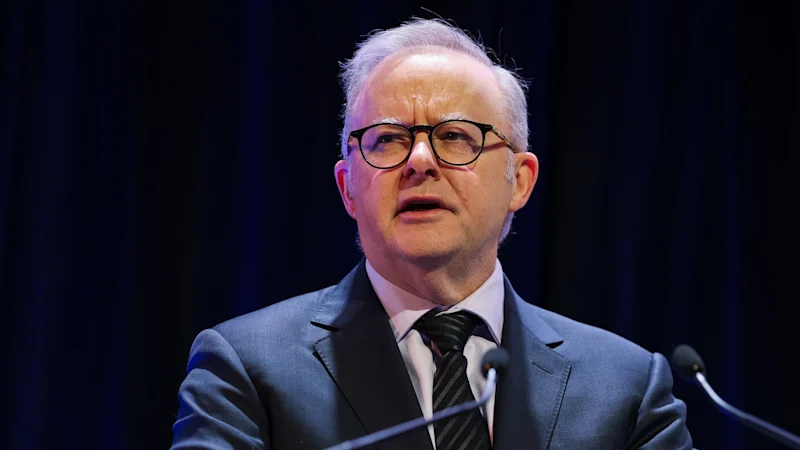
It was not thunderous, but it was clear.Labor’s largest-ever caucus gave Anthony Albanese a round of applause on Tuesday when he told the assorted MPs and senators that the budget’s key tax measures would pass the parliament.Anthony Albanese needs to sell his tax policy.Stephen KiprillisAfter Labor struck a deal with the Greens, the Thursday afternoon passage of reforms to negative gearing, capital gains tax and the personal income tax system was assured.Albanese, who thanked his parliamentary team for backing the changes in their electorates, drew on Paul Keating to signal Labor could not sit on this particular parliamentary victory.Addressing the 1992 NSW state Labor conference, Keating told the assembled delegates that reform was central to the party’s existence. “The Labor Party is a bit like a bicycle; if you stop pedalling, it falls over,” he said.Albanese uttered the same words while noting that the government had to keep up the “momentum for positive change” as it sought to balance the income earned by work and that generated from assets.When it comes to assets, there is nothing more important to most Australians than property. The Australian Bureau of Statistics estimates Australians have more than $19 trillion in assets and that the nation’s homes are worth $13 trillion.That’s just the value of our bricks and mortar and land.AMP deputy chief economist Diana Mousina estimates that residential housing, and everything connected to it, accounts for about 13 per cent of national economic activity. It’s larger than non-residential construction (about 12 per cent) and well above mining (10 per cent).So a slump in auction clearance rates, and a drop in Sydney and Melbourne property values (with signs of a slowdown in other major capitals), has prompted public hand-wringing and outright hostility towards the government’s tax changes.At the heart of the government’s reforms – which are clearly a breach of the prime minister’s pre-election promises not to touch property taxation – is the state of the nation’s housing market.As Albanese said on Thursday: “No one is arguing the housing system [is] working at the moment.”A truly alarming graph produced by Mousina highlights the prime minister’s argument.She has calculated how long it takes a person on the average income to raise a 20 per cent deposit for a median-priced house. In 1983, it took 3.5 years. By 2000, it had climbed to 5.7 years.Today, it is 11 years. And if that rise continues at the same rate, by the mid-2050s, it will take 24 years to raise that 20 per cent deposit on a median-priced house, which would cost $6.2 million.The many ups, and few downs, in the time needed to save for a deposit coincide with the ebbs and flows of the nation’s property market.But the trend is obvious. Australian housing, which is among the most expensive in the world, has its value has grown at one of the fastest rates on the planet since the turn of the century.Comparable property markets in Britain, Canada and New Zealand have not been close to what’s transpired in Australia.An important note to the graph is that while New Zealand property prices have climbed more than those in Australia, that’s not been the case since 2021.Changes to planning rules in Auckland and tax reforms, which effectively ended the Kiwi version of negative gearing, have contributed to a 13 per cent fall in prices over the past four years.During that same period, Australian property prices have surged by almost 50 per cent. The next largest increase has been in the US, where they have lifted by 40 per cent.While the issues driving house prices – everything from population growth to low interest rates – are numerous and interrelated, economists and analysts have long noted the way negative gearing and the 50 per cent CGT concession introduced by the Howard government in 1999 have been a factor.Independent economist Saul Eslake, a long-time critic of the current tax settings, believes the changes will lead to cheaper housing, even if the government is reluctant to admit prices may fall.Sydney’s beachfront properties remain out of reach of first home buyersWolter Peeters“I think the main impact of the budget measures on the property market will be to reduce the demand from investors for established housing,” Eslake said.“Combined with the impact of the three rate rises we’ve seen already this year, and with a fourth still on the table, that should result in cheaper housing – that is, lower prices.”But could it go too far? Ever-increasing house prices have been accepted by both sides of politics as an electoral positive. As Howard once said, no one had ever complained to him that the value of their home was increasing.Julian Coppini, chief executive of Oliver Hume, the nation’s largest privately owned project management company, said the changes had already delivered a hit to sales of between 10 and 15 per cent.Coppini said the entire market, covering first home buyers to renters to owner-occupiers to investors, was already cautious and anxious because of the Reserve Bank’s three interest rate hikes.Then came the negative gearing and CGT reforms.The addition of a ban on self-managed superannuation funds borrowing for residential property – a long-standing plea by financial regulators that was added to win over Greens support for the tax package – was just a “double whammy”.“I think they’ve just picked the worst possible time to do this, particularly given what’s been going on here in Victoria,” Coppini said.Auction clearance rates have nosedived over recent weeks. Real estate agents cite interest rate rises and the government’s tax changes as key issues.Sitthixay DitthavongHe believes Victoria, where property prices in real terms have been going backwards for the past five years, is in recession.Other centres, particularly Perth (where the median house price has jumped by 87 per cent since early 2021) and Brisbane (up 92 per cent), have undergone extraordinary changes in property values over recent years.Coppini said those cities were likely to experience large corrections, but he has pushed back expectations on the Melbourne market.“We had been expecting a turnaround in Melbourne towards the end of this year,” he said. “Now we’ve pushed that back to late 2027.”‘I think they’ve just picked the worst possible time to do this, particularly given what’s been going on here in Victoria.’Julian Coppini, chief executive of project management company Oliver HumeSome of the commentary about the property market suggests that it has never gone through ups and downs. Housing Minister Clare O’Neil came under criticism in parliament after saying on radio she believed the property market was undergoing a correction, a term that when applied to share markets usually means a 10 per cent fall.A 10 per cent fall in Perth house prices would take them back to where they were in December.Falling property prices can cause economic damage. But short-term corrections that don’t leave an economic impact are much more common. Since 2000, there have been four property price corrections, each averaging about 5 per cent. The largest occurred in 2008-09, due to the global financial crisis, and in 2022-23, when the Reserve Bank started lifting interest rates.AMP deputy chief economist Diana Mousina says a price correction will make homes more affordable.Alex EllinghausenThere have been some extreme price movements in isolated markets, which don’t spread to the rest of the nation. In 2013, the median price of a house in the WA Pilbara town of Port Hedland reached $906,000 – well above that of Sydney at the time.Five years later, after the mining construction boom had turned to a bust, the median price in the town of 16,000 was a touch over $200,000. It’s since recovered to about $850,000.Mousina is not convinced the changes will precipitate the end of days for Australian property, saying it could even make the Reserve Bank’s job a little easier.Business Council of Australia chief executive Bran Black.Alex Ellinghausen“The expected slowing in home prices is not enough in itself to generate a serious economic downturn in Australia,” she said. “Lower wealth growth will limit household spending, but this is also helpful to get inflation to be a bit lower.“Given the 50 per cent-plus growth in home prices that has occurred in Australia in less than five years, a short-term adjustment with lower home prices is needed to rebalance affordability.”But critics said the package, particularly last-minute tweaks such as the change to self-managed super funds, would deliver long-term economic pain.“The test for any tax reform is whether it increases investment, grows the economic pie and boosts living standards. This legislation fails that test,” Business Council of Australia chief executive Bran Black said.Criticism of the overall package has been narrowly cast. There’s been almost no mention of the tax cuts contained in the budget, including those aimed at workers (a $1000 standard tax deduction will simplify the tax system for 6 million people) and at business (loss carry-back for firms with a turnover of less than $1 billon).Also ignored has been the government’s other housing policies that date back to Treasurer Jim Chalmers’ first budget in 2022. That includes, most recently, $2 billion in grants aimed at local councils and state governments to build the infrastructure necessary for new homes.Albanese said that when Keating introduced the fringe benefits tax in 1985, it prompted a long-term vituperative campaign from the hospitality sector saying restaurants would shut as businessmen ended company-paid “liquid lunches”.The fringe benefits tax remains.But Albanese failed to say that Keating was forced to abandon another tax change he put in place in 1985 – the end of negative gearing. A concerted campaign led by Sydney’s property industry (and frightened Labor MPs) forced a rare Keating policy retreat.Whether Albanese and Chalmers will be forced into a similar retreat, or whether their changes will become part of the nation’s tax architecture, is a debate that will run all the way to the next federal election.Cut through the noise of federal politics with news, views and expert analysis. Subscribers can sign up to our weekly Inside Politics newsletter.
The caucus cheered Albanese’s tax changes – but will voters?
The biggest reform package in a generation was made law this week. Now the battle for the prime minister is to see it work on the property market.
1,654 words~8 min read