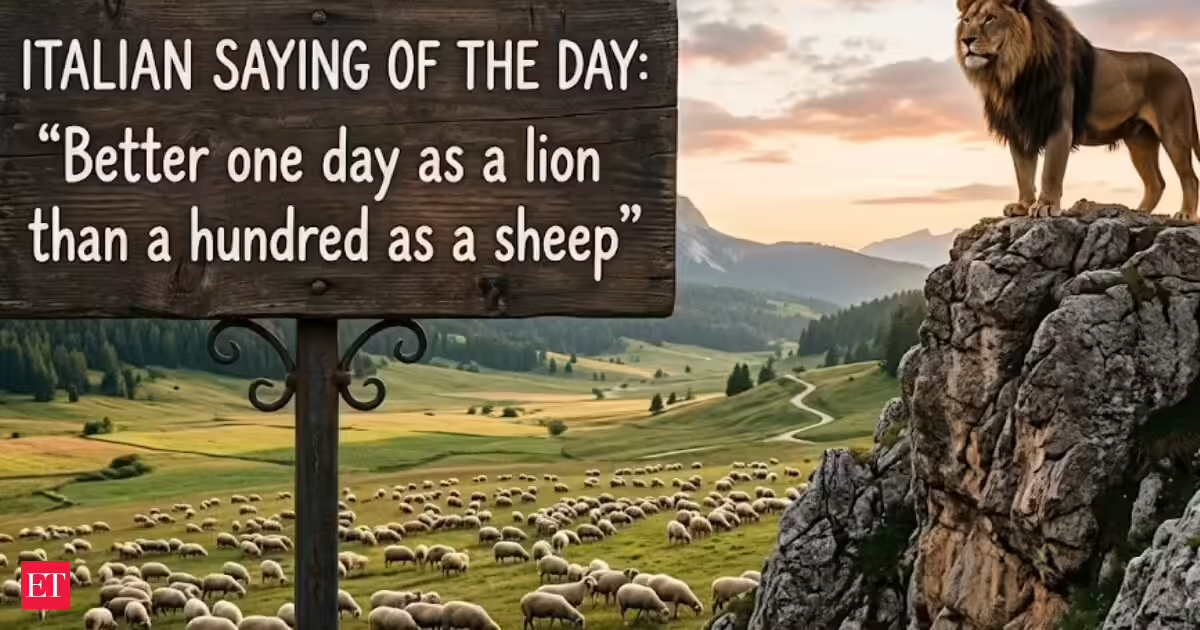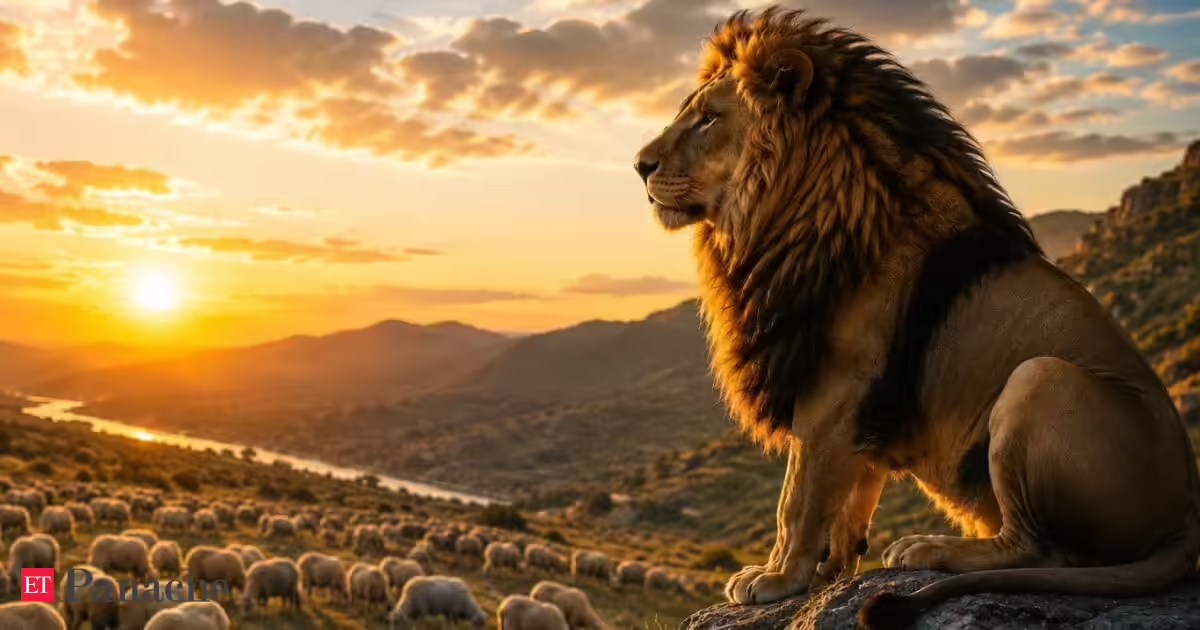
Every culture has sayings that survive for generations because they continue to reflect the way people think and live. Italian proverbs are known for combining simple images with practical wisdom, and this one is a good example. At first glance, it appears to praise bravery over fear. But when read completely, the proverb goes beyond the usual comparison between a lion and a sheep. It suggests that courage is not about being aggressive all the time. Instead, it is about staying calm, acting only when there is a real need, and not allowing fear to control everyday life.The proverb says, "It is better to live one day as a lion than a hundred years as a sheep; but remember that the lion hunts only when hungry, while the sheep spends its entire life trembling at a mere shadow." The opening line encourages people to choose courage instead of spending their lives being controlled by fear. It reminds readers that a short life lived with confidence can be more meaningful than a long life spent avoiding every challenge. At the same time, the second half changes the message in an important way. It points out that the lion does not waste energy looking for unnecessary fights. It acts only when there is a real reason.That final comparison gives the proverb a much deeper meaning. The sheep is not shown as weak because it lacks strength, but because it remains frightened even when there is no actual danger. Many people experience something similar in everyday life. They worry about situations that may never happen, imagine the worst possible outcome, or hesitate because of problems that exist only in their minds. The proverb suggests that real courage is not loud or reckless. It is steady, thoughtful and able to separate genuine threats from imagined ones.Looking beyond the lion and the sheepThe images used in this proverb are easy to understand. Across many cultures, the lion has long represented confidence, leadership and strength. The sheep, meanwhile, is often used to symbolize caution, obedience and vulnerability.But this proverb is careful not to celebrate blind bravery. That is where it becomes different from many other sayings built around similar ideas. The lion is described as a creature that hunts only when it is hungry. It does not attack everything around it simply because it is powerful. It conserves its energy and reacts only when necessary.The sheep, on the other hand, is portrayed as spending its whole life frightened by even a shadow. A shadow cannot actually cause harm, yet it still creates fear. This image reflects the way anxiety can shape human behaviour. Sometimes people spend more time worrying about what might happen than dealing with what is actually happening.A lesson about fear instead of forceMany people remember only the first half of the proverb because it is dramatic and easy to quote. However, the second half changes the entire message.Without that ending, the saying could easily be understood as encouraging people to be bold at any cost. But the complete version argues for something much more balanced. It reminds people that courage should be guided by wisdom.Being fearless does not mean creating unnecessary conflict. It does not mean proving strength at every opportunity. Instead, it means knowing when to take action and when there is no reason to react at all.This idea is relevant in everyday life. At work, people often worry about making mistakes before they even begin a project. Students may fear failing an exam long before the test arrives. Others delay important conversations because they imagine negative outcomes that may never happen.The proverb suggests that much of this fear comes from imagination rather than reality. Like the sheep frightened by a shadow, people sometimes become trapped by possibilities instead of facts.Why the proverb still feels relevant todayModern life provides many reasons for people to feel anxious. News updates, social media discussions, workplace competition and financial concerns can create a constant sense of pressure. In such an environment, it becomes easy to overthink situations and expect the worst.The proverb offers a simple reminder that not every concern deserves the same level of attention. Some situations require action. Others simply require patience.People who remain calm are often better able to make sensible decisions than those who react immediately to every challenge. Confidence does not always appear dramatic. In many cases, it looks like patience, careful thinking and self-control.That is why the image of the lion hunting only when hungry is important. Strength is shown through restraint rather than constant action.The history behind the sayingThe first part of the proverb, "Meglio vivere un giorno da leone che cento anni da pecora," has a long and complicated history.It is widely believed that the phrase first appeared as graffiti written by an anonymous Italian soldier during the First World War. Over time, it became a well-known expression in Italy.Years later, the line was heavily used by Benito Mussolini during the Fascist period, which gave it a political association beyond its original appearance. Because of that history, the shorter version of the proverb is sometimes discussed in historical and political contexts rather than simply as a traditional saying.The longer version, which adds the comparison between the lion hunting only when hungry and the sheep fearing even a shadow, is considered a much more recent anonymous addition. It is commonly shared in modern cultural posts and online discussions. This expanded version shifts the focus away from political symbolism and places greater emphasis on psychology, emotional balance and the nature of fear.
Proverb of the day from Italy: 'It is better to live one day as a lion than a hundred years as a sheep; but remember that the lion...' Why true courage means staying calm, not always being fearless
Proverb of the day from Italy: "It is better to live one day as a lion than a hundred years as a sheep; but remember that the lion hunts only when hungry, while the sheep spends its entire life trembling at a mere shadow." This Italian proverb goes beyond encouraging bravery. While its famous first half praises courage over a life ruled by fear, the lesser-known ending adds a deeper lesson: true strength lies in staying calm, acting only when necessary, and not letting imagined fears control your life.
922 words~4 min read