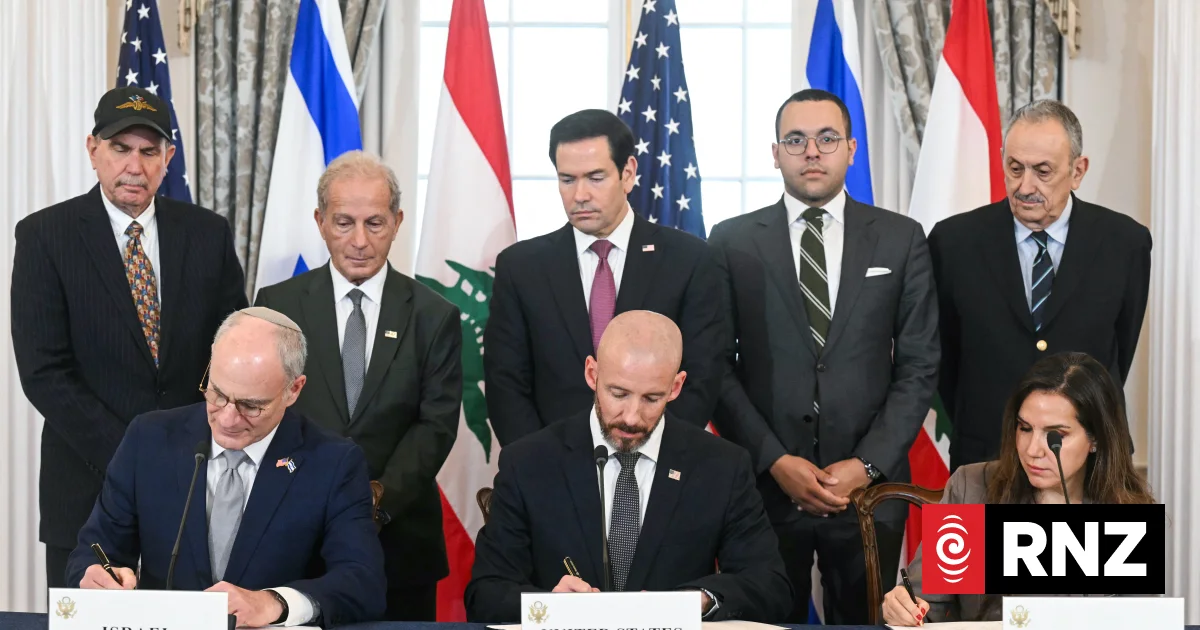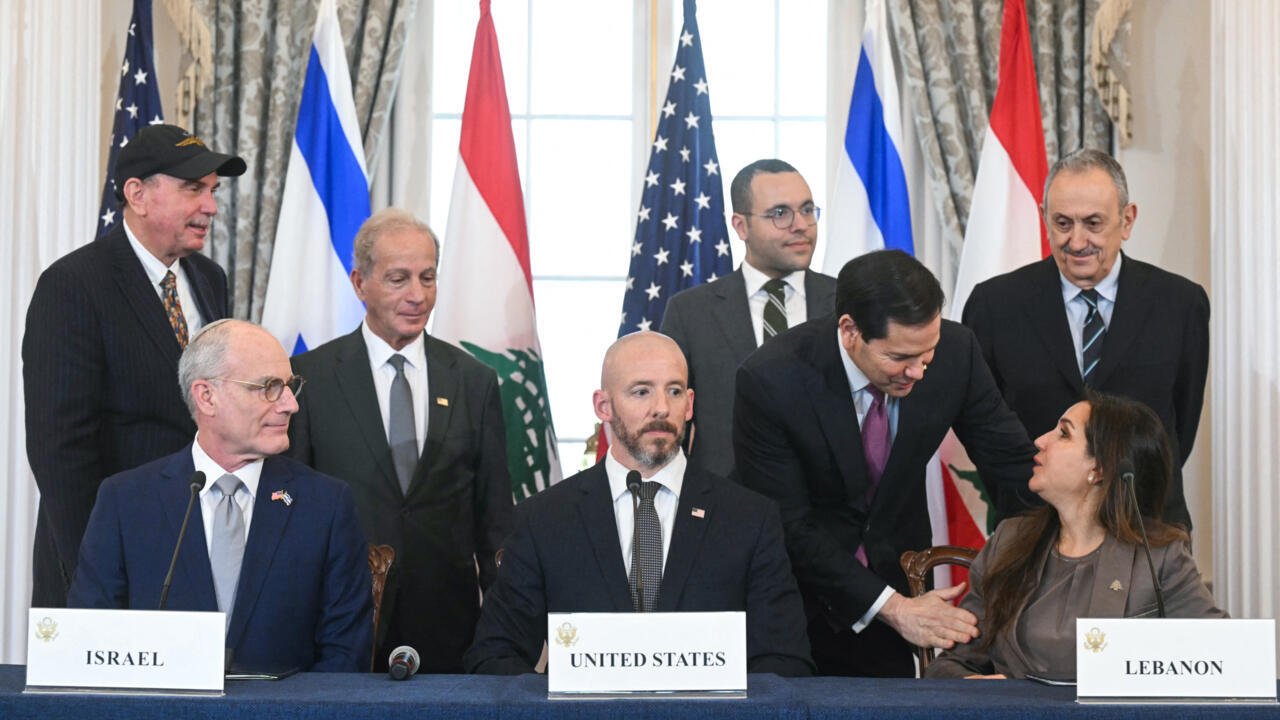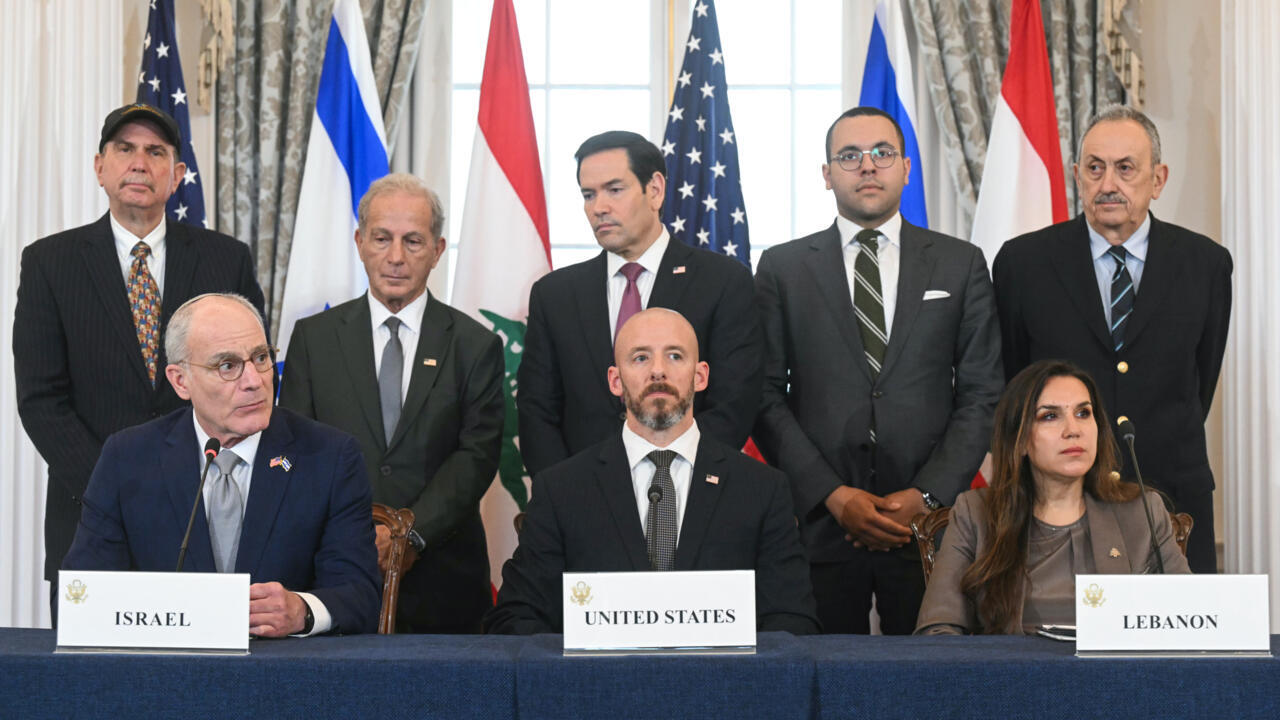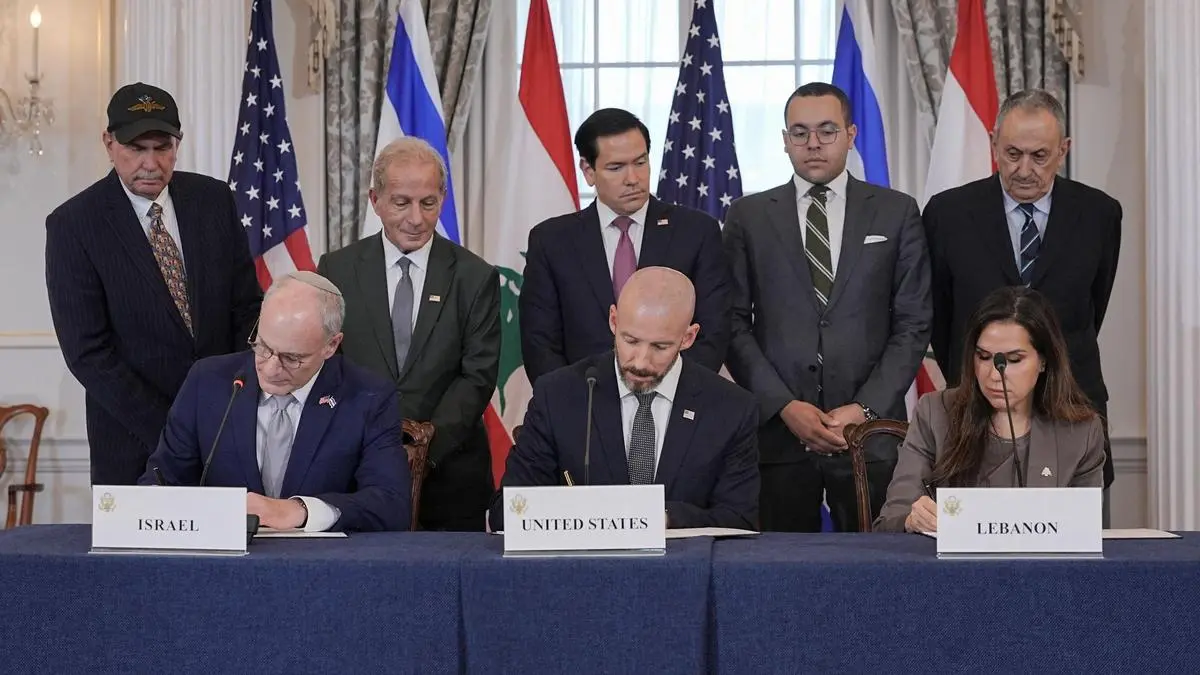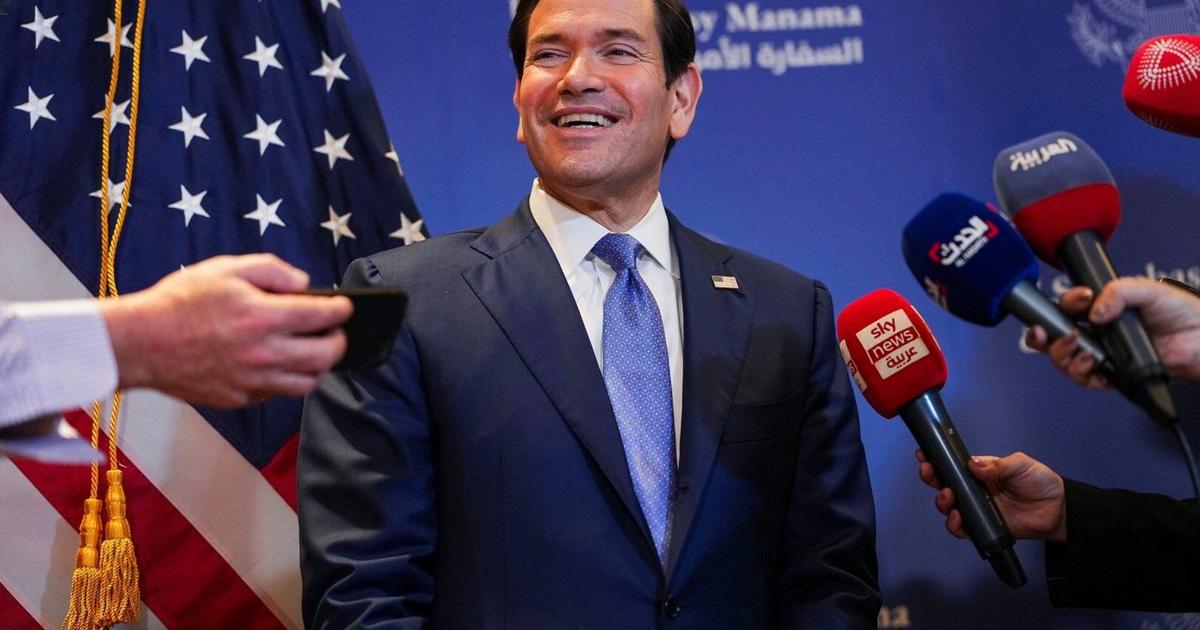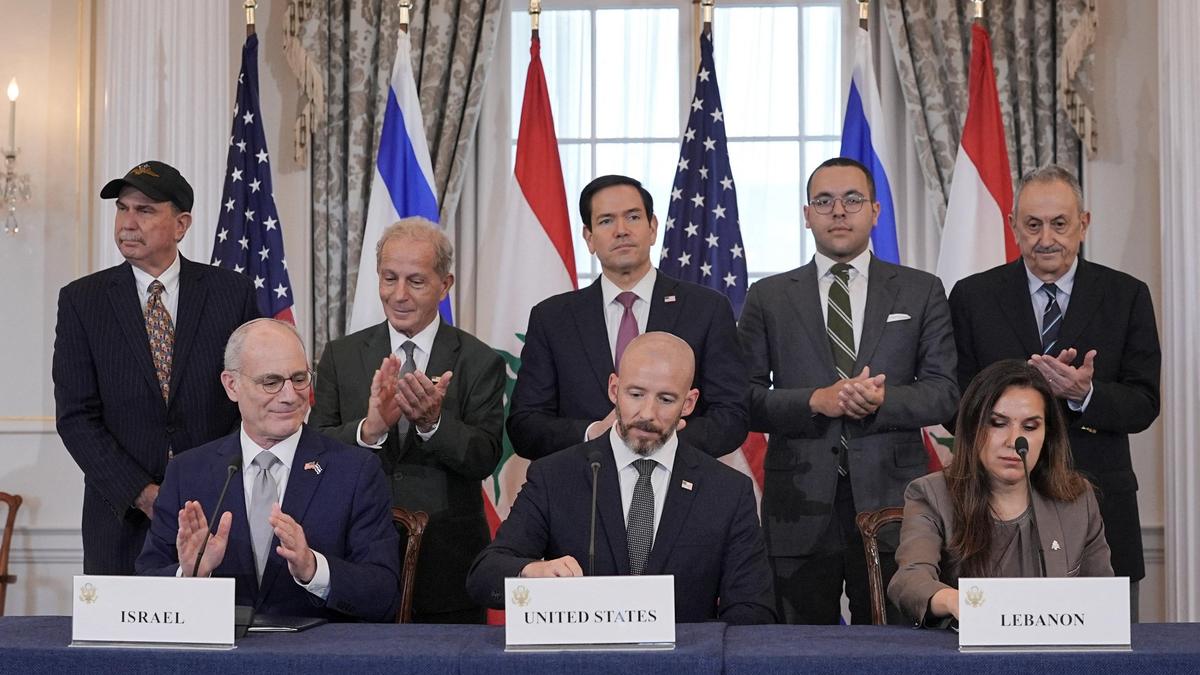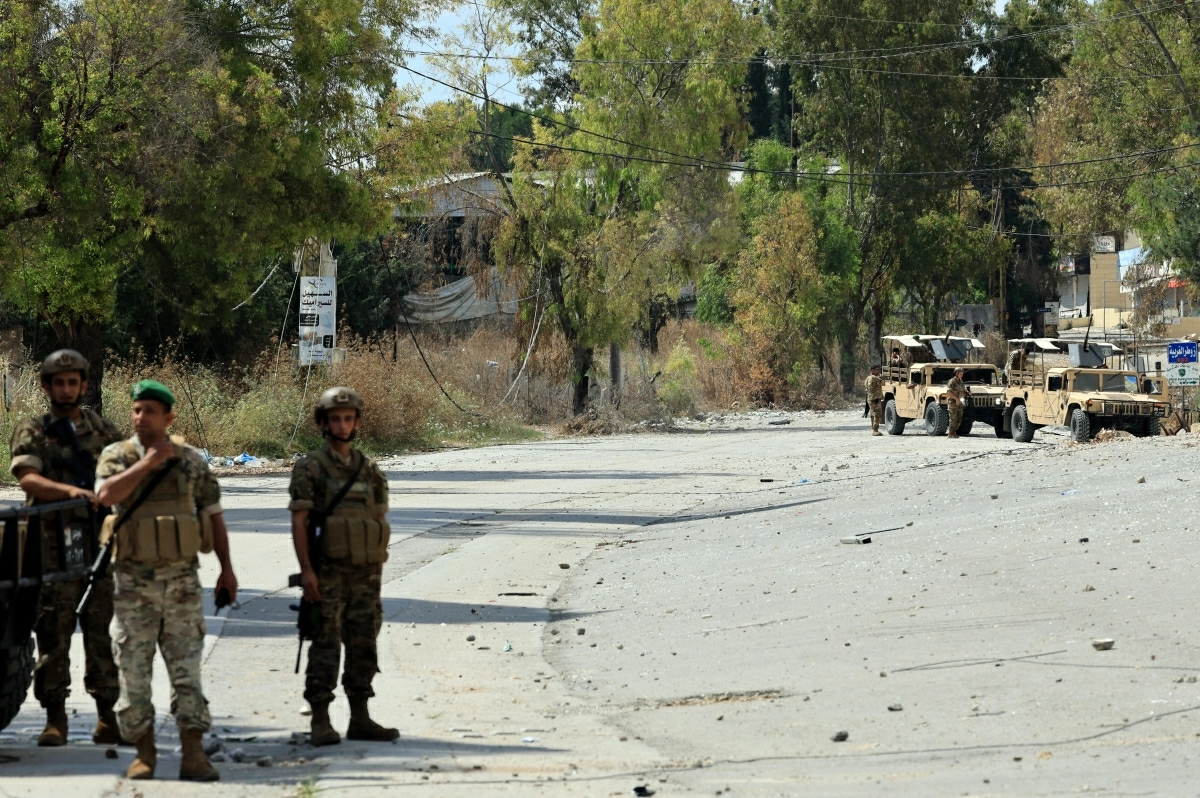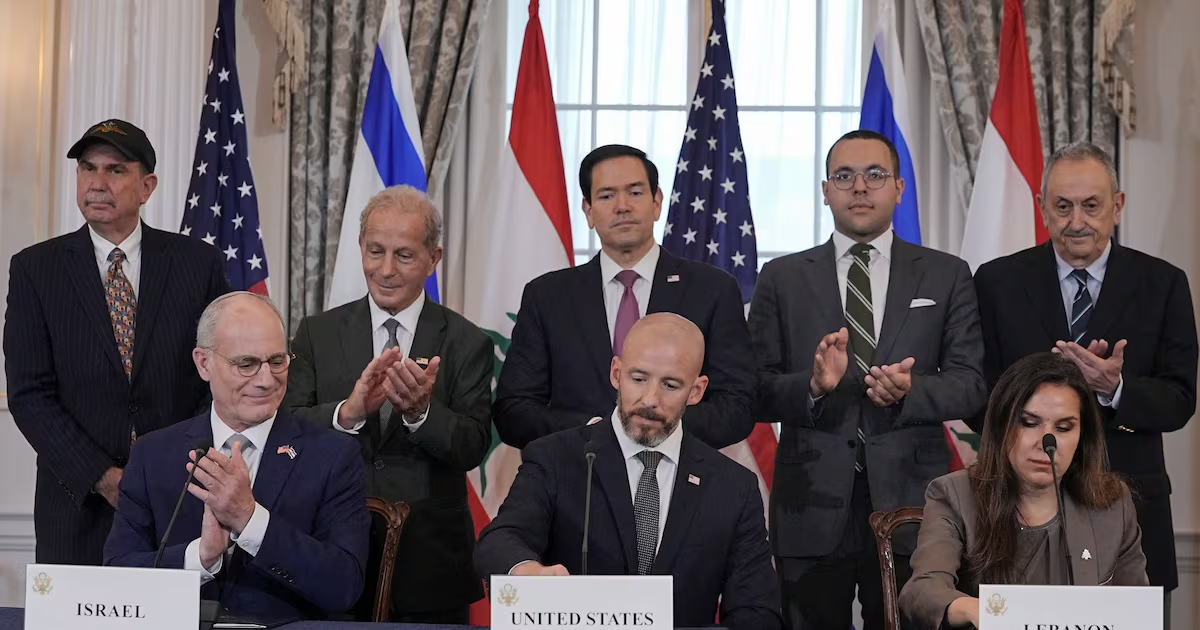
Israel and Lebanon signed a framework peace agreement on Friday after several days of talks in Washington."Today is the first step. This first step sometimes is the hardest one, but it's an important one, and the one we've taken together," US Secretary of State Marco Rubio said.Lebanon's ambassador to the US Nada Hamadeh said the meeting was "long and difficult" but that it would ultimately lead to restoring her country's sovereignty, territorial integrity, and "securing a permanent and final cessation of hostilities, enabling our people to go back to our land."Israel's ambassador to Washington Yechiel Leiter described the agreement as "performance-based", and said the "train has been put back on the tracks" towards peace.The Israeli Prime Minister's Office said in a statement that Israel will maintain its security zone within the borders of the Yellow Line in Lebanon until Hezbollah and other groups are disarmed. It added that the Israeli military would continue to "eliminate threats of any kind" within the security zone.The statement said that Israel and Lebanon had agreed on two areas near the Yellow Line where there would be a pilot for the dismantling of Hezbollah and the transfer of the territory to the control of the Lebanese army.The conflict in Lebanon has become a major focal point for continuing discussions between Washington and Tehran aimed at cementing an end to the conflict. Part of the initial agreement between Iran and the US stipulates a permanent end to fighting in Lebanon. Israel has reacted angrily to the preliminary agreement between the US and Iran. It was not involved in negotiating the deal despite being one of the main parties to the conflict.Israeli officials are particularly concerned that the agreement requires an end to fighting in Lebanon, where Israel has been battling Iran-backed Hezbollah.Lebanese officials, meanwhile, worry that the deal could leave Iran in a stronger position, making Hezbollah even less willing to give up its weapons. By insisting that Lebanon be included in its agreement with Washington, Tehran has also left Beirut in an awkward position, as the government attempts to push for Hezbollah's disarmament while trying to repel Iran's influence.US and Gulf allies released a statement on Thursday saying that negotiations between Iran and Washington should not rely on the outcomes of other conflicts, and that all non-state groups should be disarmed. Elizabeth Tsurkov, senior research fellow with Newlines Institute for Strategy and Policy, said the political significance of the negotiations in Washington would depend on whether the withdrawals were viewed in Lebanon as the result of direct diplomacy between Beirut and Israel or because of US pressure on Israel driven by Iranian influence. "If I were giving advice to the Americans, I would say you need to make these negotiations a real thing," Ms Tsurkov told The National. "You need to actually give the Lebanese state authority to make a decision over its territory and negotiate with Israel." She said that, for now, Iranian pressure on Washington over issues such as the Strait of Hormuz appeared to be shaping developments more than direct Lebanese-Israeli negotiations.Alan Eyre, former US diplomat and distinguished diplomatic fellow at the Middle East Institute, said he did not believe Washington was investing significant effort in regional diplomacy. Instead, he said, the administration was focused on extricating itself from the conflict with Iran and had become involved in Lebanon only because it was part of that broader effort"The US administration is essentially indifferent to Lebanon qua Lebanon," Mr Eyre told The National. "Lebanon is not unique in being caught in the middle of this war. Others in the same situation are the GCC countries and the people of Iran."He said Lebanon's political and security challenges long predated the current conflict and would persist "as long as weak governance precludes finding a way to successfully deal with the challenges posed by Hezbollah, and Israel seeks to secure its security through solely military means".
Lebanon and Israel sign framework agreement in Washington | The National
Conflict between Israel and Hezbollah has become major focal point in continuing peace negotiations between US and Iran
650 words~3 min read