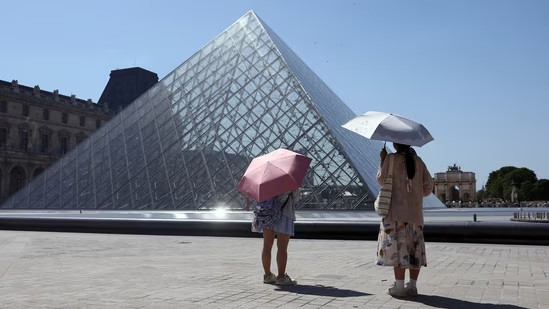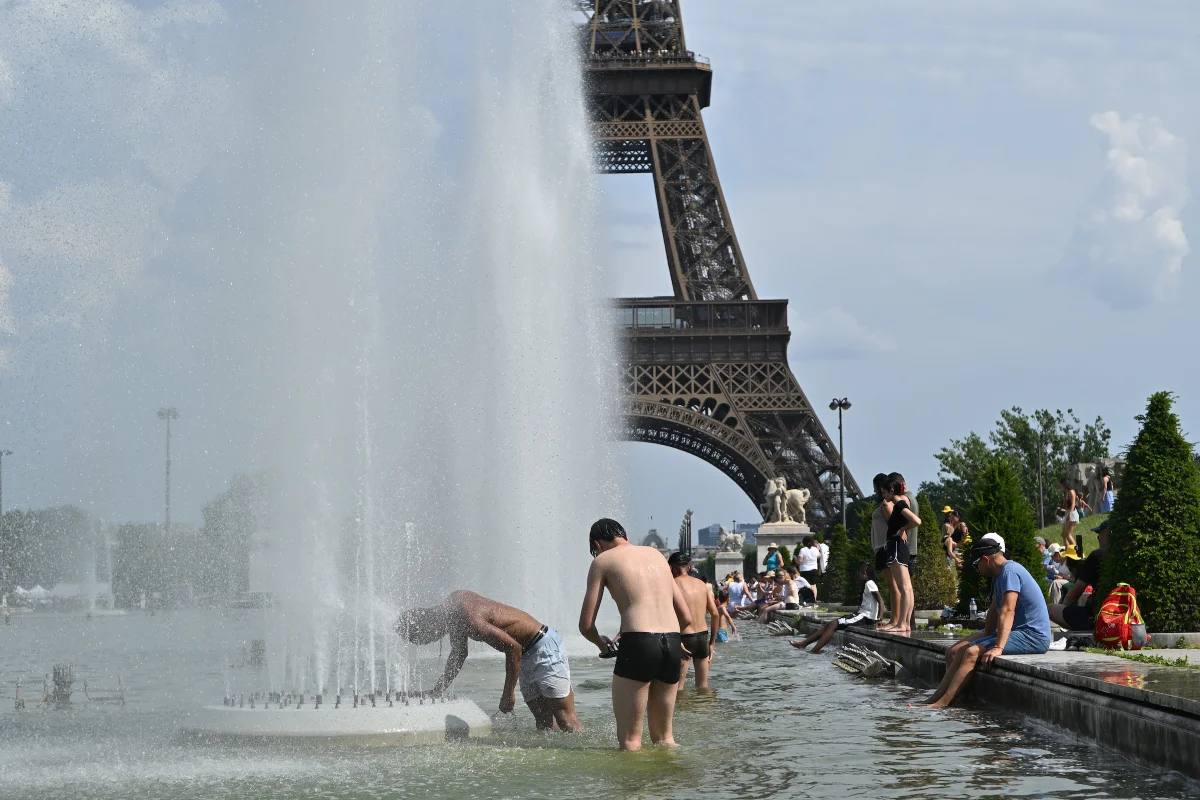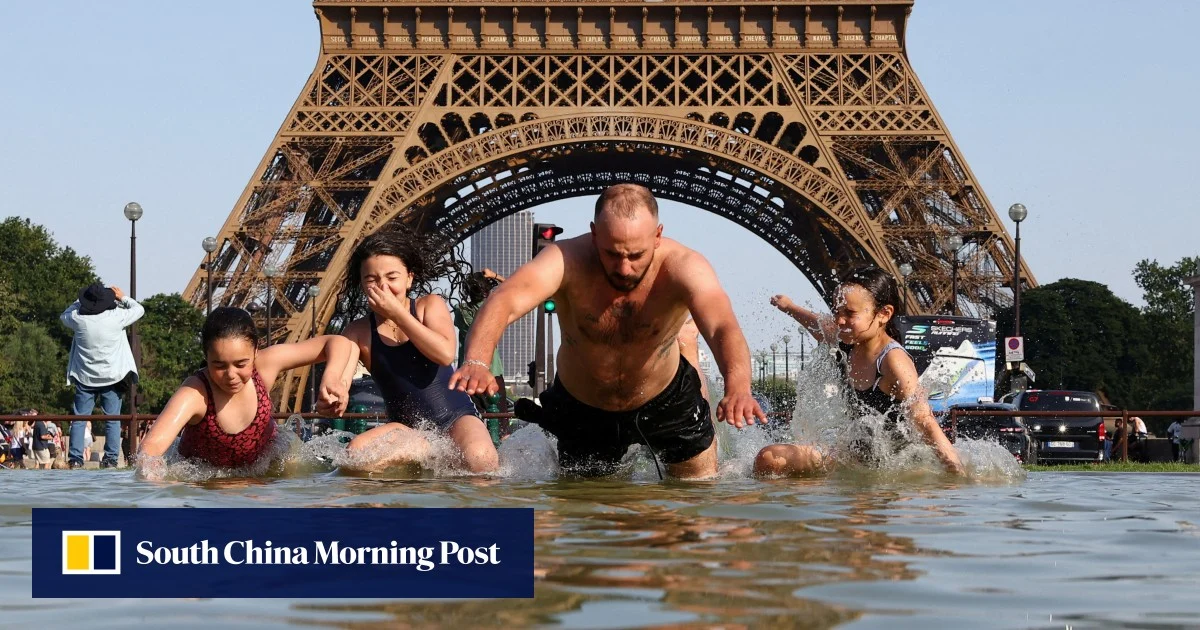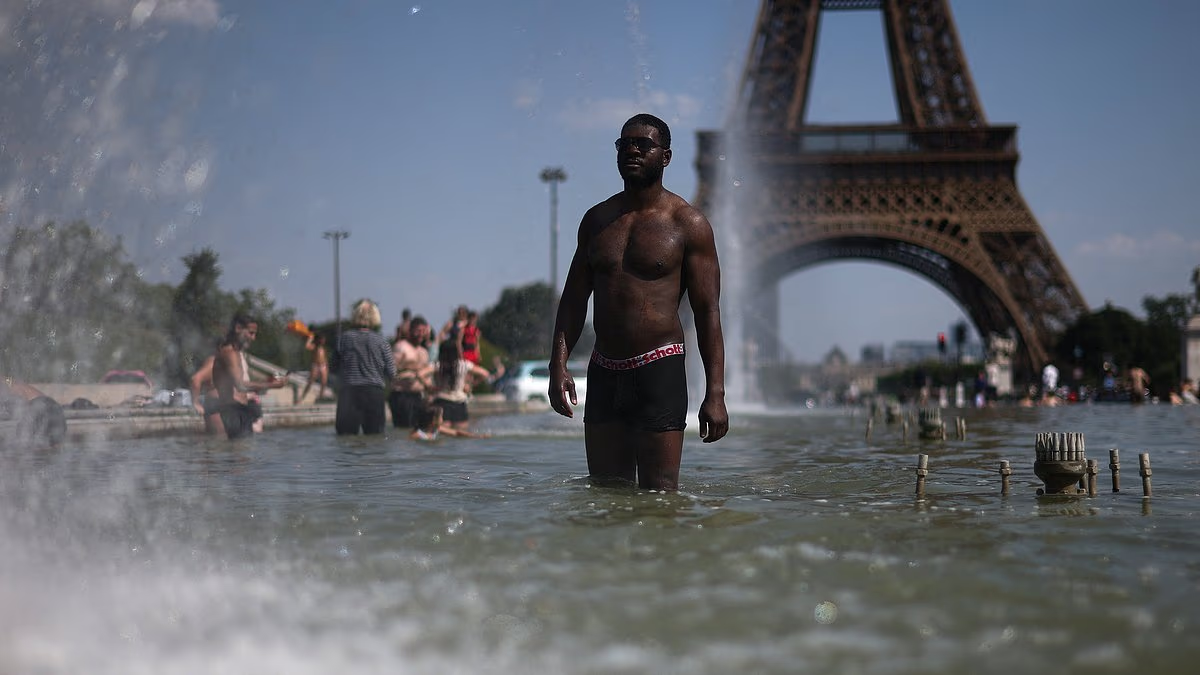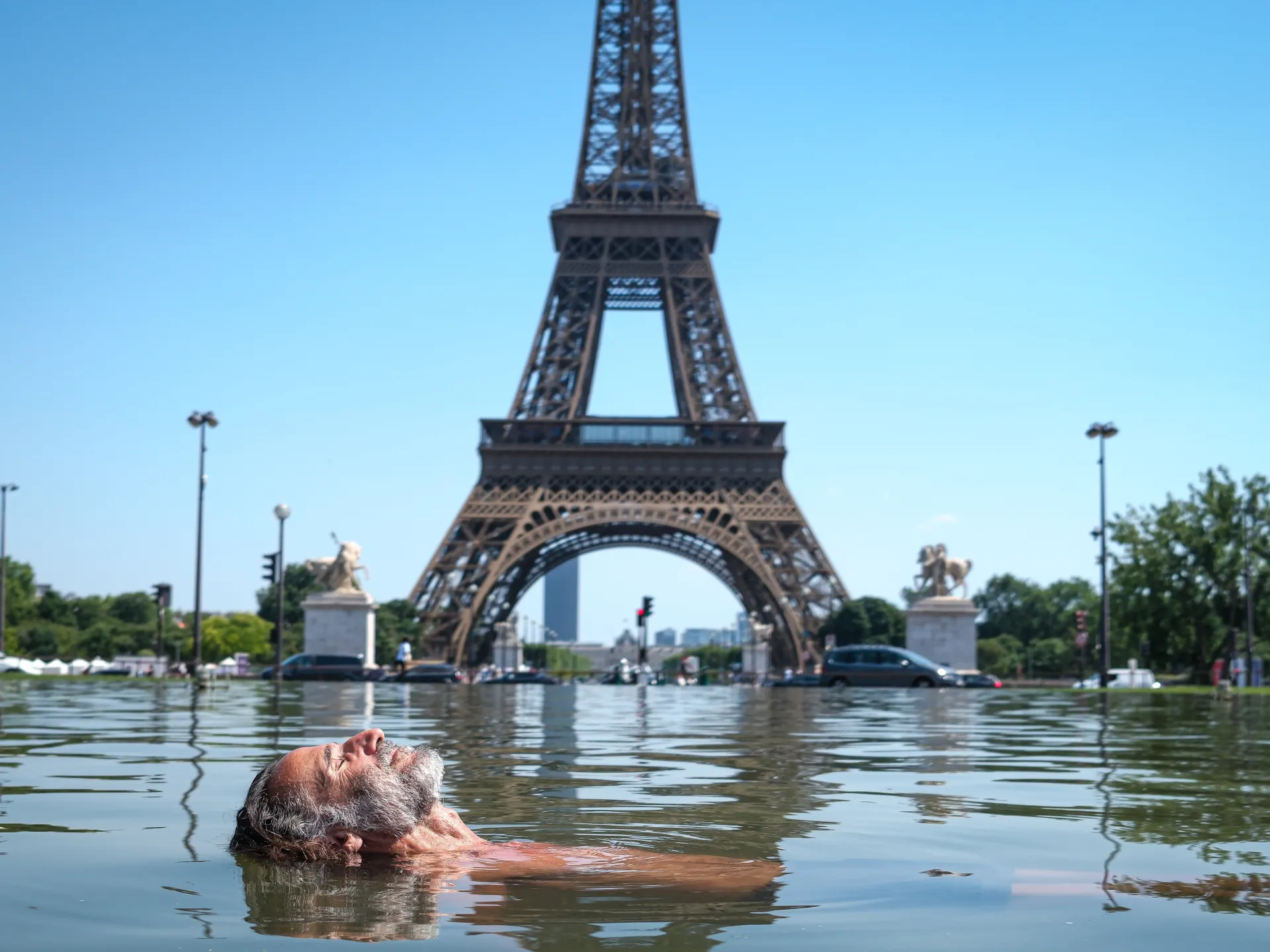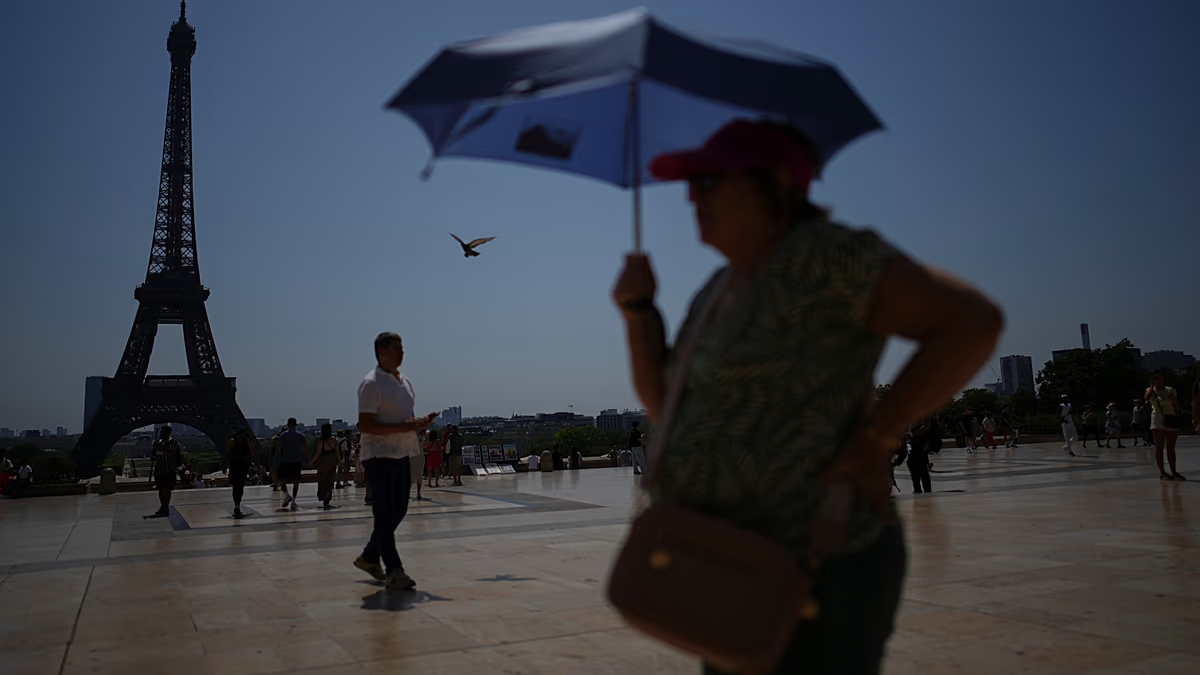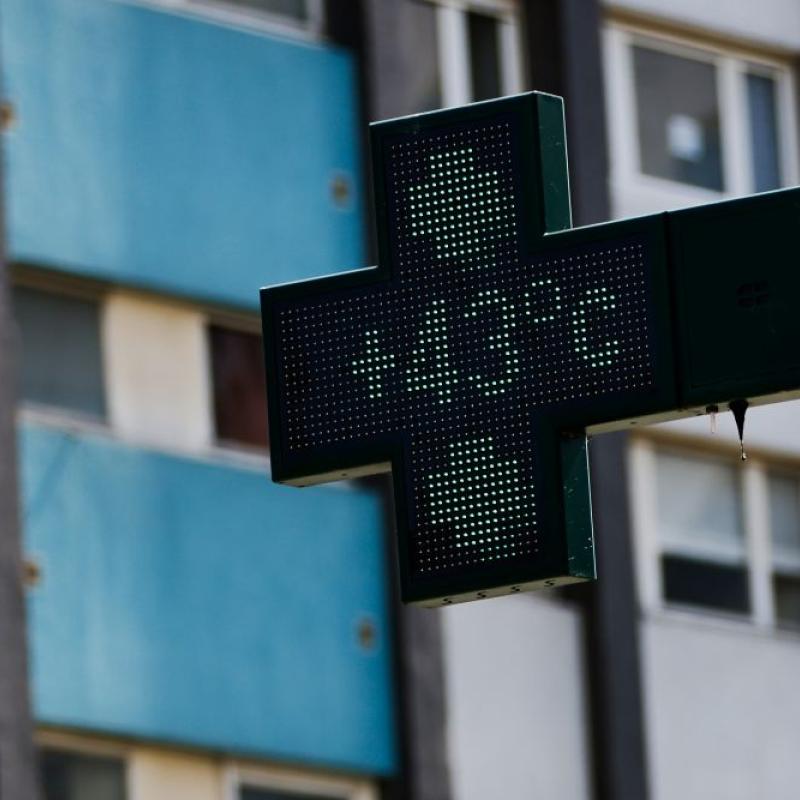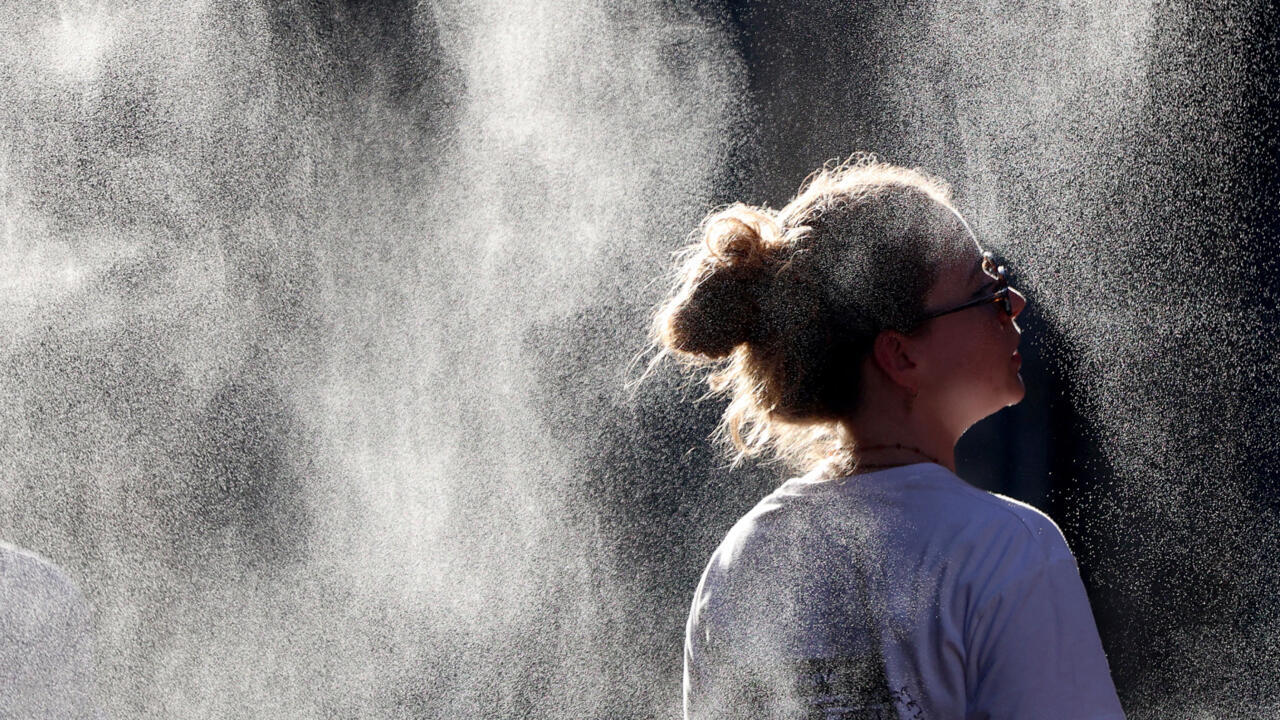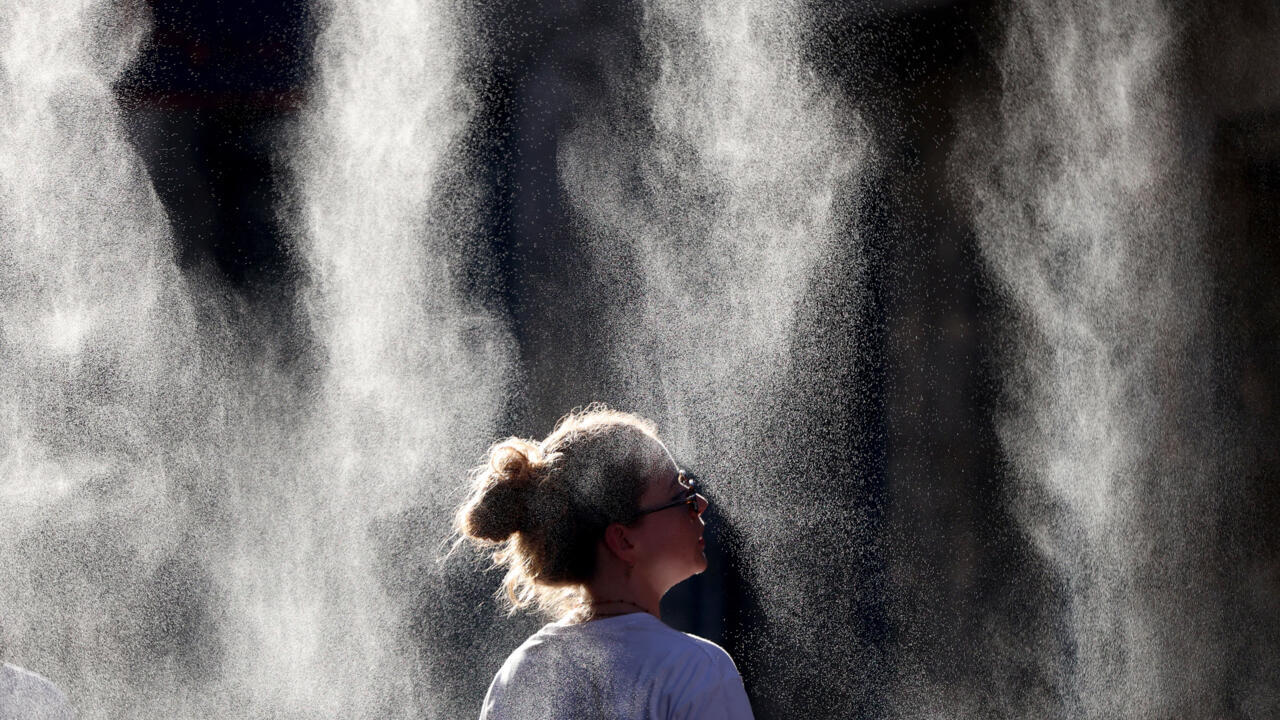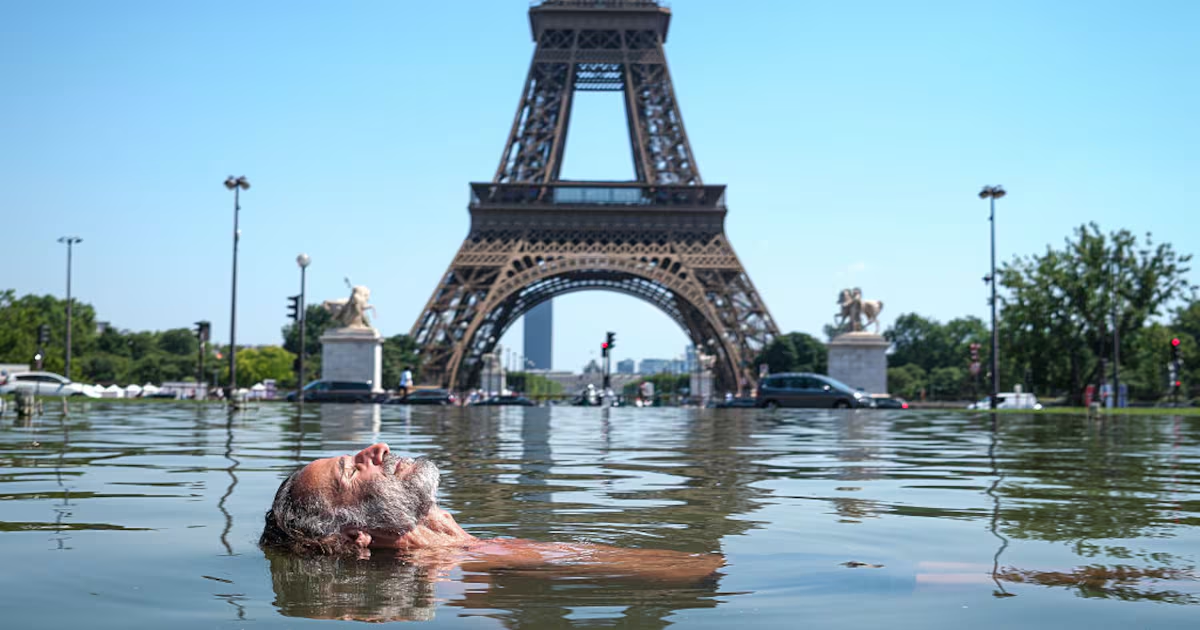
The black of the night was as warm as the typical peak temperature for a June summer day, hardly dropping below 25 degrees in towns and cities across France.Opening the window hardly brought relief. Fans and air conditioners were sold out everywhere. People stayed stretched out on blankets in the parks of Paris overnight.As soon as the sun rose, it was time to shut the windows and cover the glass by any means possible. Chalk paint stops the glare, metallic emergency blankets block the sun and reflect it back out, and were stuck up on windows in hospitals, nursing homes, and even the national parliament.It was already 30 degrees by 9am on Wednesday. More than 6,000 schools across France were shut or “adapted” due to the heat. One sent children home after recording 38 degrees in its prefabs. Another agreed with a neighbouring hotel to move classes into its air-conditioned dining area.At 9.20am, the emergency services were called to a primary school in northern France because a teacher, aged 50, had fainted from the heat. Children were evacuated to a shaded area of the playground, to await collection by their parents.“We had 44 degrees on the third floor,” a school worker in Paris’s 17th arrondissement said when Geoffroy Boulard, the local mayor, paid a visit that was recorded and posted to social media. “I have a photo of the thermometer.”Boulard released a video showing himself unloading boxed air conditioners from a van for schools in his district. Socialist mayor of Paris Emmanuel Grégoire had already announced 1,200 air-conditioning units would be delivered during the week to allow each Paris school at least one cool room.Until France’s hottest day, air conditioning had been politically and publicly divisive, championed by the hard right and resisted by the left and the Greens for being counterproductive because it is energy-hungry and pumps hot air out on to the streets, raising the general temperature for all.A commuter uses a handheld fan while travelling on public transport in Paris on Wednesday. Photograph: Annice Lyn/Getty Now there was a shift.“The reality is that we urgently need to equip public services, particularly schools and hospitals, with air conditioning,” Green Party leader Marine Tondelier said in a television interview, breaking a political taboo.Climate change was now inevitable, and France had to “both mitigate it, and adapt”.With only about a quarter of French homes equipped with an air-conditioning unit, cinemas, museums and large department stores drew in visitors.“Passersby take refuge with us; they get out of the heat and often they end up buying something,” Sophie Ponn, a saleswoman at department store Galeries Lafayette, told French media.Outside, people gathered around public water taps and splashed themselves in the water from fountains. Children played under water jets and misting machines.Passing cyclists are doused with water by youngsters cooling off in Paris on Wednesday. Photograph: Simon Wohlfahrt/AFP/Getty Calls to the emergency services began to tick up, and scheduled procedures were cancelled to free up staff. An elderly man collapsed and died while doing work outside his house in Pas-de-Calais. Two more people were found dead at home, suspected to have been overcome by the heat. The public health service announced a surge in hospital admissions “rarely, if ever, observed” during a heatwave, saying people of all ages had been affected including those “from 15 to 44 years old”.Extreme heat makes anyone who is already vulnerable – small children, the elderly, people with diabetes – more likely to die. In France’s extreme heatwave of 2003, there were 15,000 more deaths than normal. The toll of this latest heatwave will only become apparent once full figures have been recorded.Forest fires, fuelled by the dry conditions, raged in the Aveyron region, in southern France, and in Saint-Macaire-du-Bois, in the west. Also in the south, flames appeared at the side of a motorway between Carcassonne and Narbonne, forcing the road to be shut.The heat overwhelmed parts of the electricity infrastructure, leaving 68,000 people without power in Brittany and causing the cooling systems of a hospital in Oise, north of Paris, to fail. Rail lines overheated, causing train disruption across France. All regional trains in Nouvelle-Aquitaine – a region the size of the island of Ireland – were cancelled between 10am and 6pm due to a lack of air conditioningUnions began to warn of strikes due to the intense heat. A debate took off on the airwaves about whether special leave should be allowed during heatwaves. There were warnings of impossible conditions for chefs, bakers, Montessori teachers, nurses and people working outside doing road repairs. A farmer told French media his chickens were dying due to the heat.Council swimming pools were opened for extended hours. Young people in bathing suits lined the banks of the Saint-Martin canal, now adapted for swimming, with daredevils leaping from the bridge in defiance of the rules.In the afternoon, temperatures were peaking at 40.3 degrees in Paris, only the fourth time in 150 years that the temperature had gone above 40 in the capital. The towns of Palluau and Pissos in France’s west and southwest recorded the national record: 43.8 degrees. It was officially the hottest day ever recorded in France.[ Why is it so hot and when will Ireland’s ‘exceptionally warm weather’ end?Opens in new window ]Shortly after 3pm, emergency services were called to the banks of the river Marne in Chelles in the eastern suburbs of Paris. A 25-year-old man had gone swimming, and had disappeared into the water. Emergency responders found his body at 5pm.Another young man had drowned in the same spot just the day before. This was despite a public order forbidding swimming in the Marne, Seine, and other rivers due to “unpredictable currents”, hidden obstacles in the river, and opaque water that makes it difficult for emergency responders to find people.Young people jump into the Saint-Martin canal ni Paris. Photograph: Simon Wohlfahrt/AFP/Getty France has been shocked by at least 50 drownings in just six days during the heatwave, largely affecting young people who sought to cool off in unauthorised swimming spots.At 7pm, a three-year-old boy was found dead in a car parked in front of the family home in the northern suburbs of Paris, the third similar death in three days.Joggers were still to be seen along the Seine, prompting frustrated warnings from authorities that those at greatest risk of danger were people who did not attune their behaviour to the heat.France must change to adapt to the new climate, Paris mayor Emmanuel Grégoire told media: “to start earlier, take a longer lunch break, and work later”.“Paris’s climate trajectory means that our environment will one day resemble that of Seville,” Grégoire said. “In all countries facing these temperatures, working days and lifestyles are different from ours.”
France’s hottest day: ‘We had 44 degrees. I have a photo of the thermometer’
On Wednesday the temperature in Paris rose above 40 for only the fourth time in 150 years. How did France, used to June averages of 25 degrees, cope?
1,120 words~5 min read