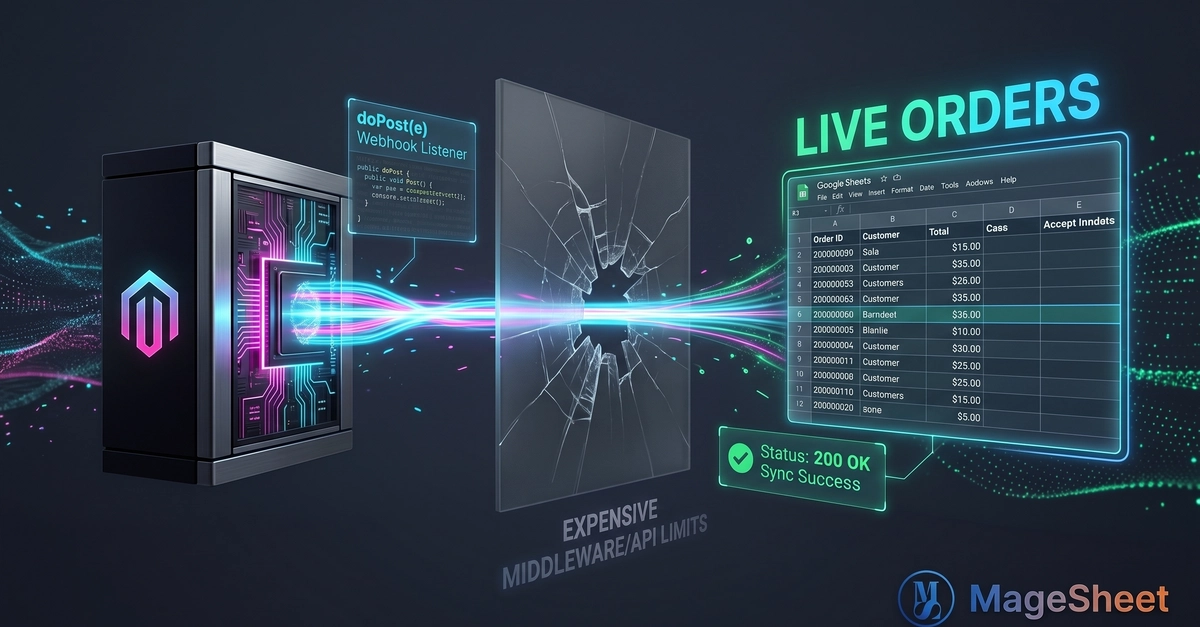
![Cover Image: A monolithic block breaking into Go microservices]
Answer-first: How we escaped Magento's licensing and scaling walls by migrating to a Composable Commerce Platform built on 21 Go microservices, Dapr PubSub, and a 3-phase Strangler Fig strategy without dropping a single order.
At exactly midnight during a major campaign, a monolithic Magento server can quickly become your single point of failure. Every engineering team that builds seriously on Magento eventually hits the same walls: the licensing wall ($100k-$200k/year for Enterprise), the scaling wall (scaling the entire massive codebase just to handle a traffic spike on the checkout page), and the developer velocity wall.
When we decided to migrate away from Magento, the standard industry advice was to split the monolith into "4 to 6 microservices". We ignored that advice. For serious e-commerce at scale, that approach inevitably leads to a distributed monolith — where services are deployed separately but remain tightly coupled through HTTP chains or shared database tables.
Instead, we built a Composable Commerce Platform using 21 Go microservices, Google's Kratos v2 framework, and Dapr PubSub. Here is the blueprint of how we structured it, and how we migrated with zero downtime.