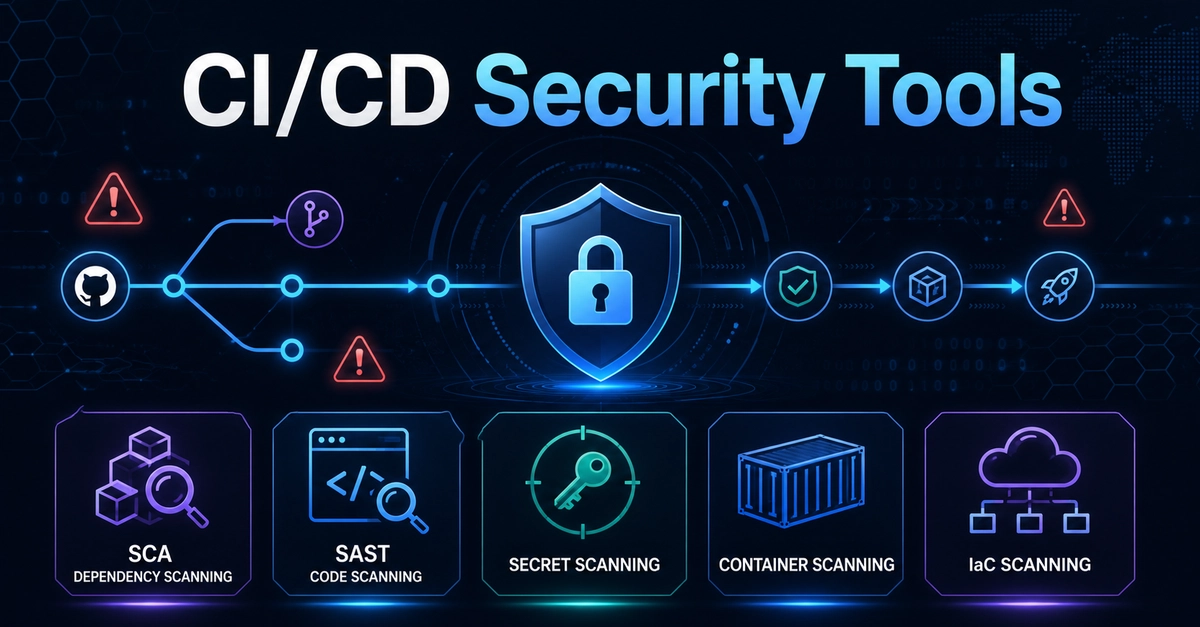
I've spent 25 years securing Linux boxes, cloud accounts, CI/CD pipelines, and production clusters. The single most consistent lesson across all of it is this: the teams that get breached aren't the ones who lacked a security department. They're the ones who treated security as something a separate department would handle later.
Security is not a phase. It's not a gate at the end of the pipeline, and it's not a quarterly audit. It's a property of how you write infrastructure code, manage secrets, ship containers, and run production every single day. When security lives inside the daily workflow — in the merge request, the pipeline stage, the Terraform plan — it costs almost nothing. When it lives in a separate review at the end, it's expensive, late, and routinely skipped.
This is the checklist I'd hand a new engineering team. Everything here is defensive: hardening, detection, and recovery. Work through it section by section.
Why DevOps security belongs in the daily workflow
The whole premise of DevOps was to stop throwing work over the wall between dev and ops. Security is the last wall standing in most orgs, and it has to come down the same way: by moving the controls into the tools engineers already use.