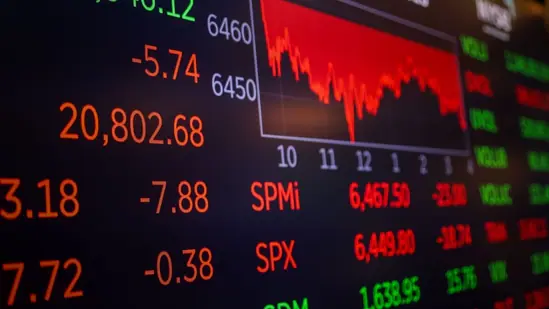
Futures point to a lower start for cash trading on the last day of the week, as tech stocks dragged global indexes lower following renewed selling in chipmakers, while a report that OpenAI could postpone plans to go public also weighed on sentiment. The volatility reflects a valuation test, profit‑taking and flow-driven positioning, according to Christian Stocker, equity strategist at UniCredit, who suggests it’s a “temporary correction within a still-intact long-term AI growth trend.” As of 8:00am ET, Nasdaq 100 futures slid 1.1%, while those on the S&P 500 fell 0.4%. In premarket trading, semiconductor names, including Micron and optical stocks were broadly lower following news of OpenAI’s IPO delay; the "chip paying" hyperscalers showing moderate gains as the equilibrium seems to shift away from chip stocks. A selloff in Korean chip giants Samsung Electronics and SK Hynix triggered a second trading suspension in Seoul within days. Oil resumed its slide, failing to lift stocks but offering a fillip to bonds. Bond yields declined further led by the front-end of the curve: 2y is down 3.5bp; USD is lower. Oil fell -2.74 this morning to $69.18. US economic data calendar includes May goods trade balance, retail and wholesale inventories (8:30am), June final University of Michigan sentiment (10am) and Kansas City Fed services activity (11am). Fed speaker slate includes Minneapolis Fed’s Kashkari at 11:30amIn premarket trading, Mag 7 are mixed: Microsoft is the is a top gainer as investors rotate into software stocks from hardwar (Microsoft +0.8%, Apple +0.5%, Amazon unchanged, Meta Platforms +0.3%, Alphabet -0.7%, Nvidia -1%, Tesla -1.1%).Semiconductor stocks are broadly lower amid investor concerns over the staying power of chip demand given price increases seen across Apple and Xbox products. A potential delay to OpenAI’s IPO, as reported by the New York Times, also dampened risk sentiment.ON Semiconductor (ON) slides 14% after the chipmaker agreed to an all-stock deal to buy Synaptics. Analysts worry that buying a business that’s exposed to smart devices and the consumer market may distract a push to supply for AI data centers. Synaptics (SYNA) is up 4.2%.Rocket Lab (RKLB) gains about 1% after the space firm said NASA selected it to provide three Electron launches for two missions, PolSIR and TSIS-2, from early 2027.Tango Therapeutics (TNGX) climbs 5% after Jefferies upgraded the drug developer to buy citing durability of its experimental therapy to treat pancreatic cancer.Wise (WSE) climbs 5% after the financial technology firm announced it will begin a new buyback program and reported results for the full year which analysts say were in line with expectations.In other corporate news, EV maker Polestar will exit the US after the Commerce Department banned the company due to a rule prohibiting Chinese software in cars, according to the WSJ. And Volkswagen is looking to cut tens of thousands of additional jobs and may shutter factories in a push to be more competitive, Manager Magazin reported.Markets are capping a volatile week in which shifting sentiment around the once-relentless tech trade whipsawed stocks, with traders parsing everything from spending plans to corporate earnings. Investors pulled money from US equities for the first time in three months, with record withdrawals from tech.Friday’s bout of weakness came as price increases in products from Apple Inc. and Microsoft Corp. triggered fears about the staying power of chip demand. A New York Times report that OpenAI could delay its initial public offering until 2027 also brought into focus how volatility could affect the sector. In Japan, OpenAI backer SoftBank Group Corp. tumbled following the NYT report, sending the Nikkei 225 down 4.2%. The tech sector led declines in Europe as well, with the Stoxx 600 on course for its worst performance since the middle of May.“Technology remains a crowded trade, positioning is relatively tight, and that makes the sector more sensitive to negative news flow or sharp moves in individual names,” said Francisco Simon, European head of strategy at Santander Asset Management.AI valuations relative to the rest of the S&P 500 have fallen to their lowest levels since the Iran war, with AI stocks now trading at just a 15% P/E premium to ex-AI stocks, notes Bloomberg. The case for the AI trade remains intact, but the risk of getting it wrong has risen considerably with leverage, crowding and dispersion in focus.Investors say the roller-coaster week shows that while the case for the AI-trade is still strong, the days of everything going up in a straight line appear to be over. While there hasn’t been panic selling, the cracks are real, and extreme investor positioning means the easy days could be a thing of the past.The most sensible strategy “is to maintain well-diversified portfolios across geographies, styles, sizes, companies, and sectors,” said David Manso, chief investment officer at CaixaBank AM. “In a couple of weeks, the earnings season will kick off, and leading indicators are pointing in the right direction. We expect corporate results to become a positive catalyst.”Also in AI, the Pentagon has revised its doctrine on how the US military picks its targets in battle, opening the way for AI to make critical wartime decisions in the future.In politics, New York City’s Rent Guidelines Board voted to freeze some apartment rents, handing Mayor Mamdani a major political victory. Commerce Secretary Lutnick intervened to delay the opening of a new bridge between the US and Canada and is pressing to renegotiate the deal for a larger share of toll revenue. The Stoxx 600 is down by 0.6%, with energy and technology equities leading declines, while food beverage and personal care drug stocks are the biggest outperformers. Here are the biggest movers Friday:Wise shares climb as much as 8.2% after the financial technology firm announced it will begin a new buyback program and reported results for the full year which analysts say were in line with expectationsPandora shares rise as much as 5.1% after BofA upgraded the stock to buy from underperform, saying it has a “clear catalyst path ahead as main pressures subside and LFL [like-for-like sales] stabilizes”Barratt Redrow and Bellway climb after Berenberg upgrades both stocks to buy, saying depressed valuations, strong balance sheets and attractive capital returns create selective opportunities in UK housebuilders despite a downbeat market outlookKoninklijke KPN shares rise as much as 2.5% after the Dutch telecoms firm was upgraded at Citi, as analysts said there is an opportunity for investors to increase their holding in a “quality stock” following a recent pullbackTechnology shares declined in Europe, following Asia peers lower, after Apple slumped Thursday following price increases on its products. A report that OpenAI may delay its IPO also weighed on sentimentZalando shares fall as much as 11% after the German Financial Supervisory Authority BaFin opened a probe into the online fashion retailer’s 2025 report over suspected violations of accounting rulesAccor shares drop as much as 2.8%, pulling back from an all-time high after the hotelier was downgraded at Jefferies. Analysts believe any potential recovery in the Middle East is already priced inINWIT shares slip as much as 2.1% after a downgrade to neutral from buy at Goldman Sachs, which sees “heightened operating and structural uncertainty” for the Italian telecoms company’s investment caseAsian stocks resumed their decline after a brief reprieve the prior day, as concerns about the sustainability of recent tech gains weighed on sentiment. Trading in Asian stocks has remained volatile, with investors torn between whether the rally in technology shares is stretched or backed by confidence in continued AI-driven growth. In the end, tech stocks dragged Asia lower, with the Kospi falling 5.8% and the Nikkei 225 dropping 4.2%. The MSCI Asia Pacific Index dropped as much as 3.6%, with Samsung Electronics, SK Hynix and TSMC weighing most on the gauge. South Korea, Japan and Taiwan led declines. For the week, the index has fallen more than 4%, on track for its worst showing since early March. The selloff comes after Apple said it raised prices to offset cost hikes caused by an unprecedented shortage of memory chips, dragging supplier shares across the region lower. For some, it underscored just how vulnerable the chip rally — which has lifted benchmarks to repeated highs — has become. “After recent performance, it’s not difficult to expect some consolidation,” said Kieran Calder, head of Asia equity research at Union Bancaire Privee. Apple price hikes highlighted “memory shortage impact on consumer electronics prices and part of the inflation narrative.”In FX, the Bloomberg Dollar Spot Index down by 0.1% and the euro back to testing $1.14, while sterling has climbed back above $1.32. The Norwegian krone is underperforming among major currencies on the slide in oil prices.In rates, a falling oil price is lifting short-end bonds across Europe and the US, with a pullback in bets on central bank rate hikes. US two-year yields falling by four basis points and outperforming moves in the same direction in Europe and the UK.
Futures Drop, Chips Resume Slide As OpenAI IPO Delay Dents Sentiment
“Technology remains a crowded trade, positioning is relatively tight, and that makes the sector more sensitive to negative news flow or sharp moves in individual names,”
4,645 words~21 min read