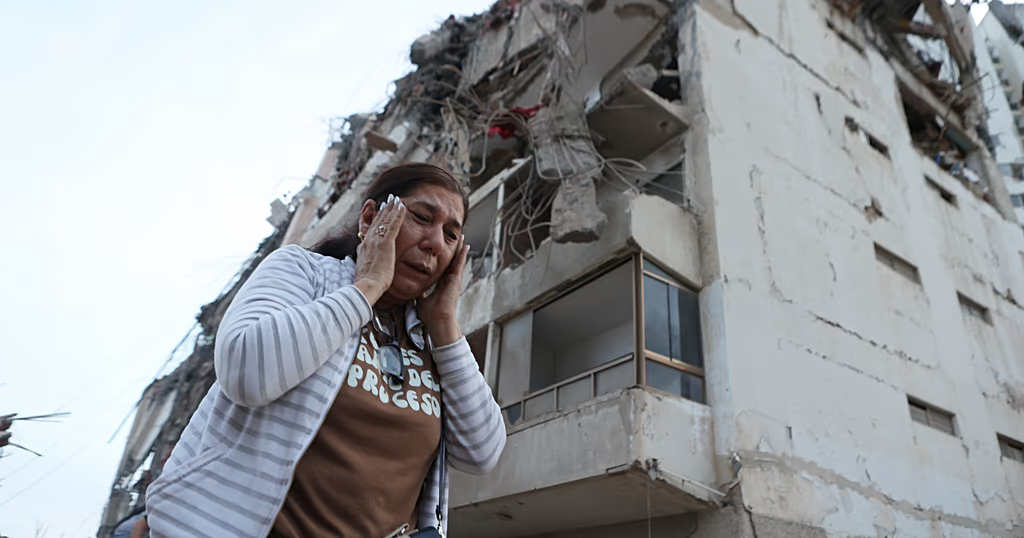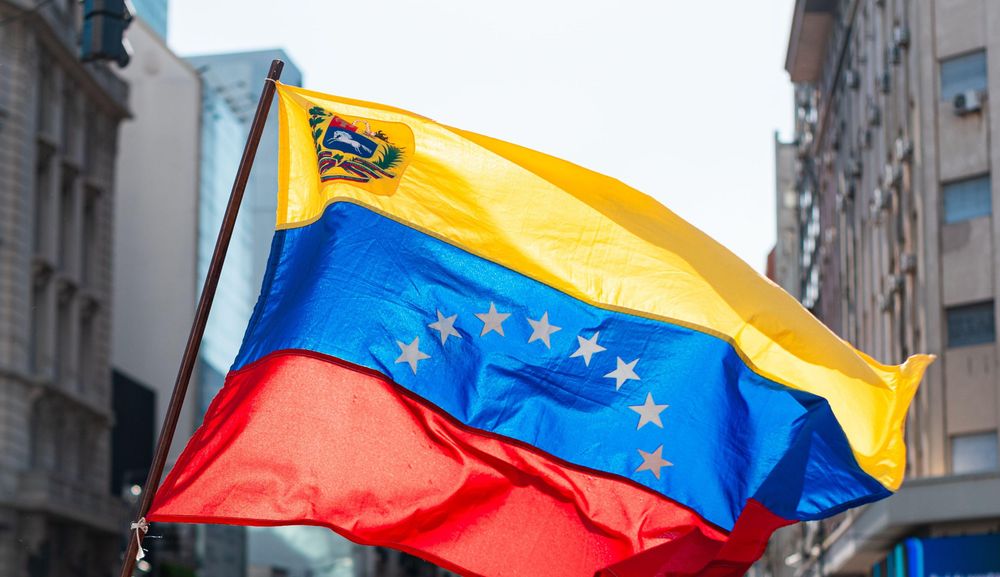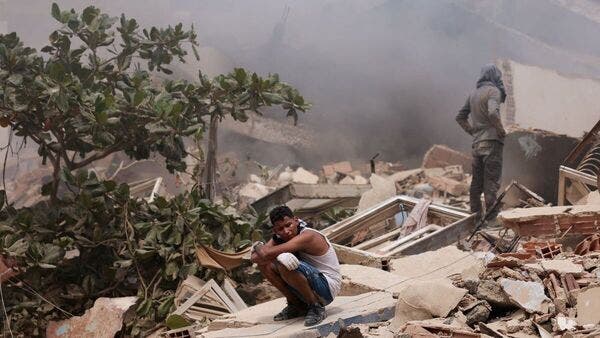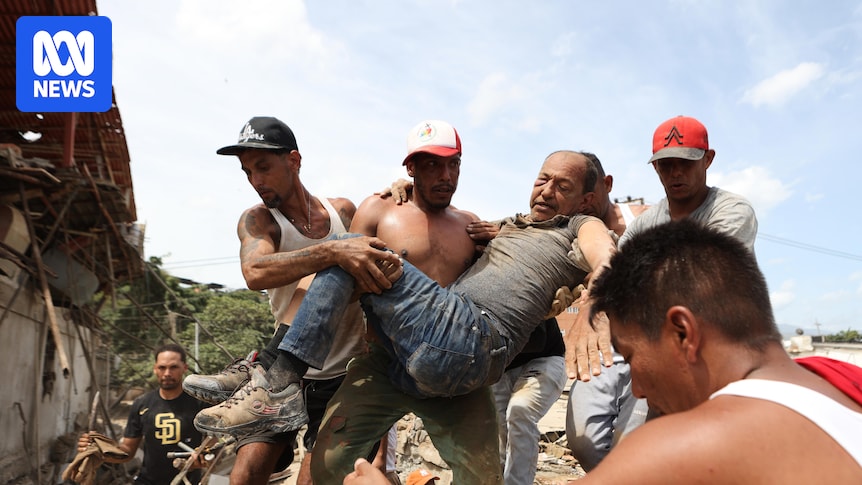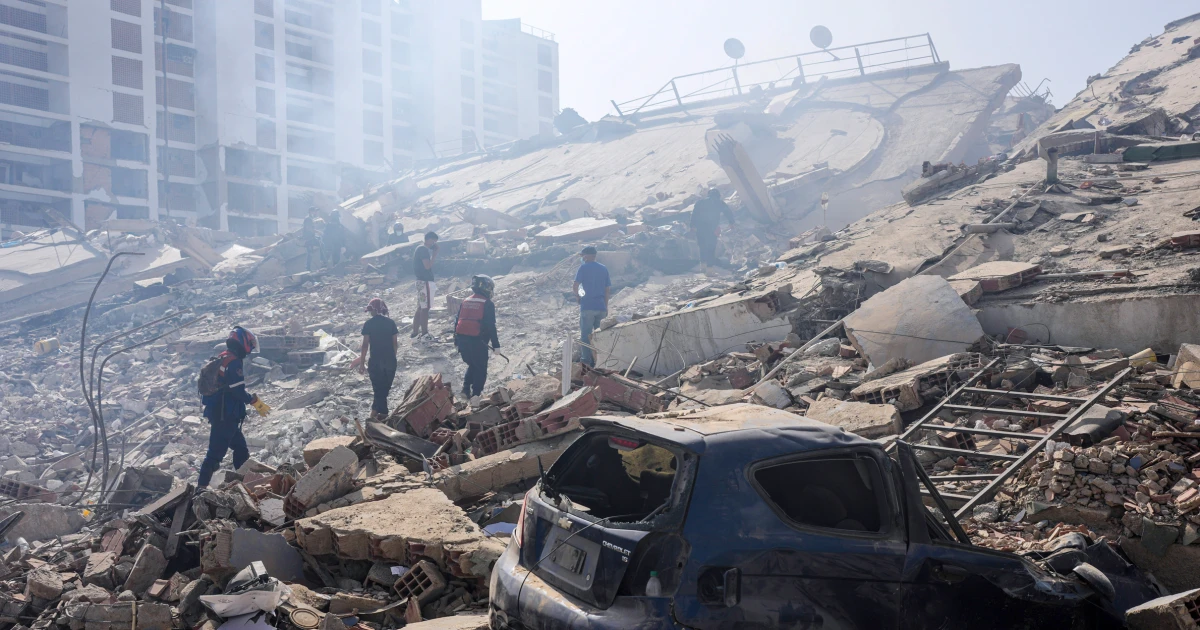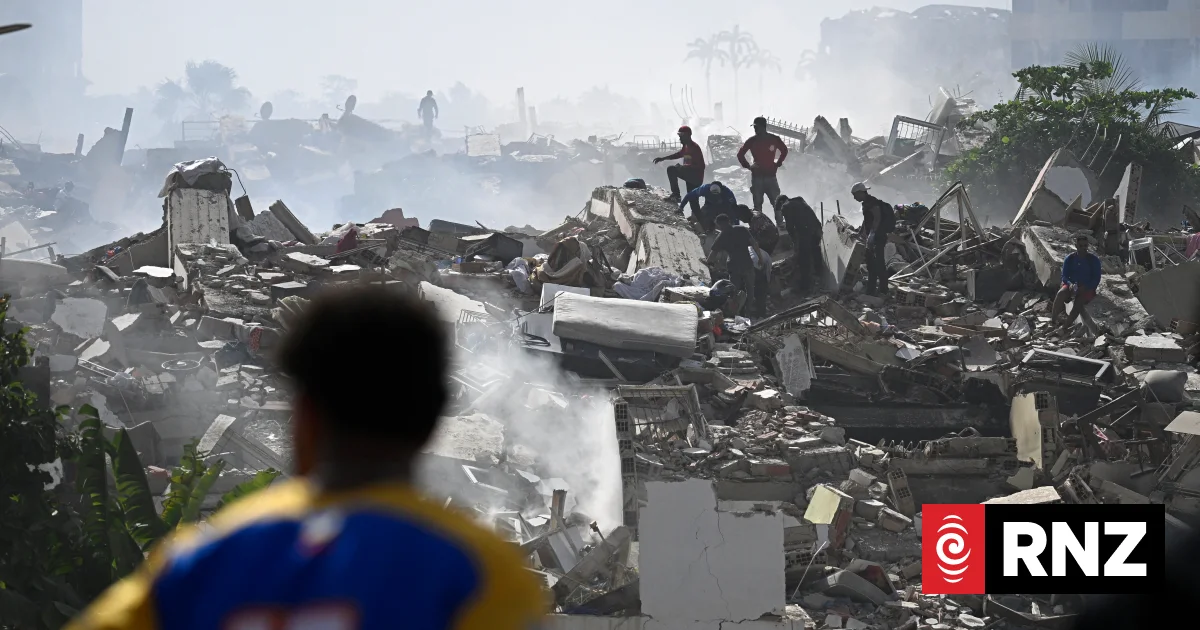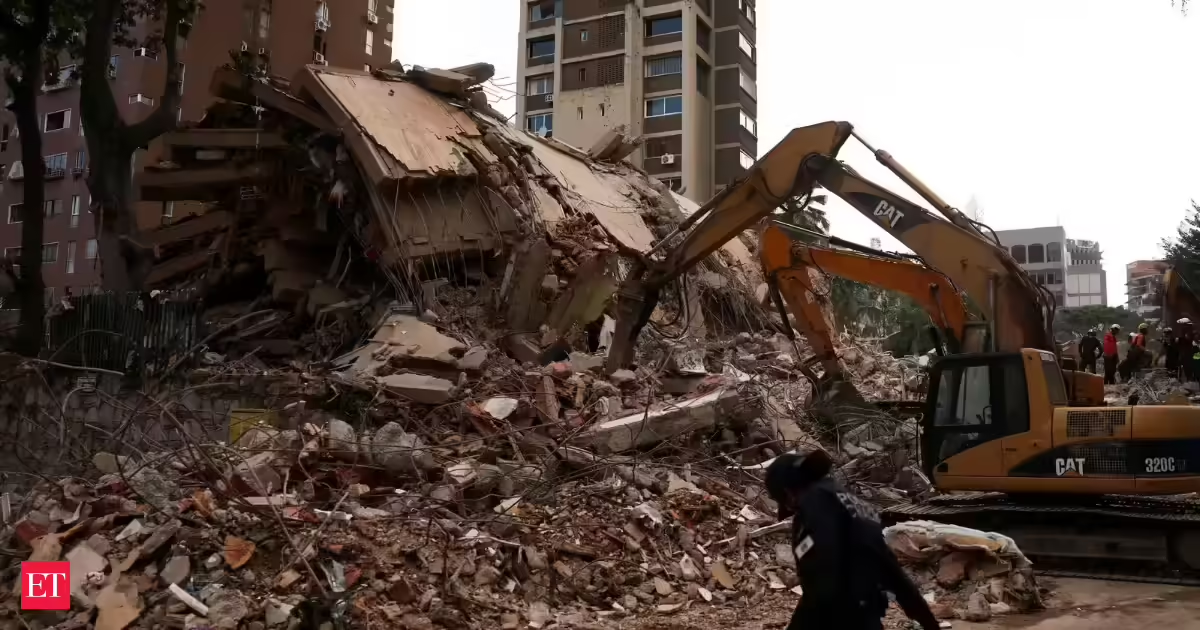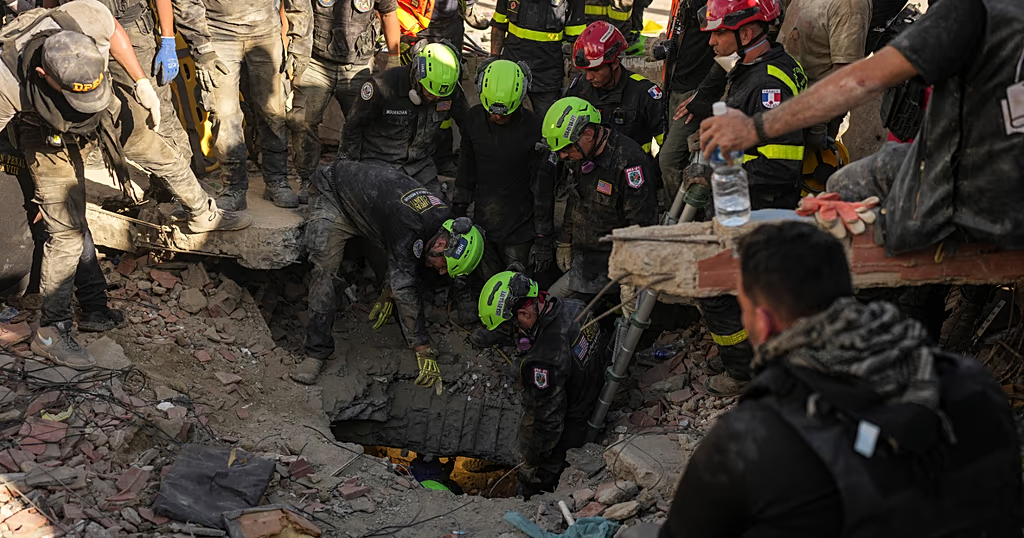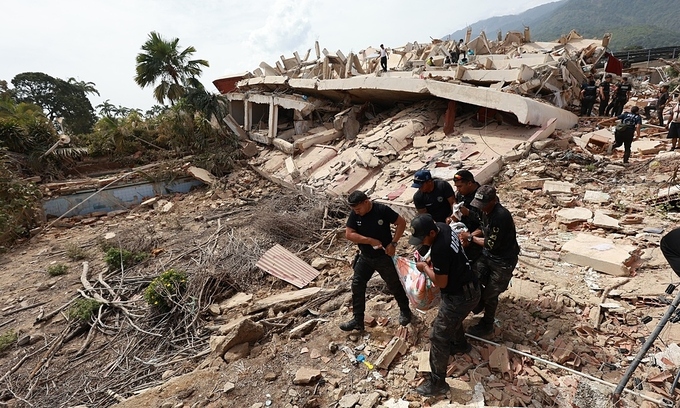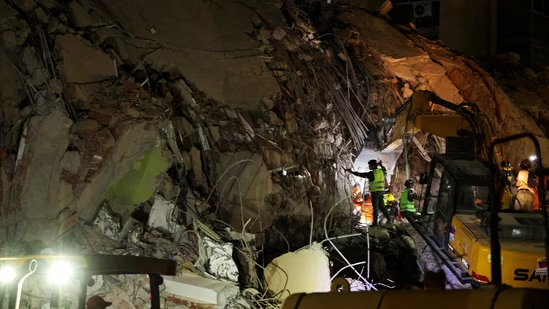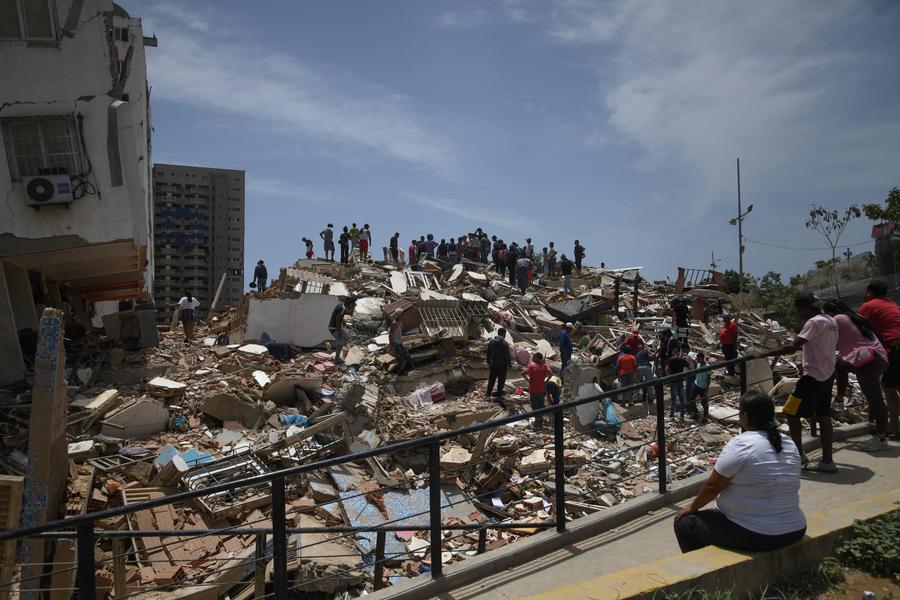
People search for survivors among the rubble in La Guaira State, Venezuela, June 25, 2026. (Photo by Marcos Salgado/Xinhua)CARACAS, June 25 (Xinhua) -- Venezuela is racing against time on Thursday to rescue hundreds believed trapped beneath collapsed buildings after twin powerful earthquakes left at least 188 people dead and 1,520 injured, while authorities warned the toll could rise further as rescuers struggled to reach the worst-hit areas.The shallow earthquakes, measuring magnitudes of 7.2 and 7.5 and striking just 40 seconds apart Wednesday, were the strongest to hit the South American country in more than a century and the deadliest in decades.They devastated parts of the country's central coast and the capital Caracas, triggering widespread building collapses, power and communications outages, while raising fears of further destruction from continuing aftershocks.Venezuela's National Assembly President Jorge Rodriguez told a press conference Thursday that about 200 people remained trapped under rubble. "We are racing against time in the hope of rescuing as many people as possible," Rodriguez said.EXTENSIVE DESTRUCTION"This earthquake was horrible, even worse than the one in 1967," recalled 80-year-old Maria Romero, a resident in Caracas.The capital city lies less than 200 km from the epicenters of both quakes, sending thousands of residents fleeing their homes into the streets.On Thursday, Xinhua reporters drove to the hard-hit La Guaira state and saw collapsed apartment blocks and heavily damaged buildings lining the streets. The air carried the smell of gas leaks and burned electrical wiring, while smoke still hung over some of the worst-affected neighborhoods.Among the survivors was Evelyn Freites, whose 14-story apartment building has been levelled to rubble."The building swayed one way, then the other," she recalled. "The stairway was buried under debris. We had to slide down because the steps were gone."Pausing briefly, Freites fought back tears before saying quietly: "My home is gone."Alongside the rubble, police sirens were drowned out by neighbors shouting and the dull thud of stones being moved by bare hands."Police came last night, but they didn't have the proper equipment," Freites told Xinhua. "In the end, it was the neighbors who became volunteers, digging with our bare hands."Her nephew, Ronny Madrid, said many residents had been forced to return repeatedly to unstable buildings despite continuing aftershocks to retrieve water, food, clothing and medicine after nearby supermarkets and shops had run out of supplies.Pointing to a neighboring residential block, Madrid said: "Other buildings weren't as lucky. There are still people trapped inside, and there are bodies."Authorities said public infrastructure suffered extensive damage across affected areas.Simon Bolivar International Airport near Caracas remained closed after sustaining severe structural damage. Parts of the capital were left without electricity, running water and mobile communications, while natural gas supplies were suspended in several affected communities.Venezuela's acting president Delcy Rodriguez said the country's central coastal region bore the brunt of the disaster, describing La Guaira state as facing "a real tragedy."A framed photo of a girl is seen among the rubble in La Guaira State, Venezuela, June 25, 2026. (Photo by Marcos Salgado/Xinhua)REASONS BEHIND SEVERITYAnalysts said several factors combined to magnify the disaster's impact.The earthquakes were both shallow, occurring at a depth of just 10 km, allowing much of their energy to be released near the surface. The two strong shocks struck less than a minute apart, while repeated aftershocks have increased the risk of secondary building collapses.The epicenters' proximity to Caracas, one of the country's most densely populated areas, further amplified its destruction.Experts also noted that Venezuela has experienced no major earthquakes for roughly half a century, leaving many residents with limited disaster preparedness.Years of underinvestment in infrastructure have also heightened concerns over the vulnerability of aging buildings to strong seismic activity.GLOBAL SUPPORTAs Venezuela intensified rescue efforts, other countries and international organizations pledged assistance.A Chinese foreign ministry spokesperson said on Thursday that China is ready to do what it can to assist in light of Venezuela's need. The United Nations is also mobilizing assistance and working closely with the government and aid partners in response to the Venezuela earthquake emergency.Countries in the region, including Brazil, Cuba, El Salvador and the Dominican Republic, have offered assistance for Venezuela's relief and recovery efforts, while nations from other parts of the world, including Iran, Azerbaijan, the United States, Türkiye, Jordan and Qatar, have also expressed solidarity with Venezuela and their willingness to help, Venezuelan Foreign Minister Yvan Gil said in a Telegram post on Thursday."The country values the offers of international aid and is working through the Ministry of Foreign Affairs to manage and receive this much-needed support during these difficult times," Gil said.The country's acting president on Thursday announced a series of emergency measures, including coordinating international rescue operations and establishing a 200-million-U.S.-dollar reconstruction fund.The coming days are expected to be critical as rescue teams continue searching for survivors amid persistent aftershocks, while authorities work to restore essential services and assess the full extent of the destruction across the country's central coastal region. ■
Roundup: Rescue race intensifies after Venezuela's deadliest quakes in decades
Roundup: Rescue race intensifies after Venezuela's deadliest quakes in decades-
818 words~4 min read