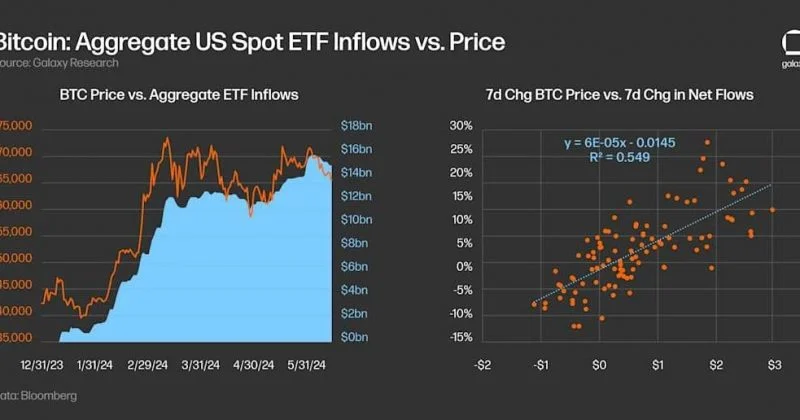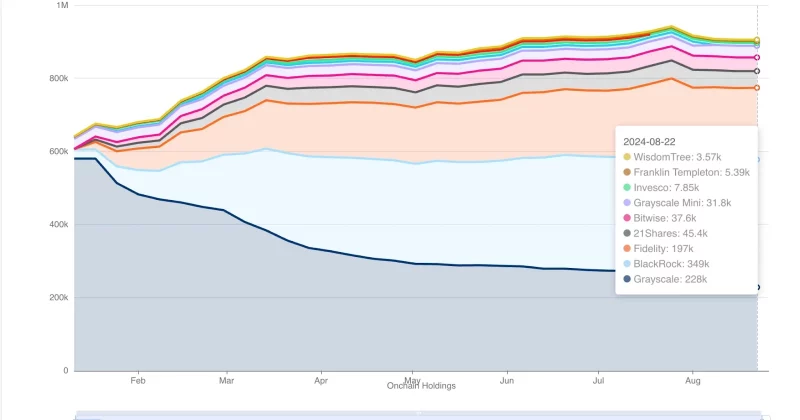
Bitcoin ETF flows refer to the movement of money into and out of bitcoin exchange-traded funds (ETFs). When investors buy ETF shares, new money enters the fund and creates an inflow. When investors sell shares and capital leaves the fund, an outflow occurs. Because most U.S. spot bitcoin ETFs hold actual bitcoin, these flows are widely treated as a proxy for institutional demand for the asset.
Flows are reported in three forms. Inflows measure money coming in, outflows measure money going out, and net flow is the difference between the two over a given period (most often a single trading day). A fund with $400 million of inflows and $100 million of outflows on the same day has a net inflow of $300 million.
In this article, we'll cover how ETF flows work, as well as their effect on the wider crypto markets.
Why Do Bitcoin ETF Flows Matter?
Flow data matters because it offers a transparent, repeatable window into how a major category of buyers is behaving.