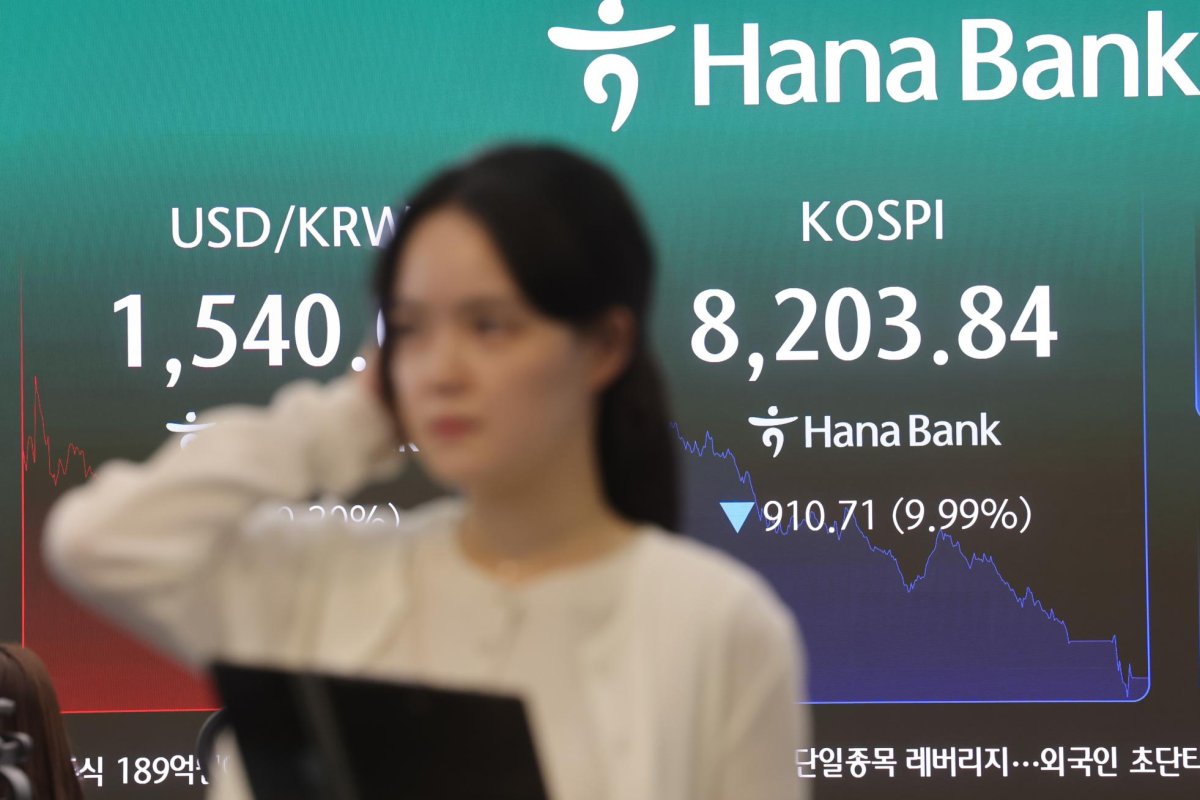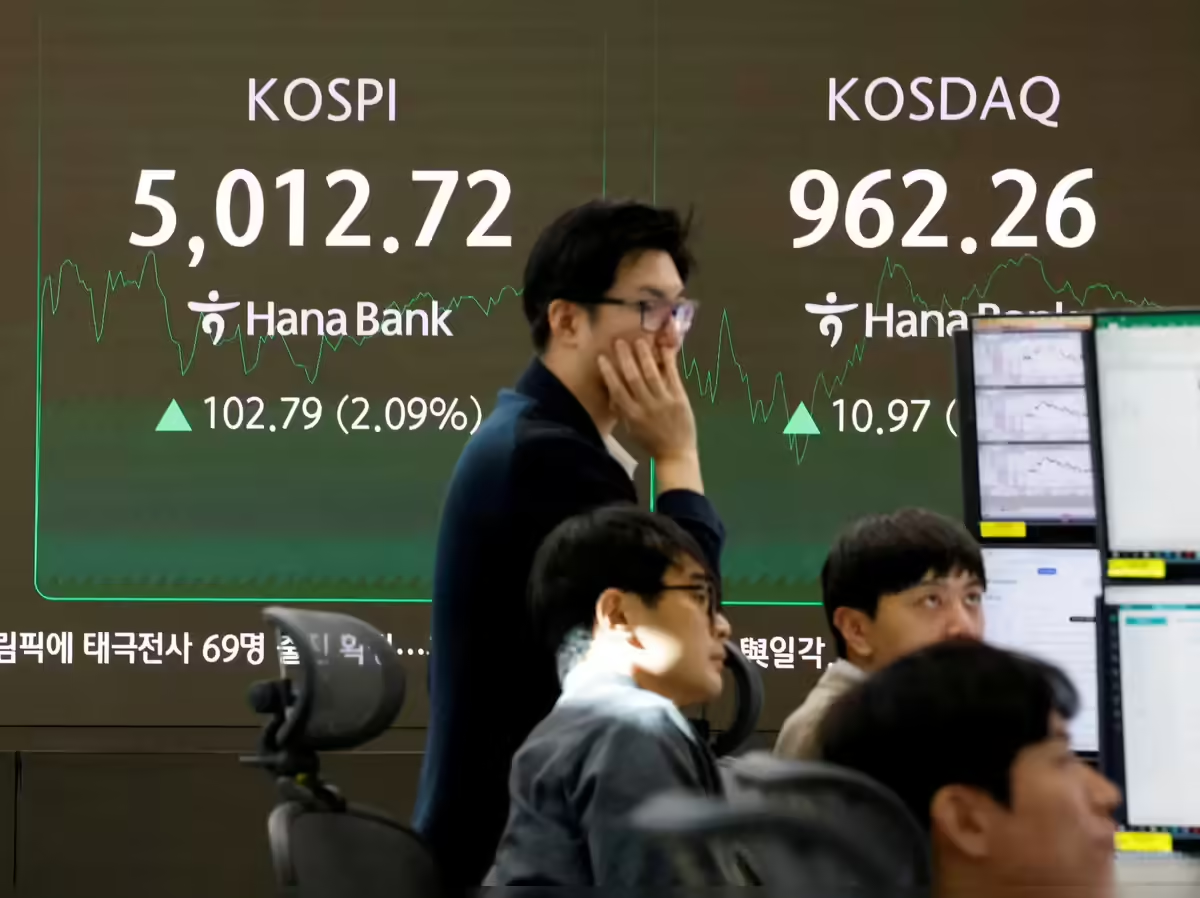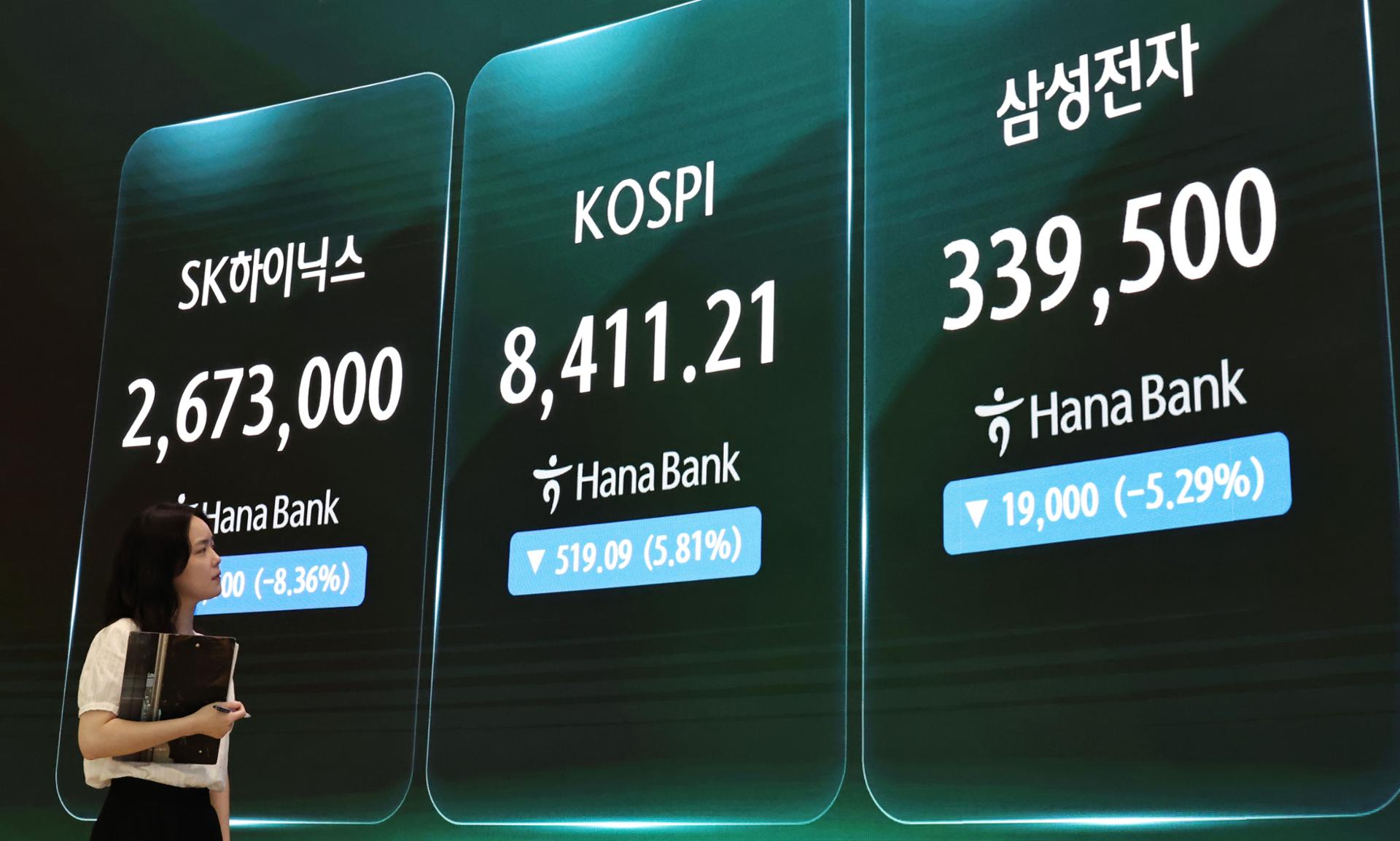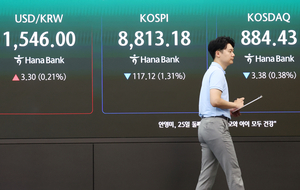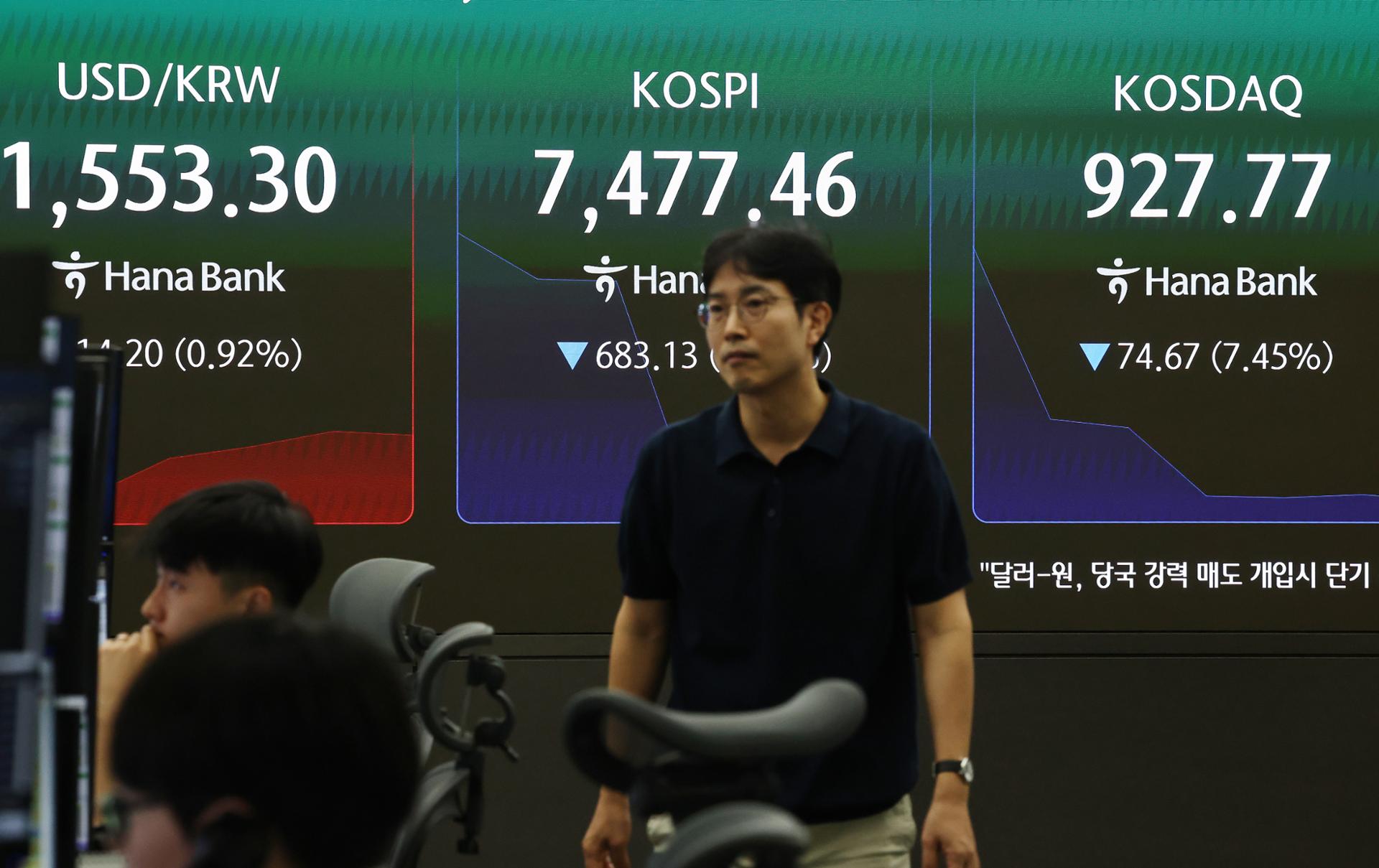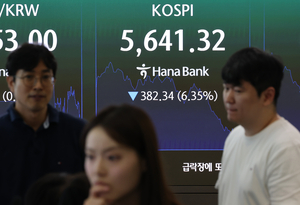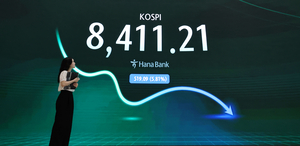
Heavy selling in semiconductor stocks extends week of wild market swings as investors grapple with heightened volatility An electronic board displays the Kospi's movement at Hana Bank's dealing room in central Seoul on Friday. (Yonhap) South Korean stocks tumbled Friday, erasing the previous session's chip-fueled rally, as the Kospi slid nearly 6 percent and triggered another circuit breaker amid mounting concerns over extreme market volatilityThe benchmark Kospi fell 519.09 points, or 5.81 percent, to close at 8,411.21 after dropping as much as 8.19 percent during the session. The tech-heavy Kosdaq lost 36.44 points, or 4.1 percent, to 851.37.The sell-off triggered a sell-side sidecar at 11:12 a.m. after Kospi 200 futures fell more than 5 percent. Less than an hour later, the Korea Exchange imposed a marketwide circuit breaker after the Kospi stayed more than 8 percent below the previous session's close for one minute, suspending trading on the main board for 20 minutes.Friday's circuit breaker came just three trading days after the previous one. It marked the 11th circuit breaker on the Kospi and the fifth this year.The latest rout followed a sharp rebound Thursday, when the Kospi surged 5.42 percent, triggering a buy-side sidecar after stronger-than-expected earnings from US chipmaker Micron lifted semiconductor shares.The Kospi has swung more than 4 percent in eight of this month's 19 trading sessions, with moves exceeding 8 percent on three occasions. Monday's 910.71-point plunge marked the largest one-day point decline on record.Retail investors bought a net 9.46 trillion won ($6.14 billion) worth of shares, while foreign and institutional investors sold a net 5.49 trillion won and 4.33 trillion won, respectively.Investor sentiment weakened after a broad sell-off in US technology stocks overnight. Concerns over weaker memory chip demand intensified after reports that Apple would raise prices across its product lineup and revise its next-generation chip road map, prompting heavy selling in semiconductor shares.Still, analysts said the Kospi's sharp decline could not be explained by the global semiconductor sell-off alone. Other major Asian markets, including Taiwan and Japan, also fell, but their losses were far smaller.They pointed instead to the market's heavy concentration in Samsung Electronics and SK hynix, the growing influence of single-stock leveraged and inverse exchange-traded funds tracking the two chipmakers and profit-taking after the sector's strong rally over the previous two sessions.Samsung Electronics and SK hynix together accounted for 57.11 percent of the Kospi's market capitalization as of Thursday's close. Both stocks fell more than 9 percent at one point during Friday's trading. SK Square and Samsung Electro-Mechanics, which had been among the biggest drivers of the recent rally, also posted sharp losses.The VKospi, often referred to as South Korea's "fear gauge," remained elevated after surging to 97.78 on Tuesday, its highest level since the 2008 global financial crisis. It climbed above 93 during Friday's session.Heo Jae-hwan, an analyst at Eugene Investment & Securities, said the sell-off reflected growing concerns over the market's heavy concentration in artificial intelligence and semiconductor stocks. He cited weakness in US technology shares, including pressure on Apple from rising semiconductor costs, and a New York Times report that OpenAI could delay its initial public offering."The market's concerns over weaker memory demand appear excessive," said Han Ji-young, an analyst at Kiwoom Securities. "Today's sell-off was driven primarily by the heavy concentration in semiconductor stocks and the resulting volatility in market flows."
Kospi whipsaws again, sliding 6% as chip sell-off rattles market
South Korean stocks tumbled Friday, erasing the previous session's chip-fueled rally, as the Kospi slid nearly 6 percent and triggered another circuit breaker a
554 words~3 min read