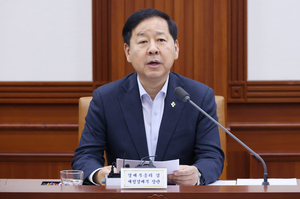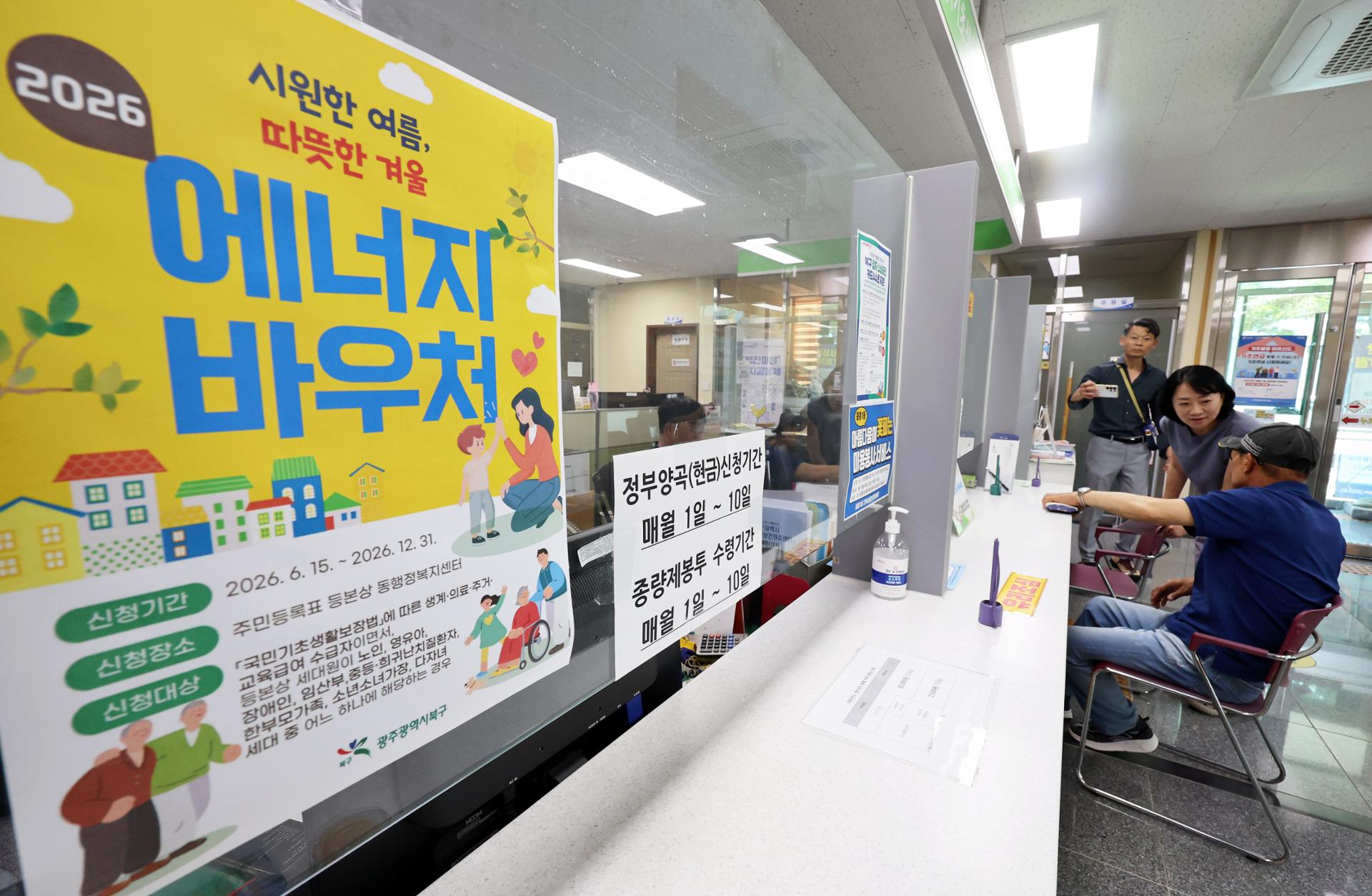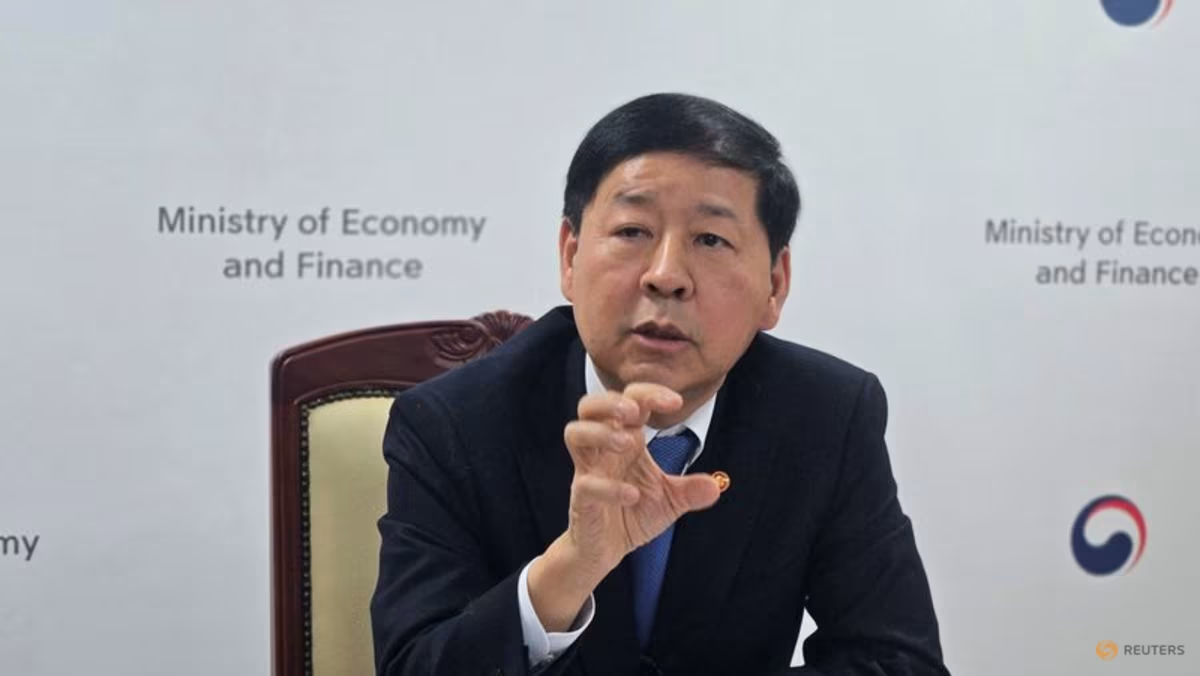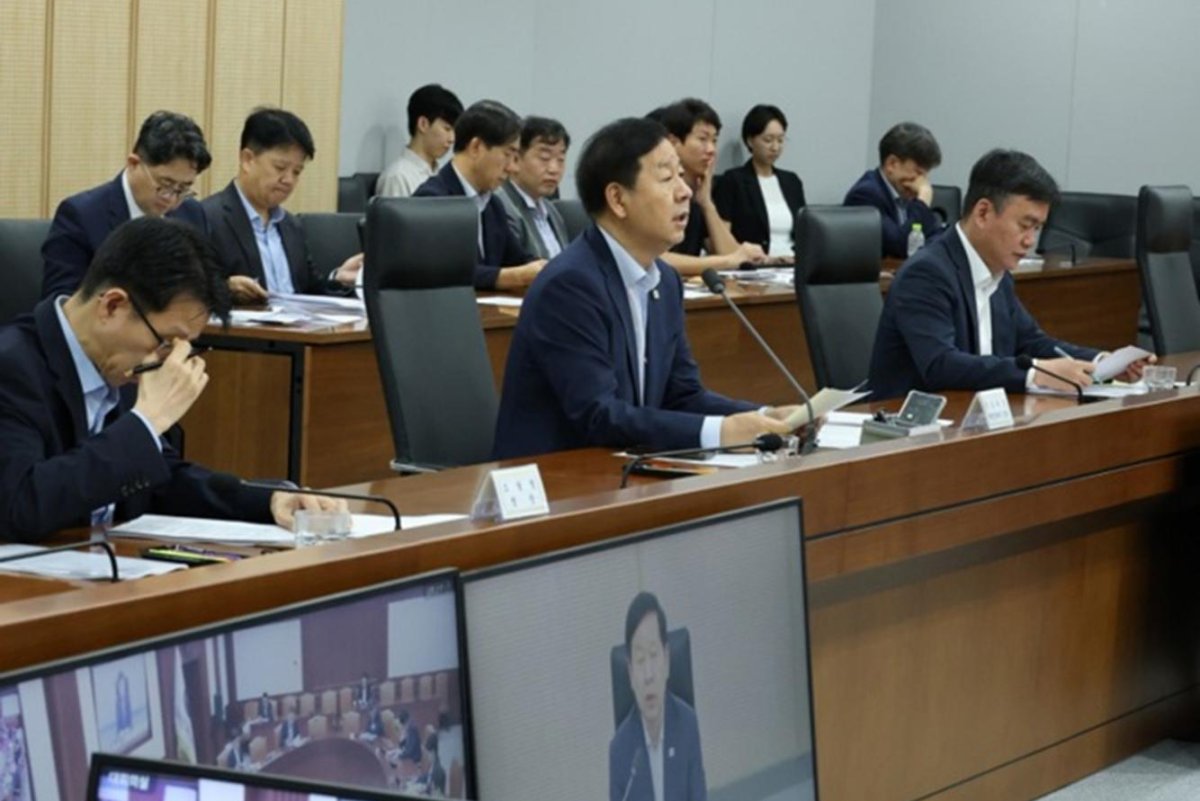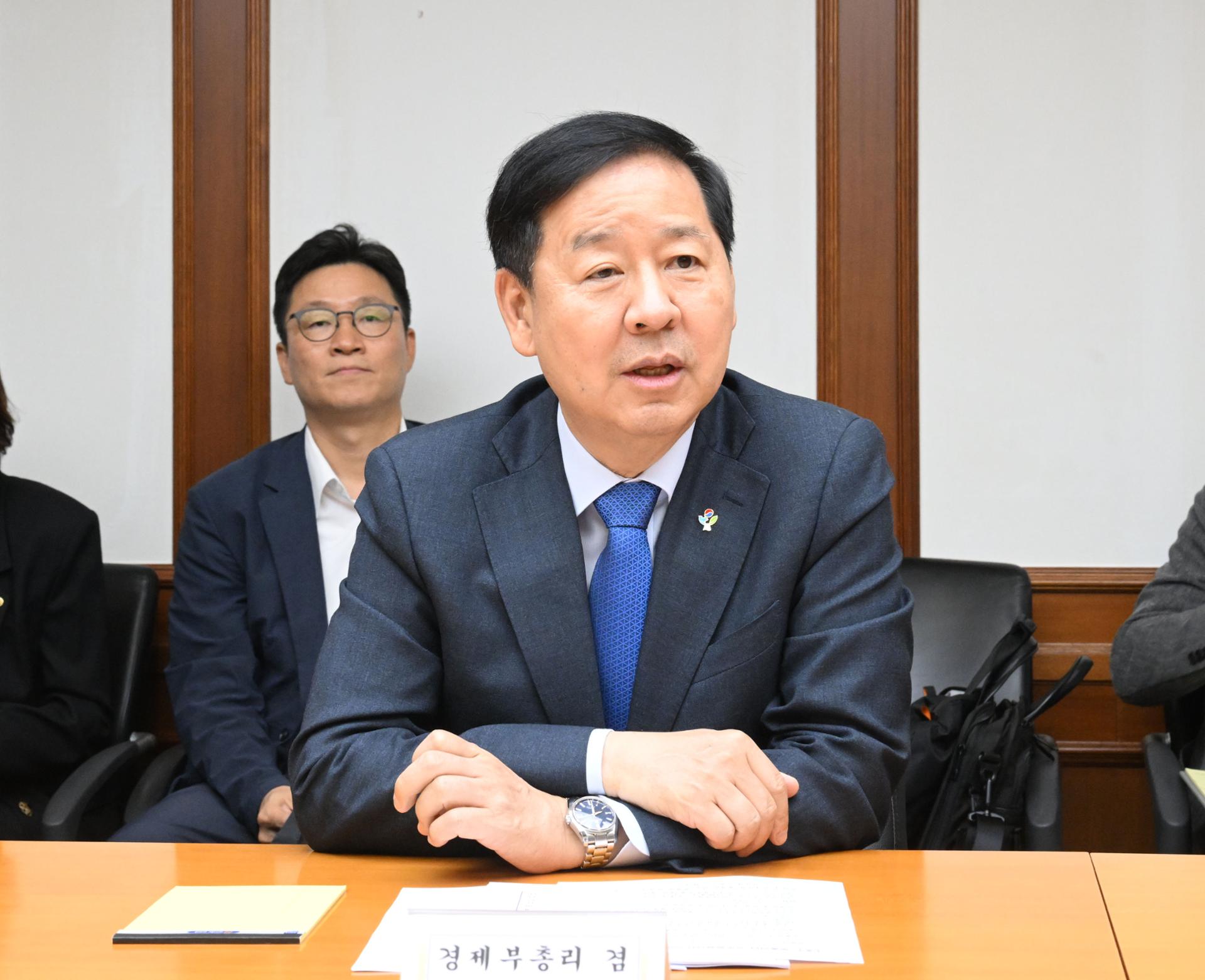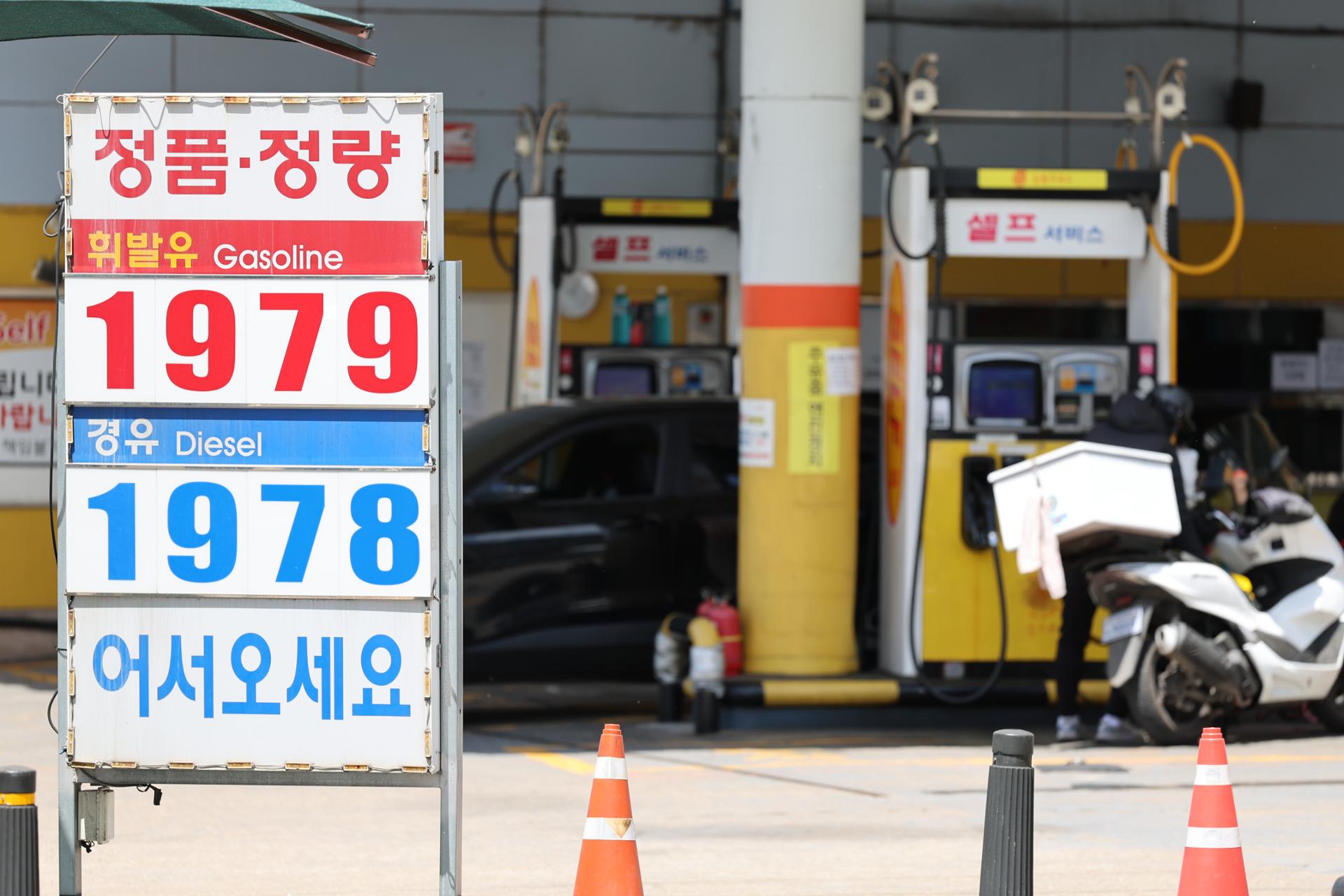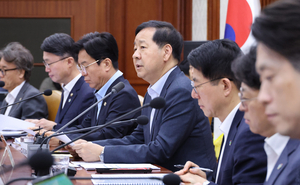
Government to freeze public utility rates in second half, seeks to keep inflation below 3 percent Finance Minister and Deputy Prime Minister Koo Yun-cheol speaks during an emergency economic meeting held in Seoul, Friday. (Yonhap) South Korea will deploy 1 trillion won ($647 million) to ease the burden of high living costs, while lowering fuel price caps and freezing major public utility rates in the second half of the year."We will inject 1 trillion won in fiscal spending to support small merchants hit by high oil prices and mobilize all available measures to do our utmost to keep consumer inflation below 3 percent in the second half," Finance Minister and Deputy Prime Minister Koo Yun-cheol said Friday.Koo announced the measures at an emergency economic meeting in Seoul, held jointly with a meeting of economy-related ministers and a special task force on living costs.The government plans to lower the seventh round of petroleum price ceilings from the current level, reflecting declines in global oil prices as well as pressure on household finances and fiscal conditions. The detailed caps are scheduled to be announced later Friday."Taking into account the decline in international oil prices, living-cost burdens and fiscal conditions, we will lower the ceiling from the current level, but keep it in place until retail fuel prices stabilize," Koo said.The government extended the sixth round of price ceilings on June 18, keeping the cap at 1,934 won per liter for gasoline, 1,923 won for diesel and 1,530 won for kerosene.Koo said external uncertainty appears to be easing after the signing of a memorandum of understanding between the US and Iran aimed at ending their war, with oil prices falling and the average domestic diesel price dropping below 2,000 won for the first time in two months.Still, the minister warned that risks remain."Uncertainty still remains in the follow-up negotiations after the memorandum, while living-cost pressures persist amid high inflation, a weak won, high interest rates and slowing employment," he said.The package includes what the government called its largest-ever discount campaign for agricultural, livestock and seafood products, to be held in July and August. It will also expand imports of fresh eggs more than sixfold, bringing in an additional 200 million eggs.To stabilize mackerel prices, the government plans to send a delegation to Norway in July to arrange direct imports of 2,000 metric tons of Norwegian mackerel for sale at lower prices. It will also buy domestically caught mackerel initially intended for export and sell it to consumers at half price.Major public utility rates, including electricity and gas, will be frozen in the second half, while households receiving energy vouchers that use kerosene or LPG will receive an additional 147,000 won, which can be used from October through May 2027.The government will also expand support for vulnerable groups and small merchants. It will broaden expressway toll discounts for people with disabilities and veterans, while doubling a loan support program for small merchants hit by high oil prices to 3 trillion won from 1.5 trillion won.Friday's meeting also discussed an industrial transition employment stabilization plan, aimed at reducing job-market disruption from the shift toward artificial intelligence and green industries. The government plans to train 1,000 AI specialists in the second half and link the program to jobs and startups.Koo said the government will soon announce additional measures to support small and medium-sized companies affected by the won's weakness.
Korea to spend W1tr to ease living costs, lower fuel price caps
South Korea will deploy 1 trillion won ($647 million) to ease the burden of high living costs, while lowering fuel price caps and freezing major public utility
564 words~3 min read