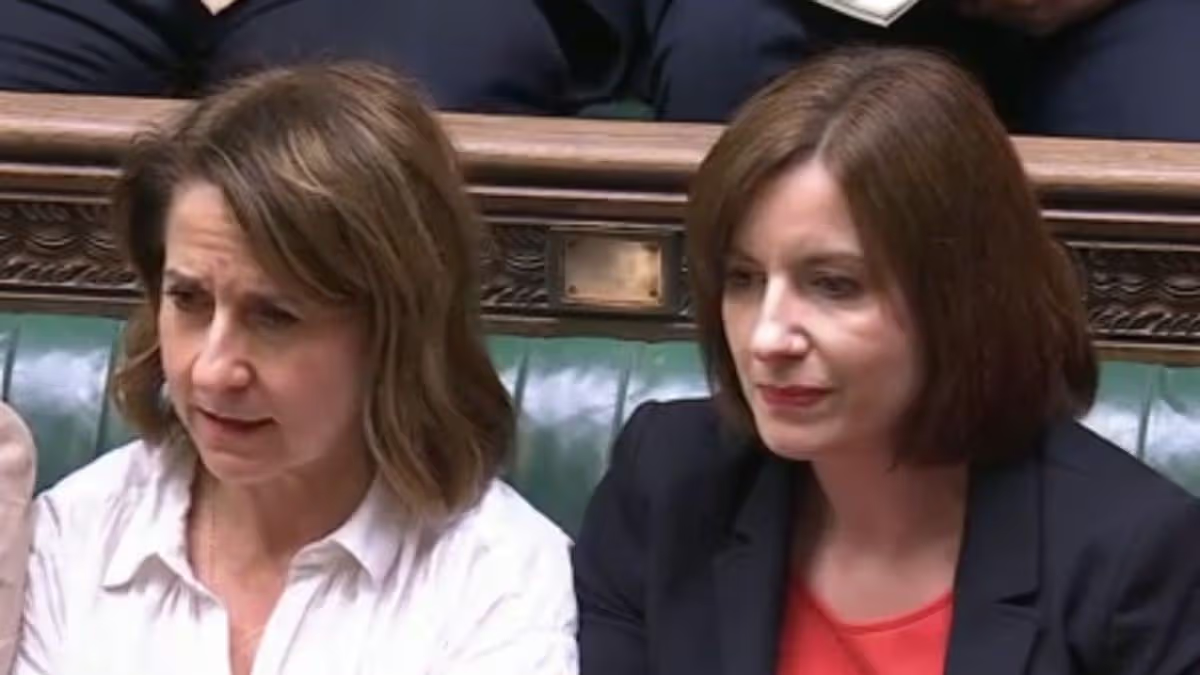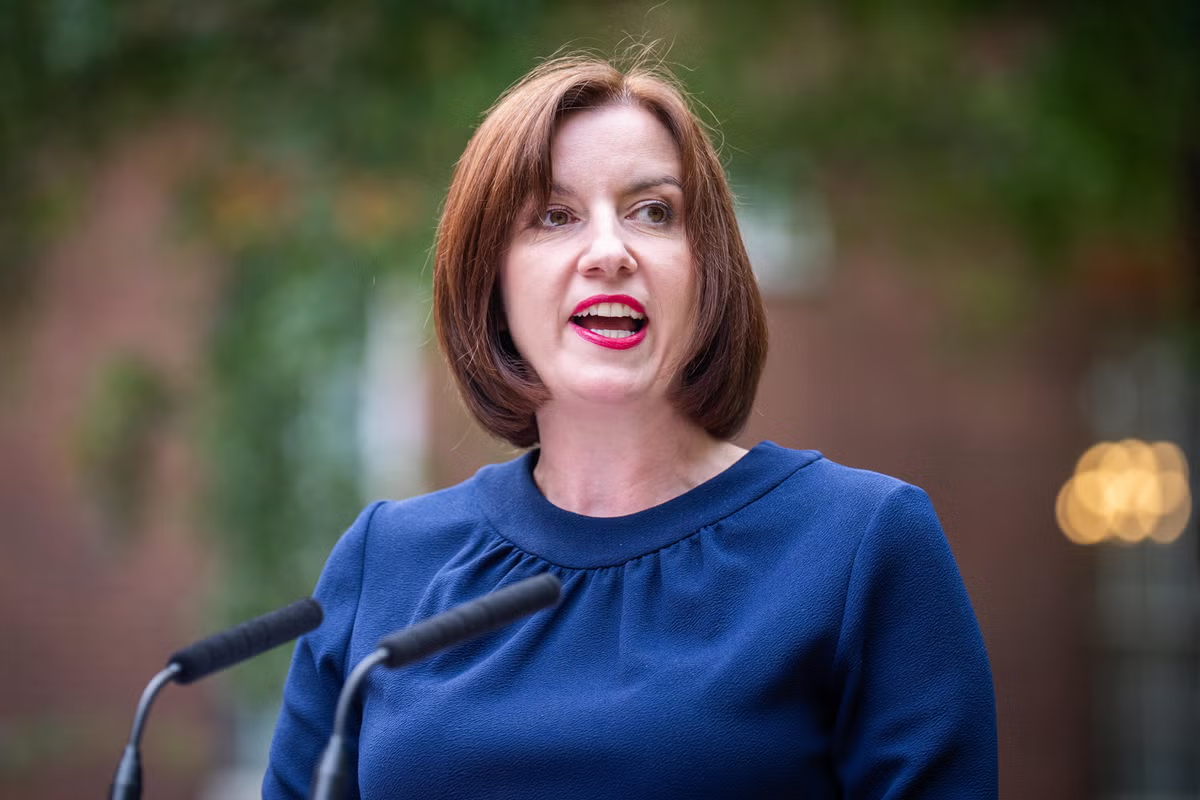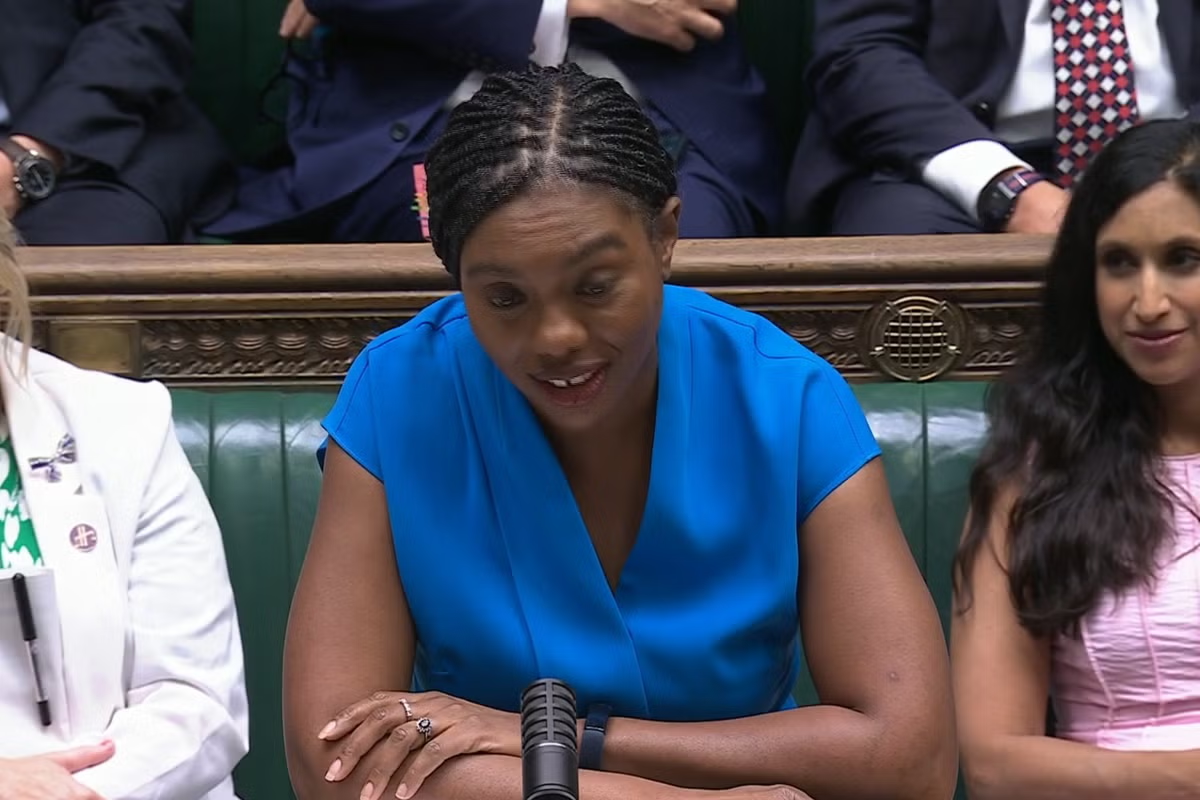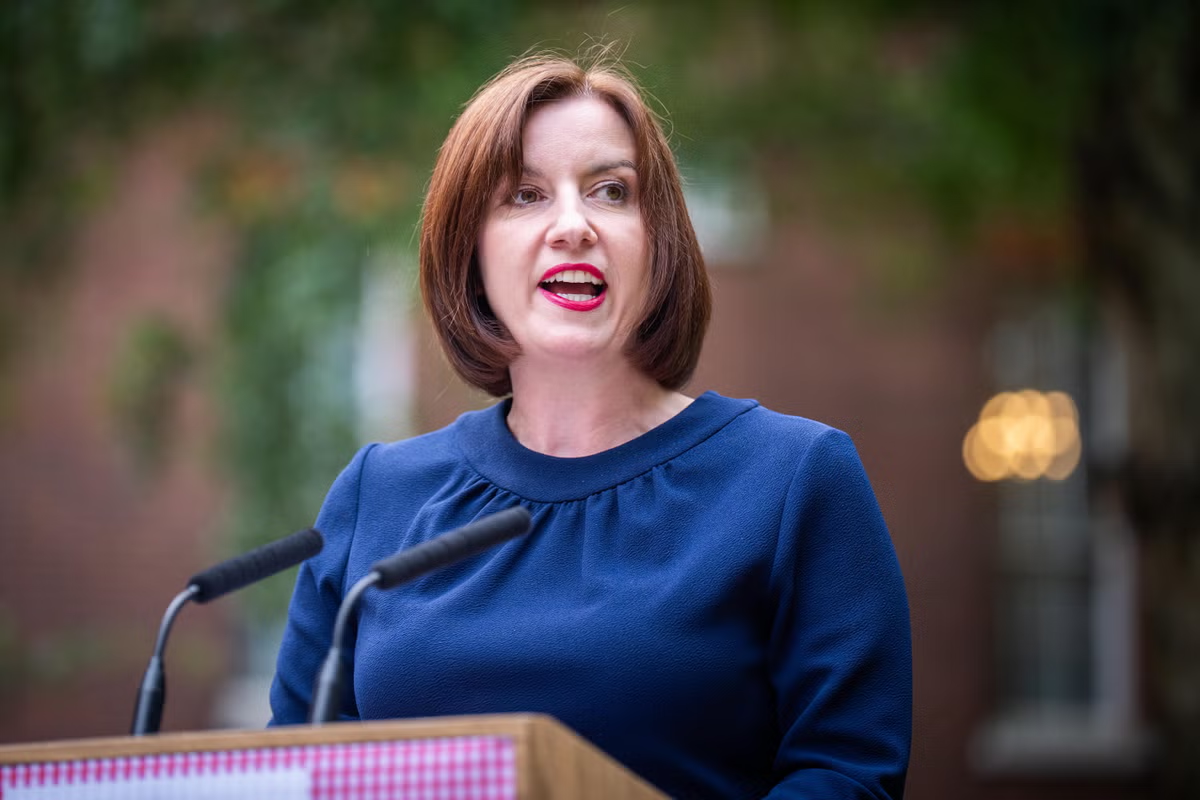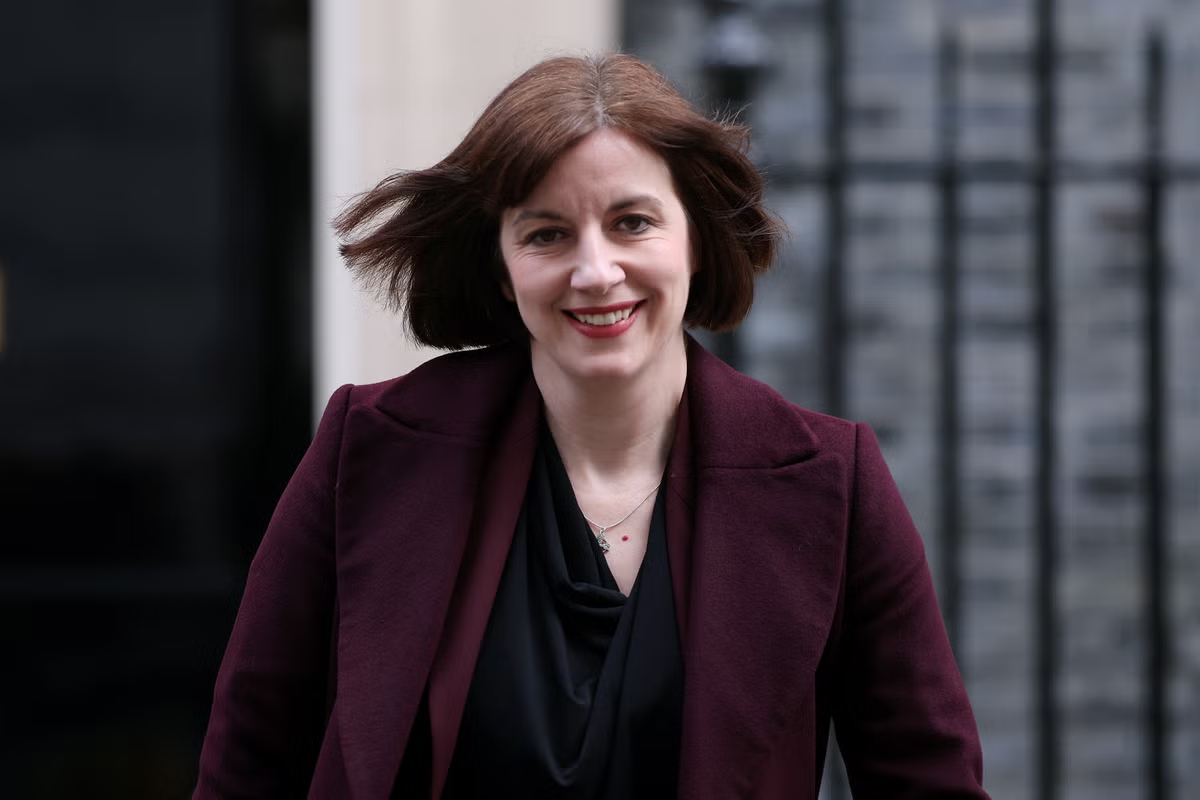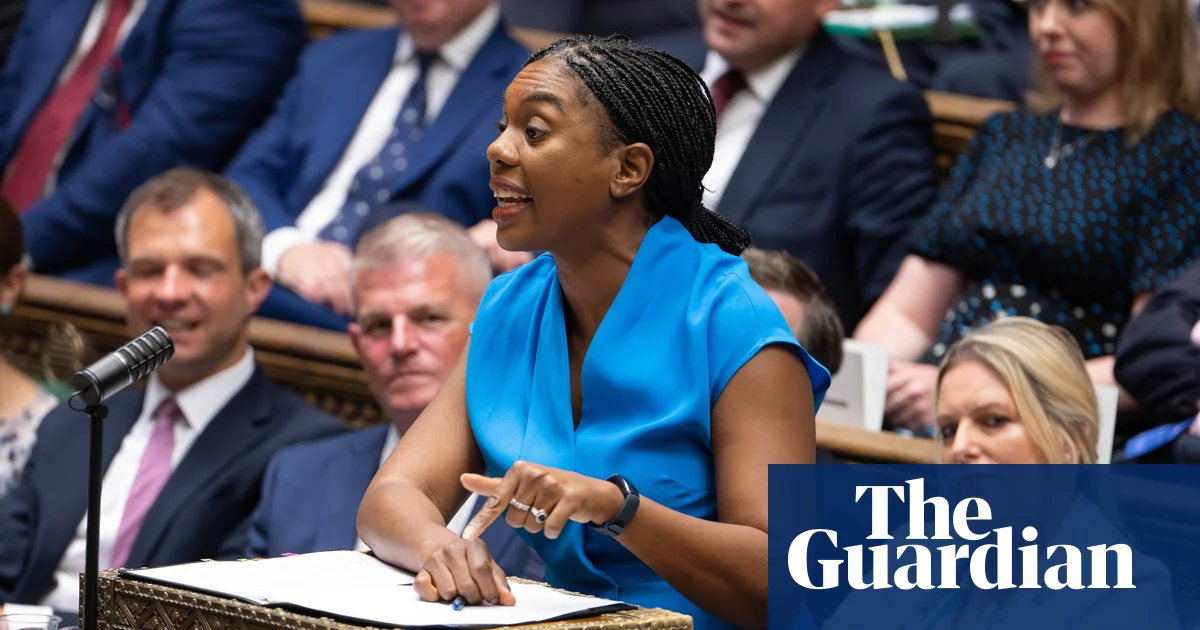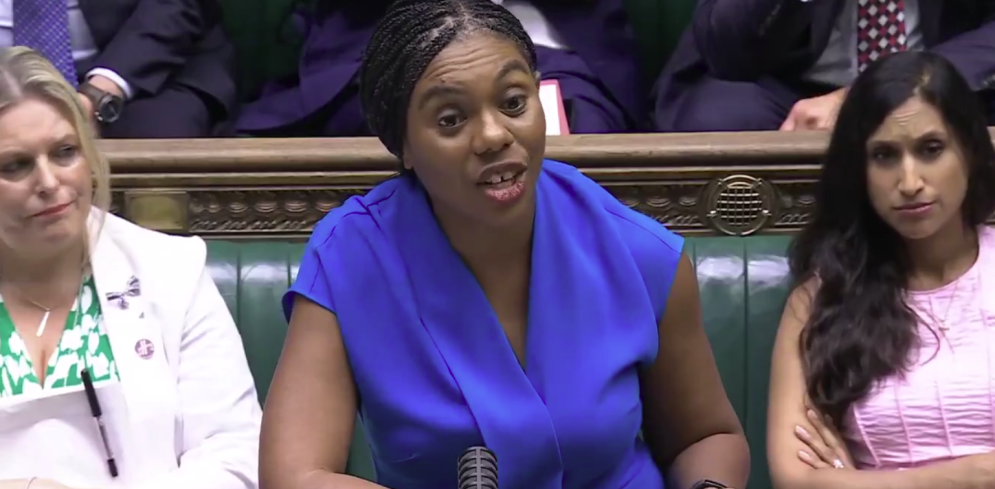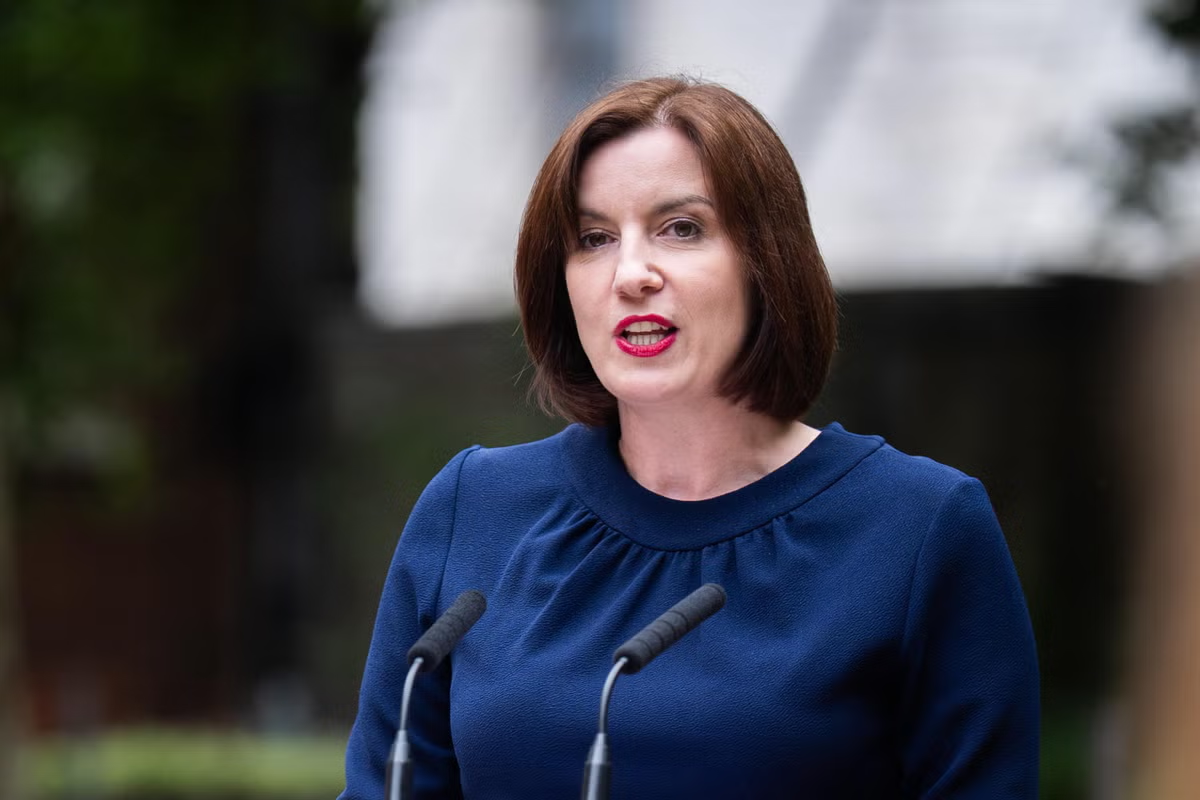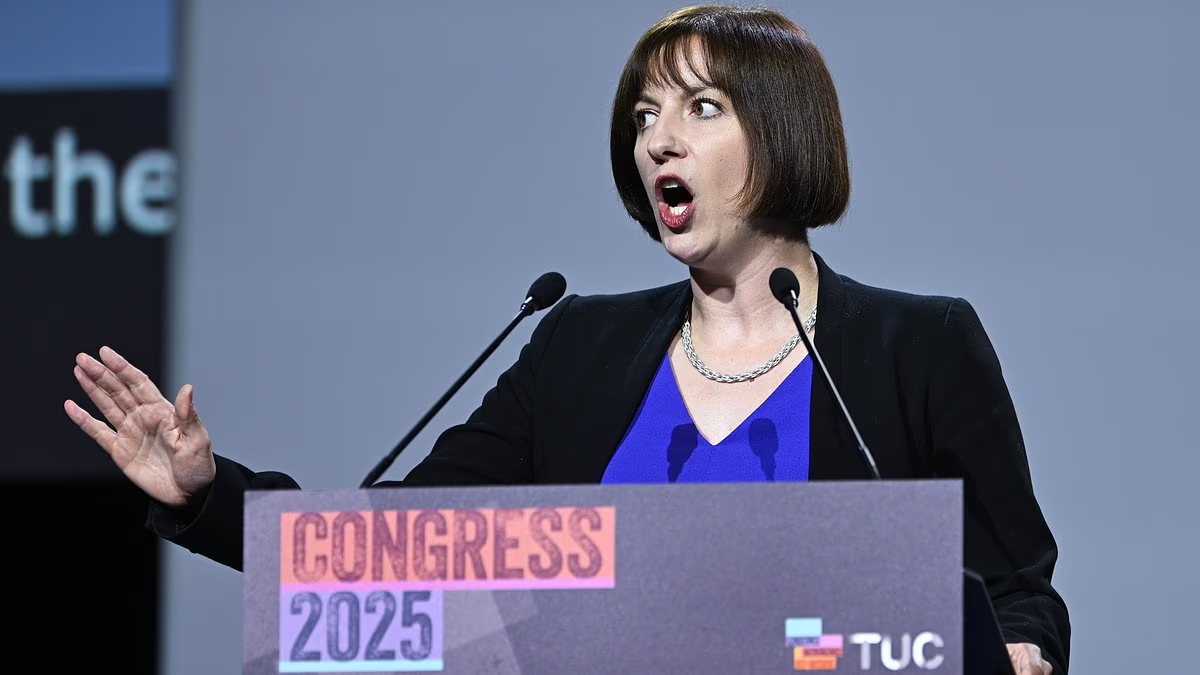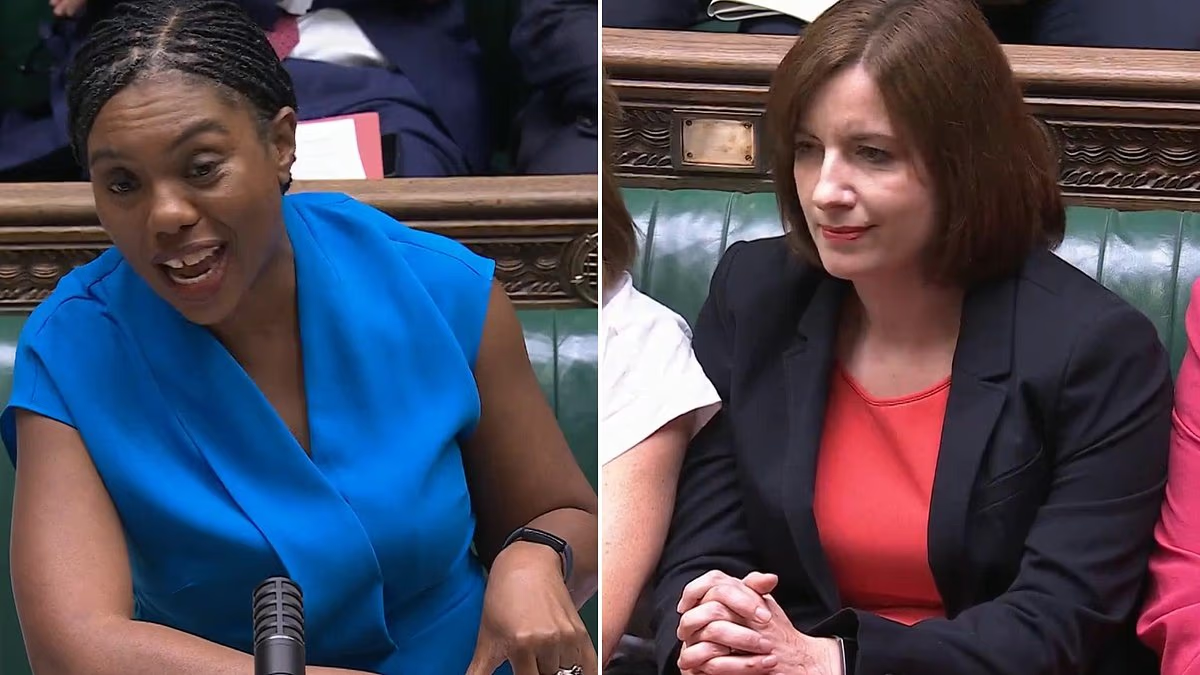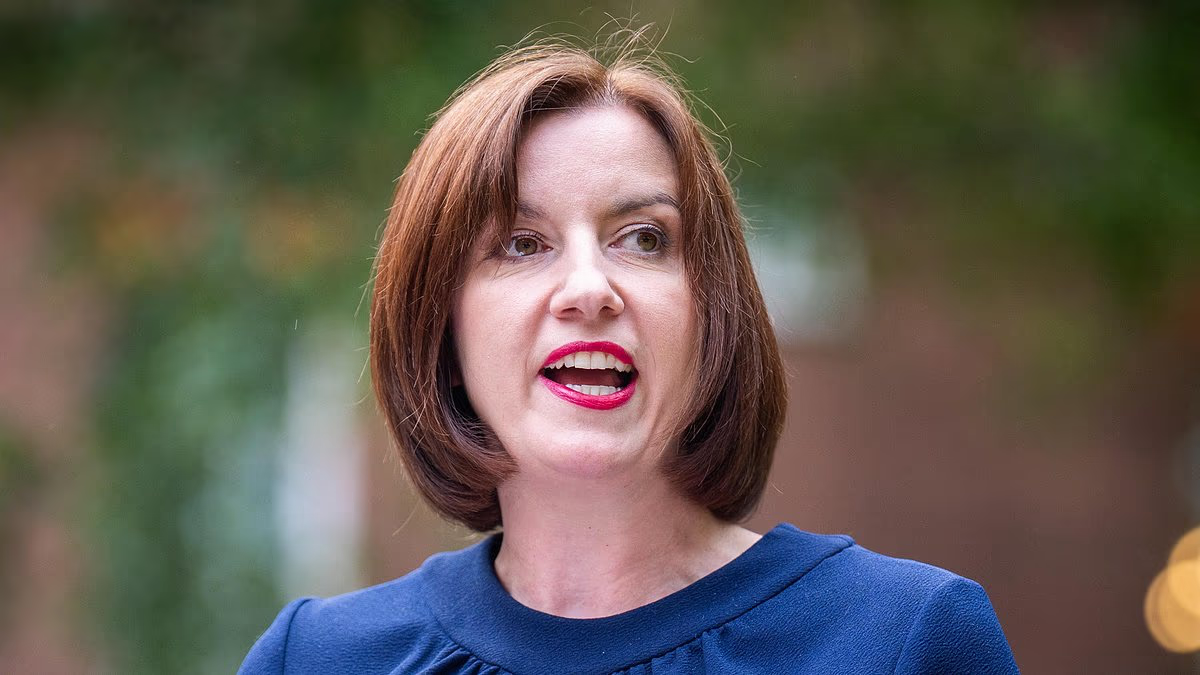
Bridget Phillipson claims she's proud to be branded 'a spiteful class warrior' by Tory leader Kemi Badenoch.Indeed, the perennially po-faced Education Secretary showed a tiny glimmer of levity yesterday when she told the BBC that she is going to have the words printed on a T-shirt.Whereupon she then attacked Mrs Badenoch for her 'unpleasant politics' and for having the effrontery to say hurty words.Yet the Conservative leader, as Labour well knows, hit the nail on the head when she accused Mrs Phillipson of presiding over a 'disaster' in British education – in both the private and the public sectors.'Chippy Phippy' (as one teacher has christened her) is waging class war against independent schools ostensibly to boost staff numbers in state schools.The result has been a drop of 2,000 on the state sector staff roll. Moreover, as Mrs Badenoch helpfully pointed out during Prime Minister's Questions, a new survey by a major teaching union reveals that precisely 0 per cent of teachers think Mrs Phillipson has done a good job.As for the private sector, the damage she has inflicted already amounts to thousands of lost jobs and thousands more displaced children. And things are only going to get worse.However hard the Government tries to paint this as some sort of egalitarian crusade, the data is now clear. Shameless attitude: Education Secretary Bridget Phillipson is unrepentant about Labour’s attack on private educationUnder Mrs Phillipson and Chancellor of the Exchequer Rachel Reeves, Labour is dismantling what used to be a world-class British export.For British independent education is – or was – worth an annual £14 billion and 280,000 jobs. Those numbers are shrinking by the week.This month's figures from the Independent Schools Council (ISC) show that twice the predicted number of pupils – more than 30,000 – have already left the private sector for state schools.Their parents will not be paying a penny in VAT, of course, but the Treasury must now find an extra £200 million and umpteen new teachers to look after them.And all over Britain, more schools are dying. After 847 unbroken years of teaching everyone from Charles II's composer, Matthew Locke, to Coldplay frontman Chris Martin, Exeter Cathedral School in Devon is about to shut its doors. So too is Horris Hill Prep School, set on the pretty Berkshire/Hampshire border which inspired old boy Richard Adams to write Watership Down.Further north in Staffordshire, the situation is baffling at Abbotsholme School, near Uttoxeter. As recently as June 4, the 137-year-old independent school was proudly trumpeting the imminent arrival of two new Steinway concert pianos.A few days later, the new owners suddenly announced that they would be closing the doors at the end of term. They claimed that a closer look at the accounts revealed it was no longer viable as a school (very convenient, given that the new owners' background is in shooting and leisure rather than education). Things got so unpleasant that stones were thrown at the headmistress's house and the school announced it was shutting the whole place a month early. 'We are too busy to talk,' says director Tony Costigan. After 847 unbroken years of teaching everyone from Charles II's composer, Matthew Locke, to Coldplay frontman Chris Martin, Exeter Cathedral School in Devon is about to shut its doorsIn Worcestershire, Malvern St James, spanning 130 years of female education, locks its doors a few days from now.They have already closed at St Lawrence College, Ramsgate, once the biggest employer in town. It is where a post-war schoolmaster, Anthony Buckeridge, dreamed up a fictional prep schoolboy called Jennings whose jolly antics filled 24 bestselling novels and spawned multiple BBC productions. Now its grand campus on the Kent coast lies empty, while parents and pupils scrabble for places nearby.The Phillipson effect extends to the upper end of the spectrum. The Princess of Wales's old (all-girls) school in Berkshire, Downe House, has agreed a new 'partnership' with (all-boys) Harrow, in north London. While both schools are adamant that they have no plans to go co-educational, they will be doing as much as possible together – wherever and whenever possible.An even older all-boys school, Sherborne, in Dorset – whose alumni include codebreaker Alan Turing, actor Hugh Bonneville and author John le Carre – is to go selectively co-educational.All teaching from three to 13 and then for A-level will be shared with the neighbouring Sherborne Girls School under one overarching 'Sherborne' brand and a fresh motto: 'Separate – but together'. The fact that each school will also close a boarding house reflects the current climate.And in Kent, another all-boys citadel, Tonbridge School, will start to admit girls at sixth-form level in 2028.In other words, the bigger schools are broadening their appeal to the shrinking pool of those who can swallow a 20 per cent VAT hike. Many of those smaller schools – catering for the squeezed middle who choose to spend money on education rather than a new car or holiday – are being pushed over the edge.Talk to veterans in private education and they will all acknowledge that the sector had been facing multiple challenges anyway.With staff costs and pensions rising ahead of inflation and schools trying to outdo each other with shiny new facilities, some major readjustments were overdue. That might previously have been feasible. However, Labour's sudden thermonuclear attack has been devastating. The Princess of Wales's old (all-girls) school in Berkshire, Downe House, has agreed a new 'partnership' with (all-boys) Harrow, in north London (pictured)A combination of VAT on fees, the abolition of business rates relief for charities purely if they happen to be private schools – now that really is 'spiteful' – plus the hike in National Insurance premiums means that some schools have found themselves unable to look beyond the end of this academic year.'Given a few years, a lot might have found a way to rethink,' says a senior executive of one private school consortium. 'But then Labour suddenly created this cauldron and a lot of them couldn't get out in time. So they've boiled.'Thousands are now losing their jobs. And there are sad days ahead for people like Sam Engle and his young family. Having moved from the US to Exeter for work, he and his wife had never thought about private education until they saw lots of contented, purposeful children spilling out of Exeter Cathedral School at going-home time and took a closer look.Here was a non-selective co-ed prep school taking children from three to 13. The couple loved what they found and, two years ago, enrolled their elder boy with the younger due to follow next year.While some pupils enjoyed a discount as cathedral choristers, the majority of the 150 pupils were local children whose parents were paying termly fees of £4,000, rising to £6,900 by the age of 11. Suddenly, in January, the school governors announced that they couldn't make ends meet. The parents began a rescue operation but that collapsed when the cathedral struck a separate deal to syphon off all the choristers to another independent school.The rest of the pupils, along with the staff, were left high and dry. The cathedral will now reclaim the school's pretty buildings. It has all left a bad taste in the mouth.'It's hard to explain to my son why the place he loves is now disappearing,' says Mr Engle, 'and there is a feeling that the cathedral has cannibalised the school.' The school and governors have been approached for comment.What also sticks in the craw is the response of the local Labour MP, Steve Race.He has waged a noisy campaign against Mecca's decision to close the local bingo hall, lamenting the loss of up to 22 jobs. The end of the city's oldest school, after 847 years, and very many more job losses, has not roused him quite as much. Contacted by the Daily Mail, he says he is 'saddened' that the school's trustees have 'chosen to close it', is 'thankful' that the choristers will still sing and loyally adds the party mantra about ending 'tax breaks for private schools'. No other country actually taxes education in the first place.Mrs Phillipson's spin doctors claim that more private schools have opened under Labour, though 90 per cent of these are small, specialist units educating children with special needs – and are mainly state-funded anyway.Examine the figures for mainstream education and the ISC says that 64 mainstream independent schools have already closed, with more on the way.'We always expected a two to three-year lag because parents already in the system want to get to the next phase,' says a senior ISC source. 'Now things really will start to bite.'Again, it is not all the fault of the Government. I have heard several tales of sharp practice, often involving one local independent school offering serious discounts to undercut another in order to scoop up the castaways when the rival goes under.One experienced educational consultant tells me that some well-known schools may already be in breach of Charity Commission rules, which state that a charity running out of money must say so.'They don't want to speak up because once there is a run on a school, it's terminal,' the expert adds.Then there is simple bad luck. Horris Hill, near Newbury, is a famous prep school with a fine academic record, including regular scholarships to its primary leavers' destination, Winchester. Horris Hill, near Newbury, is a famous prep school with a fine academic record, including scholarships to WinchesterFor years, its relatively small size (130 or so) was part of its appeal, along with its beautiful grounds. But it continued to remain an all-boys, all-boarding school while the market shifted towards day and co-ed offerings.In 2021, the school changed hands and the new owners, the Forfar Education group, were turning things round with the addition of day pupils and a new boarding house for girls. Just before it opened, a roofer's torch burned the whole thing to the ground.'We suddenly lost that key pipeline and then the VAT thing kicked in and it was no longer viable,' says chief executive John Forsyth. 'It's very sad. But we are in touch with the alumni groups to ensure that the heritage is preserved properly.'The property is now on the market, though Forfar says that the guide price is unlikely to recoup the money it has invested in the school.Every closure of every school is akin to a bereavement. 'Don't forget the ripple effect,' says an ISC spokeswoman, pointing to the local shops, cafes, laundries and other businesses that feed off a school.A Cabinet minister imposing seismic change on any major industry – and British boarding schools are still viewed worldwide as gold-standard centres of excellence – might be expected to take some interest in their handiwork.Asked how many independent schools have received a visit from Ms Phillipson during her two years in charge, the Department for Education replies: 'One.'
Proof that Phillipson 'IS a class warrior and that kids are suffering'
Bridget Phillipson claims she's proud to be branded 'a spiteful class warrior' by Tory leader Kemi Badenoch.
1,807 words~8 min read