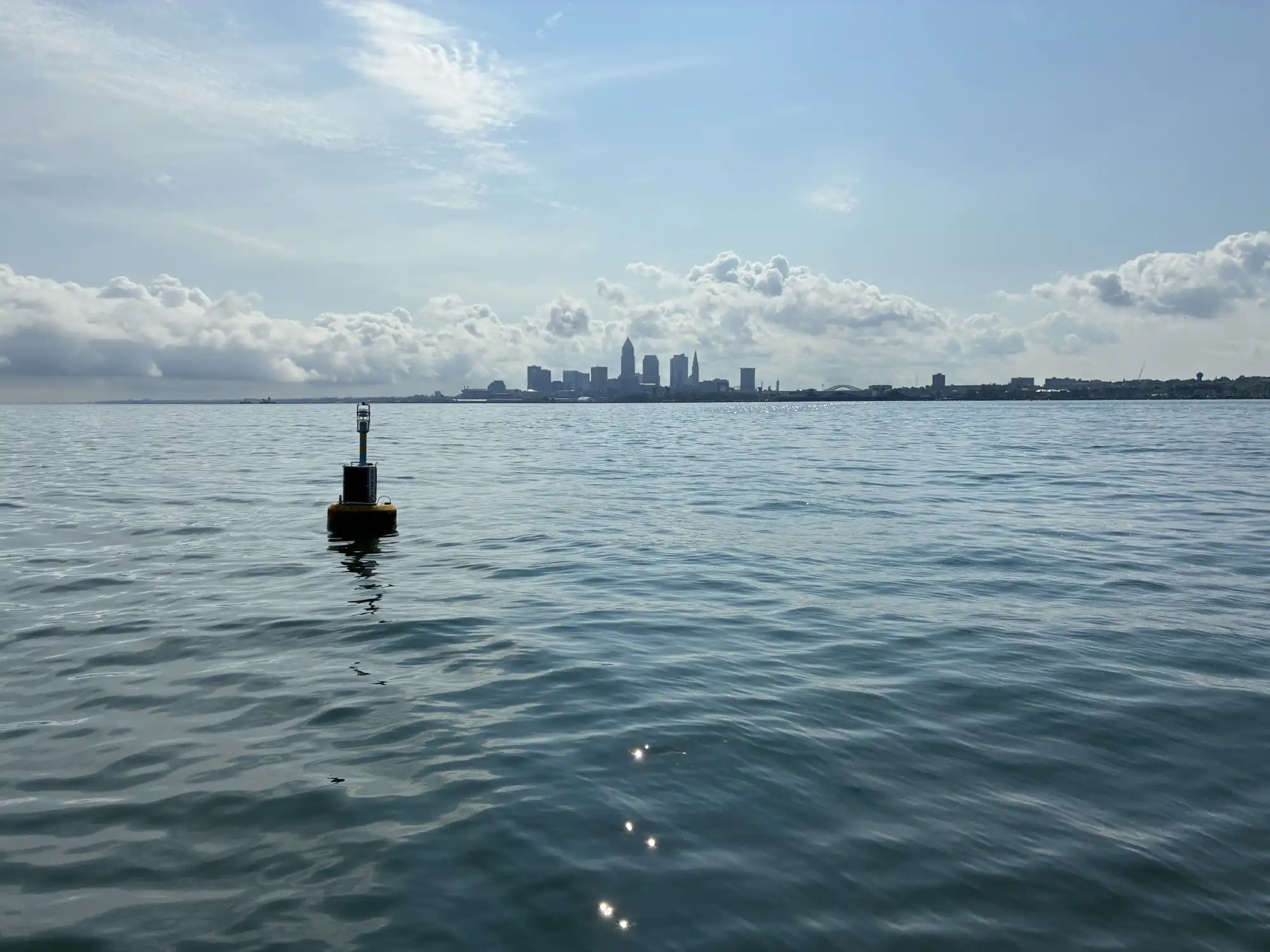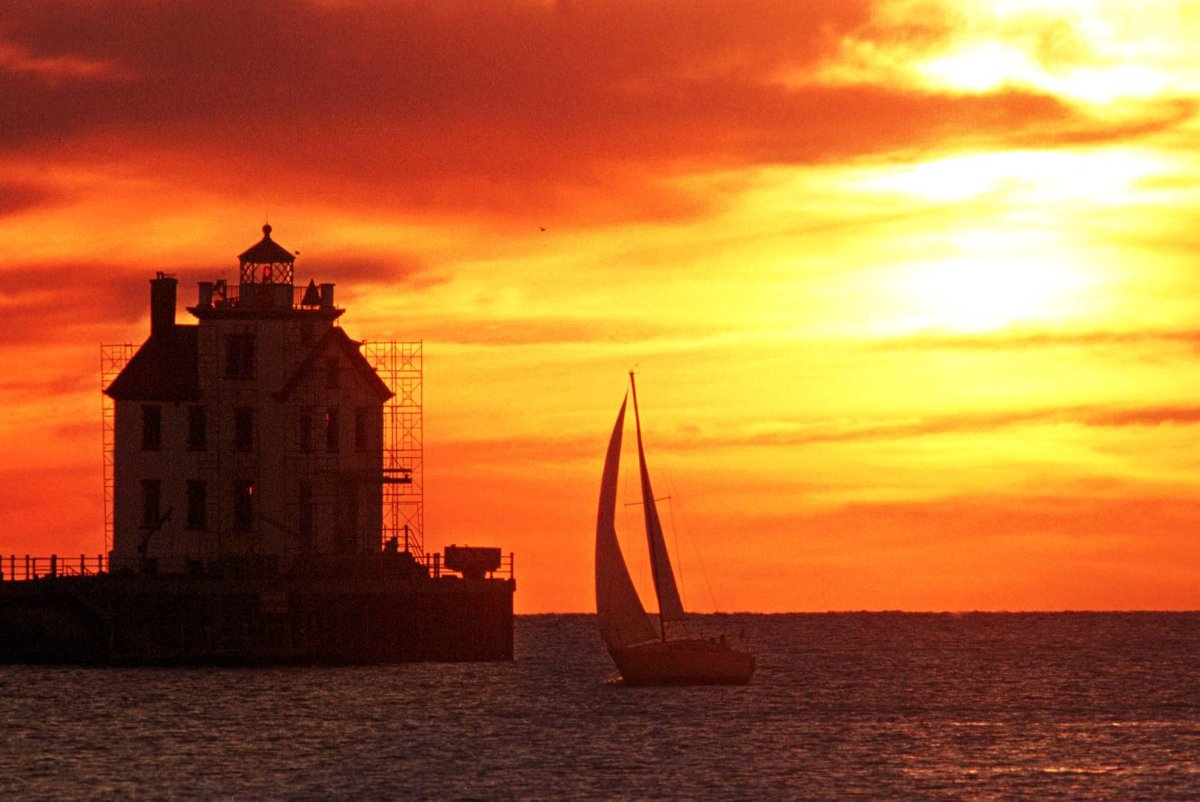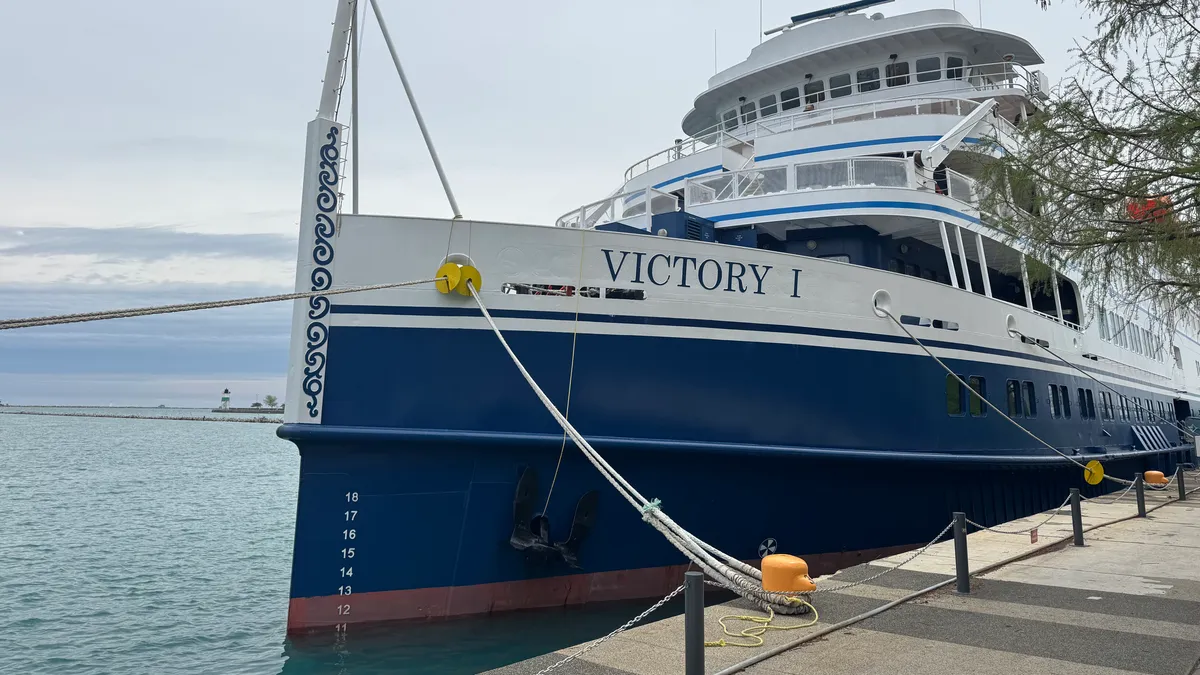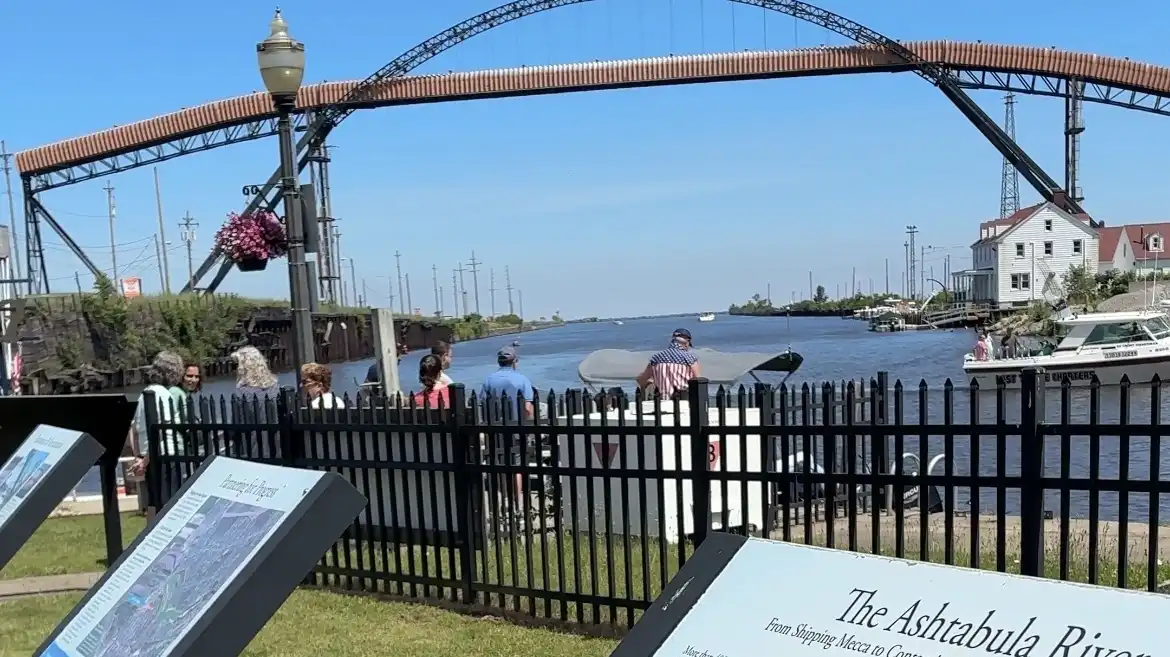
Lake Erie on a perfect June day may not look perilous, but looks can be deceiving.“When it blows up on Lake Erie, it blows up quick,” said Christine Seuffert, who led Ashtabula’s 77th annual Blessing of the Fleet.Since the 1940s, Ashtabula residents in the very northeast corner of Ohio have gathered where its namesake river flows into Lake Erie. After the lake thaws, and the freighters set sail, those residents throw a memorial wreath into the harbor for fallen sailors, and a retired priest from the local Catholic Church leads prayers of protection from the perils of the deep.The annual wreath is donated by a local florist. This year, Brad Fagnilli and his wife Maggie help their children Andrew and Susanna lay the wreath into the harbor in honor of sailors who have lost their lives at sea.Caleigh Wells/MarketplaceThe lake’s shallow water means storms make waves much faster and closer together than on the ocean. Federal seaway pilot Gunar Luhta sat quietly in the audience. He experienced the rough seas of Lake Erie on Christmas Eve 25 years ago.“We were taking waves over the top of the pilot house. We lost our lifeboat, lost everything except for our GPS, lost our radar, and was able to navigate into the harbor using an old paper chart,” he said.Luhta said his job is only getting busier every year. Even in the age of planes, trains and automobiles, more than 2 billion tons of the goods consumers and businesses buy move by ship. Coastal ports tend to steal the spotlight, because that’s where the stuff bought on Amazon tends to come into the country. But the Great Lakes and inland waterways carry nearly 700 million tons of cargo every year, according to the American Great Lakes Ports Association. “A lot of steel and a lot of grain, those are the primary things, but there's also project cargo, like windmill parts, mast sections, and blades for windmills and engines and all sorts of stuff,” Luhta said.All of that travels on the Great Lakes because they’re close to a lot of steel mills and grain-growing areas. The cargo includes the grain that’ll feed the cow that’ll end up on your Fourth of July burger, the steel that’ll go into your next car and the salt mined beneath Lake Erie that’ll make your roads safer next winter.“The most efficient way to ship a whole bunch of salt that you mine under the lake is to ship it on top of the lake versus putting it on a whole whole lot of trucks and trying to send it that way,” said Jonathan Ernest, an economics professor at Case Western Reserve University.Ships cut down on fuel use, pollution, and road congestion — and they save money. So the demand for them on the Great Lakes isn’t going anywhere. Which also means that Great Lakes residents will keep showing up to their respective harbors every year, and doing what they can to make sure those ships get where they’re supposed to go.
Need a burger? A car? Winter road salt? Thank cargo ships on the Great Lakes
Some of the busiest ports in the U.S. are around the Great Lakes, and last weekend, a group of people who understand just how important Great Lakes shipping is gathered to pray for calm seas and safe voyages.
503 words~2 min read