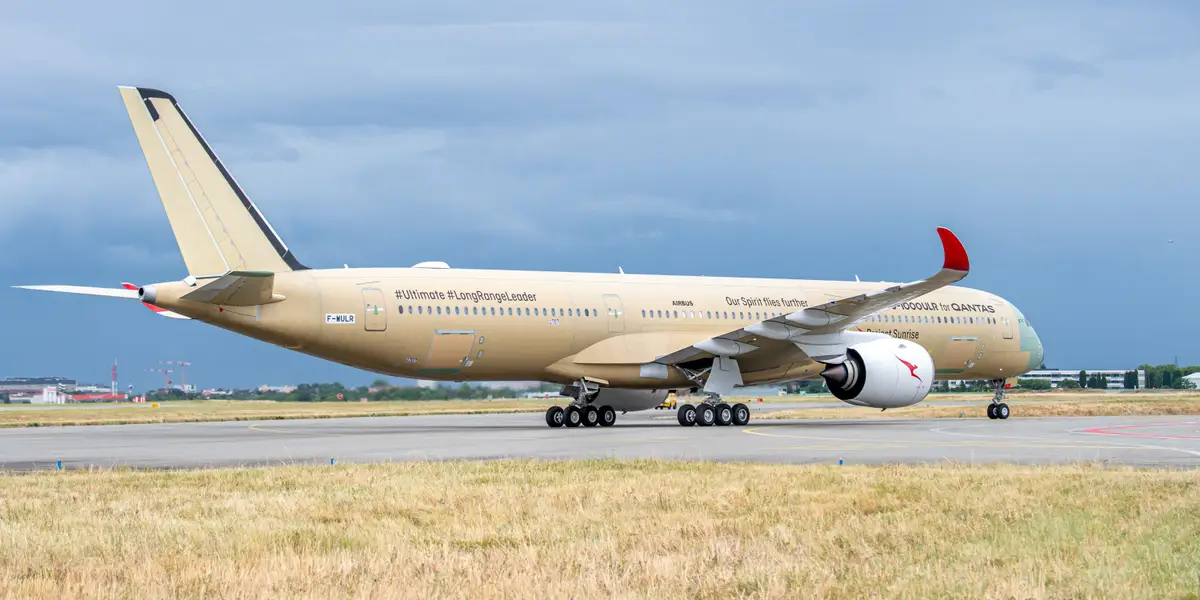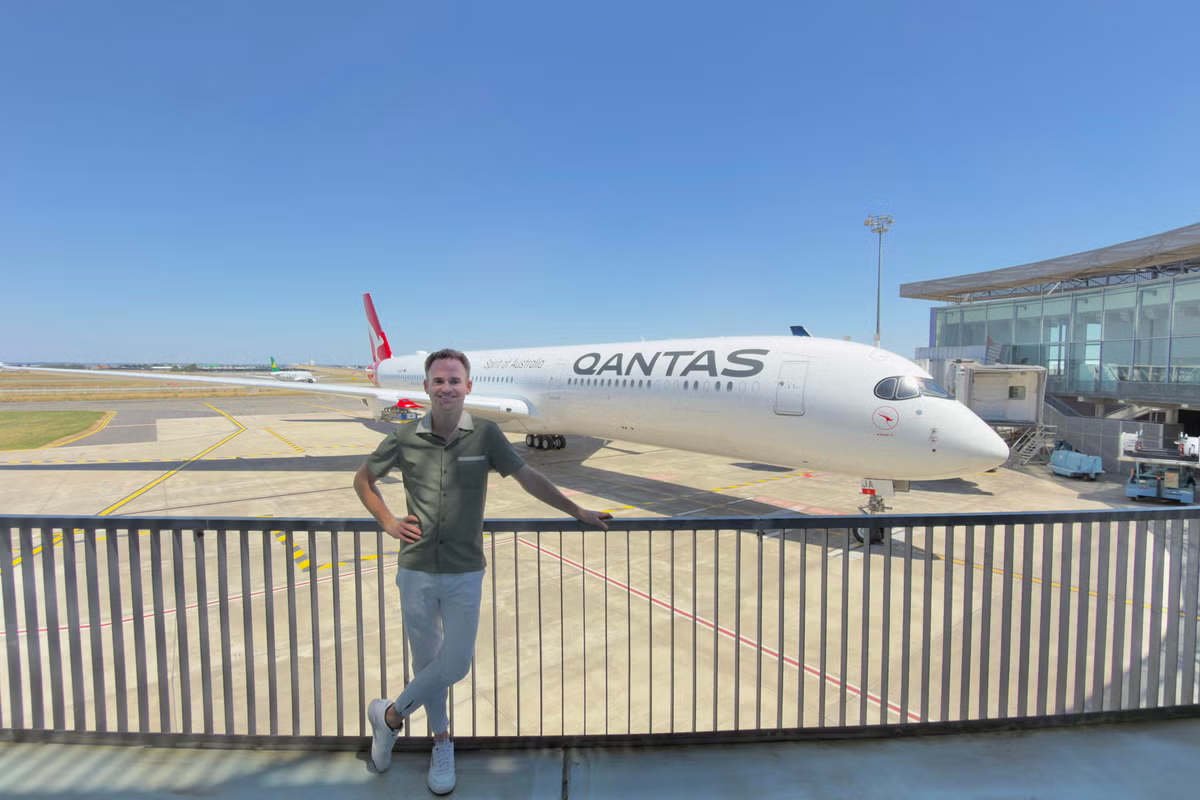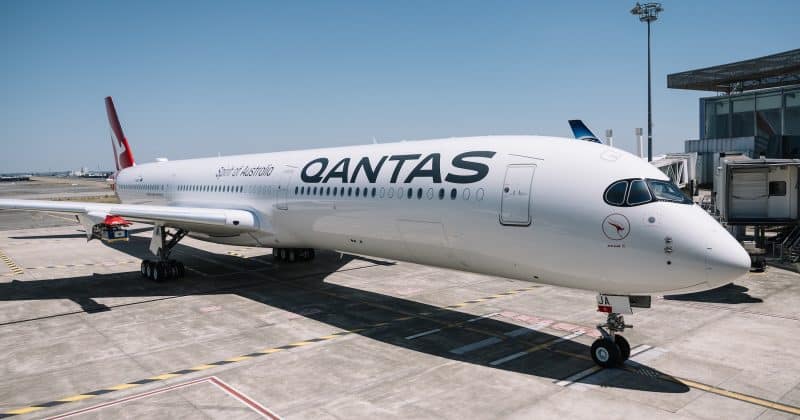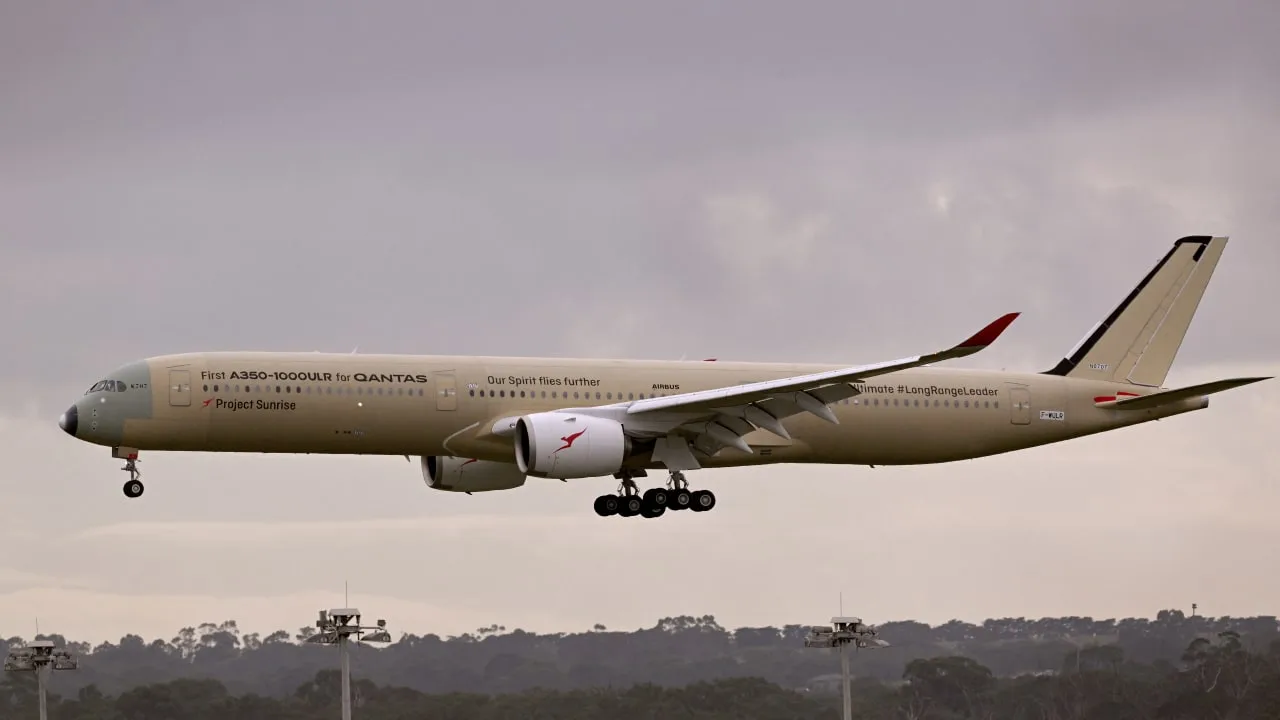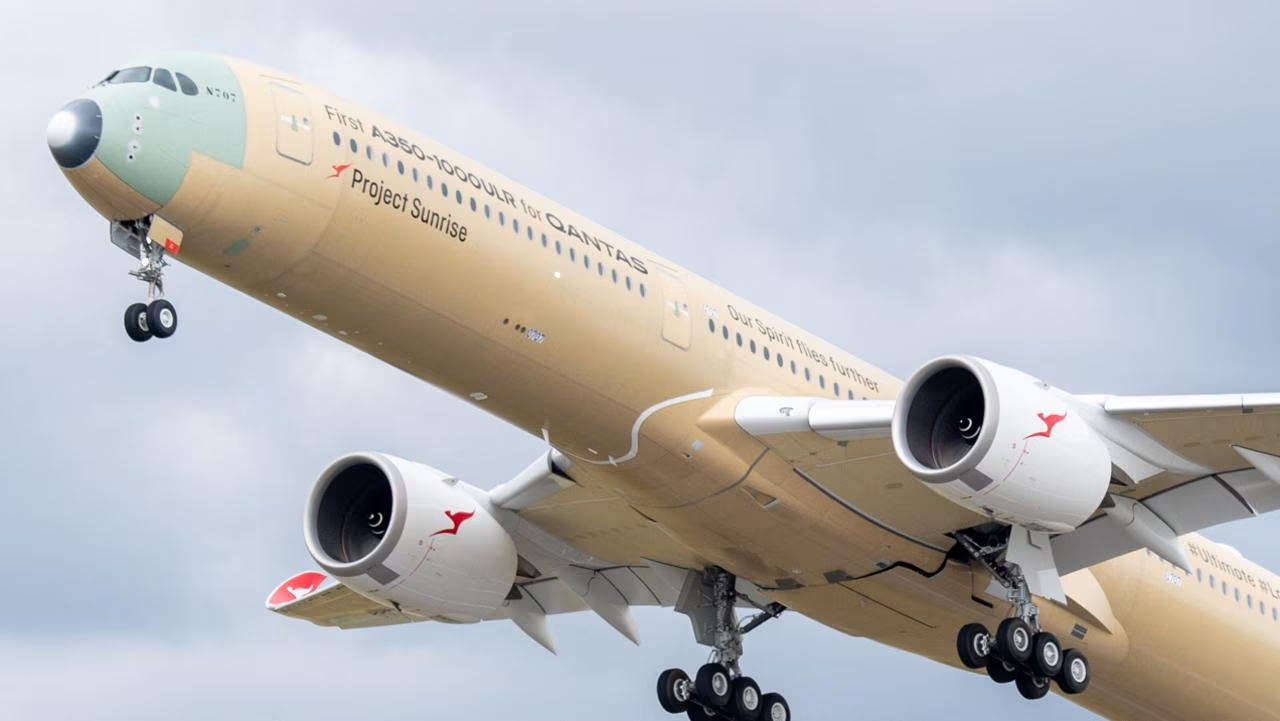
By the end of the same year, the Australian airline plans to fly non-stop to New York.Passengers on the custom-built Airbus A350-1000ULR aircraft will cross between nine and 11 time zones on the journey to London and a whopping 14 to 16 on the New York flight, depending on the time of year.Stuck in a plane for 21 hours and crossing time zones faster than their internal clocks, there is a lot to consider regarding the health of these future customers.There is the challenge of sleep deprivation or mistimed sleep, fatigue and jet lag, long periods of immobility, and potential dehydration.Qantas called on the expertise of Peter Cistulli, a professor of sleep medicine at the University of Sydney’s Charles Perkins Centre, to help.news.com.au was there at Airbus headquarters in Toulouse, France last week when Prof Cistulli revealed his team’s research and the recommendations he made to the airline.“We have embedded biology into every aspect of the design from the outset,” he said, explaining the partnership started over 10 years ago.“We have experts in sleep and circadian science, world experts in nutrition and physical activity, behavioural design, and evaluation.”He described the changes as a “revolutionary” and a “new era” thanks to research that was “disrupting” the traditional approach to flying.But surprisingly, despite significant investment and change to the on-board experience, the professor said passengers may not even notice the science happening around them – “which is probably a good thing”.What is going to change?Prof Cistulli explained that the traditional aeroplane model was to get passengers onto the aircraft safely, feed them, turn the lights out, then wake them up and feed them again.But an optimised approach involved deliberately timing meals and sleep.He said the strength of lighting, the colour and timing was “very important” in influencing our circadian clock, as well as what meals were served up and when.“Light is the strongest environmental cue for the body clock,” he said.Qantas decided on 12 lighting scenes for the A350-1000ULR, including a sunrise and sunset that gradually roll through the cabin, to help customers adjust.Passengers can expect a huge 12 hour window of darkness to encourage sleep on the Sydney-London flight.As for the food, Prof Cistulli said before sleep on the flight you want “not heavy, low fat, more protein”.“You can use spices strategically when you want people to stay awake,” he added.However, it’s looking like customers will still have the choice to participate.When news.com.au asked if all the food would be optimised, Prof Cistulli said the optimised meal would likely just be an option on the menu with an asterisk indicating it’s the recommendation.There is no detail yet on what the meals will be.The aircraft also has a wellness zone located between premium economy and economy that is available to everyone, with guided exercises developed by the Charles Perkins Centre.“The idea is that the in-flight entertainment system will include a channel that provides this kind of wellness and health messaging,” Prof Cistulli said.“But everybody’s got choice. Nobody’s going to be forced to do anything. People will make their own informed decisions based on the information that we are providing them.”Down the track, Prof Cistulli said he expects there might be a journey planner that will be provided to passengers to help them best prepare their bodies in the days before a flight.Qantas ran health and wellness research flights for Project Sunrise – the name of its ambitious plan for non-stop flights between the east coast of Australia and London or New York – in 2019. It involved volunteers flying on an optimised schedule based on science and a traditional schedule.Data was collected seven days prior to the flight, during the flight and two weeks after the flight. Passengers wore electrocardiograms that monitored light exposure and activity, undertook reaction tests to assess their alertness, and completed questionnaires and logs about their sleep, food, beverage intake, exercise, jet lag, sleepiness and mood.“The optimised versus the traditional produced a shorter perceived jet lag duration post flight, higher alertness in the two days post flight, and less fragmented sleep during the flight,” Prof Cistulli said.Jet lag hangs around for about seven days on traditional approaches compared to a couple days when flying on an optimised schedule.Interestingly, the results found that passengers on an optimised schedule in economy, did better overall than those on a traditional schedule in business class.Read related topics:QantasSydney
Qantas flight will turn dark for 12 hours
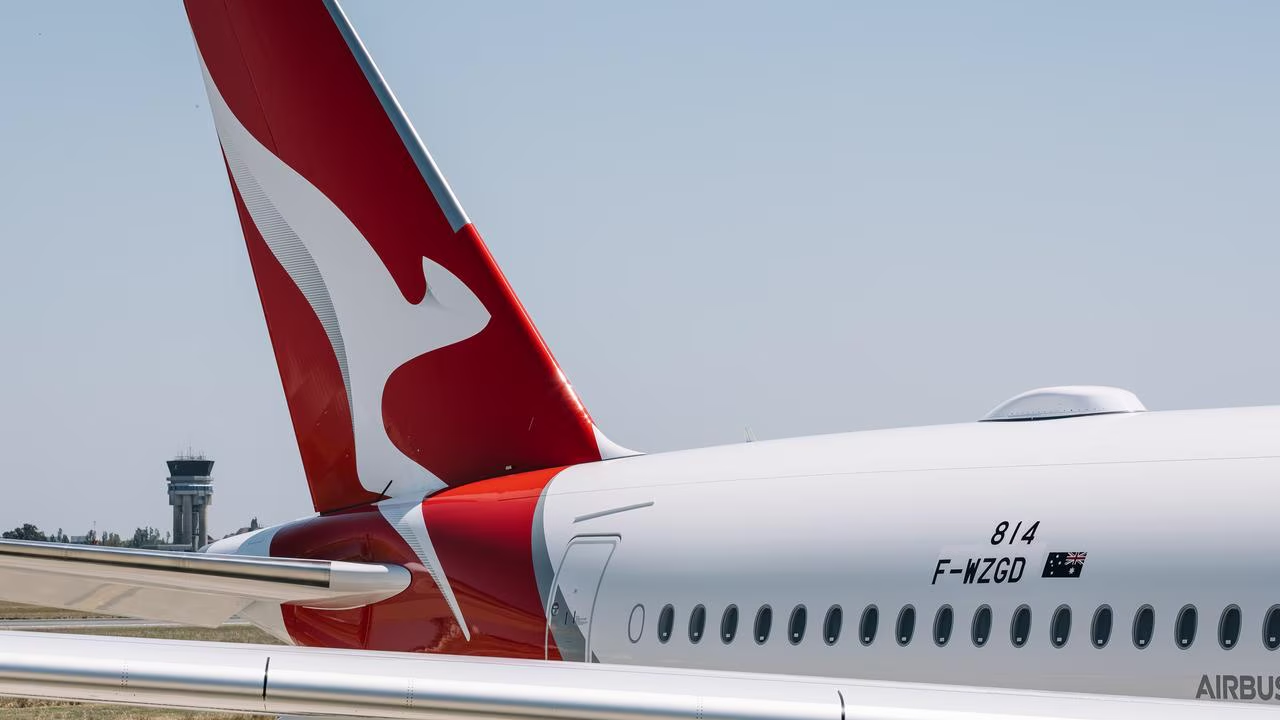
Qantas will fly 21 hours non-stop between Sydney and London from October next year on the world’s longest-range commercial aircraft.
725 words~3 min read