In a letter to House Speaker Mike Johnson (R-LA), Office of Management and Budget Director Russell Vought said the administration’s request is primarily aimed at addressing costs associated with Operation Epic Fury, while also funding other urgent priorities.“I am transmitting to the Congress a request for $87.6 billion in supplemental funding,” Vought wrote. “Most of this request will address urgent needs related to Operation Epic Fury, in addition to other critical needs such as responding to the Ebola outbreak in Central Africa and supporting hardworking American farmers.”
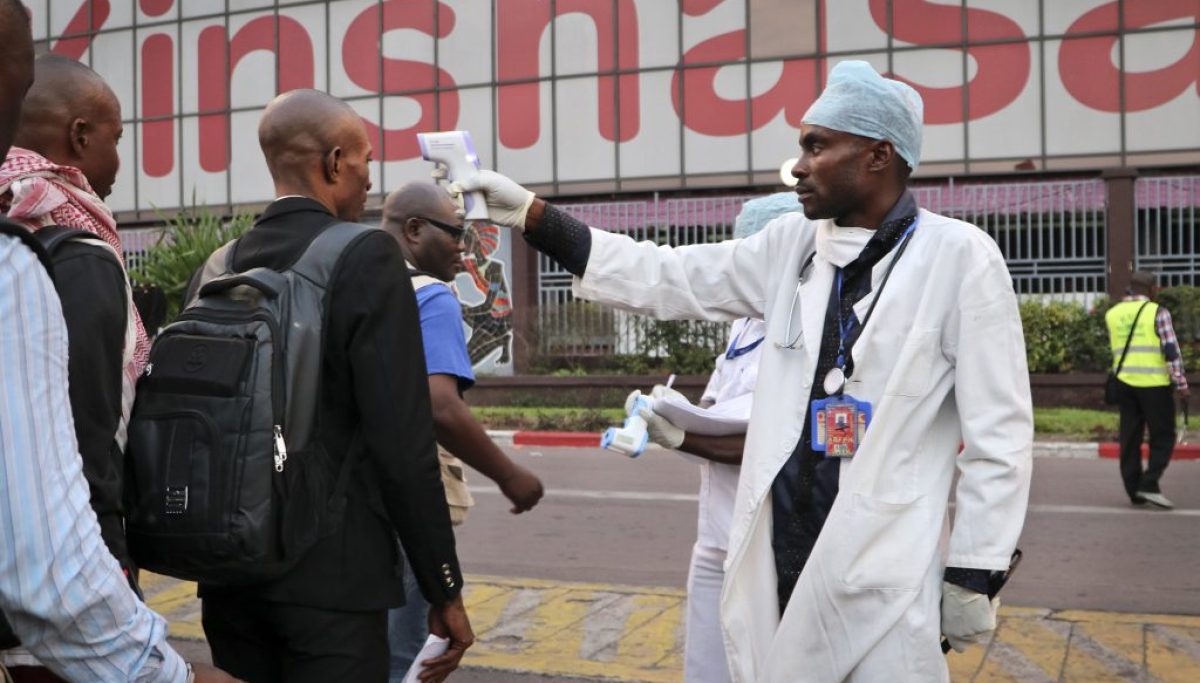
The administration is seeking $1.4 billion specifically for Ebola response efforts, warning that the virus could spread beyond the Democratic Republic of the Congo and Uganda if left unchecked.“These funds would be used to limit the spread of Ebola beyond the Democratic Republic of the Congo and Uganda to other vulnerable nations and ensure the virus does not reach U.S. shores,” Vought wrote.The supplemental bill includes substantial defense spending as well, including $21 billion for munitions replenishment, $17.3 billion for operational costs, $5.1 billion for cybersecurity and autonomous systems, $2.4 billion for drone programs, $1.7 billion for military readiness, and $12.1 billion for classified programs.The request comes as health officials continue to sound alarms over the outbreak, which has become one of the most severe in modern history. As of Monday, the outbreak had sickened 1,048 people and killed 267, according to the World Health Organization.WHO Director of Health Emergency Alert and Response Operations Abdirahman Mahamud described the outbreak as the deadliest first month of an Ebola epidemic ever recorded in Africa.The current outbreak reached 250 deaths in just 37 days. It took 78 days to reach 250 deaths during the 2014-16 West Africa outbreak, and 130 days during the 2018-19 Congo outbreak.In response, the Centers for Disease Control and Prevention issued travel health notices for both the Congo and Uganda, advising Americans to avoid nonessential travel to the provinces surrounding the outbreak location. Travelers returning from affected areas are urged to monitor for symptoms for 21 days after departure.The CDC and Department of Homeland Security have also implemented enhanced screening procedures, entry restrictions, and other public health measures designed to prevent Ebola from entering the United States.