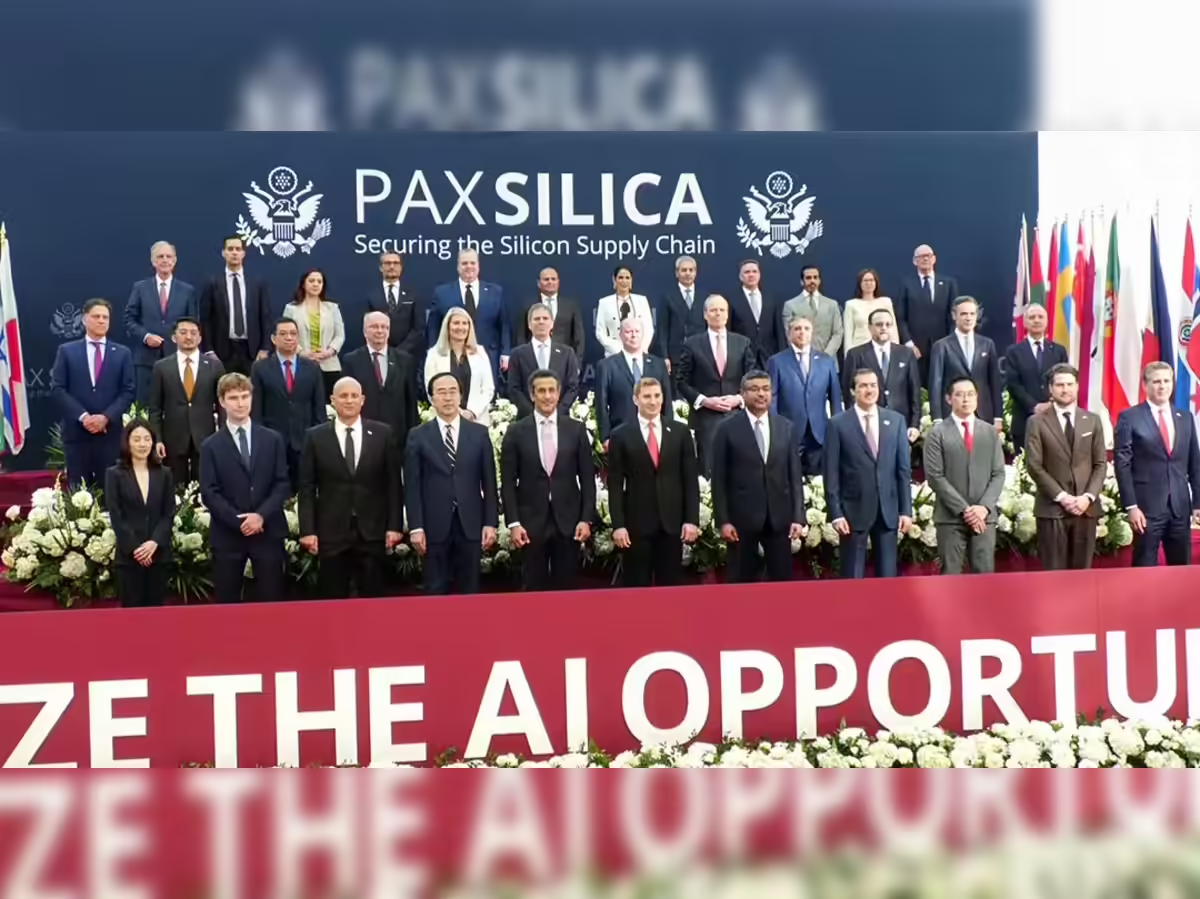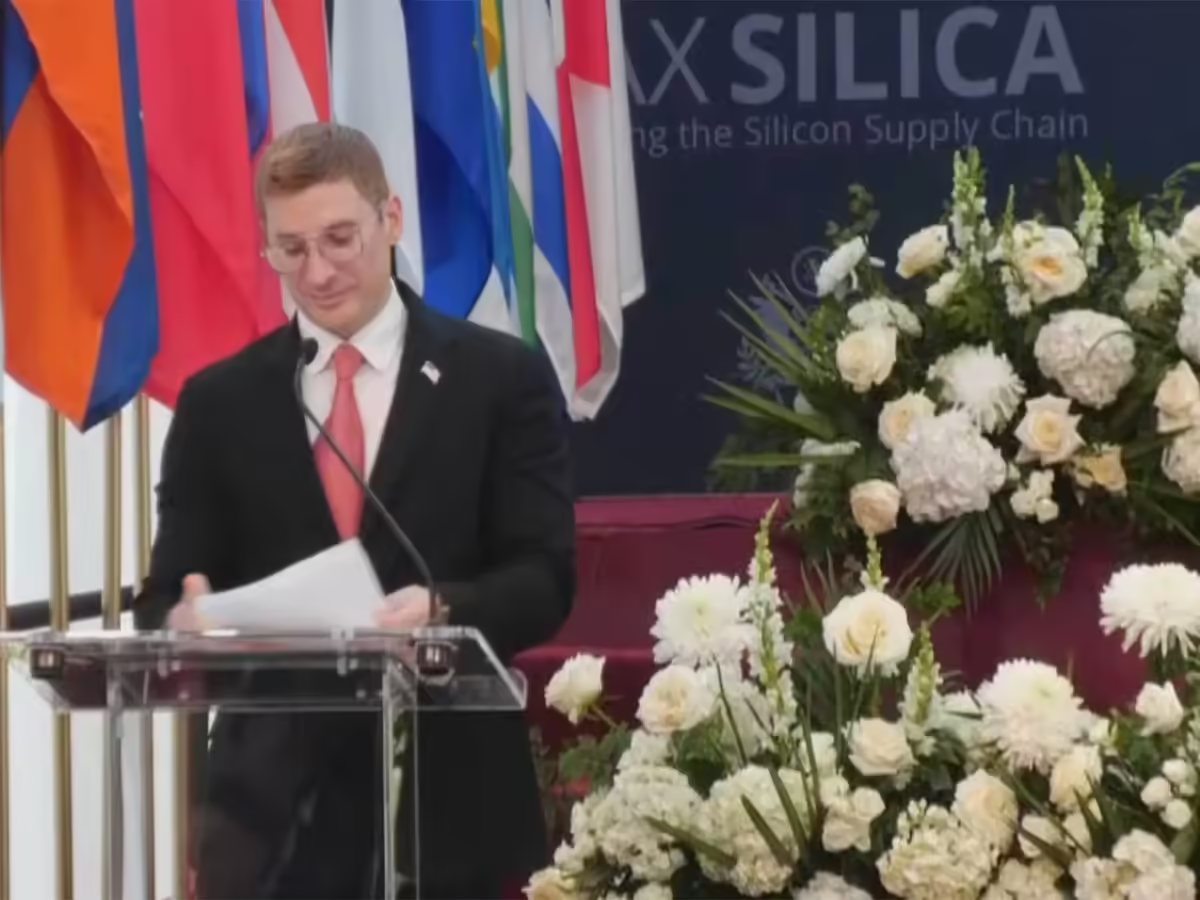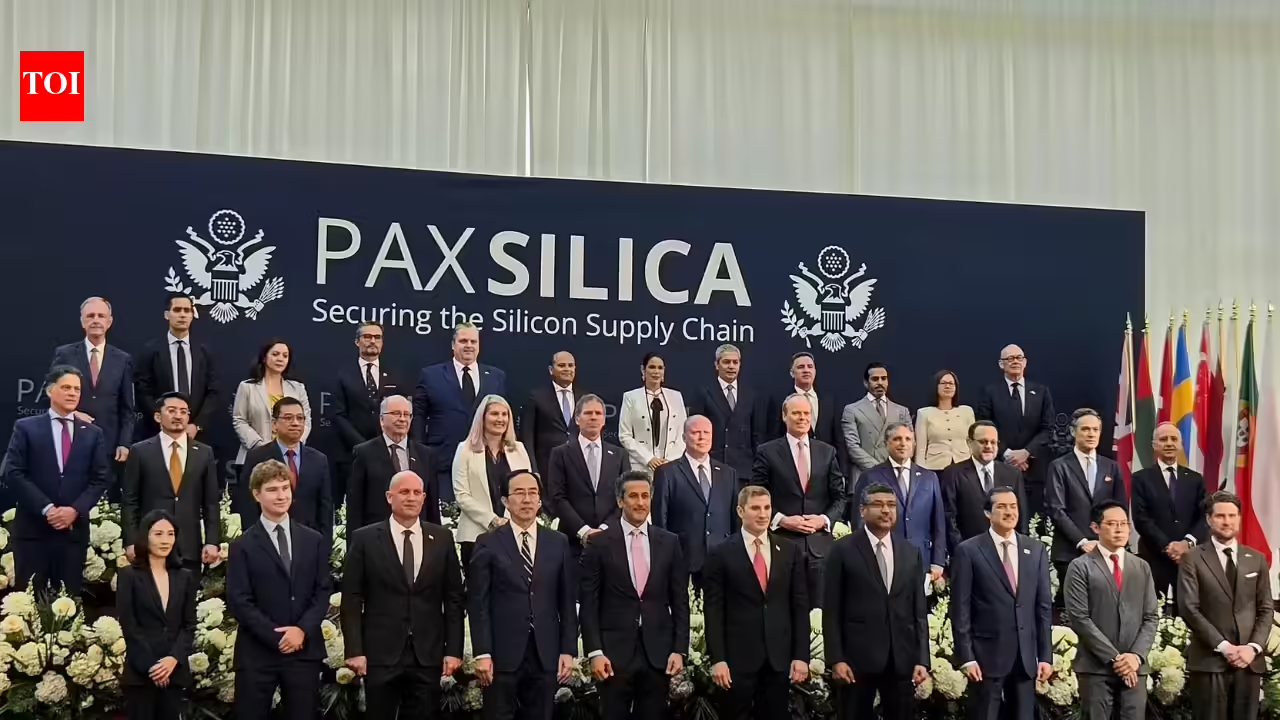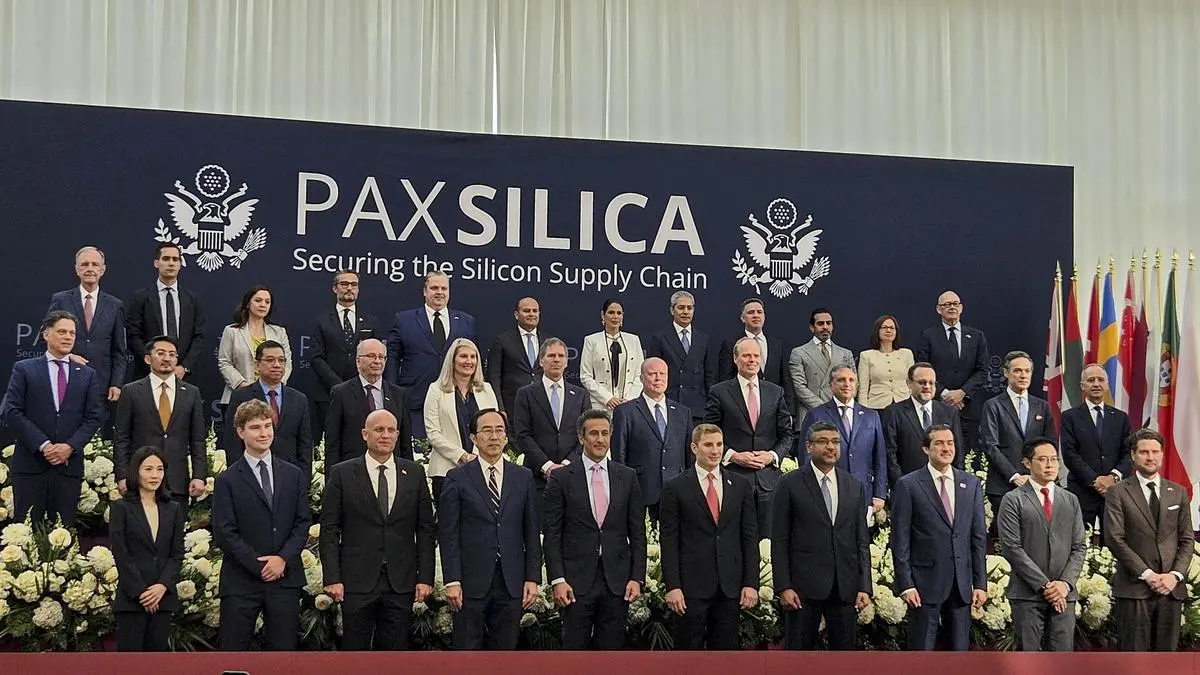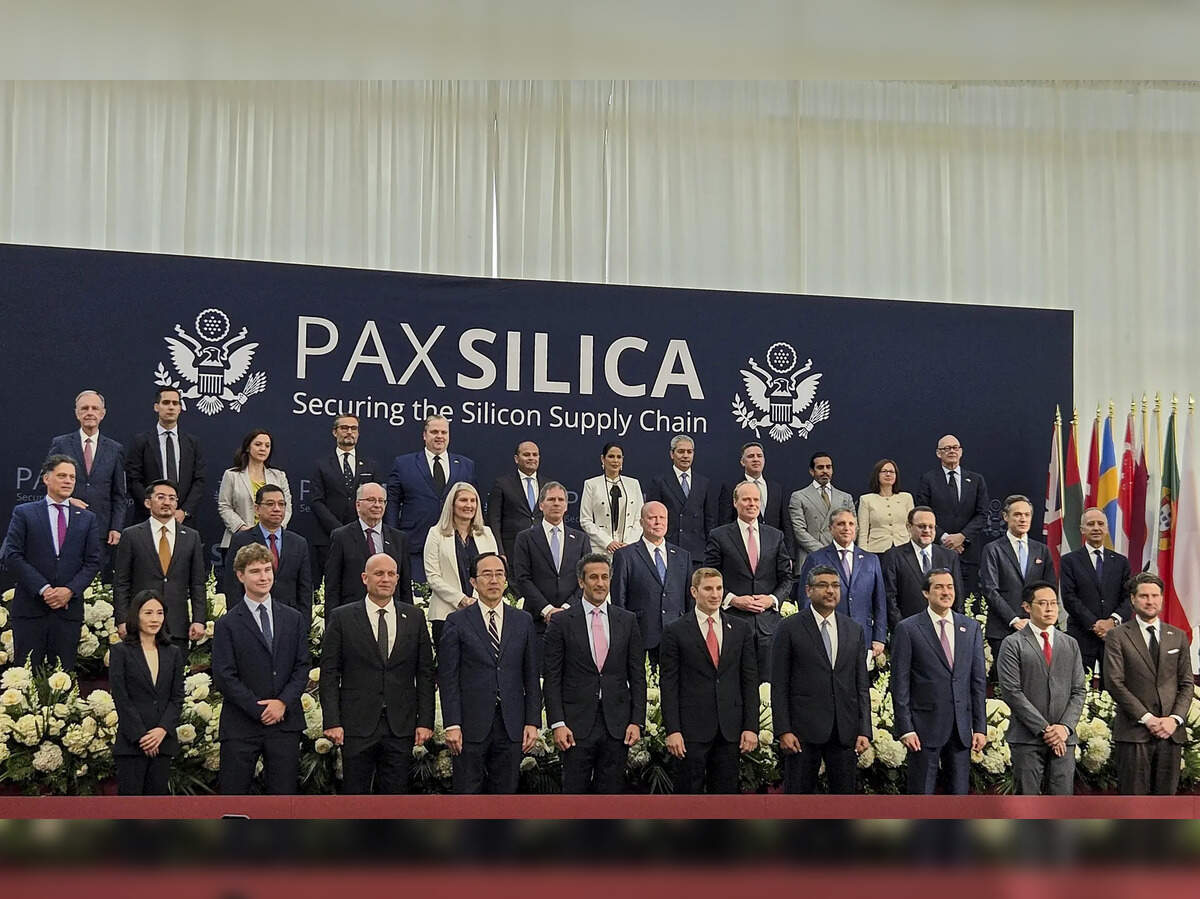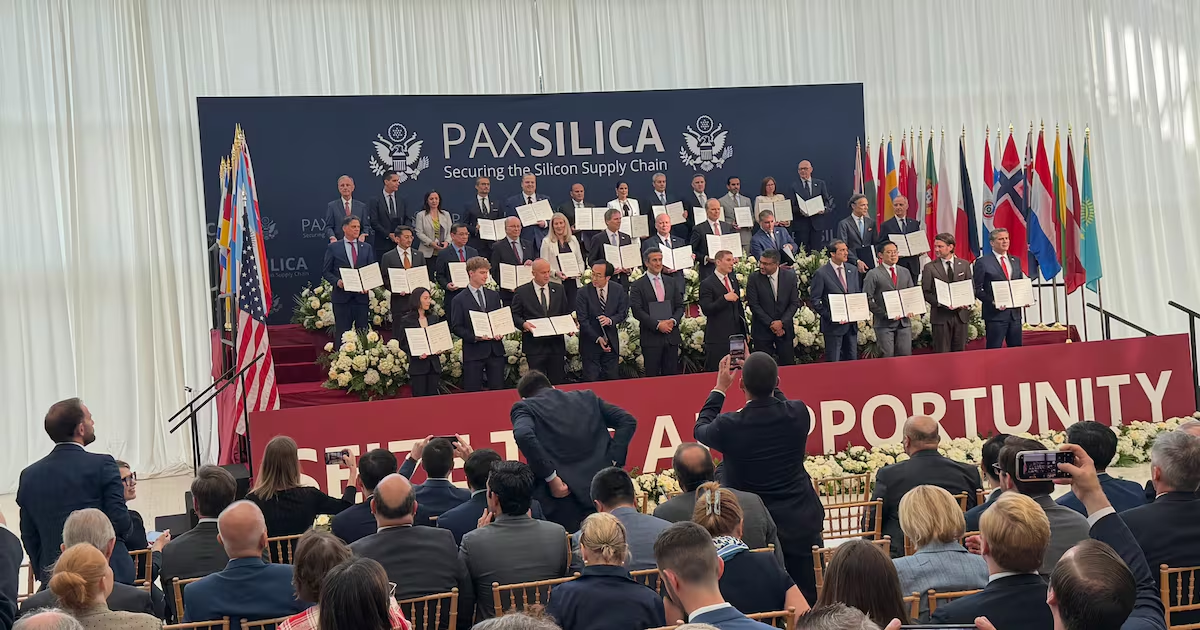
Pax Silica, US President Donald Trump's initiative to secure technology supplies crucial for building artificial intelligence, expanded its footprint on Thursday, with 35 countries signing a declaration on AI opportunity.The consortium began with only a handful of countries several months ago, but membership has grown to include Argentina, Australia, Costa Rica, the EU, Finland, Germany, Greece, India, Israel, Japan, Kazakhstan, the Netherlands, Norway, Qatar, South Korea, Singapore, Sweden, the Philippines, the UAE, the US and the UK. Jacob Helberg, US undersecretary of state for economic affairs, described it as a shared commitment on AI for the years ahead."The declaration reflects a simple but important idea that governments should not approach AI primarily through the lens of restriction. We should approach it through the lens of opportunity," he said. The endeavour has been described by some as a way to blunt China’s potential dominance of the technology supply chain amid the race for AI dominance. Although large language models often receive the most attention from users when it comes to AI, the sector has been made possible by increasingly powerful semiconductors, critical minerals and high levels of energy. US undersecretary of state for economic affairs Jacob Helberg.InfoThe importance of all of those elements have increased focus on global suppliers in recent years.In tandem with that focus, Mr Trump has sought to distance himself from his predecessor, Joe Biden, by taking a less regulatory approach and placing more trust in the private sector. "Innovation, entrepreneurship, investment and technological leadership remain the surest path to broad-based prosperity," Mr Helberg said at the Pax Silica event. Pax PassHe said the consortium would soon be starting a new project for "Pax partners that ship high-value AI supply chain products through Panama", called Pax Pass. Twenty-four countries are now members of Pax SilicaInfoMr Helberg described it as a platform that will "transform how trusted partners move critical goods that power the AI economy" by using pre-approved expedited processing, cargo verification and AI risk assessment to "reduce friction" in shipping tech goods.The Iran war resulted in ship traffic in the Strait of Hormuz coming to a halt for several weeks, putting supply chains all over the world at risk. In March, when announcing another Pax Silica endeavour, the Pax Silica Investor Consortium, Mr Helberg addressed the issues in the Strait of Hormuz and said that it had provided a learning moment for AI. “It's about what happens when the physical infrastructure of civilisation, the chokepoints, corridors, cables and ports, become the battlefield,” he said. More specifically, he highlighted that the US was working closely with the UAE for what has been called the AI Acceleration Partnership.“In light of current events, the work of that group is even more meaningful,” Mr Helberg said in response to a question from The National. “We are going to reaffirm how much we value our bilateral relationship with the UAE and the courage that they've demonstrated throughout this incredibly trying time.”The US first announced Pax Silica in 2025 with officials describing it as a way to unite nations that are home to the world’s most advanced technology companies, and help to “unleash the economic potential of the new AI age”.These include ensuring “reliable” supply chains for economic security, developing trustworthy systems and driving economic value.According to the US State Department, Pax Silica also seeks to harness the “historic” opportunity and demand for energy, critical minerals, manufacturing, technological hardware, infrastructure and markets not yet invented.Anthropic woesDespite its avowed commitment to deregulation, the White House under US President Donald Trump has not hesitated to take a regulatory approach to AI company Anthropic. The company refused to bow to pressure to remove protection on its technology. In response, Mr Trump called the AI firm, which is led by chief executive Dario Amodei, a “radical left” and “woke” company, and ordered its use to be banned by federal agencies.This month, the Department of Commerce forced Anthropic to disable access to its latest AI models, Fable 5 and Mythos 5, for "any foreign national, whether inside the US or outside".Anthropic, which had claimed that those models were finely tuned to reduce the risk of misuse that the company had warned about for several months, said the Commerce Department had spoken of a risk that the models could be compromised and fall into the wrong hands.On the Anthropic restrictions, a State Department representative said that "ensuring American technology dominance and protecting critical technologies are not mutually exclusive", adding that the Pax Silica coalition is "built exactly on that understanding".Mr Helberg did not respond to The National's inquiries about Anthropic during Thursday's Pax Silica event, although he touched on the potential dangers of AI briefly. "We view danger in a practical way, through the prism of threats to our critical infrastructure and cyber security," he said.Those worries led the US to have a "very careful, deliberate approach to managing the release of our most advanced models to make sure that we didn't have friends and partners around the world get attacked or compromised in unintended ways".
US expands Pax Silica consortium's AI footprint | The National
US undersecretary of state for economic affairs promotes international shared commitment on future of AI
837 words~4 min read