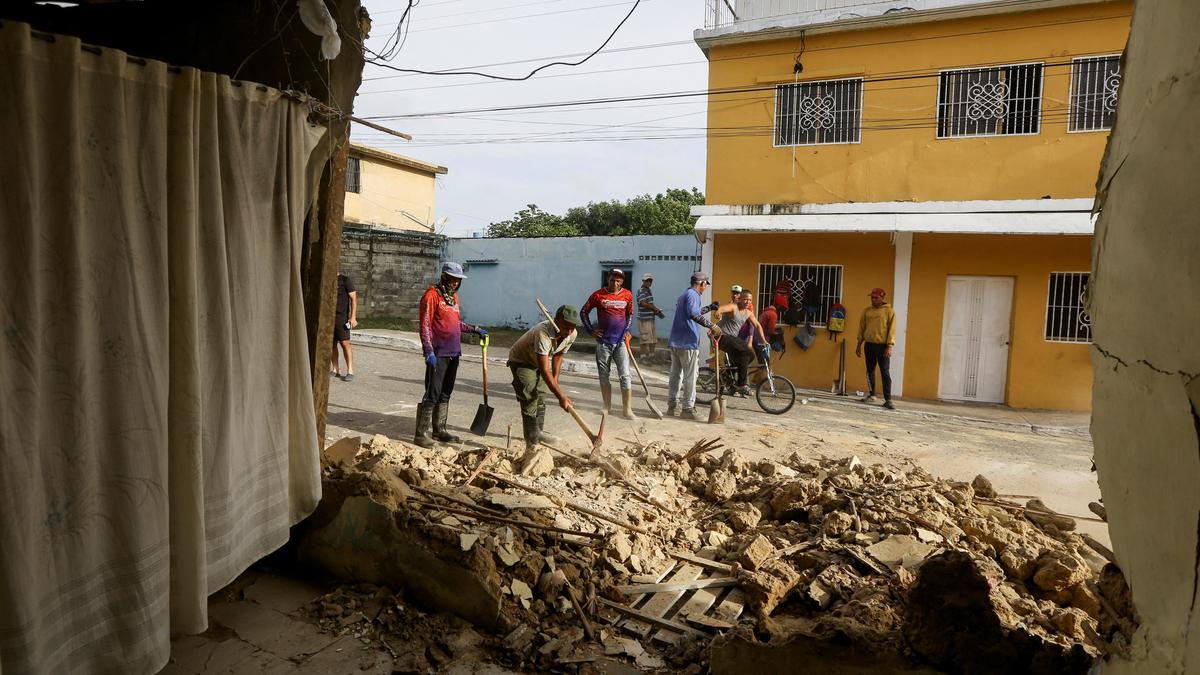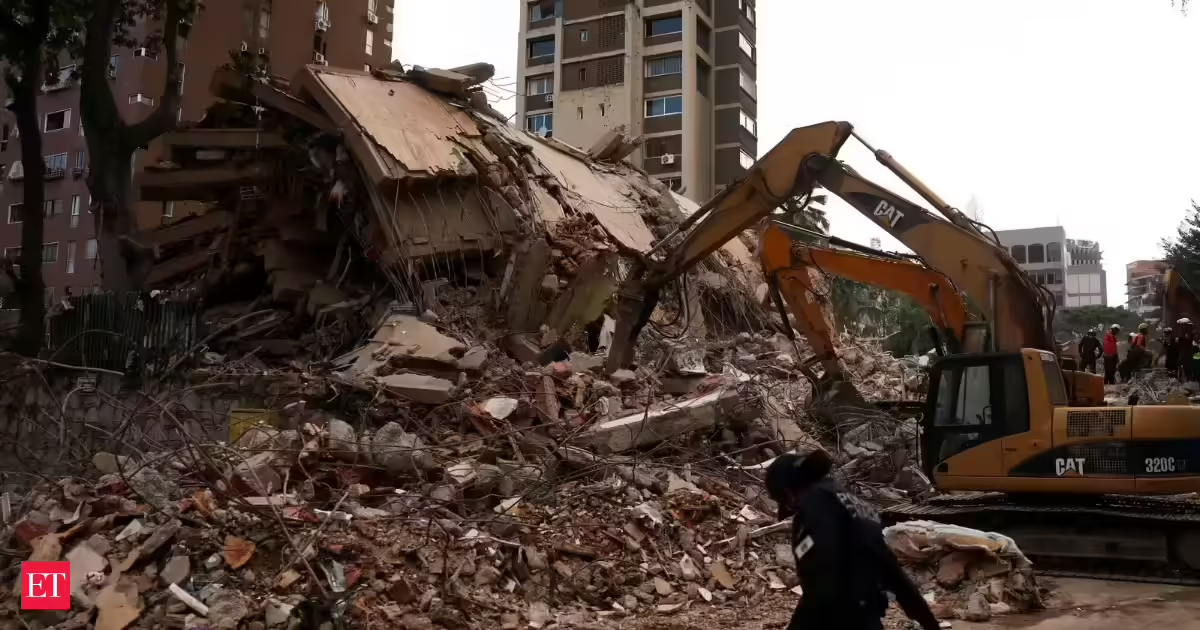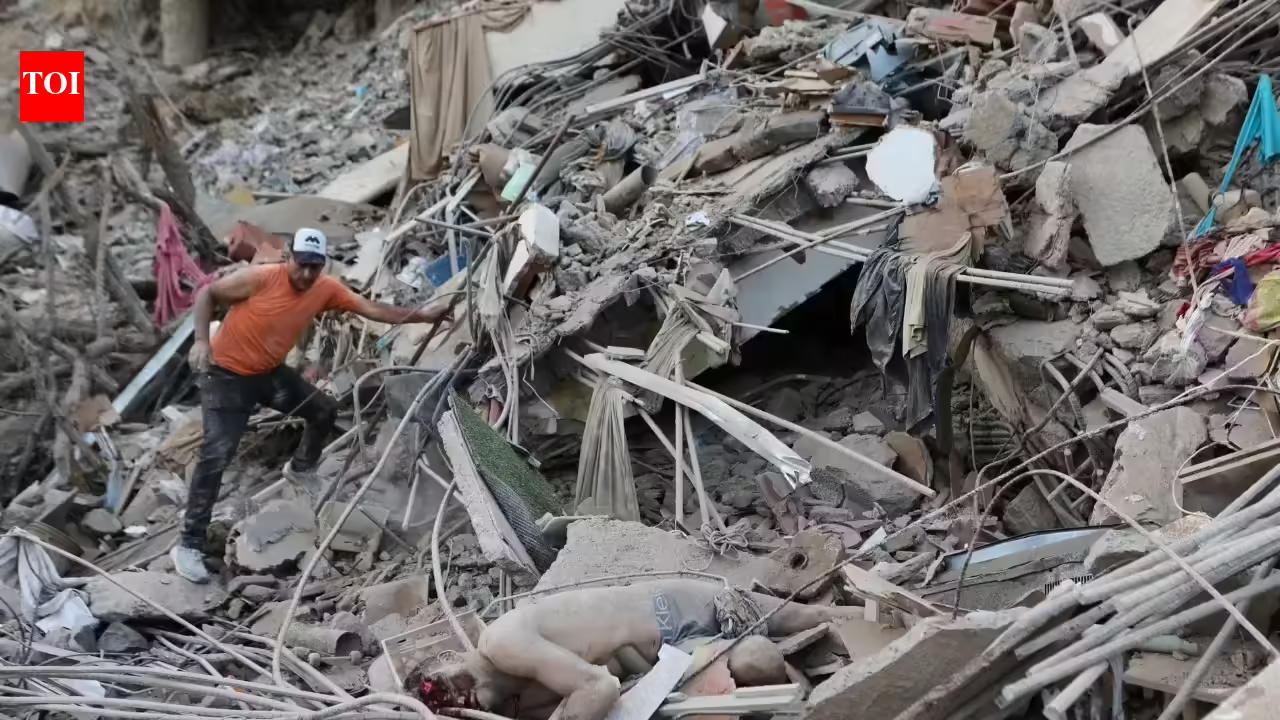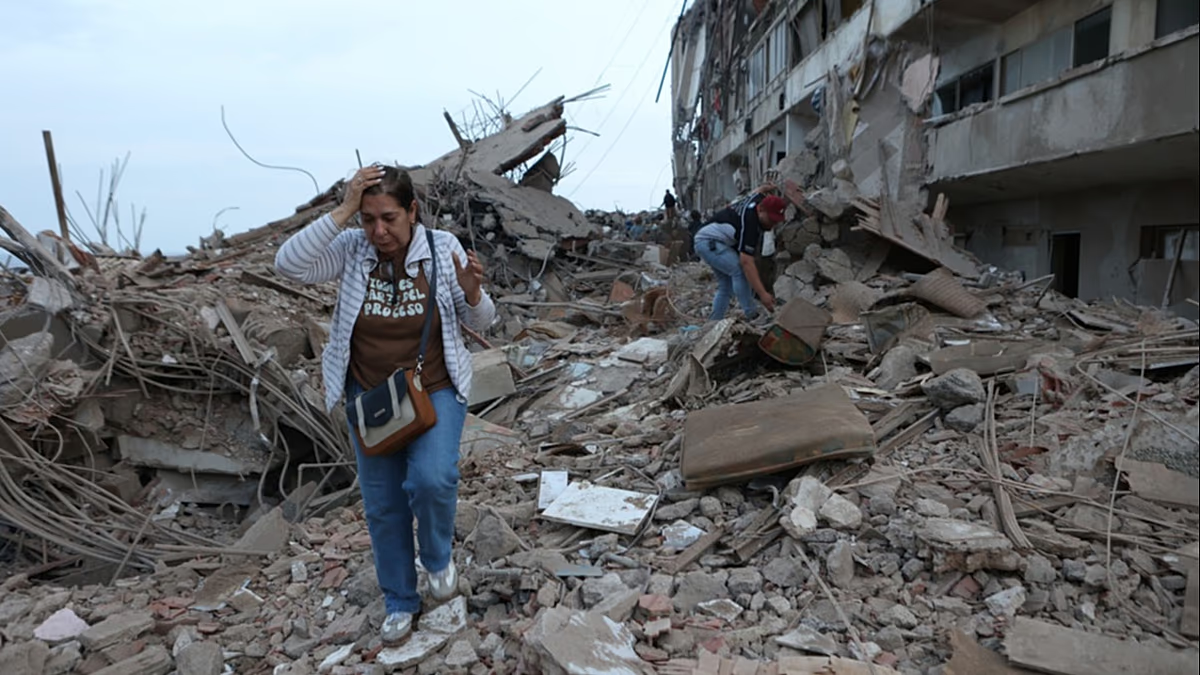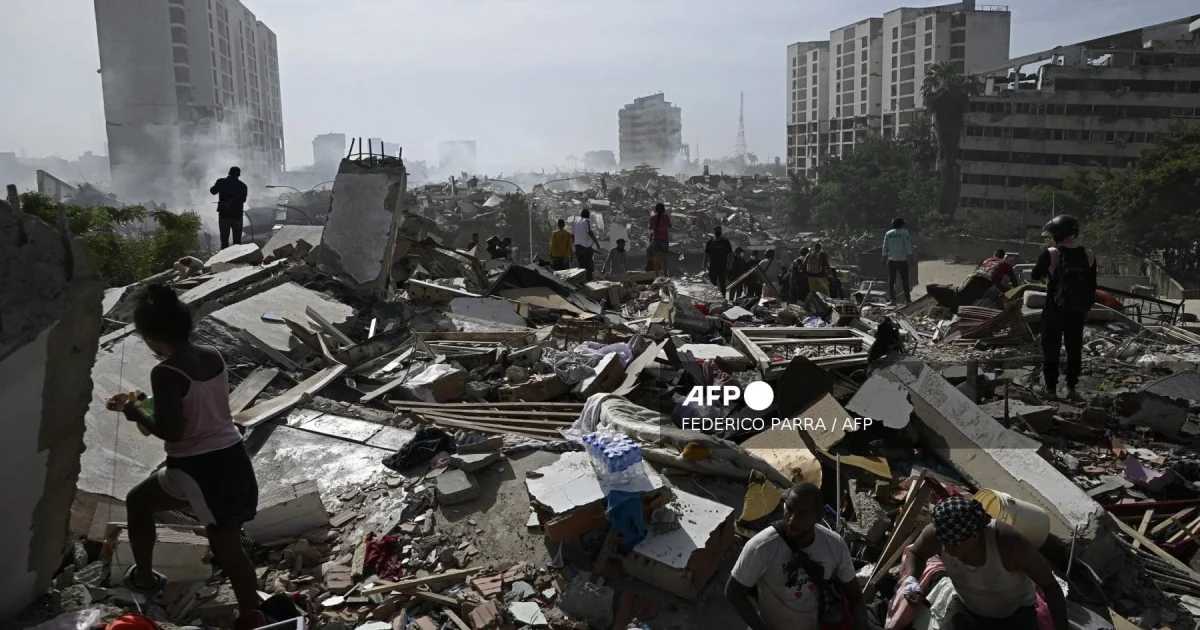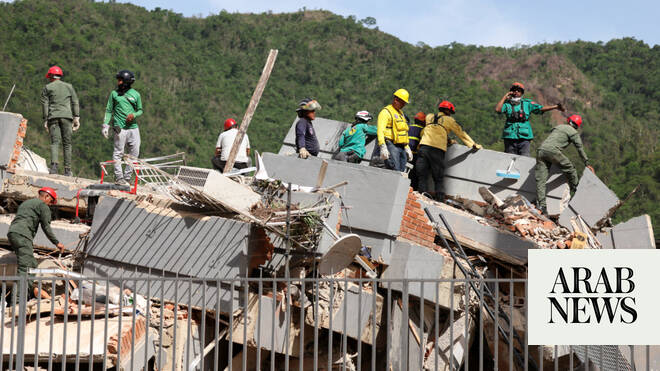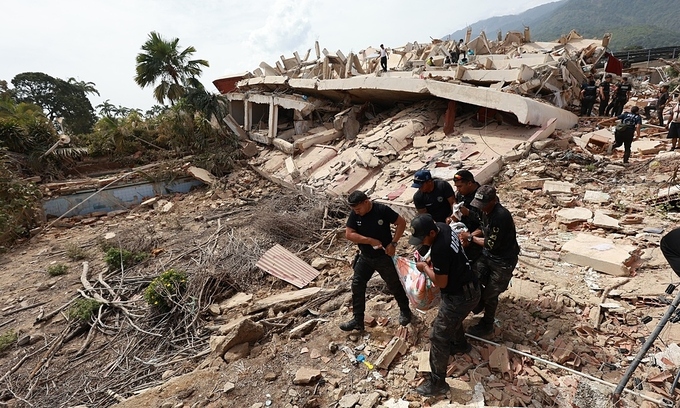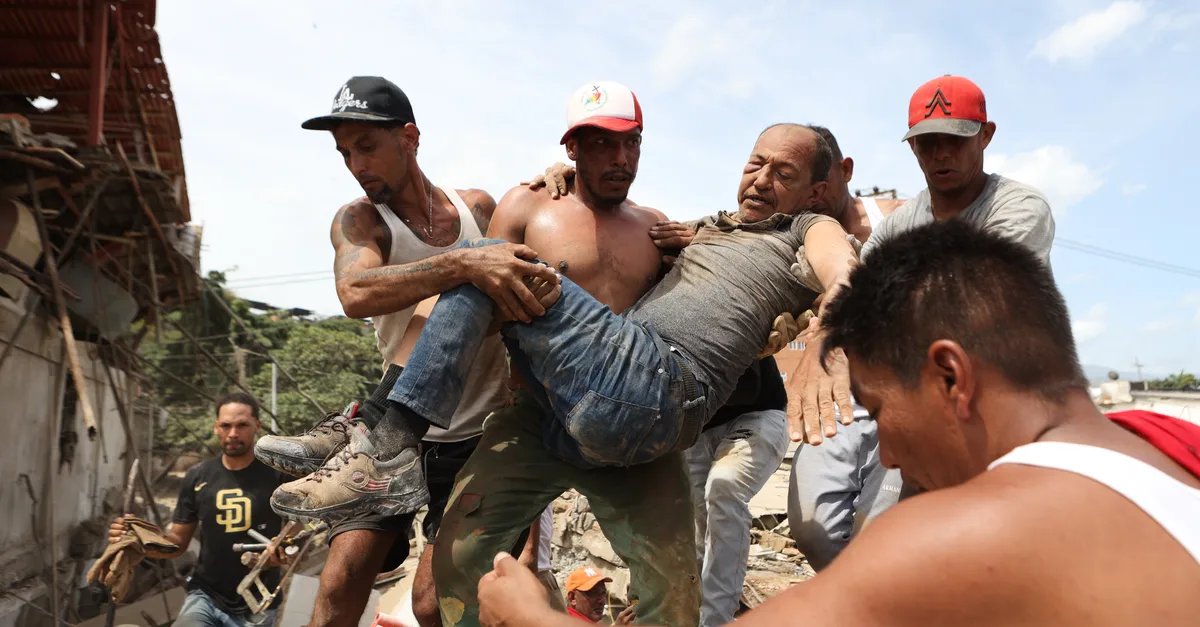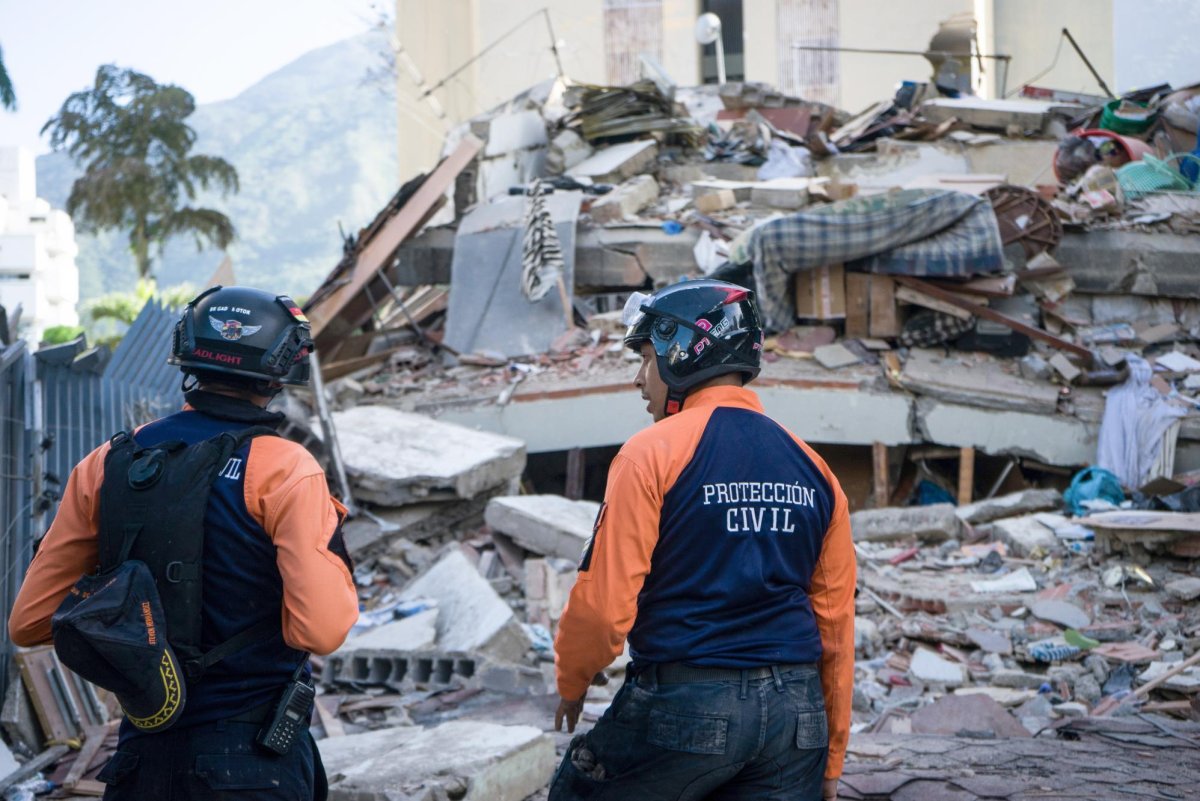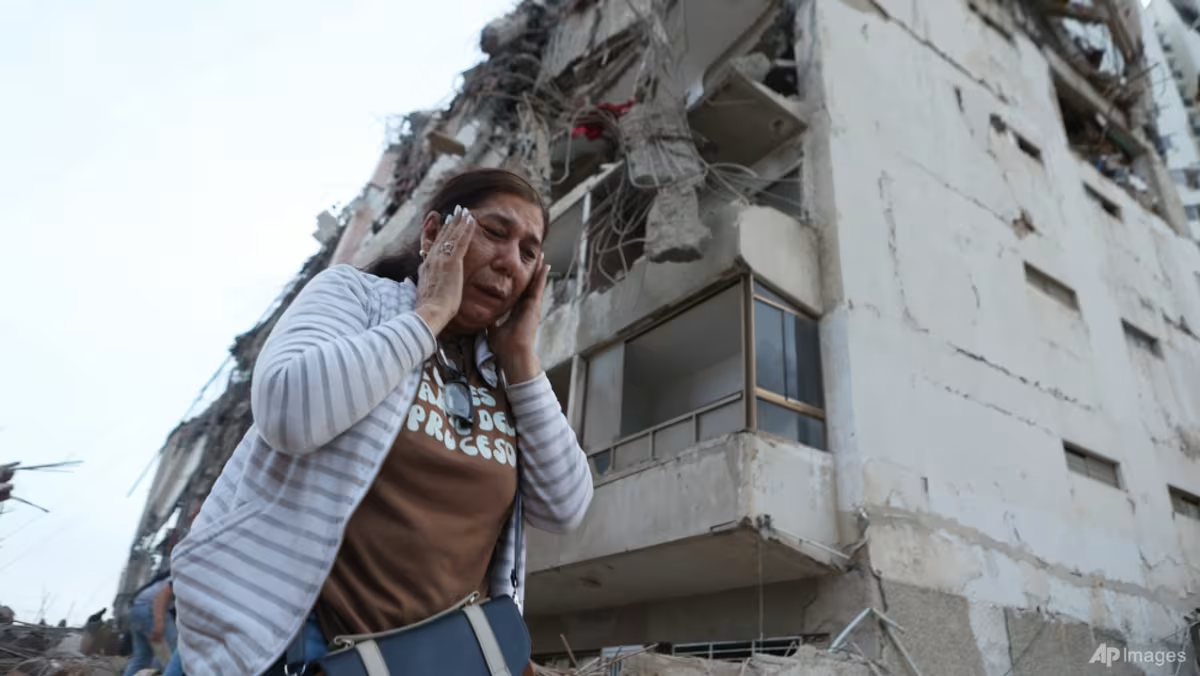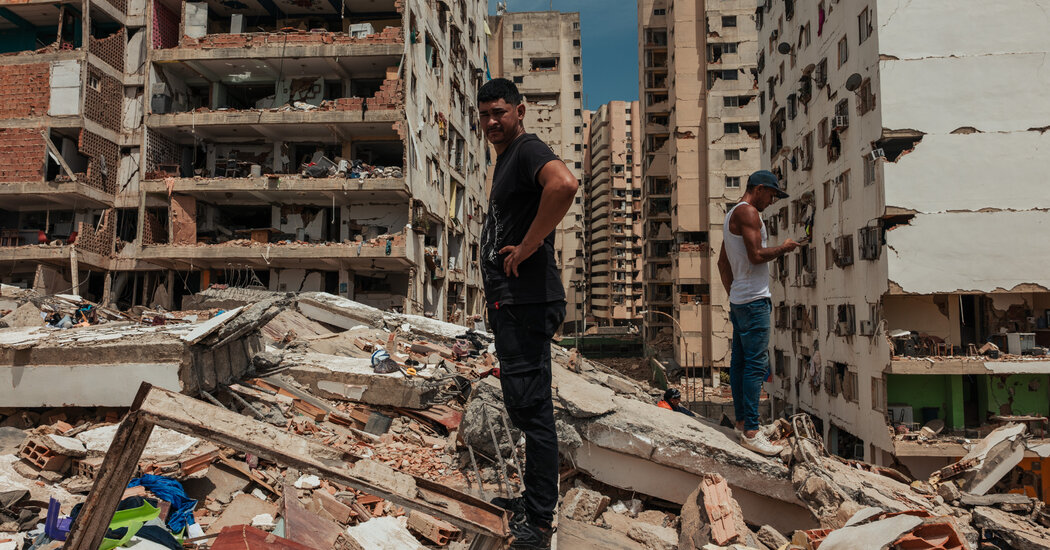
Latest PinnedUpdated Here’s the latest.Rescue crews and residents dug through the rubble of buildings on Thursday searching for survivors after the worst earthquakes to hit Venezuela in nearly six decades. At least 188 people were killed, and hundreds more were trapped in the rubble or missing, according to the government.More than 1,500 people were injured in the back-to-back quakes on Wednesday evening, according to the president of Venezuela’s national assembly, Jorge Rodriguez. The toll from the quakes, which struck the country’s populous northern states, was virtually certain to rise as rescuers began to reach the hardest-hit areas.Videos posted on social media show collapsed residential towers in the capital, Caracas, and in the nearby port city of La Guaira. Mr. Rodriguez said more than 200 people were reported trapped in the rubble of destroyed buildings, and 157 were missing as of Thursday afternoon.Residents in La Guaira said they had seen few rescue workers and minimal government presence. Many began digging through the rubble themselves. People outside one collapsed building estimated that hundreds were trapped beneath the ruins. One woman, Yorliana Colmenares, listened to taps coming from people trapped underneath.“They’ve pulled out a lot of dead people,” she said, adding that she believed her boyfriend was inside the building. “Injured people, children, animals.”Outside another collapsed structure, a couple searched for their eight-year-old boy, who had been playing basketball nearby when the quakes hit.The government said quake damaged at least 250 buildings. There were growing fears about the toll in shantytowns outside the two cities, where many people live in precarious homes built on hillsides.Venezuela is rich in oil, but is still trying to emerge from a decade-long depression that wiped out most of its economic production and prompted millions to leave the country. Its rescue services have been hollowed out, infrastructure has deteriorated and inflation has reached record highs, which is likely to compound the challenges of recovery.The disaster comes at a pivotal moment. A U.S. military raid removed the long-ruling autocrat Nicolás Maduro in January, transforming the country from a U.S. adversary into effectively a satellite state.Mr. Maduro’s former vice president, Delcy Rodríguez, took over as president with Washington’s blessing but has faced growing popular discontent.Shortly after the quakes, Ms. Rodríguez called for national unity and pointed to the promises of international aid to her government, including from President Trump.“We will be there for our new and great friends,” Mr. Trump wrote in a social media post on Wednesday night, adding he has told governmental agencies to “get ready to move quickly.”Here’s what else to know:Witnesses: Residents of Caracas and nearby cities described scenes of terror and confusion as buildings collapsed, windows rattled, and homes lost power when two major earthquakes struck the country on Wednesday evening.Destructive factors: Scientists said several factors amplified the quakes’ power. The two temblors came in quick succession, a rare “doublet.” The quakes also struck in a valley full of loose sediments, which causes more destructive shaking. Read more ›International aid: Ms. Rodríguez said that rescuers from other countries would start arriving in Venezuela early Thursday, including teams from the United States, the Dominican Republic, El Salvador, Mexico and Qatar. China, Brazil and several Caribbean nations have also offered support, she added.Amy Graff, Tibisay Romero, Pranav Baskar and Francesca Regalado contributed reporting.Virginia Task Force 1, a search and rescue crew based in Fairfax, Va., has not yet left for Venezuela according to John Morrison, their spokesman. The delay, he said, was because the U.S. State Department, which is coordinating and facilitating the deployment of American disaster response teams, has not yet determined whether large aircraft can land at Simón Bolivar International Airport outside of Caracas. Videos verified by the Times showed scenes of chaos at the airport on Wednesday as the earthquake rattled its structure, producing clouds of dust and falling ceilings. The airport, which has three runways, is in La Guaira, the province most heavily affected by the quake. The team from Virginia is expected to include 80 people and six dogs.María Victoria FermínReporting from Caracas, VenezuelaHundreds of people gathered outside a hospital at the Universidad Central de Venezuela to drop off donated supplies for earthquake victims. People have set up stations where they are labeling and separating donations, including children’s clothing, underwear and sheets.AdvertisementSKIP ADVERTISEMENTMaría Victoria FermínReporting from Caracas, VenezuelaAt about midday in the Altamira section of Caracas, efforts were underway to try to free a group of people from the rubble of a residential building that had collapsed. Volunteer doctors were at the site, asking for supplies. Various people arrived with water, face masks, food and tools. People were approaching the ruined building with shovels.María Victoria FermínReporting from Caracas, VenezuelaSeveral people arrived in a pickup truck at the Universidad Central de Venezuela clinic in Caracas on Thursday afternoon. A woman traveling with the group said her 10-year-old nephew, Efraín Lucena, was rescued from a building in La Guaira. He is stable condition but is waiting to find out if they will have to amputate his leg. The boy’s mother – the woman’s sister– managed to pass him through a window but got trapped herself and died. Another cousin is missing, she said.The death toll from the earthquakes rose to 188, and 1,520 people were injured, Jorge Rodriguez, the president of Venezuela’s National Assembly, said in remarks streamed by the state-funded TV station Telesur. At least 250 buildings, most of them in La Guaira, had been damaged, he added.The devastating earthquakes will test Venezuela’s newfound alliance with the United States.ImageA person searches the ruins of an apartment building in Catia La Mar, Venezuela, on Thursday. Credit...Adriana Loureiro Fernandez for The New York TimesVenezuela’s worst natural disaster in decades is testing the country’s forced alliance with the United States, creating an unexpected, tragic hurdle in Washington’s campaign to turn the country into an effective economic protectorate.President Trump has touted the military operation that removed Venezuelan President Nicolás Maduro from power as an unfettered success, which has redirected the flow of Venezuelan oil and gold to the United States.The humanitarian toll of back-to-back earthquakes that struck Venezuela on Wednesday night, and the reconstruction ahead, will test whether his administration will now be willing to support a purported ally with relief funds and policies to assist the country.“No matter what, the United States has always responded to humanitarian crises, especially in our own hemisphere,” Secretary of State Marco Rubio told reporters on Thursday. “That’s what we’re focused on now.”Mr. Rubio said on Thursday that he had spoken to Venezuela’s leader, Delcy Rodríguez, and added that rescue teams from Virginia and California would assist the search for survivors. The Defense Department will help deliver the aid, he said.Mr. Rubio, who helped disband the State Department's aid agency last year, did not say how much money the U.S. would allocate for humanitarian relief.Mr. Rubio said that the earthquakes, which have killed at least 164 and destroyed hundreds of buildings, represented a “setback” for Washington’s multiphase plan to recover Venezuela’s moribund economy and ensure democratic elections.“These are things you don’t plan for,” he said. "I think Venezuela is going to emerge stronger from this.”Following Mr. Maduro’s downfall, Washington has pressured Ms. Rodríguez to overhaul oil and mining laws to attract Western investment. The U.S. Treasury has also set up a payment system that has concentrated the administration of Venezuela’s export revenues into the hands of the U.S. government, giving its officials a direct and crucial role in earthquake relief.At the same time, Washington has maintained its wide-ranging sanctions on Venezuela, issuing instead exemptions for companies that want to do business there.The new financial system imposed by the United States has eliminated Venezuela’s most blatant corruption schemes, but has ended up gathering a large portion of oil revenues in a few Venezuelan banks and consumer companies with bank accounts in the United States.The persistence of sanctions has also made it difficult for Venezuela’s government and Venezuelan companies to move money in and out of the country, an issue likely to attract greater attention amid acute humanitarian need.A State Department spokesman said in a written response to questions that U.S. sanctions exemptions, known as general licenses, already allowed financial transactions related to humanitarian efforts. The spokesman added that the U.S. government would ensure that these facts were widely known.People connected to the Venezuelan government, as well as the country’s banking and corporate executives, said this month that Western banks routinely delay and halt money transfers related to Venezuela because of U.S. sanctions, a compliance policy that Washington’s exemptions are unlikely to change.The earthquakes will also test Washington’s bet on Ms. Rodríguez, Mr. Maduro’s vice president, who oversaw the economy and, in January, emerged as an unlikely willing executor of Mr. Trump’s vision for the country.Ms. Rodríguez’s challenges in meeting the public’s expectations of an economic boom following Mr. Maduro’s downfall have already been eroding her popularity. Her approval rating fell to 25 percent in May, the third consecutive monthly decline, according to an online survey.Venezuela’s economic growth in the first three months of this year fell to its lowest quarterly rate since 2021, a stark contrast to the narrative of record growth that Mr. Trump has been claiming repeatedly in public speeches.“We had a great victory in Venezuela,” Mr. Trump said in a speech on Saturday. “Venezuela has become a happy country, because they have never made the money that they are making now.”Ms. Rodríguez now faces a daunting task of leading a rescue and reconstruction effort by an impoverished, hollowed-out and autocratic state that she helped to create as Mr. Maduro’s right-hand lieutenant.Even before the earthquake, Ms. Rodríguez had been facing growing calls to transform the country’s political system and allow new elections. These calls are now likely to intensify in a country gripped by mourning and hunger for change.Tyler Pager contributed reporting from Washington.AdvertisementSKIP ADVERTISEMENTOn the ground and online, Venezuelans desperately search for missing relatives.ImageSearching for survivors in the rubble in Catia La Mar, Venezuela, on Thursday.Credit...Adriana Loureiro Fernandez for The New York TimesGrandparents, young children, siblings.Venezuelans living around the world turned to social media to post photographs of missing relatives, desperately hoping that someone recognized them in the aftermath of two devastating earthquakes that struck the country on Wednesday.Some people finally learned that their loved ones were alive but injured and their whereabouts unknown. Some received news of deaths, and many more were still unaccounted for.Okarina Castaño, who works at a bank in Miami, said her brother, Carlos Castaño, called her early Thursday.Mr. Castaño lived in Los Corales, a coastal area east of the Caracas airport, where heavy damage was reported.“‘I’m alive, we’re alive. We just got out of the rubble, we made it,’” Ms. Castaño said he told her. “But I think my mother-in-law didn’t.”He had been trapped in the rubble all night. Although his wife, Eliana Palacios, 40, and their 12-year-old daughter, Danna, had made it out with injuries, he did not know where they were taken.He had been frantically searching hospitals, Ms. Castaño said.The family had also lived through a major landslide in 1999 that killed thousands in the same area, she added. The experience had been traumatizing.“My brother is in shock,” Ms. Castaño said. “He tells me he’s in a lot of pain.”Brigeanner Soto, a Venezuelan who lives near Dallas, was desperate for information about her sister Gabriela Orfao, 18.Gabriela and other siblings lived in a 14-story building called Punta Brisas in Macuto, about 12 miles east of the Caracas airport.Ms. Soto said she had received some audio messages from neighbors, but communication was slow and spotty. So far, she learned that the neighbors were able to rescue one of her sisters, Camila, who was taken to a hospital and undergoing surgery on her hip, she said. But they had not been able to reach Gabriela.“Gabriela was too far underneath, and they needed heavy machinery to reach her,” Ms. Soto said. “They need heavy machinery because there are a lot of people who are still alive, but there is so much rubble that they can’t get them out.”Absent any immediate official rescue response, survivors were the ones sifting through the rubble to find those trapped underneath, she said.“We have tried to find the way to send help, to find them,” she said. “We haven’t slept from the moment this happened, and we are very desperate.”In a telephone interview from Venezuela, Angie Reyes said she was trying to find her colleague, Daniel Vivas, 43, whom she had not heard from since before the earthquake.Mr. Vivas lived on the sixth floor of a building in La Guaira, a port city not far from Caracas, that she believed had significant damage. Ms. Reyes said she knew the country’s rescue workers had very limited capacity and was worried that no one would arrive in time to help Mr. Vivas.“We’re stuck like this until the international community arrives,” she said.In Caracas, Vladimir Navas stood outside the remains of a six-story building in the El Paraíso neighborhood, looking for his in-laws. He said he thought they had probably been home watching a World Cup game, and the prospects of finding them alive were looking increasingly bleak.People operating heavy machinery were lifting large chunks of rubble outside the building on Thursday, trying to reach the people trapped inside. Some dead pets had been found, and at least seven residents were missing, said Henry Ascanio, a colonel at the Caracas Fire Department.“There’s no possibility that they got out,” Mr. Navas said of his in-laws, Freddy Carrero, 86, and Eliana Hernández, 82. “You can’t hear anything. If anyone is alive in there, it’s a miracle.”Julie Turkewitz contributed reporting from Bogotá, Colombia.‘My sister lived here!’ A lonely search for loved ones in La Guaira.ImageCivilians and emergency workers searched for survivors in the rubble of a collapsed building in Catia La Mar, Venezuela, on Thursday.Credit...Adriana Loureiro Fernandez for The New York TimesYorliana Colmenares stood at the edge of a building turned to rubble on Thursday morning and listened to the taps.Tap.Tap.Tap.Her boyfriend was inside the building, she believed, below the crushed walls and knotted wire and dust. She could hear trapped people knocking on the building’s remains. But she had not been able to find her boyfriend — no rescue workers had arrived, no firemen, no medical workers.Instead, the building’s residents were doing the rescues themselves. “They’ve pulled out a lot of dead people,” said Ms. Colmenares. “Injured people, children, animals.”La Guaira, a port city outside of Caracas, is among the places hardest hit by the two earthquakes that shook Venezuela on Wednesday evening.ImageCatia La Mar residents said they had seen very few rescue workers at the scene after the earthquakes on Wednesday night, leaving civilians to look for survivors.Credit...Adriana Loureiro Fernandez for The New York TimesLa Guaira is no stranger to disaster. A mudslide a generation ago killed thousands of people. Now it is again experiencing tragedy. Entire buildings crumbled to the ground. Outer walls fell to the earth, leaving apartments looking like skeletons.By midday Thursday, many residents said that they had seen only a few rescue workers and minimal state presence.On some blocks, survivors said they were on their own. Residents standing outside one collapsed building estimated that hundreds of people were trapped beneath the ruins.Outside another, a couple searched for their eight-year-old boy, who had been playing basketball when the quakes hit.Repeated aftershocks shook the city even as civilians-turned-rescue workers in flimsy helmets dug through the ruins. Some said they desperately needed heavy machinery that could move building walls.“My sister lived here!” cried one woman who stood by a damaged apartment as civilians scraped away rubble. “I see no one here! This is the government’s neglect!”ImageDayana Arles stood on the remains of a basketball court where her son, Brayner, was last seen before the earthquake.Credit...Adriana Loureiro Fernandez for The New York TimesAdriana Loureiro Fernandez contributed reporting from La Guaira.AdvertisementSKIP ADVERTISEMENTHow to help victims of the Venezuela earthquakes.ImageRescue efforts in Caracas, Venezuela, on Wednesday after two large earthquakes struck the country.Credit...Adriana Loureiro Fernandez for The New York TimesAs rescuers continue to search for survivors of the earthquakes in Venezuela, and citizens work to dig out friends and neighbors, governments around the world have pledged aid and resources. Here are some additional ways you can help.Before you give, do your research.Before you make a donation, especially to a lesser-known organization, you should do some research to make sure it is reputable. Sites like Charity Navigator and Guidestar grade nonprofits based on transparency and effectiveness. The Internal Revenue Service also allows you to search its database to find out whether an organization is eligible to receive tax-deductible contributions.And if you suspect an organization or individual of committing fraud, you can report it to the National Center for Disaster Fraud, part of the Justice Department.Many national and international organizations are helping.The United Nations Office for the Coordination of Humanitarian Affairs, which is the U.N. disaster relief agency, is working to put urban search and rescue teams on the ground, and working with authorities in Venezuela to assess priorities. You can donate here.The United Nations International Children’s Emergency Fund, better known as UNICEF, said it is already on the ground working to help children and families in the aftermath of the temblor.The I Love Venezuela Foundation is raising funds to supply food, water, medical support, hygiene kits, shelter supplies, logistics, and direct support for vulnerable families in affected areas. Here’s the fund-raiser.Caritas, an international Catholic humanitarian organization, is accepting donations to its national partners in Venezuela.Direct Relief is accepting donations as it coordinates with regional aid groups to help provide emergency medical supplies.Save the Children has staff and local partners in the country and is asking for support as it prepares to provide health services, child protection support, shelter, food, and essential relief items as needed.Global Giving, which helps local nonprofit agencies, is collecting donations to provide emergency relief, shelter, medical care, and recovery support.The International Federation of Red Cross and Red Crescent Societies said it is assessing the needs of its staff after its headquarters in Venezuela suffered “critical damage.” The organization said it is activating its emergency response fund and continuing to operate hospitals and clinics. You can donate here.Global Empowerment Mission, an international emergency aid nonprofit, is seeking donations as it deploys emergency response teams.Why did these quakes happen, and what happens next?ImageEmergency workers at the site of a collapsed building in Caracas on Thursday.Credit...Leonardo Fernandez Viloria/ReutersNorthern Venezuela is no stranger to large, damaging earthquakes. But the pair that tore through the region on Wednesday ranks as a rare catastrophe — a one-two punch representing one of the most powerful tectonic events to strike there in the past century.At 6:04 p.m. local time, a magnitude 7.2 temblor struck to the west of the capital city of Caracas; this was followed just 39 seconds later by a magnitude 7.5 rupture. So-called doublets are uncommon, but not vanishingly so. In September 2025, just southwest of Wednesday’s doublet, a pair of quakes (magnitudes 6.2 and 6.3) caused widespread damage to buildings and injured more than 110 people.The extent of the devastation is not yet clear, and scientists may yet revise their estimates of the quakes’ strength. Over the coming weeks, researchers will gather reams of geologic data and build up a detailed picture of the twin temblors.But they already have an idea as to why these quakes took place in such a remarkably short time and why they were so damaging. Here’s what they know so far about these catastrophic earthquakes, and what to expect in the days to come.Why was one strong quake immediately followed by another?During a sequence of earthquakes, the most powerful among them — in this case, the magnitude 7.5 event — is considered to be the main shock, which would make the magnitude 7.2 event the “foreshock.”These two quakes together are known as a doublet, because of their back-to-back nature at nearly the same location and probably on the same fault, or a closely related group of faults. But Wednesday’s pair was peculiar.“Most doublets don’t occur quite this close together in time,” said Brandon Bishop, a seismologist at Saint Louis University. “Delays of hours to a few days are much more common.”The timing is almost certainly not a coincidence. “It is very likely that the first triggered the second one,” said Harold Tobin, the director of the Pacific Northwest Seismic Network at the University of Washington.The ferocious seismic waves unleashed by the initial rupture may have convulsed an adjacent, locked-up section of the fault, which triggered the second quake. Although these two quakes might be considered separate events, “this could be regarded as one earthquake that went on for 50 seconds or so,” said Stephen Hicks, a seismologist at University College London in England.Instead of a pause between the two events, it may be better to think of this disaster as a near continuous rupture that “cascaded into this bigger beast,” he added.Why were these earthquakes so destructive?Although a magnitude 7.2 event sounds just a little less severe than a magnitude 7.5 quake, this scale isn’t linear. According to scientists, the second quake released almost three times as much energy as the first.Other factors conspired to make this doublet particularly devastating.“Both earthquakes are relatively shallow,” said Dr. Bishop. That means that the potency of the seismic waves wasn’t much diminished by the time they coursed across the Earth’s surface.The quakes took place in the Yaracuy Valley, which is filled with loose sediments — the very sort that amplify shaking. This led to landslides and even liquefaction, a temporary state in which soil behaves like a fluid.And as the fault rupture moved eastward, in the direction of the capital city, Caracas “got a direct hit,” said Dr. Hicks.The fact that Venezuela lacks a technologically sophisticated earthquake early-warning system and is in a state of economic and political disarray only exacerbated the potential for disaster.ImageDamaged homes in Catia La Mar, about 19 miles northwest of Caracas, on Thursday.Credit...Federico Parra/Agence France-Presse — Getty ImagesIs this area prone to earthquakes?This region is a messy geologic jigsaw puzzle. The Caribbean tectonic plate is moving eastward relative to the South American plate by less than an inch per year. In one section, the Caribbean plate has also been forced under the South American plate, causing parts of the latter to fragment.Within a 155-mile vicinity of Wednesday’s earthquakes, there have been seven magnitude 6 or greater earthquakes in the past century. And around the epicenters of this week’s doublet, there are three known significant faults mapped out: the Boconó Fault, the El Guayabo Fault and the Morón Fault.The magnitude 7.5 event appears closest to El Guayabo, while the magnitude 7.2 earthquake seems nearest to Morón. But with the uncertainties involved, all three are suspects — and more than one could have ruptured.This complexity makes untangling the root cause of Wednesday’s quakes somewhat troublesome. But early indications are that the fault, or faults, that ruptured did so in a strike-slip fashion, meaning two blocks of the crust slipped in a side-to-side manner with respect to each other.“Strike-slip faults tend to produce strong seismic shaking, especially near to and along the length of the fault that moved,” Dr. Tobin said.“This is analogous to the East Anatolian Fault that devastated Turkey a few years ago, Haiti in 2010, or the San Andreas Fault,” he added.Will there be any significant aftershocks?They are already taking place. According to the forecasts by the U.S. Geological Survey, the region will be rattled by myriad smaller quakes (magnitudes 3 to 5) over the next week.Within this time frame, there is a 24 percent chance of a magnitude 6 event striking the area, and a 3 percent chance of another magnitude 7 quake taking place.“Normally, aftershocks occur most frequently right after a big one, then tail off exponentially over days to weeks to years,” said Dr. Tobin. That means the chaos and fear gripping the nation right now is likely to continue well into the future.AdvertisementSKIP ADVERTISEMENTThe United States Geological Survey’s computer models suggest that fertile river valleys north of the epicenter may have behaved like water in certain areas. This is due to a process of liquefaction, in which intense shaking weakens water-saturated soil, causing it to flow, shift, or crack, leading to damage to surface structures and underground utilities. Internet users in Venezuela are reporting that they now have access to X, one of several communication platforms that has long been blocked by the government of President Delcy Rodríguez and her predecessor, Nicolás Maduro.In the absence of official rescue crews, residents of the collapsed buildings have been picking through rubble to find survivors, Brigeanner Soto, a Venezuelan woman who lives near Dallas and received audio updates from her family’s neighbors said. Neighbors of an apartment building called Punta Brisas in Macuto found one of Ms. Soto’s sisters, who was injured. Another was still trapped, she said. “People are too far down, and they are not able to reach them without machinery,” she said. Colombia’s disaster management agency said it is preparing to send a search and rescue team to Venezuela.AdvertisementSKIP ADVERTISEMENTIn an interview, Angie Reyes said that she was desperate to find her colleague, Daniel Vivas, 43, a father of an 8-year-old boy. She had not heard from Vivas since before the earthquake, she said. Vivas lived on the sixth floor of a building in the city of La Guaira that she believed had suffered significant damage. She said that she knew the country’s rescue workers had very limited capacity, and she worried that no one would arrive in time to help him. “We’re stuck like this until the international community arrives,” she said.Leo SandsBreaking news reporterThe images of destruction emerging from Venezuela suggest many of the collapsed buildings were made of brittle concrete without adequate steel reinforcement, said Christian Málaga-Chuquitaype, a structural engineer at Imperial College London who specializes in seismic resilience. “These buildings fail exactly as we are seeing: pancake failures, with one floor dropping on top of the other,” he said. These non-ductile concrete buildings, as they are known, are among the deadliest type of building during an earthquake because they collapse so explosively, he said.ImageCredit...Federico Parra/Agence France-Presse — Getty ImagesLeo SandsBreaking news reporterThe U.N.’s main humanitarian agency is directing incoming search and rescue personnel to arrive in Venezuela at Caracas’s “cleared” La Carlota air base, after earthquake damage forced the closure of the nearby Simón Bolívar International Airport. The agency said international teams should prioritize reaching La Guaira and Caracas, two of the hardest hit cities.President Delcy Rodríguez said in a phone call to state television that Venezuela was coordinating with the Inernational Monetary Fund on a $200 million fund to help with reconstruction.AdvertisementSKIP ADVERTISEMENTSecretary of State Marco Rubio said Thursday that he had spoken to President Delcy Rodríguez of Venezuela and that the United States was “deploying search and rescue teams from Fairfax County, Virginia, and Los Angeles.” Speaking to reporters while traveling in Bahrain, Rubio said other teams would follow, and that the United States was also providing Venezuela with overhead imagery.He added that the Defense Department would be running aid flights given that the airport in Caracas, the capital, was badly damaged.ImageCredit...Eric Lee/ReutersLeo SandsBreaking news reporterDetails about the scale of the devastation across Venezuela are still emerging. The U.N.’s main humanitarian agency reports that at least 100 buildings have collapsed in La Guaira, a port city near the capital, overwhelming the local authorities there.Chevron said in a statement that its employees in Venezuela were accounted for and its business was operating there after the earthquakes. The company remained in Venezuela when others had pulled back during years of political and economic upheaval in the country. It is now looking to expand operations and increase investment after the United States deposed Nicolás Maduro, the former leader.The disaster is the latest major challenge for President Delcy Rodríguez.ImagePresident Delcy Rodríguez became leader after the U.S. military deposed and captured her predecessor, Nicolás Maduro. Credit...Federico Parra/Agence France-Presse — Getty ImagesPresident Delcy Rodríguez of Venezuela has only been in office for a few months, after Nicolás Maduro, the former leader whom she served under, was deposed and captured by the U.S. military. The deadly earthquakes that struck the country on Wednesday now force her to deal with a major disaster on top of her serious political challenges.After U.S. forces spirited Mr. Maduro out of the country in January to face drug trafficking charges in New York, Ms. Rodríguez found herself in a complex balancing act: She has had to juggle the demands of President Trump, having assumed power with Washington’s blessing, while trying to assert authority over Maduro loyalists and manage Venezuelans’ expectations of an economic bonanza.The Trump administration has demanded that Venezuela open its oil sector to foreign companies (especially those from the United States), work with U.S. security and intelligence services toward American objectives, sever ties with American adversaries and free political prisoners. Ms. Rodríguez has obliged on the economic and diplomatic requests while delaying political reforms.A key member of her inner circle, Interior Minister Diosdado Cabello, is a founder of the ruling party with deep ties to the Venezuelan military and pro-government armed groups. The Trump administration has accused him of “narco-terrorism” in the same indictment as Mr. Maduro.At a televised address after the quakes struck on Wednesday night, Ms. Rodríguez stood next to top officials, including Mr. Cabello, as she declared a state of emergency and detailed the initial reports of casualties and damage.“I ask that we act in national unity, with calm, and that we know that together we are going to overcome this tragedy,” she said.AdvertisementSKIP ADVERTISEMENTThe earthquakes hammer Venezuela’s fragile infrastructure.ImageRubble of a residential building that collapsed during an earthquake in Caracas, on Wednesday.Credit...Adriana Loureiro Fernandez for The New York TimesThe two major earthquakes that struck Venezuela late on Wednesday hammered the country’s fragile infrastructure, raising the prospects of a high death toll and threatening to further set back the country’s recovery after years of mismanagement and corruption.Venezuela’s acting president, Delcy Rodríguez, said in a televised address that the quakes had caused widespread disruption to public infrastructure, especially in the capital, Caracas, and the neighboring state of La Guaira, which she said was the hardest hit. She said that there had been power outages in Caracas and La Guaira, though the electricity grid continued to function in the rest of the country. Early Thursday, no lights were on in parts of Caracas, especially in the west of the city, and streets were flooded from burst water pipes.“Dozens of buildings have collapsed, and right now we are in very arduous rescue operations,” Ms. Rodríguez said, adding later: “This is a true tragedy.”Venezuela’s electrical grid has suffered chronic outages, including in 2019, when a national blackout was attributed to a failure at a hydropower plant caused by mismanagement and corruption. Over the past 10 years, water supplies have run dangerously low. Hospitals have also been failing and lack basic resources.The U.S. Geological Survey said that many people in the quake-affected region live in vulnerable structures constructed from bricks and adobe. Similar weaknesses existed in 1967, when an earthquake in Caracas killed hundreds of people and officials attributed the deaths to faulty construction.Officials shut off domestic gas supplies in the affected areas and water service was disrupted in parts of Caracas and several northern states, including Miranda, Falcón, Yaracuy, Zulia and La Guaira, she said.Subway and rail services were also suspended for rescue and recovery efforts, Ms. Rodríguez said. Simón Bolívar International Airport, which serves the capital, was closed after it suffered heavy damage. Schools will be closed for the rest of the week, she added.Internet connectivity in Venezuela late Wednesday after the quakes dropped to around 65 percent from over 90 percent, according to data from NetBlocks, an internet monitoring group. The country’s restrictions on the social network X appeared to remain in place, said Isik Mater, director of research at NetBlocks. Such internet restrictions, which are widespread in Venezuela and aimed at political control, have added to the communication limitations.The pre-existing weaknesses in Venezuela’s health system have made rescue efforts more challenging, said Dan Hovey, vice president of emergency response at Direct Relief, a California-based humanitarian organization providing aid to Venezuela. The road closures, power outages and communication disruptions have also created logistical hurdles for delivering aid, he said.“We have been in contact with some partners this evening and are continuing to reach others as they assess conditions,” he said.Footage shared on social media shows a crowd of people in the city of Naguanagua, about 110 miles west of Caracas, calling out to a man who approached a partially collapsed building to move a motor bike. Seconds after he moved the bike, another part of the structure came down, and debris fell near where the man was standing.VideoCreditCredit...Social media, via ReutersHere’s what to know about the earthquakes.ImageEmergency workers tried to rescue people trapped in the rubble of a residential building in Caracas, Venezuela, on Wednesday.Credit...Adriana Loureiro Fernandez for The New York TimesDeadly twin earthquakes struck Venezuela in succession on Wednesday evening, leveling buildings and transforming areas of its populous northern states into scenes of destruction.The extent of casualties and damage was beginning to become clearer on Thursday morning as rescuers combed through rubble. At least 188 people were killed and more than 1,500 were injured, officials said. Many others have been reported missing.President Delcy Rodríguez said that initial reports of deaths did not include the worst-hit state of La Guaira.Here’s what to know.
Venezuela Earthquakes Live Updates: At Least 188 Dead as Rescuers Search for Survivors
Back-to-back earthquakes left at least 188 dead and injured more than 1,500 people, the authorities said. Residents of the port city of La Guaira estimated that hundreds of people were trapped in rubble.
7,289 words~33 min read