WHAT’S HAPPENING TODAY: Good afternoon and happy Thursday, readers! The USMNT will be taking on Turkey tonight in their last match before the knock-out rounds begin next week. 🇺🇲⚽⚽⚽🇹🇷 Luckily, Team USA has already advanced. Will you be cheering them on in the late-night match? In other news, traffic in the Strait of Hormuz continues to pick up, with vessel transit reaching a new daily record high since the start of the war. 🚢🛢️ However, traffic could be slowing, following a recent attack on a vessel. Meanwhile, Energy Secretary Chris Wright is at the Idaho National Lab to celebrate the administration’s efforts to boost nuclear power. ☢️⚡ Keep reading to see what the secretary has to say.
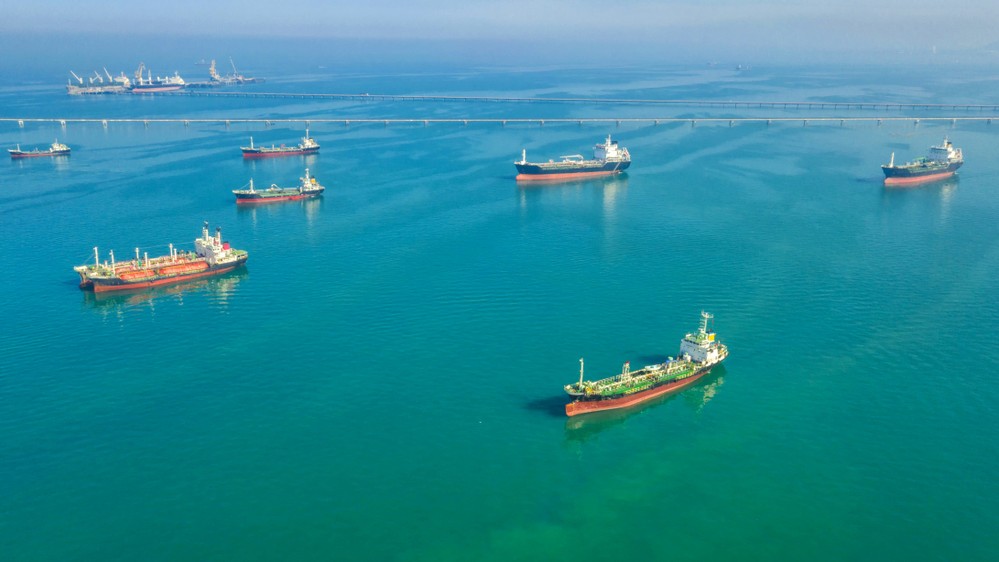
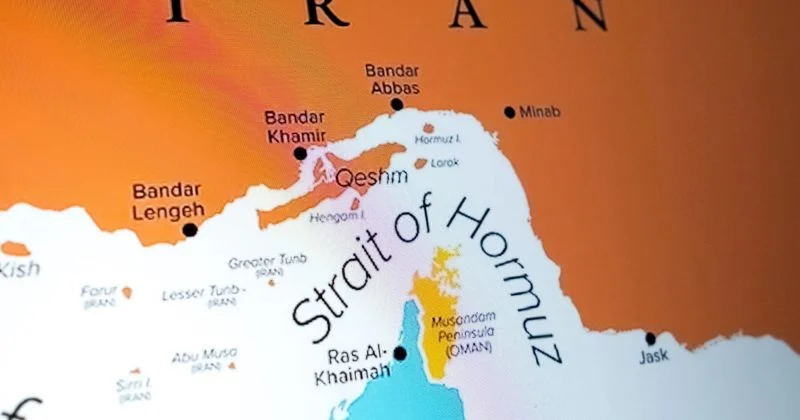
Welcome to Daily on Energy, written by Washington Examiner energy and environment writers Callie Patteson (@CalliePatteson) and Maydeen Merino (@MaydeenMerino). Email cpatteson@washingtonexaminer dot com or mmerino@washingtonexaminer dot com for tips, suggestions, calendar items, and anything else. If a friend sent this to you and you’d like to sign up, click here. If signing up doesn’t work, shoot us an email, and we’ll add you to our list.STRAIT OF HORMUZ TRAFFIC HITS DAILY RECORD POST-WAR: Traffic is quickly increasing in the Strait of Hormuz, with shipping transit hitting a daily record high since the war in Iran started. According to the latest data from S&P Global MINT and S&P Global Commodities at Sea, 78 vessels passed through the Strait of Hormuz yesterday, making it a new daily record. The previous high was 49 vessels. Oman and the International Maritime Organization have announced a safe route to transit near the Omani coast. S&P said that about 40% of the vessels used this route during the day. As traffic continues to pick up in the strait, the Trump administration has been working toward finalizing a deal to end the war in the Middle East. Secretary of State Marco Rubio noted today that the administration won’t reach a deal with Iran “at any price,” adding that Iran issuing tolls in the strait would be unacceptable, Bloomberg reported. “You can call it a toll, you can call it a fee, whatever you want to call it — it’s a game of semantics,” Rubio said Thursday in Bahrain. “That will never be an acceptable condition of any deal.”Iran and Oman released a joint statement earlier this week about working toward an agreement on how to jointly administer the strait. The joint statement mentioned the cost of managing maritime traffic, raising concerns about tolls or fees. Evacuations paused: Despite a rise in traffic, the International Maritime Organization announced this afternoon that it would pause its evacuation operations in the waterway after an attack on a vessel. IMO said in a statement that the vessel did not transit under IMO’s evacuation framework. As negotiations are underway to reach a deal, many in the maritime and shipping industry have raised concerns over vessels’ safety when exiting the waterway due to the threats of attacks and mines. CHEVRON WARNS THERE’S NO QUICK FIX TO LOWERING GAS PRICES: Big Oil is hitting back at the president’s assertion that the market is gouging consumers with higher gasoline prices, with a Chevron executive saying there is not a quick fix to get prices at the pump in line with lower oil prices. Chevron CFO Eimear Bonner told CNBC today that, while she expects gasoline prices to continue to fall, it will take longer than oil. “What I would say is, we’re all concerned about prices. So, there is a lot of empathy, whether it’s in the U.S. or here in the U.K. or in Europe for consumers,” Bonner said. “It’s going to take time though. There is a lag between, you know, oil prices and reductions in oil prices and when that shows up at the pump, but we expect that prices will come down as things continue to normalize.”She told the outlet that the majors are doing “everything” that they can to get prices down in the short term, including expanding their production by 7-10%. While the president is unhappy with the pace of price declines, market analysts have pointed out that gas prices are falling at a considerable rate. Data compiled by GasBuddy found that gasoline prices are falling faster now than they did after peaking in 2022. In fact, they are falling about 5% faster than they did under former President Joe Biden. Where are prices now? As of this afternoon, GasBuddy was reporting the national average of gasoline to be around $3.889 a gallon, down more than 50 cents from last month’s average. Oil on the other hand, ticked back up slightly, after hitting pre-war levels yesterday. Just after 2 p.m. EDT, Brent crude had risen by 1.91% and was selling at $75.15 a barrel. West Texas Intermediate was also up 2.25% and priced at $71.92 a barrel. CHRIS WRIGHT TEASES THIRD SMR TO HIT CRITICALITY: The Department of Energy is poised to hit Trump’s July 4th deadline for developing advanced nuclear reactors this week, as a third small modular reactor is set to be turned on and hit criticality in just a matter of days. The details: Energy Secretary Chris Wright confirmed to CNBC this morning that the reactor, developed by Aalo Atomics, should hit criticality “in the next few days.” So far, two companies have had their reactors achieve criticality: Antares and Valar Atomics. “These are all Gen IV, meaning new advanced technology reactors and they’re all different designs,” Wright said. “They’re all going to go critical before July 4. Simply incredible that President Trump’s aggressive goal is going to be achieved.” The secretary confirmed that he approved Aalo Atomics to turn on its reactor and test criticality today. Reaching criticality means a reactor is perfectly stable and its nuclear chain reaction is self-sustaining. For more information about this stage of the reactor development process, check out Callie’s explainer here. Criticality does not mean a nuclear reactor is producing electricity. But Wright said that could happen for these advanced reactors as soon as next year. “I believe we will see the first electricity coming out of a small modular reactor, yes, perhaps before the end of next year, and definitely within 2028, within the Trump administration,” he said.CONSERVATIVES PRESS HOUSE TO OVERTURN EPA ETHANOL-BLENDING QUOTAS: A group of conservatives is pressing House lawmakers to overturn the Environmental Protection Agency’s higher-ethanol gasoline blend requirements. Nearly three dozen conservatives signed onto the letter sent to Congress, including Unleash Prosperity Chairman Stephen Moore, Americans for Tax Reform President Grover Norquist, Domestic Energy Producers Alliance president and CEO Jerry Simmons, and billionaire oilman Harold Hamm, according to Bloomberg.At issue is the EPA’s biofuel blending standards that were set in March, also known as the Renewable Fuel Standard “Set 2” requirements. The RFS, established under the Clean Air Act, requires transportation fuel to contain an increasing volume of renewable fuel, a policy justified as reducing emissions.The group argued that these requirements would end up raising fuel prices for consumers. The standards have been praised by agriculture groups, but the oil industry has argued that it would raise compliance costs, which would fall onto the consumers. EPA Administrator Lee Zeldin has noted that the agency would immediately begin to work on the third set of these requirements. Read more by Maydeen here. WORLD BANK’S CLIMATE TARGETS ON THE VERGE OF BEING SCRAPPED: In just five days, the World Bank’s climate financing goals will expire. And as European leaders are facing growing pressure from the Trump administration to ditch climate-related policies and regulations, there doesn’t appear to be a clear replacement for the targets. The climate target: Following the United Nations’ climate conference in 2023, the World Bank said it would pledge 45% of its funding to climate-related projects by 2025, with the aim that it would help reduce greenhouse gases from the largest emitters while also propping up developing countries in need of resources to adapt to climate change. The bank more than achieved that goal last year, committing 48% – around $39.2 billion – of its financing to climate-related projects. Better known as the Climate Change Action Plan, the funding target expires on June 30. It was first developed as a five-year plan in 2021, extending on a similar plan created in 2016. Initially, the bank vowed to pledge 35% of its funding to climate-projects, but that target was raised two years later. The pressure: The Trump administration has called on the World Bank to do away with this financing target, and instead increase its investment in traditional fossil fuels such as natural gas. In April, Treasury Secretary Scott Bessent said the target “breeds inefficiency, distorts economic decision making, and moves the Bank away from its core mission.” Given that the U.S. is the largest shareholder of the World Bank, climate activists fear that the bank’s board of directors will let the financing targets lapse without any extension. Last fall, 19 of 25 bank shareholders signed a statement of support continuing the financing. In addition to the U.S., Japan, India, Saudi Arabia, Russia, and Kuwait declined to sign. France made a last-minute plea with the board to continue the financing earlier today. Without a detailed plan in place devoting a certain percentage of funds to climate-related projects, the World Bank would have no specific guideline on how to align its lending with goals of the 2016 Paris Agreement – which the U.S. withdrew from a second time. HUNDREDS DEAD AMID EUROPEAN HEATWAVE: Hundreds of people have died across Western Europe due to the record-breaking heatwave sweeping the region this week. The details: The Spanish Health Ministry revealed earlier today that at least 212 people have died in Spain since Saturday as a result of the heatwave. France has also recorded at least 50 deaths – 48 of which were due to drowning, as residents sought to escape the heat by swimming in dangerous areas. In Italy, at least five deaths have been reported. More than a dozen cities in the country have been put under the highest heat alert, with some local governments banning outdoor work during some parts of the day. How hot is it? In France and Spain, temperatures have reached between 100 and 110 degrees Fahrenheit. Pissos, a commune in southwestern France, also recorded the highest temperature since the country began reporting it 80 years ago, at 111.7 degrees Fahrenheit. You can read more from the Examiner’s Brady Knox on the dangerous heatwave here. ICYMI – TOP HOUSE DEMOCRAT CALLS FOR DATA CENTER MORATORIUM: House Energy and Commerce Committee ranking member Rep. Frank Pallone of New Jersey called for a national moratorium on data centers yesterday. He made the remarks at an energy subcommittee markup hearing, where lawmakers were addressing several electric grid bills. His call for a data center moratorium makes him one of the highest-ranked Democrats to take this stance. Other lawmakers who have called for a moratorium include Democrat Rep. Alexandria Ocasio-Cortez of New York and Independent Sen. Bernie Sanders of Vermont, who introduced a bill in March to pause new data center development as lawmakers work on regulations for artificial intelligence.Ocasio-Cortez told Maydeen outside of the hearing yesterday that she was “very encouraged” by Pallone’s call for a moratorium, noting that it “takes a lot of courage.” “It’s also a testament to a lot of the organizing happening in communities not just in New Jersey, but across the country as well,” she said. During the markup, lawmakers passed several bills out of the subcommittee, including the Ratepayer Protection Act. The bill would require state regulators to create standards for large-load customers to cover the costs related to new generation, transmission lines, and other upgrades.Read more by Maydeen here.RUNDOWN Inside Climate News The ‘Guerrilla Solar’ Era Has Arrived, and Here’s What to KnowLatitude Media How data centers are complicating transmission expansionE&E News How a ‘super’ El Niño could disrupt renewable energy