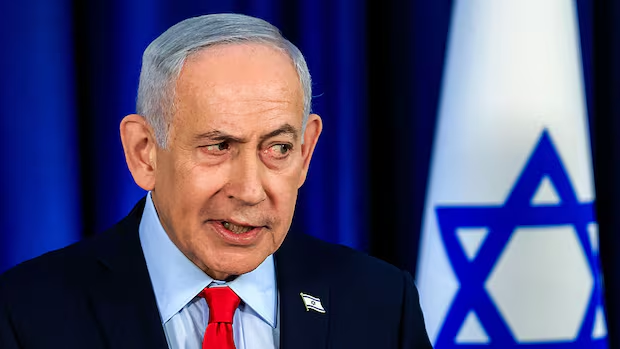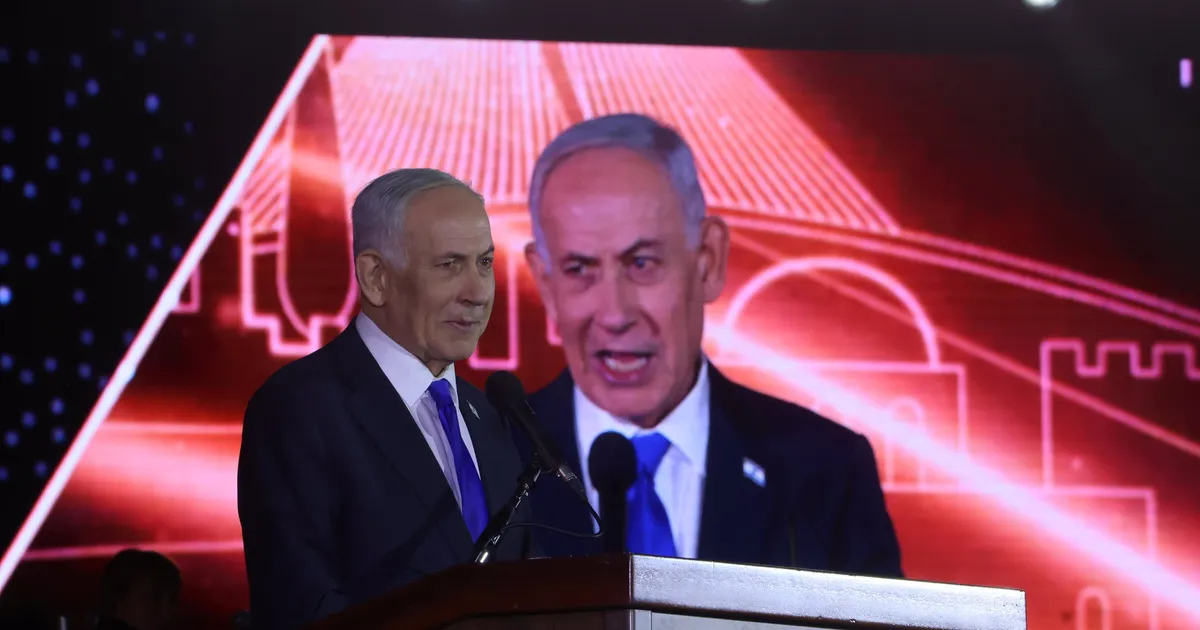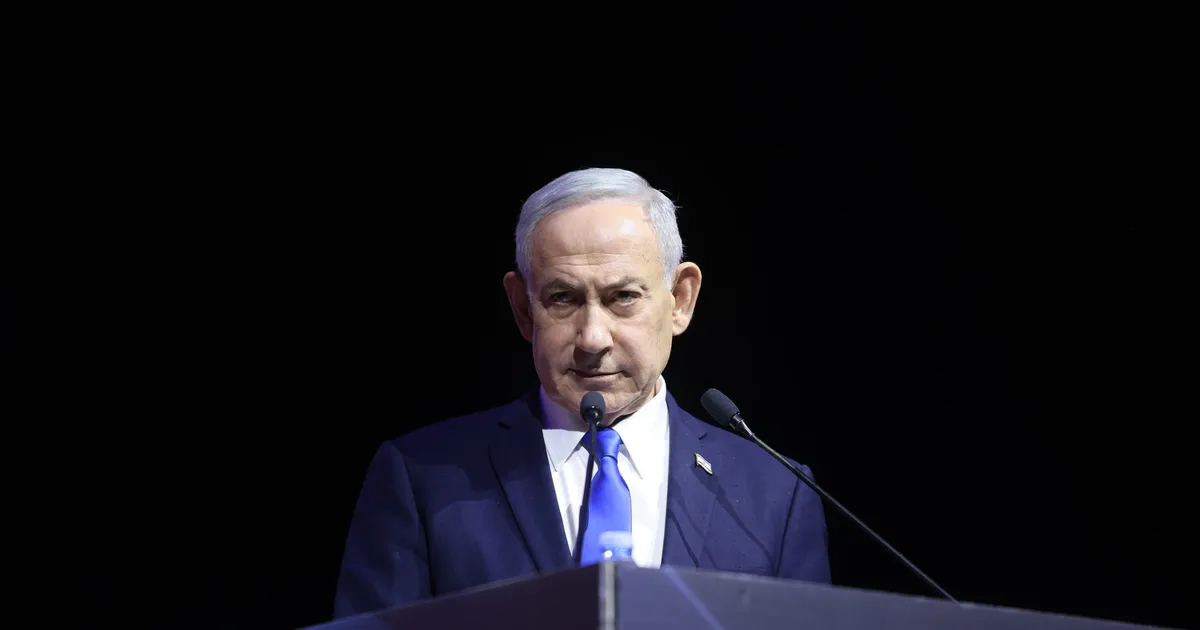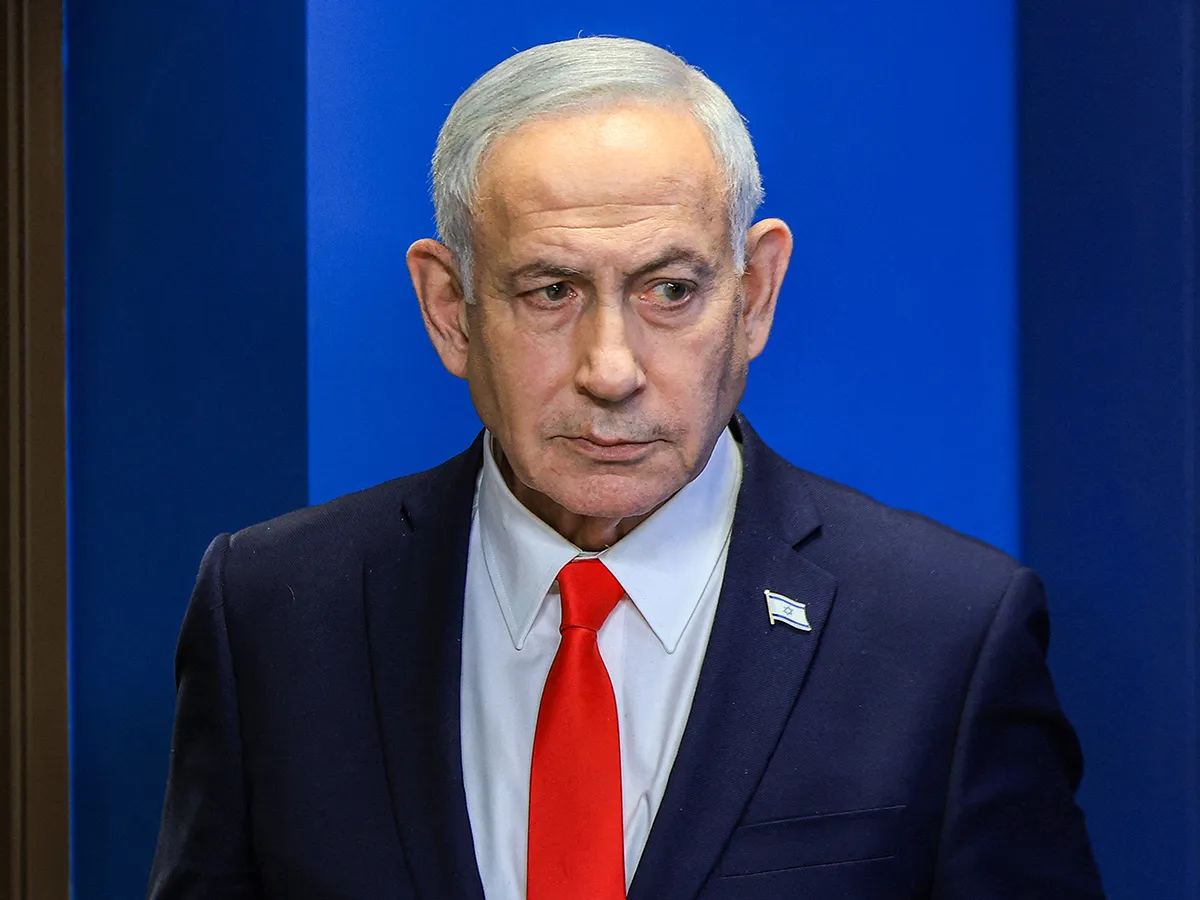
Skip to Content Subscribe Our Offers My Account Manage My Subscriptions FAQ Newsletters Canada Canadian True Crime Canadian Politics Health World Israel & Middle East Financial Post NP Comment Longreads Puzzmo Diversions Comics NP News Quiz New York Times Crossword Horoscopes Life Eating & Drinking Style Sponsored Play for Ontario Travel Travel Canada Travel USA Travel International Cruises Travel Essentials Culture Books Celebrity Movies Music Theatre Television Business Essentials Advice Lives Told Tails Told Shopping Buy Canadian Home Living Outdoor Living Kitchen & Dining Tech Style & Beauty Personal Care Entertainment & Hobbies Gift Guide Travel Guide Amazon Prime Day Deals Savings National Post Store More Sports Hockey Baseball Basketball Football Soccer Golf Tennis Driving Vehicle Research Reviews News Gear Guide Obituaries Place an Obituary Place an In Memoriam Classifieds Place an Ad Celebrations Working Business Ads Archives Healthing Epaper Manage Print Subscription Profile Settings My Subscriptions Saved Articles My Offers Newsletters Customer Service FAQ Newsletters Canada World Financial Post NP Comment Longreads Puzzmo Diversions Life Shopping Epaper Manage Print Subscription HomeNewsWorldIsrael & Middle EastNetanyahu's political future looks uncertain. His rivals still won't count him outAlong with an established party apparatus, Netanyahu's three decades in politics also brings other political advantages, not least of which is a solid base of support You can save this article by registering for free here. Or sign-in if you have an account.Israel's Prime Minister Benjamin Netanyahu said on June 15 that he intended to run in elections scheduled for later this year, as he faced domestic criticism over his handling of the Middle East war and its aftermath. Photo by RONEN ZVULUN / POOL / AFP via Getty ImagesNo later than Oct. 27, a divided Israeli electorate will decide whether the leader who steered the country through three inconclusive wars in three years should continue to chart the course.Enjoy the latest local, national and international news.Exclusive articles by Conrad Black, Barbara Kay and others. Plus, special edition NP Platformed and First Reading newsletters and virtual events.Unlimited online access to National Post.National Post ePaper, an electronic replica of the print edition to view on any device, share and comment on.Daily puzzles including the New York Times Crossword.Support local journalism.Enjoy the latest local, national and international news.Exclusive articles by Conrad Black, Barbara Kay and others. Plus, special edition NP Platformed and First Reading newsletters and virtual events.Unlimited online access to National Post.National Post ePaper, an electronic replica of the print edition to view on any device, share and comment on.Daily puzzles including the New York Times Crossword.Support local journalism.Create an account or sign in to continue with your reading experience.Access articles from across Canada with one account.Share your thoughts and join the conversation in the comments.Enjoy additional articles per month.Get email updates from your favourite authors.Create an account or sign in to continue with your reading experience.Access articles from across Canada with one accountShare your thoughts and join the conversation in the commentsEnjoy additional articles per monthGet email updates from your favourite authorsSign In or Create an AccountorBenjamin Netanyahu has been Israel’s prime minister, on and off, since 1996, and remains the dominant political figure in the country.But massive security failures during Hamas’s October 7 massacre shook many Israelis’ faith in a man whose main promise was to keep them safe. His follow up wars — against Hamas in Gaza, Hezbollah in Lebanon and, with the U.S., against the terror groups’ Islamist puppet-master in Iran — have not yet yielded conclusive results.Netanyahu is also awaiting the verdict on a six-year corruption trial while managing a division within his nationalist coalition, which incited massive protests in 2023 over plans to limit supreme court powers.Columnist Jesse Kline keeps you up to date with what’s happening in Israel and the effects of antisemitism on life here in Canada. Friday mornings.By signing up you consent to receive the above newsletter from Postmedia Network Inc.A welcome email is on its way. If you don't see it, please check your junk folder.The next issue of Channel Israel will soon be in your inbox.We encountered an issue signing you up. Please try againWhile any one of these challenges would likely have sunk a rival candidate, Netanyahu’s political obituary has been written more than once, and it may be too early for pundits to start sharpening their pencils.“He knows the Israeli political scene like the back of his hand,” Ira Robinson, professor emeritus of Jewish Studies at Concordia University, told National Post. “Surviving the Israeli political scene for so many years has taught him a number of tricks, and he is, once again, like him or dislike him, a survivor.”In Israel’s multi-party parliament, disparate factions reach delicately balanced compromises, where “simply somebody sneezing can make a coalition crisis,” Robinson said. “Netanyahu has faced probably dozens, if not hundreds, of coalition crises in his career.”“I am certainly far less than 100-per-cent certain, but based on track record, don’t count them out,” he added.Opinion polls have shown former prime minister Naftali Bennett and Gadi Eisenkot, a former chief of staff of the Israeli Defense Forces, in close contention with the 76-year-old Netanyahu.Bennett, a religious former tech investor, formed a party with Yair Lapid, the secular centrist opposition leader and former television personality, earlier this year. Naftali Bennet and Yair Lapid, smile during a press conference at the Israeli parliament on May 20, 2026 in Jerusalem. Photo by Amir Levy/Getty ImagesThe two were in a power-sharing agreement that ended Netanyahu’s 12 consecutive years in power in 2021. Bennett’s coalition collapsed after a year, with Lapid serving as a caretaker leader for six months. Their ideological gap has raised doubts as to whether their alliance can hold.“These are two very different world views that that have to be combined, and so any opposition to Netanyahu will be extremely diverse, and for that reason very fragile, just like it was last time, and the very fact that we are in June 2026 and elections will happen no later than October and it’s still not clear what the opposition lineup is,” said Csaba Nikolenyi, a political science professor and director of the Azrieli Institute of Israel Studies at Concordia.As opposition leader, Lapid “wasn’t able to galvanize any meaningful, genuine opposition to the Netanyahu government,” Nikolenyi said.“For Bennett, who is trying to come back up, it may not be the best association,” he added.Netanyahu’s challengers may take a similarly hawkish stance while also highlighting Israel’s loss of standing with the U.S. under his leadership, particularly as a result of the Iran war. Netanyahu can no longer count on his close relationship with Donald Trump after being on the receiving end of multiple expletive-laden rants, as has been widely reported.Following the Iran-U.S. ceasefire, Lapid said Netanyahu “failed to deliver the goods,” and complained of “an American president openly and publicly telling the prime minister of Israel: ‘I am your boss, and you will do what you are told.'”A poll earlier this month by Hebrew University of Jerusalem found that 92 per cent of Israelis viewed Iran as winners of the war.According to Nikolenyi, perhaps the biggest election question will be who bears responsibility for Oct. 7, the deadliest security failure in Israeli history.“The civilian leadership is putting the blame on the military, whose job and task it is to protect the borders of the nation on any given day,” he said. “There is a leadership, a national leadership under whose watch this tragedy happened, and under whose watch the successive wars have unfolded, so it’s in this context that the MOU between the United States and Iran is coming.”Polls have shown Israelis are willing to incur the cost of war for increased national security.“The liberal world and the liberal constituency, and the socialist constituencies, are really shrinking, just demographically speaking, in Israel,” noted Nikolenyi. Gadi Eisenkot, former Israeli minister without portfolio and the 21st Chief of General Staff of the Israeli army. Photo by GIL COHEN-MAGEN / AFPThat has left candidates competing for the centre with only a few months left to co-ordinate a compromise.“There is much overlapping between the public who prefer, for example, Eisenkot or Bennett or even (Avigdor) Lieberman,” said Tamar Hermann, senior fellow at the Israel Democracy Institute. “The division lines are not clear, and there is no agreement between these leaders who is going to become prime minister if they will eventually get more votes than the other side.”One of the most well-liked contenders expected to run is Eisenkot, the ex-general who entered parliament in 2022 and left in order build an independent political base. While the public admires his straight-talk and honesty, they can point to little in the way of substance, Hermann said.“There are no major pieces of legislation that could be associated with him, or, or even opposing some, but people will judge him as on his record as a former IDF chief, and in Israel that matters a lot,” Nikolenyi noted.As prime minister, Bennett was noted for his operational skills even as things came apart, Hermann said. “He does have failure written under his name, but he seems to be a good compromise for people who would like to have someone of the moderate right who is capable of really managing things,” she said.Bennett has no established party organization behind him and is a “one man show,” said Nikolenyi. “To do well and to succeed well in Israeli politics in the long run, you need a party organization, because it’s a very party-centred and party-oriented political system,” he noted.Along with an established party apparatus, Netanyahu’s three decades in politics also brings other political advantages, not least of which is a solid base of support.“On his base, the main sentiment is of love for the person. It is familial — not familiar, but familial,” said Hermann. “It’s like if you have a father that made some major mistake or even committed a crime, it’s still in a very tight family.”“Unless there is some dark horse around the corner” Netanyahu is seen as “irreplaceable” by his supporters, Hermann noted. “The people who hate him actually hate his guts, but still recognize his qualifications, so everyone agrees that none of the candidates that are running for office right now are of his calibre, and this is shared by his rivals, or even enemies, and his supporters.”Netanyahu will most likely be “stuck with” the leaders of Israel’s extreme-right parties, who serve in the current administration, Hermann said. Finance Minister Bezalel Smotrich, who has overseen surge of settlement construction in the West Bank amid mounting violence, and national security minister Itamar Ben-Gvir, who was convicted of anti-Arab incitement in 2007, were brought in after moderate and centrist parties refused to work with him.“(Ben-Gvir) is really pushing Netanyahu into making decisions and taking actions that were unthought of,” said Hermann. “Netanyahu doesn’t like him, nor Smotrich, but he didn’t have any other possibility.”“In order to replace them, he should bring over party leaders from the other side, and doesn’t look as if he is going to get it,” she added.Based on track record, don't count them outA poll last week by Israel’s Channel 12 found that 59 per cent of those surveyed feel Netanyahu should not run for re-election, while 33 per cent said he should. Another 8 per cent were not sure.Any credible opposition would likely have to ally with religious parties, according to Robinson. But Eisenkot, Bennett and Lieberman, a nationalist who represents voters from the former Soviet Union, have so far ruled out aligning with Arab and ultrareligious parties.No Israeli party has won an outright majority in parliament, which requires securing 61 out of 120 seats to form government. Under its tradition of multi-party politics, smaller parties yield concessions on pet issues in return for their support.“The major small parties that you would want or probably need in a coalition are the religious parties, and that’s a very volatile issue,” said Robinson.In 2022, Netanyahu regained power after 18 months in opposition after his conservative Likud Party formed a coalition with five right-wing and ultrareligious parties. The latest crisis in his camp came after two ultra-Orthodox parties left over his failure to legalize decades-old exemptions for religious students from mandatory conscription. The ultra-Orthodox community currently has 18 seats in parliament.“(Netanyahu) is cautious not to push this draft issue on the agenda, because he doesn’t want to alienate the ultra-Orthodox, and the ultra-Orthodox are strong,” said Nikolenyi.“So long as he has that, and the support of the religious Zionist community, which is kind of unshakable, because these parties have nowhere else to go — they will never support anyone to the left of Netanyahu — Netanyahu kind of has them has that corner fairly, fairly well guaranteed for him,” Nikolenyi said.Any politician looking to build a stable coalition will have to approach religious parties, Robinson said.“And these parties will tell whoever it is, be it Netanyahu, be it Eisenkot, whoever it is … ‘You’ve got to give us what we want,’ and now the negotiation becomes, do you get 100 per cent of what you want? Do you get 80 per cent of what you want? What are the parameters,” he explained.“That’s all backroom politics, and Israelis are used to it.” Join the Conversation This website uses cookies to personalize your content (including ads), and allows us to analyze our traffic. Read more about cookies here. By continuing to use our site, you agree to our Terms of Use and Privacy Policy.
Netanyahu's political future looks uncertain. His rivals still won't count him out
Netanyahu's three decades in politics also brings political advantages, not least of which is a solid base of support.
2,234 words~10 min read