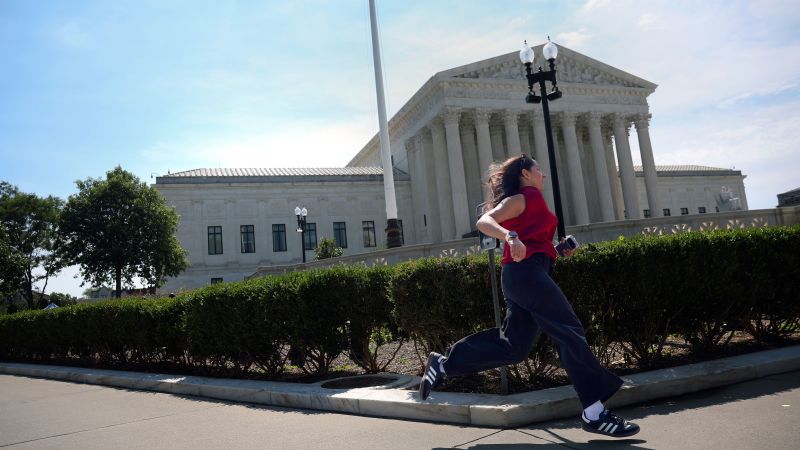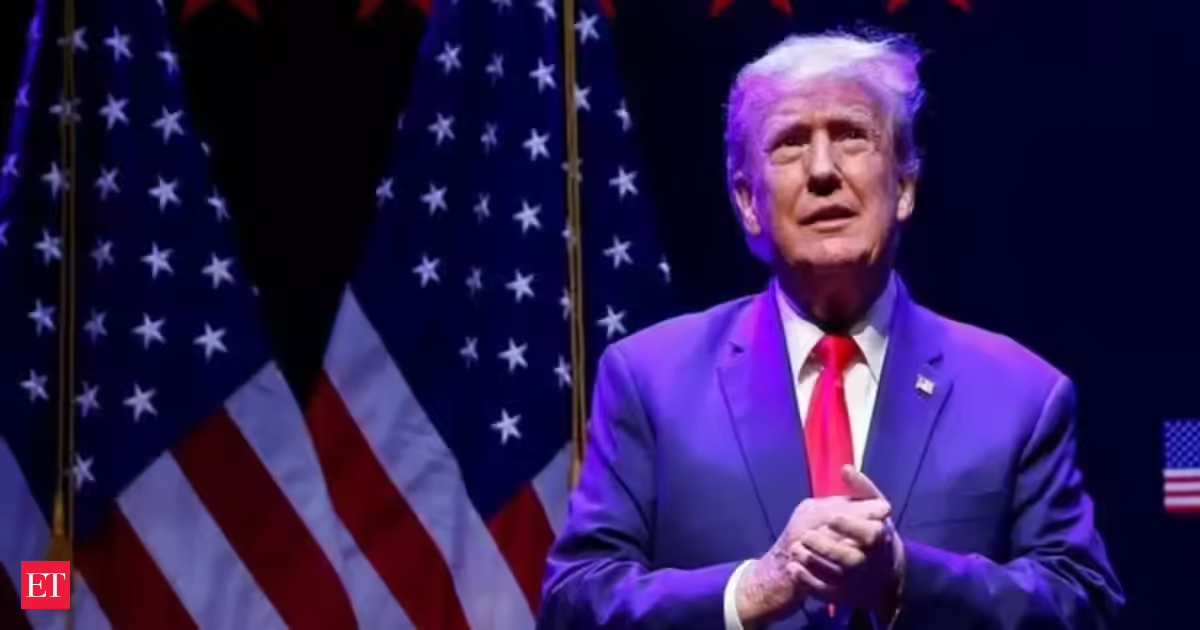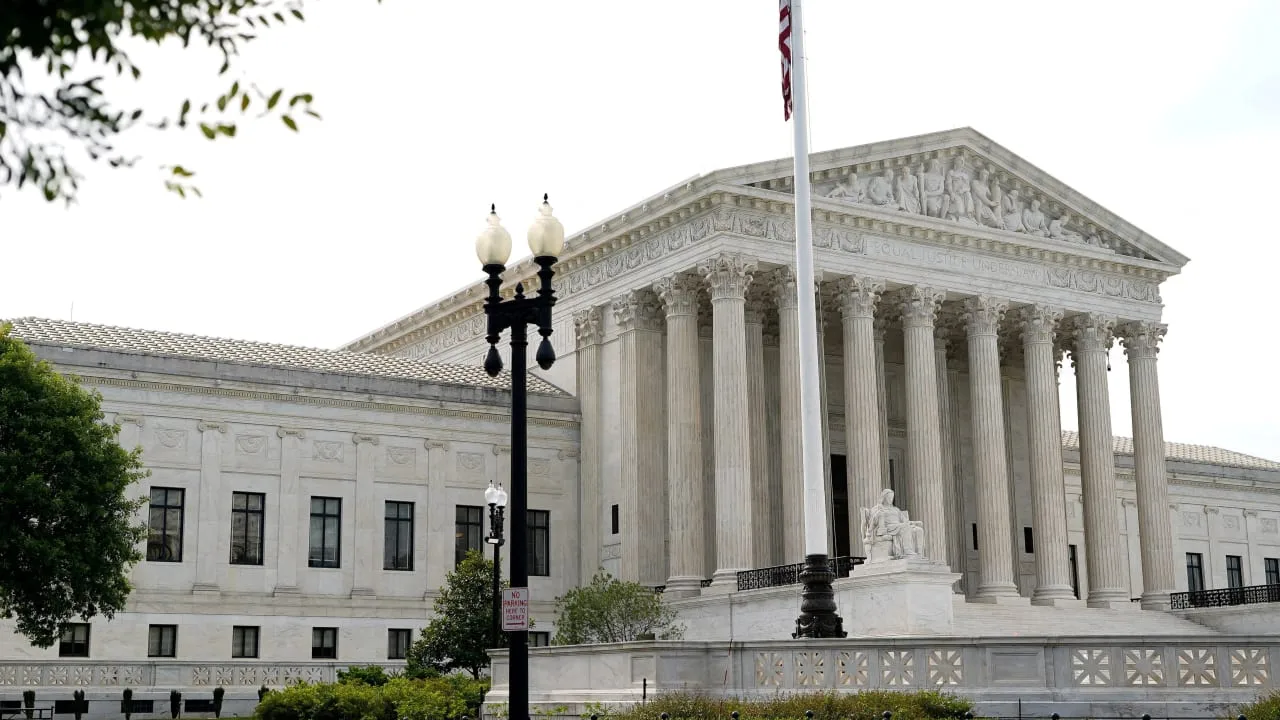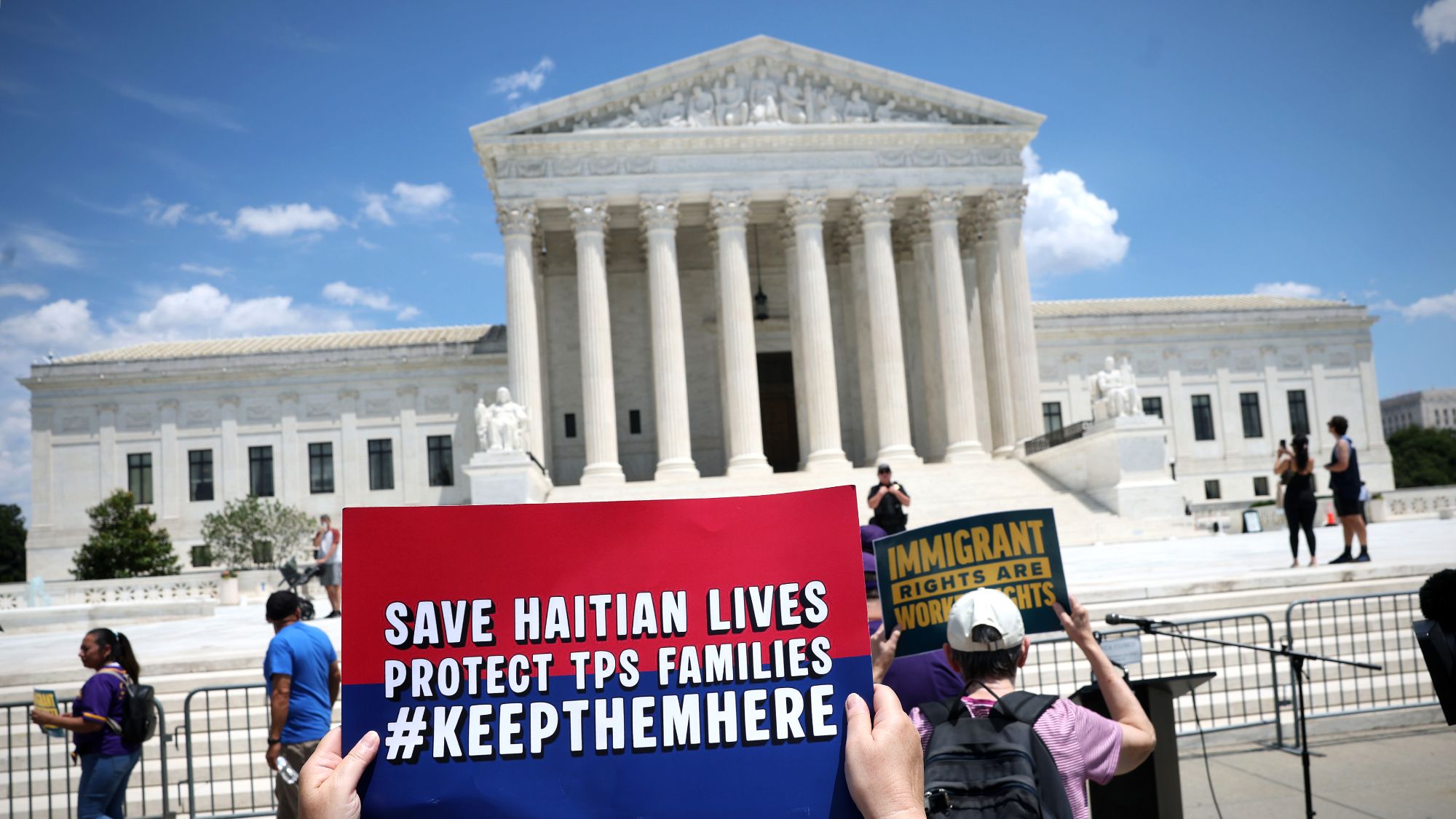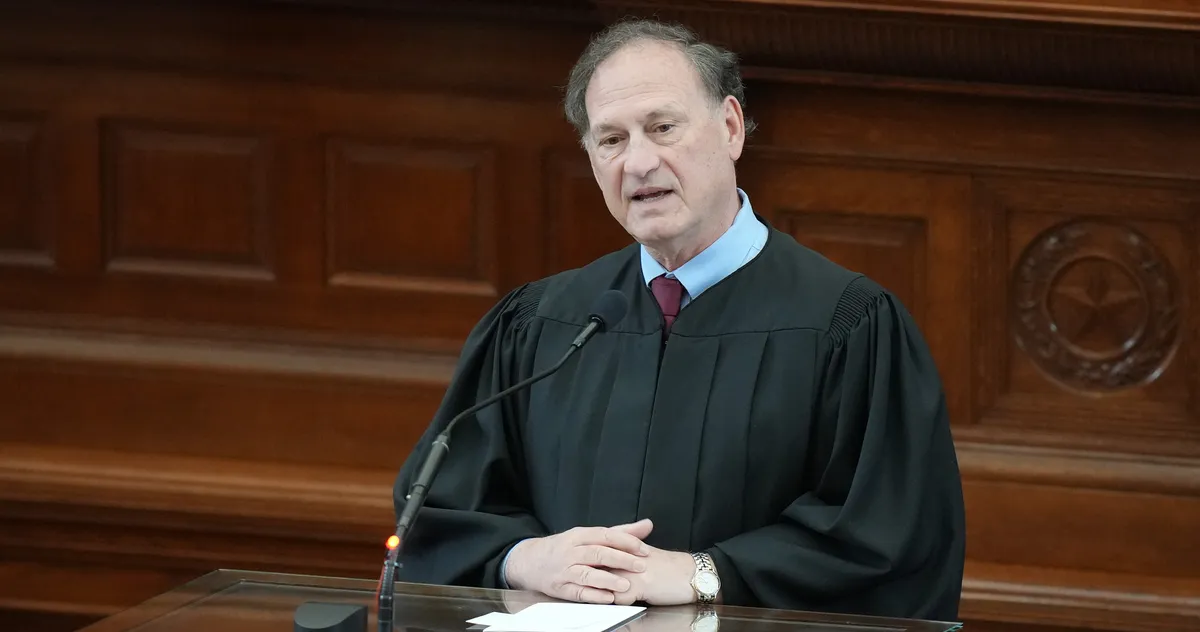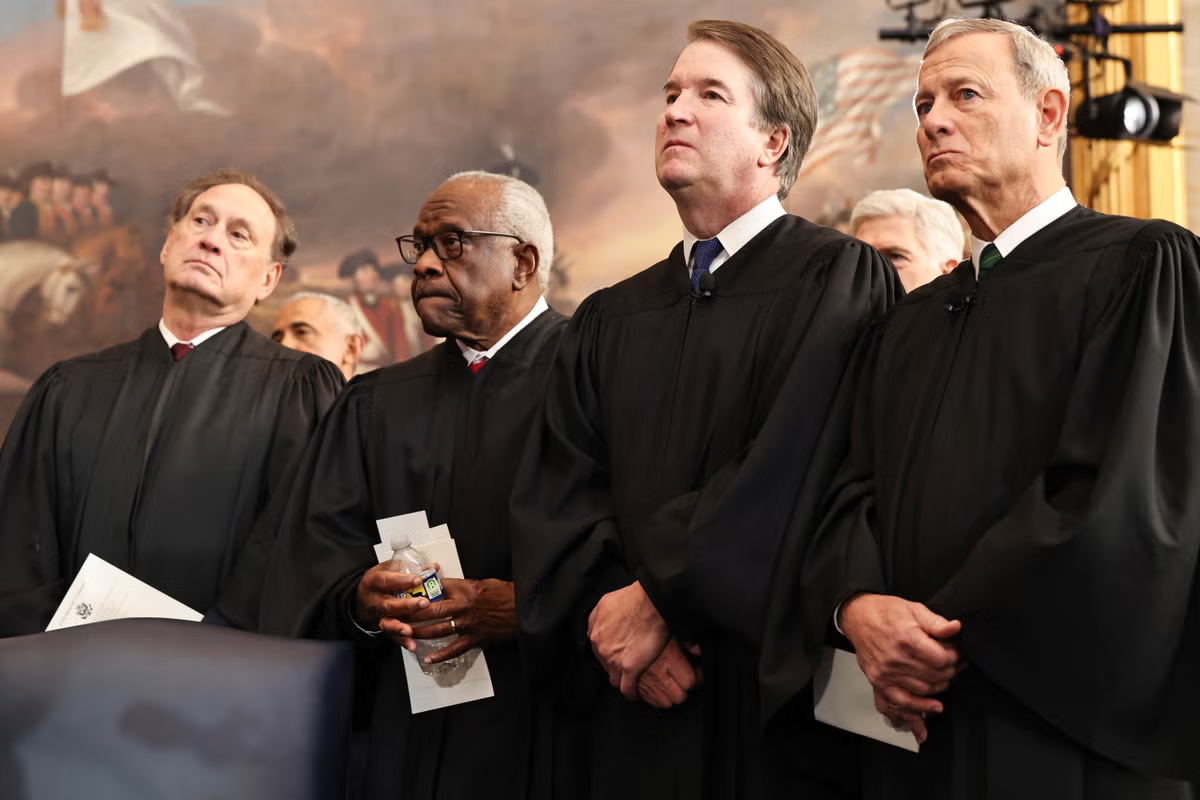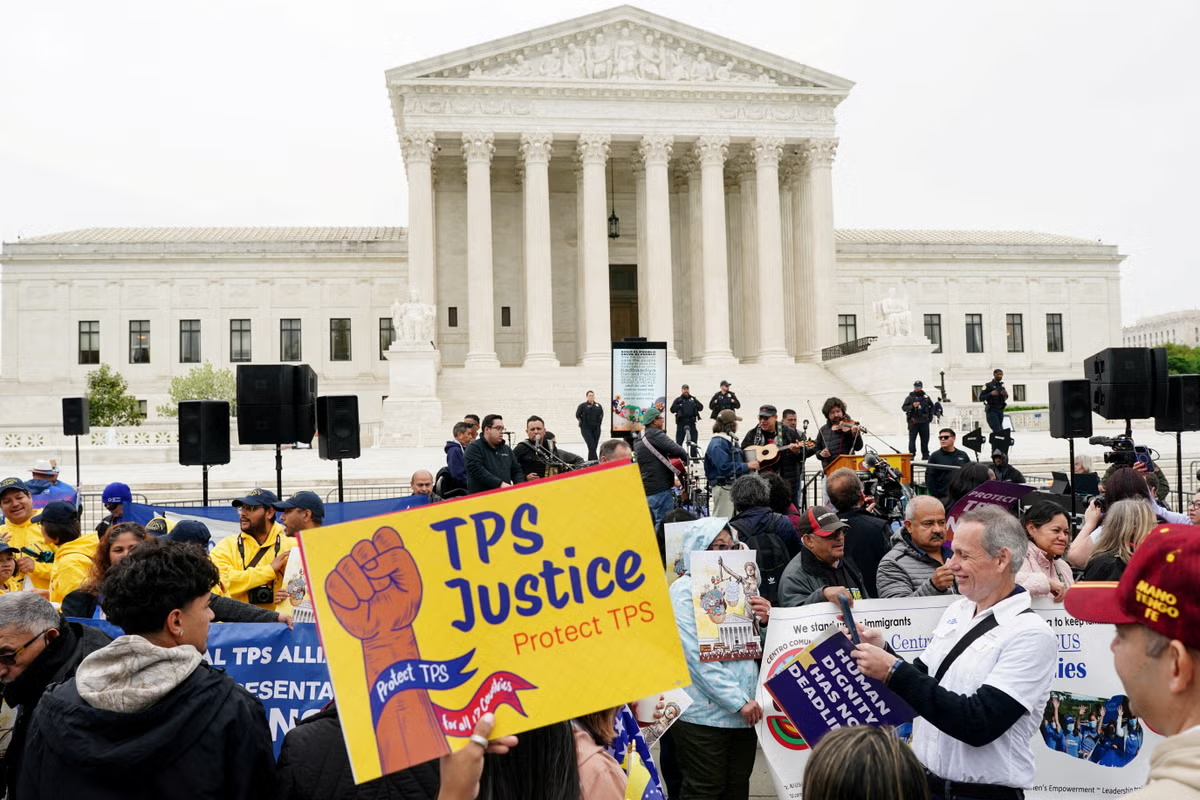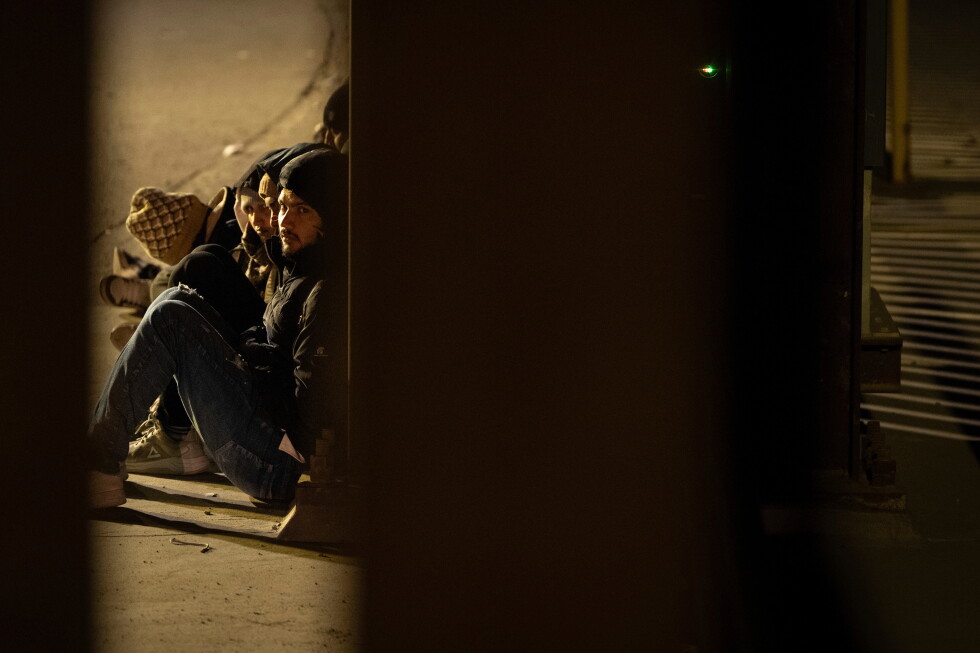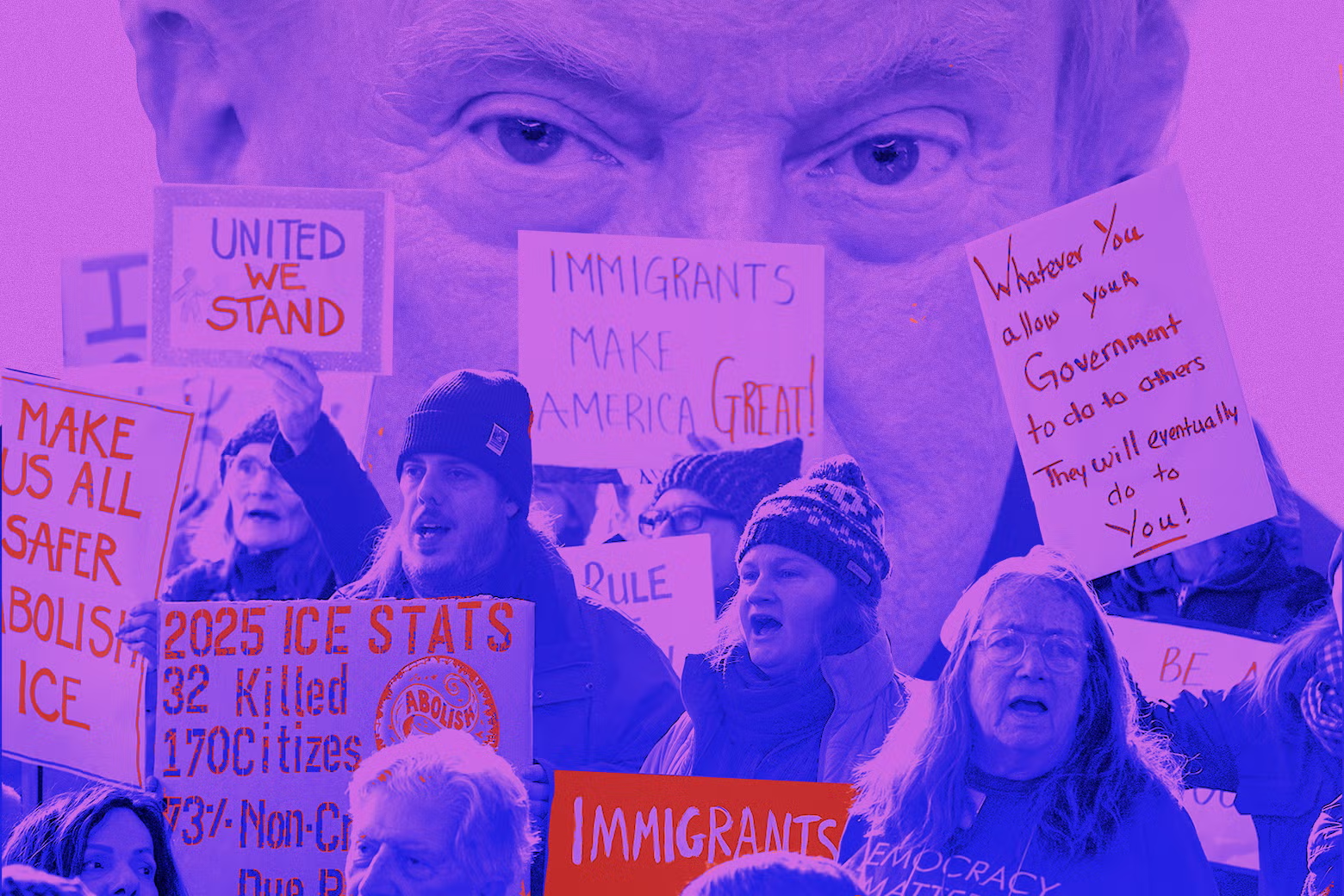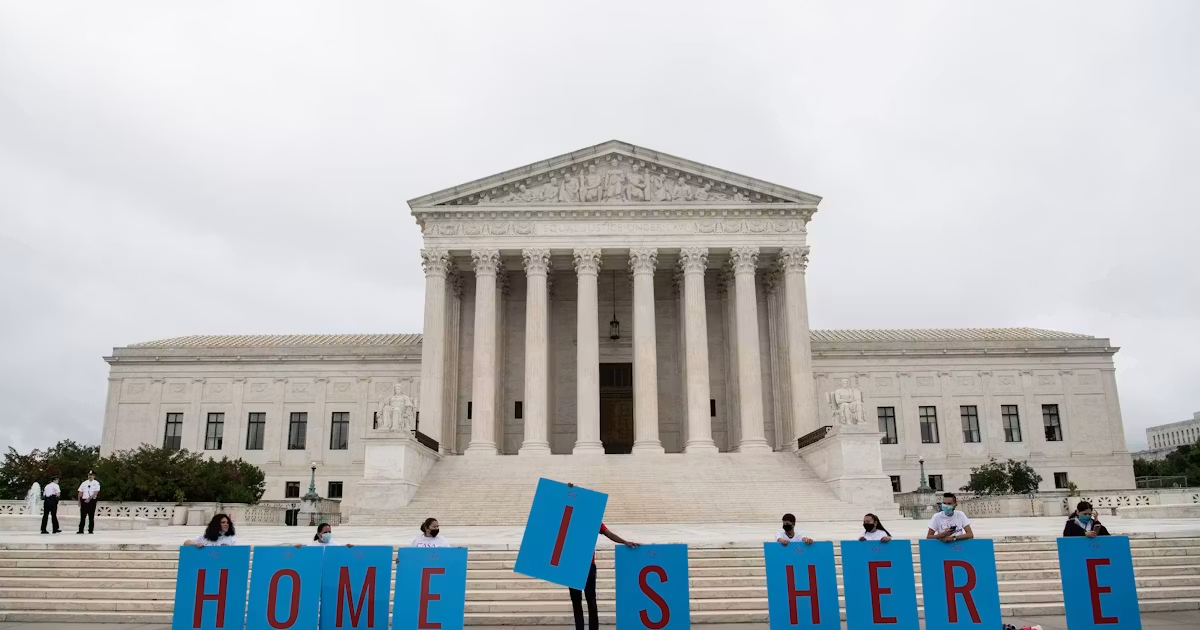
The Supreme Court has delivered President Trump two significant victories in his mass deportation campaign. On Thursday, the court’s conservative majority voted 6–3 in Mullin v. Al Otro Lado to approve a “metering” policy allowing Border Patrol agents to turn away migrants seeking asylum from the Mexican side of the southern border. The policy—introduced under the Obama administration and heavily expanded under Trump—will put the asylum hopes of hundreds of migrants and refugees at risk. “We hold that an alien who is standing in Mexico does not ‘arriv[e] in the United States’ by attempting, and failing, to set foot in this country. An alien ‘arrives in the United States’ only when he crosses the border,” Alito wrote in the majority opinion.In another 6–3 ruling, Mullin v. Doe, the conservative majority approved the Trump administration’s decision to end Temporary Protective Status for Haitian and Syrian immigrants, putting them at greater risk of being deported back to the dangerous situations they fled from under TPS. These are both countries that the State Department has deemed too dangerous for Americans to travel to. “The Supreme Court’s decision to strip TPS from Haitian and Syrian communities is a betrayal of our values and of the promise our country made to protect people from displacement and harm,” New York Attorney General Letitia James wrote after the ruling. “I’ll never stop fighting for our immigrant neighbors and loved ones.”The Supreme Court ruled in favor of the biotechnology corporation Monsanto on Thursday, saying the company did not have to include a cancer warning on a pesticide label. In a 7–2 ruling that crossed ideological lines, the justices wrote that a federal pesticide regulation shields the company from lawsuits from people who allege that their cancer was caused by Roundup, the weed killer in question.Regulating glyphosate, the potentially cancerous ingredient in question, is a hot-button issue for the Make America Healthy Again crowd. And they’re not happy.In April, Vani Hari, also known as the Food Babe, rallied outside the Supreme Court against Monsanto. On Thursday, she wrote on X, “I am literally sick. This is a devastating blow to every family that trusted our justice system.“Every elected official now has a choice: stand with families harmed by toxic chemicals or stand with the corporations that profit from them,” she wrote.For MAHA, the Supreme Court case is a betrayal: The White House sided with Monsanto in the case, and President Donald Trump signed an executive order earlier this year promoting glyphosate production. Glyphosate is one of the most common pesticides used in agriculture, and Trump framed his executive order as a way of protecting Americans’ food supply.Alex Clark, a “wellness” podcaster and Turning Point USA member, similarly lamented the ruling on X.“Today the Supreme Court made it impossible for people who develop cancer after using Roundup to sue Bayer for failing to warn them about the potential cancer risk,” she wrote. “The Trump administration URGED and PLEADED the Court to reach this result to protect a FOREIGN chemical company—and it did at the expense of Americans. What happened to America First?”Bayer, the company that owns Monsanto, is German.If MAHA feels like the Trump administration has abandoned them, it may mean trouble at the polls. Kelly Ryerson, an activist who goes by “Glyphosate Girl,” told MS NOW that the ruling may not push MAHA to the left—but that doesn’t mean they’ll keep backing Trump.“They’re not going to vote; they’re going to be done with voting,” she warned before the ruling. Editor’s Pick:Supreme Court Justice Ketanji Brown Jackson just accused the Supreme Court of caring more about guns than the actual law. The court issued a 6–3 decision Thursday along ideological lines to scrap Hawaii’s law prohibiting gun owners from taking their weapons onto private property without obtaining express permission. In a dissent written by Jackson and joined by Justice Sonia Sotomayor, Jackson argued that the court had failed to faithfully apply its own jurisprudence. “Today’s decision makes one thing clear: The Court’s objective is protecting guns, not consistently preserving any principle of law,” she wrote. Jackson argued that the court had incorrectly applied, and obscured the purpose of, a two-step legal test to prove if the Second Amendment had been violated, established in New York State Rifle & Pistol Assn., Inc. v. Bruen.In step one of Bruen, the court must determine whether the “plain text” of the Second Amendment covers the challenged action. Jackson claimed that it didn’t. The law being challenged, Act 52, required gun owners to receive affirmative consent from a property owner before bringing their firearm onto private property. “This case is about property rights, not gun rights,” Jackson wrote. “There is no constitutional right to enter private property without the owner’s permission, let alone with a firearm,” she added. “So the question this case presents is merely how a property owner must communicate his decision to exclude or to invite armed carry, including whether a State may alter the background property-law rules that set the default as one or the other. The Second Amendment has nothing to say about that.”Additionally, Jackson argued that the challenge also failed at step two of Bruen, which requires the government to justify the regulation by showing it is consistent with the nation’s historical tradition of regulating firearms. But Hawaii’s history must also be taken into account, Jackson argued, as there is no tradition of concealed carry on the islands. “In this way, Hawaii’s use of its prerogative to protect the interests of its residents is consistent with its own traditions,” she wrote. In obscuring Bruen, Jackson argued the court had opened the door to more chaos. “From this day forward, it will be difficult to view Bruen as anything more than a fig leaf,” she wrote. “The Court’s effort to rein in judicial discretion has resulted in an arbitrary rule that unleashes judges to thwart gun regulation at every turn.”Editor’s Pick:Two ICE agents harassed a poll worker on Election Day, demanding she remove social media posts they claimed threatened federal agents, according to Syracuse.com.Paigelynne Gonyea, a poll worker in Syracuse, New York, said she received a phone call Tuesday from two ICE agents asking to meet with her. Not wanting to meet with them alone, she invited them into her workplace. “I’ve seen the news, especially in Minnesota,” she said. “And I didn’t want anything to happen to me at all.”The ICE agents arrived with copies of her social media posts and driver’s license, and handed her a warning notice alerting her that they were investigating her for allegedly threatening ICE personnel. “They tried to scare me into signing it while I was working,” she said. The agents told her to “remove and/or discontinue” the behavior, according to the notice, which Gonyea shared on Instagram.
Supreme Court Hands Trump Two Huge Wins on His Signature Issue
The conservative justices apparently will let Trump do whatever he wants to immigrants.
1,631 words~7 min read