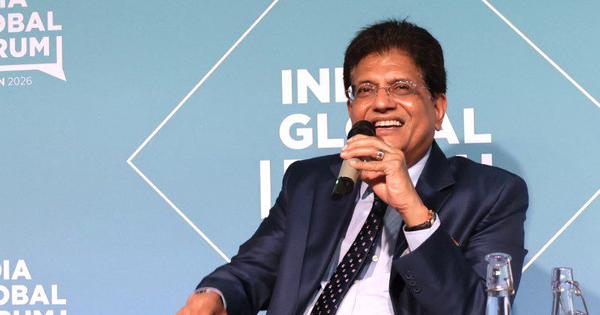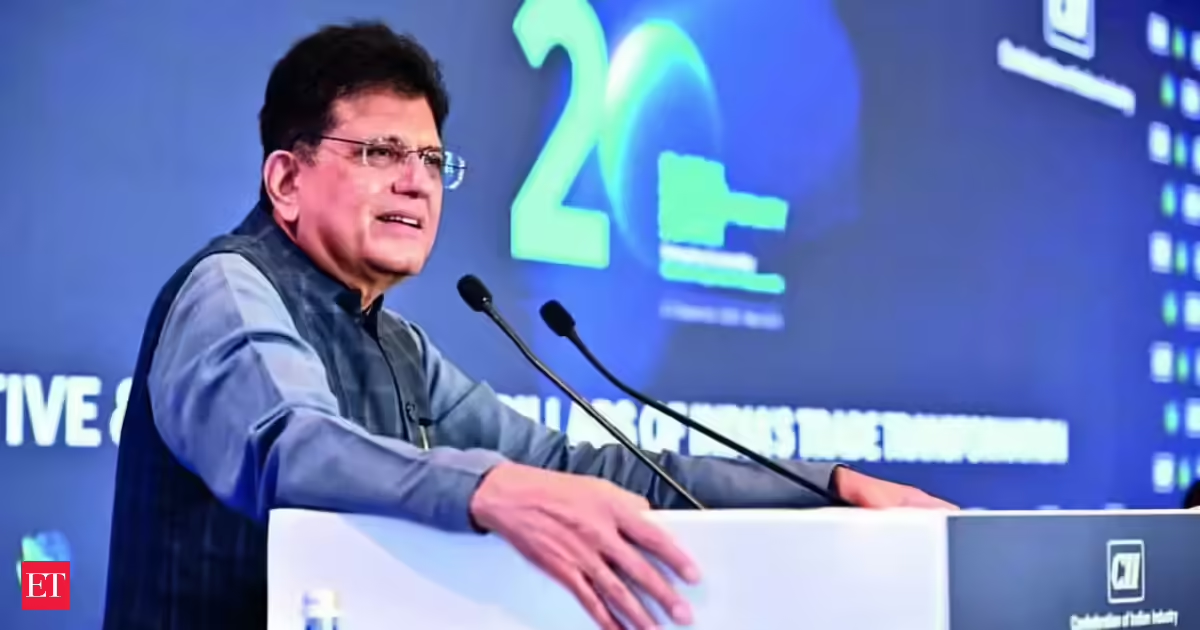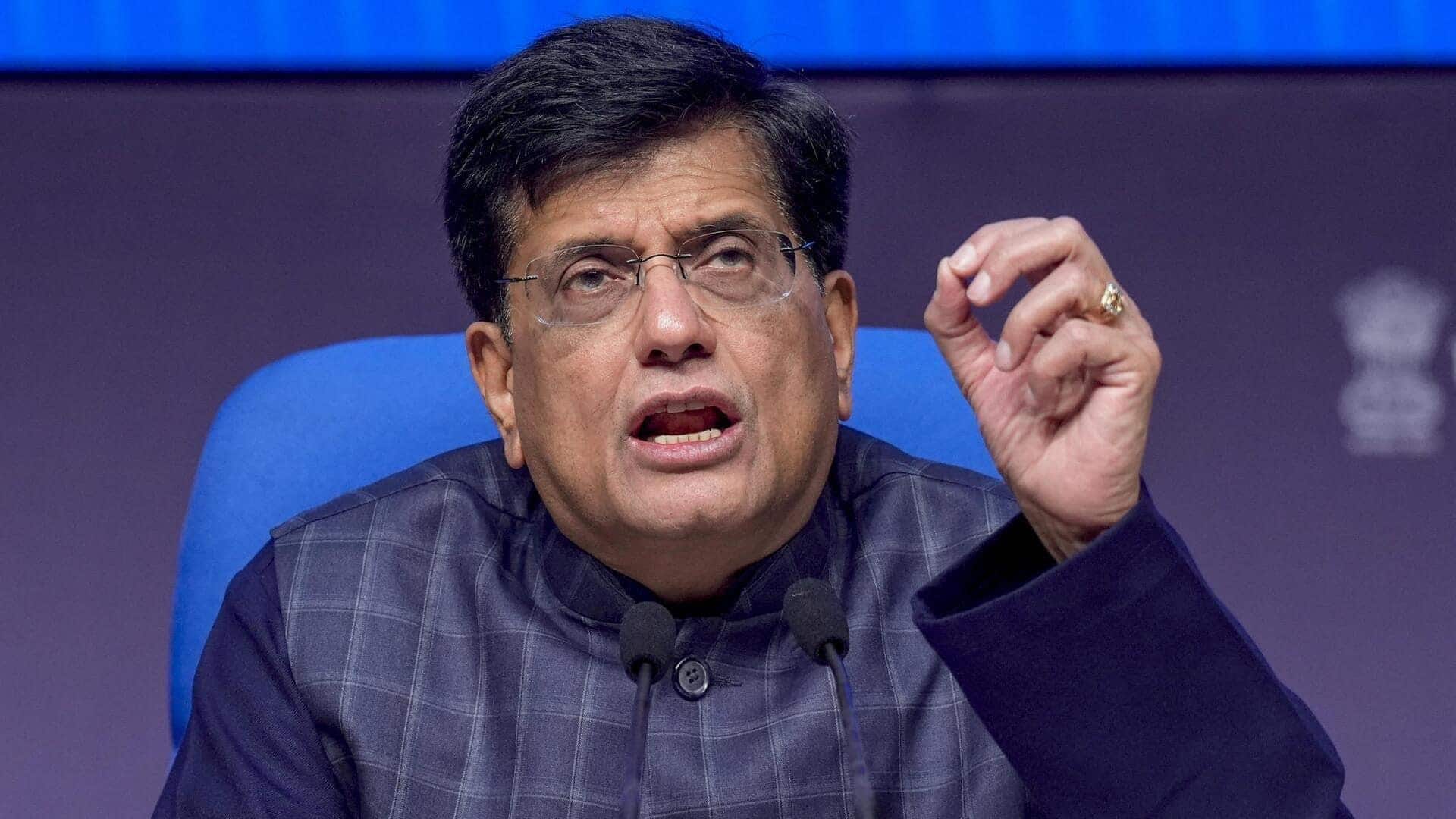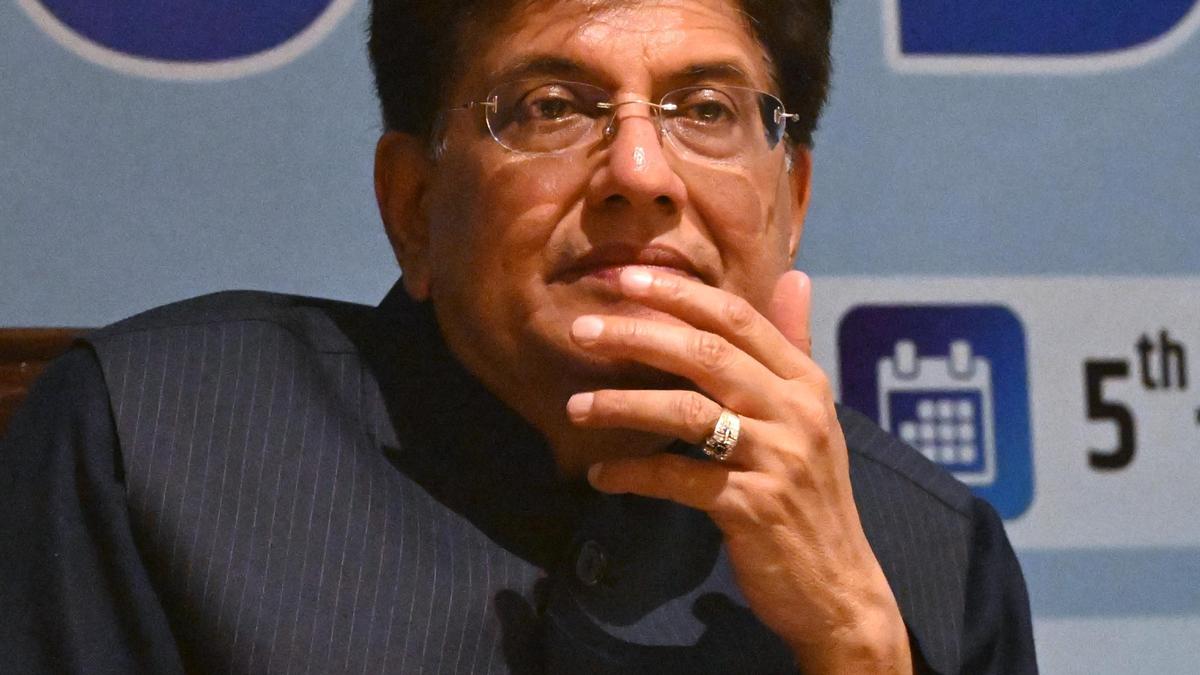
Union Minister of Commerce and Industry Piyush Goyal (file photo)
| Photo Credit:
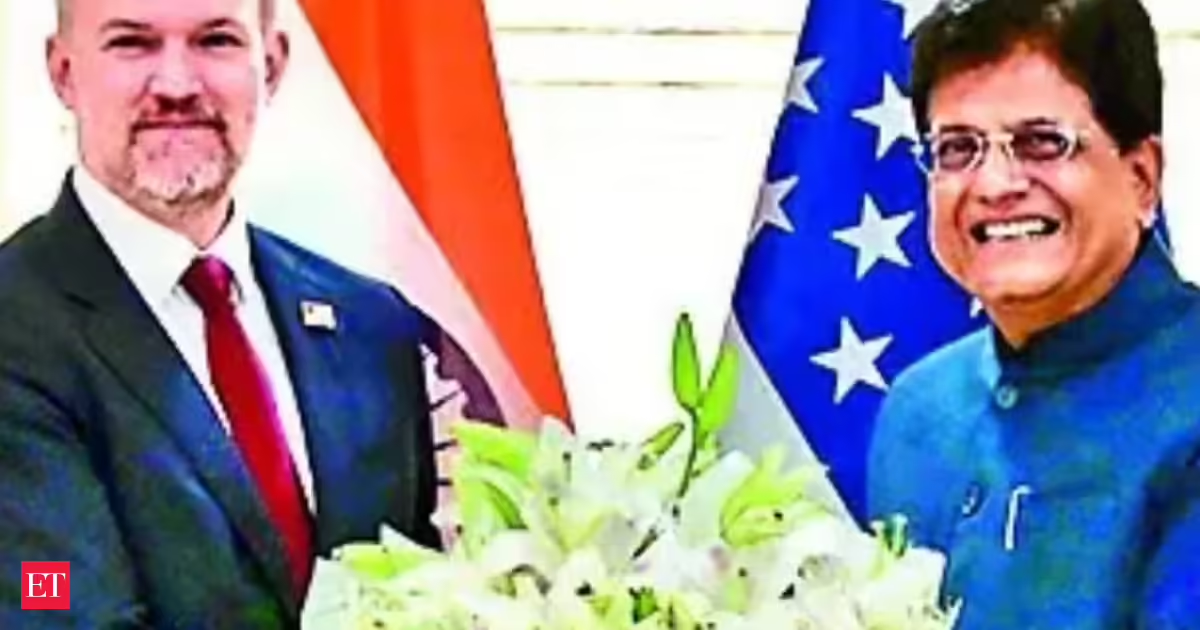
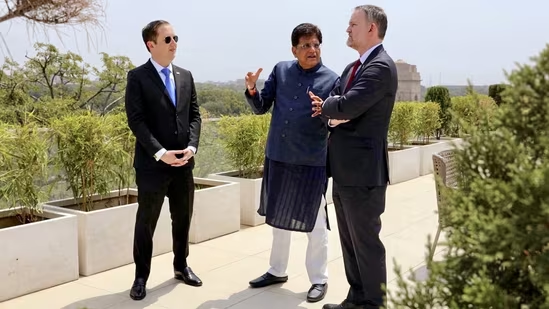
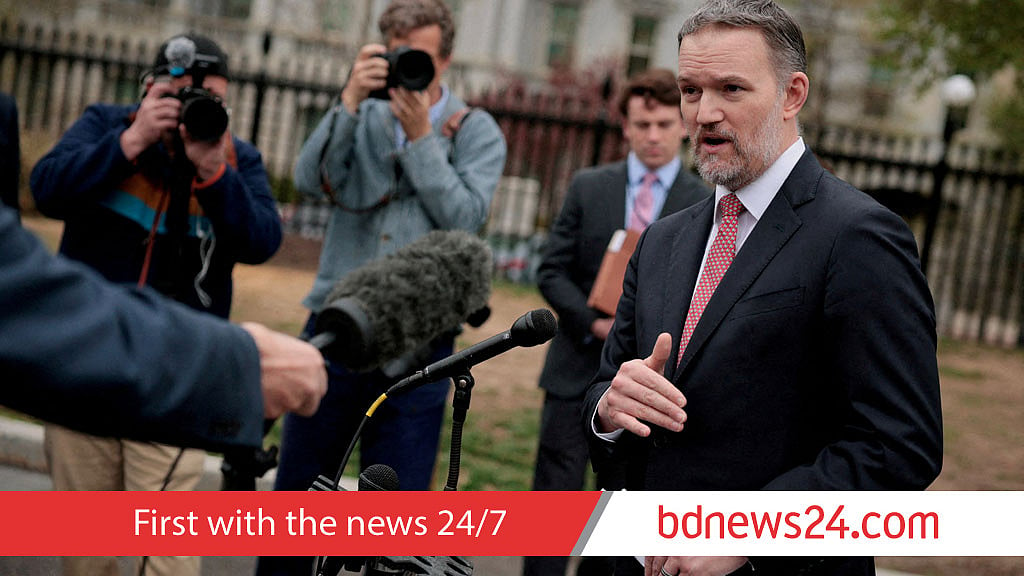
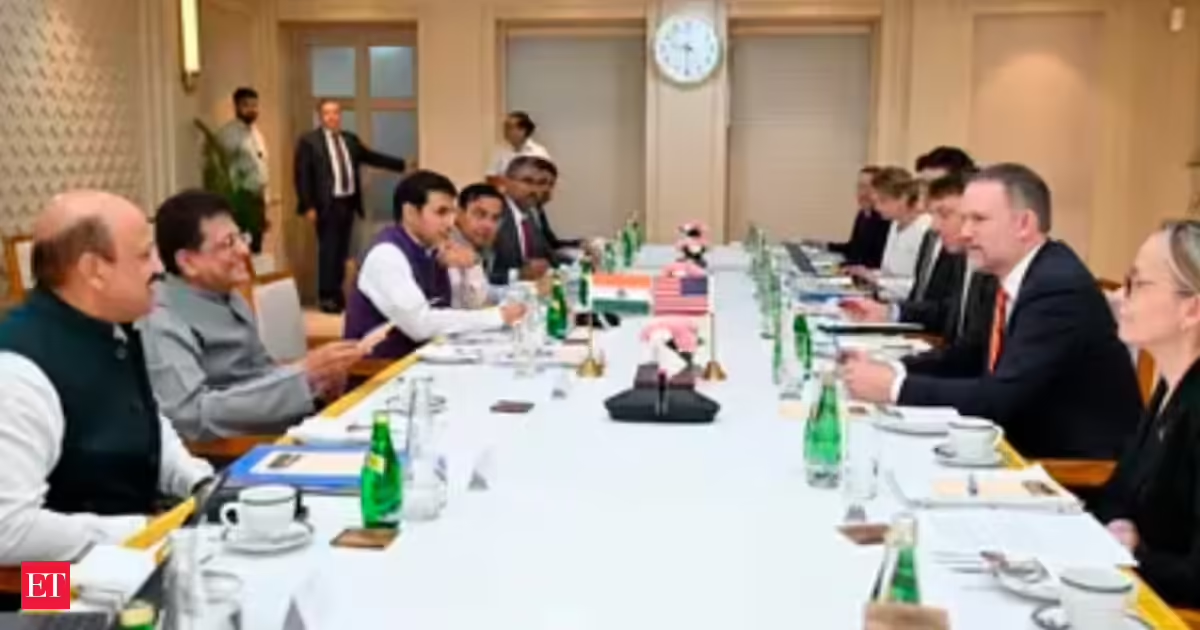
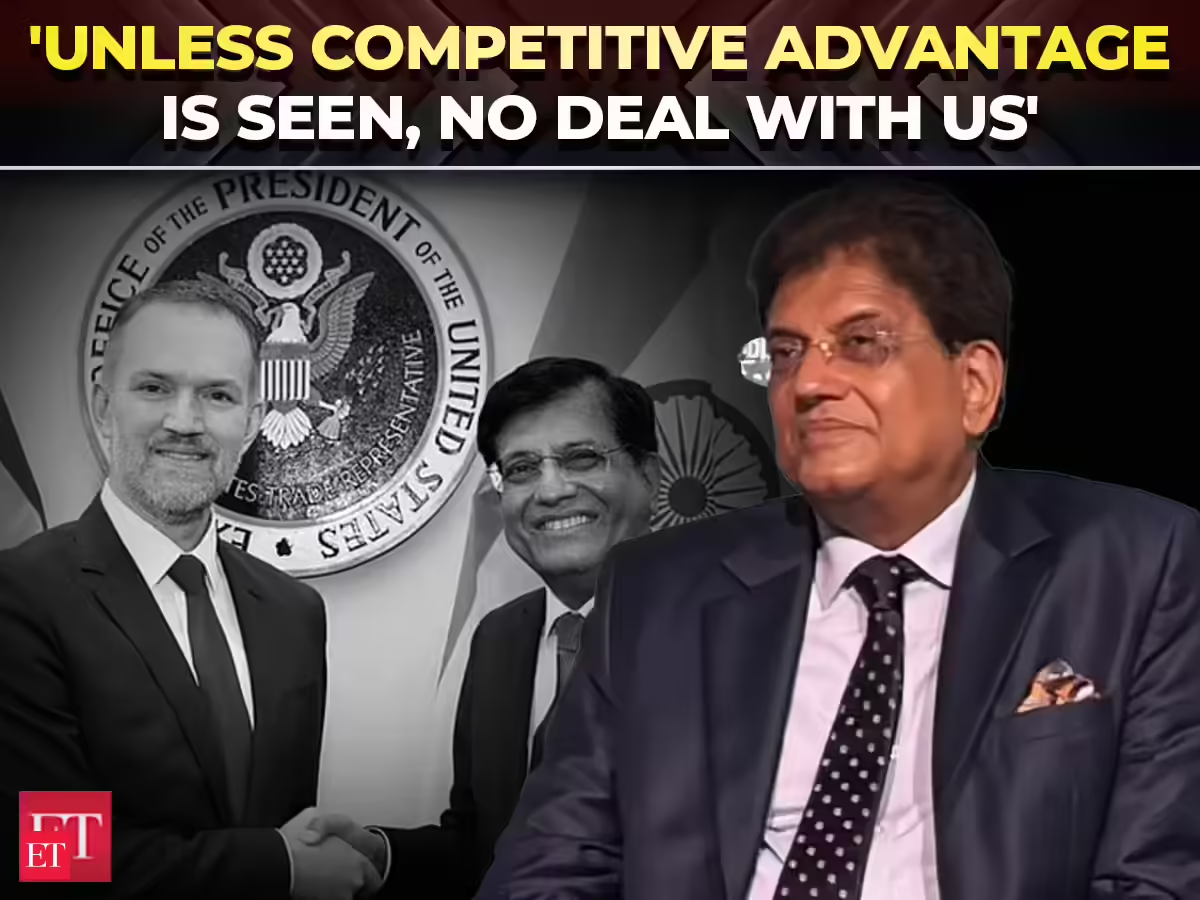
New Delhi has convinced Washington to wait till the US tariff web is untangled before pushing for the sealing of the interim bilateral trade deal that would slash Indian tariffs on most American imports, sources said.At this week’s high-level trade meeting led by US Trade Representative Jamieson Greer and Commerce and Industry Minister Piyush Goyal, it was recognised that key issues, including the fate of the Section 301 investigations, including their impact on India and competing countries, remained unresolved, and the Trump regime would need to provide clarity on future tariffs, they added. “Washington has got the message that following the US Supreme Court’s invalidation of the US reciprocal tariffs, the equations had changed and India can’t accept commitments at the older levels discussed in the February 7 framework without certain technical matters being resolved. It is prepared to wait for some time,” an official source tracking the matter told businessline.Competitive advantageCommerce & Industry Minister Piyush Goyal asserted on Thursday that till India gets an assured competitive advantage over its rival countries, the interim India-US trade deal cannot be finalised.“Until the framework of getting that competitive advantage can be finalised, we can’t enter into force a US deal. I don’t think I can be more transparent than that...So that’s broadly the discussions (between India and the US) on how the US will find the appropriate tools and legal backing to give us that competitive advantage over our competitors,” he said at a business event in London on Thursday.India is keen to see the final US tariff structure, including the outcome of two Section 301 investigations against it and other competing supplier countries, to ascertain whether the deal would confer a meaningful market-access advantage over its rivals, the source added.Elaborating on how the tariff scenario had dramatically changed since the framework India-US deal was announced, Goyal said that the International Emergency Economic Powers Act (IEEPA) tariffs were in place at that time (a total of 50 per cent against India), and the US proposal of 18 per cent tariffs was negotiated against that.The Minister said the deal at that time was acceptable to India because it put it at an advantage against all neighbouring countries and most ASEAN countries.After the US court invalidated the IEEPA tariffs, a global short-term tariff was imposed on all countries, including India, which would lapse on July 24. So, Goyal said that India needed valid reasons to go ahead with the deal, and the focus was thus on securing a competitive advantage.In Section 301 probe on use of forced labour, the USTR has proposed an additional 12.5 per cent duty on imports from India but a lower 10 per cent on rivals such as Bangladesh and Pakistan, although final findings are not out yet. The outcome of the second Section 301 investigation on excess industrial capacity, is still awaited, leaving uncertainty over the eventual tariff treatment of Indian exports.Published on June 25, 2026