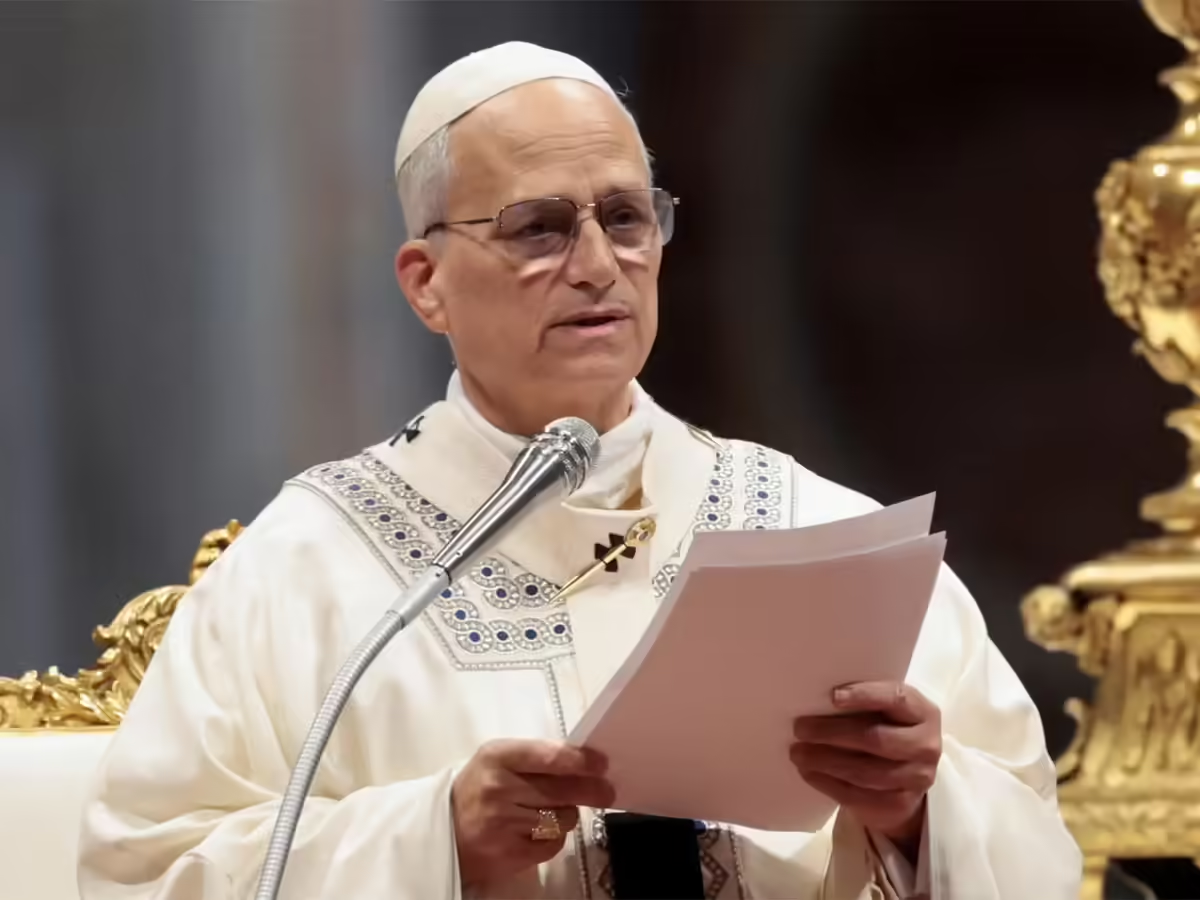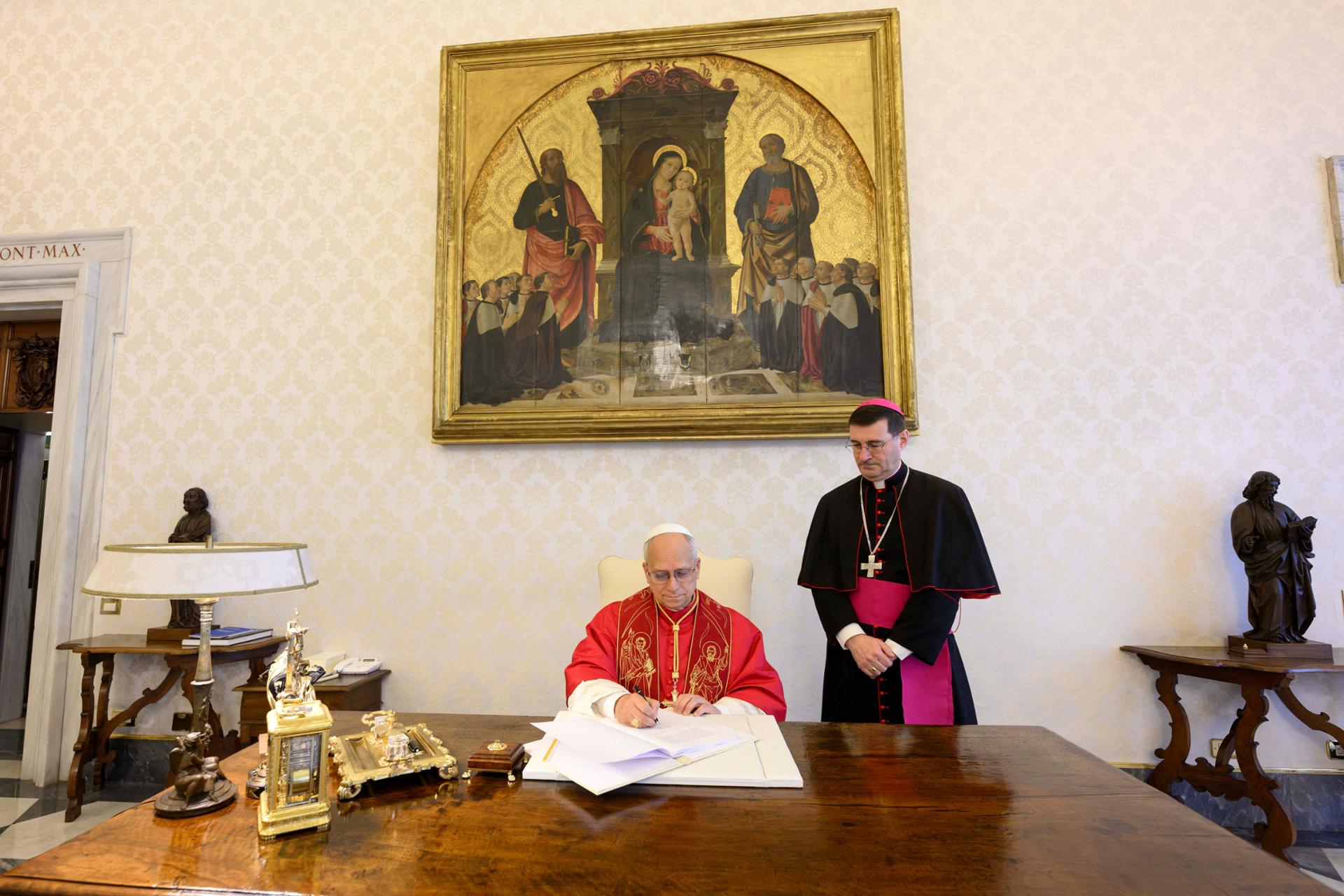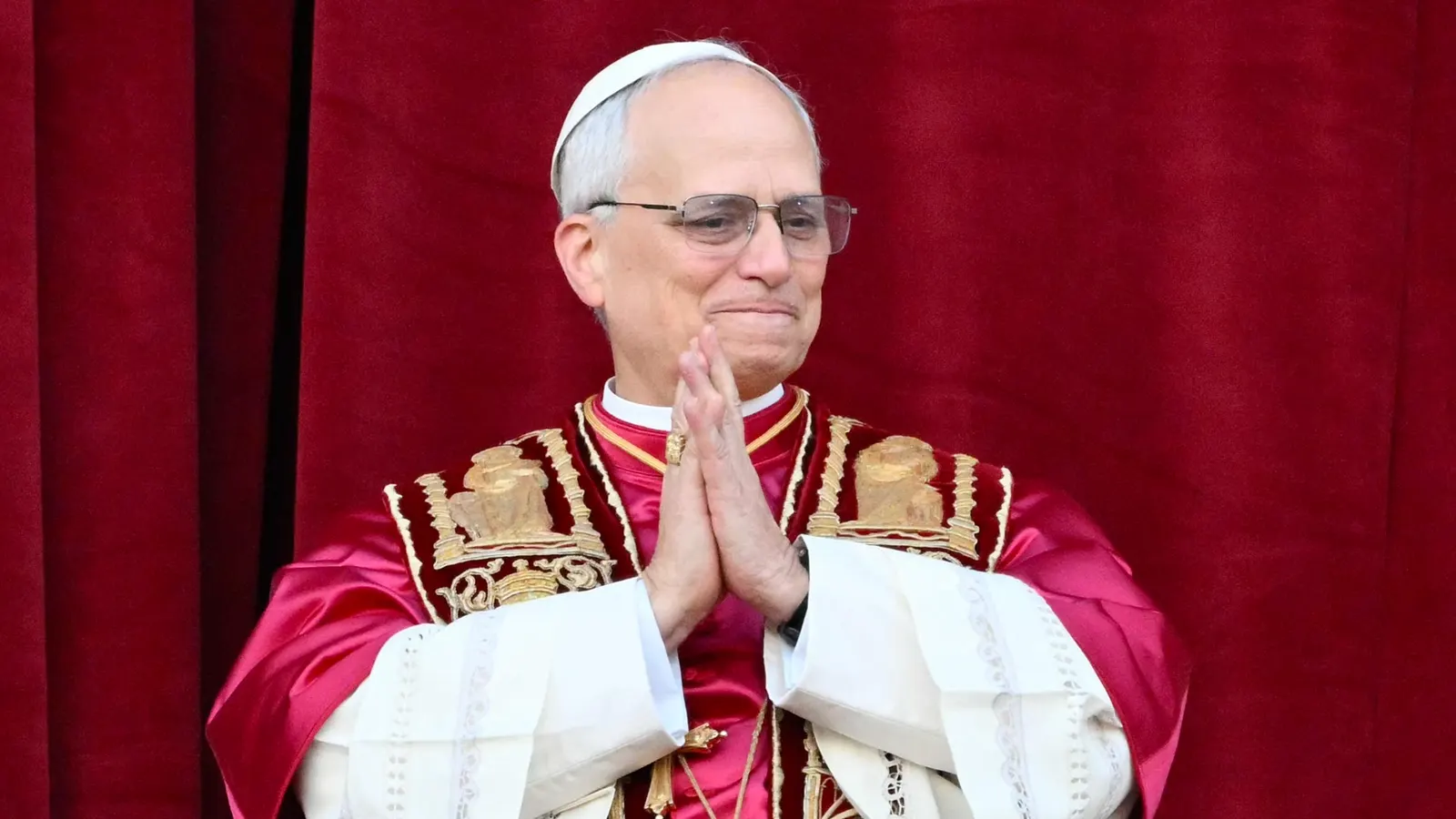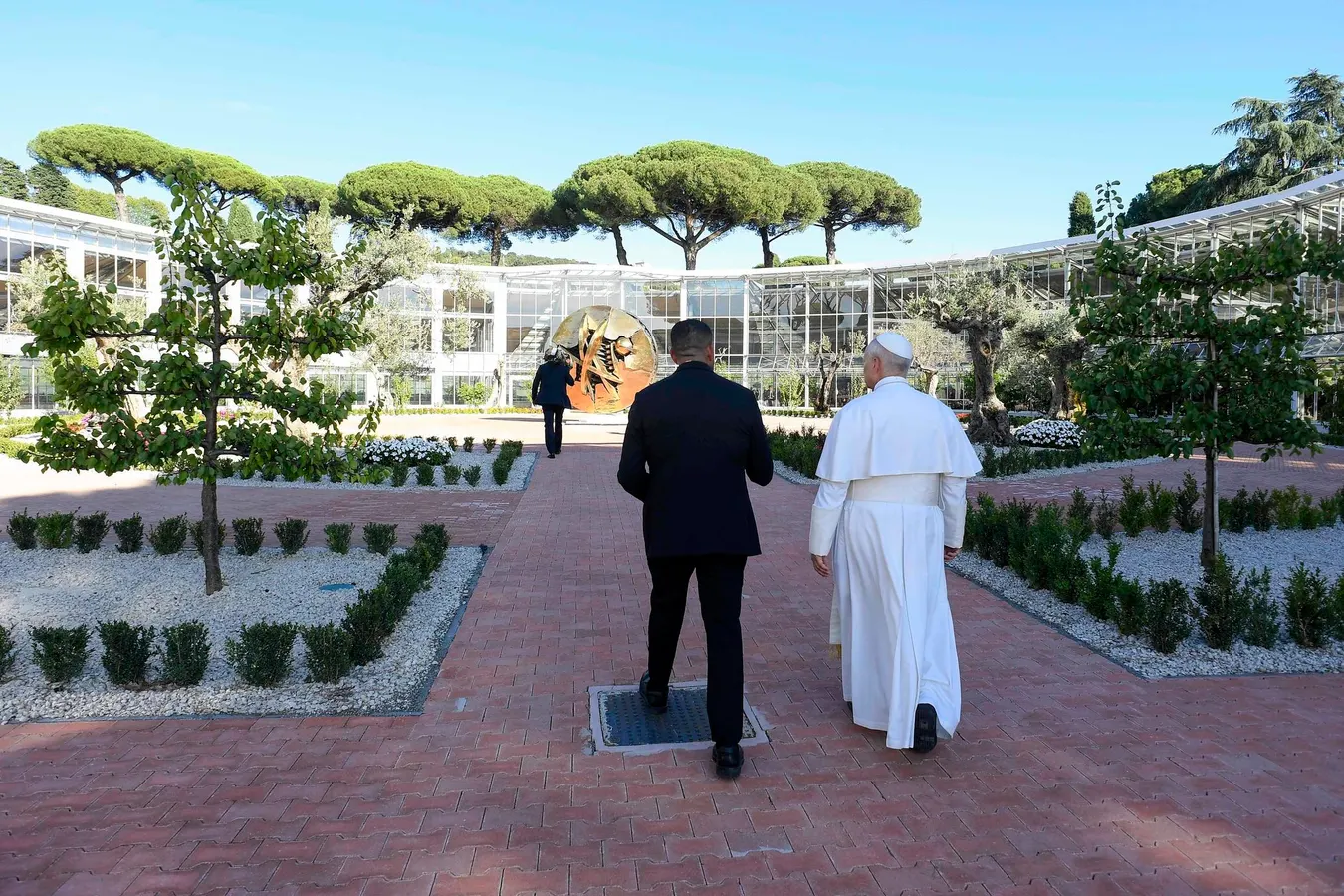
CASTEL GANDOLFO - ITALY - SEPTEMBER 05: (EDITOR NOTE: STRICTLY EDITORIAL USE ONLY - NO MERCHANDISING). Pope Leo XIV inaugurates Borgo Laudato si’ on September 05, 2025 in Castel Gandolfo, Rome in Italy. P (Photo by Francesco Sforza - Vatican Media via Vatican Pool/Getty Images)Getty ImagesLast week in Rome, Pope Leo convened an unusual gathering: corporate leaders, international organizations, scholars, and leaders in sports, cultural and civic groups, all brought together at Borgo Laudato Si’ to confront some of the most consequential issues of our time, including the impact and future of artificial intelligence. The meetings, which I attended, were part of the inaugural Borgo Dialogues, a new leadership forum designed to help decision-makers tackle pressing global challenges through the lens of ethical leadership and the common good. Over three days, leaders went offline to bring real decisions—not their public commitments—into the room, examining and discussing how to shape their industries in several pillars: AI and humanity, health and aging, environmental sustainability, and sports diplomacy. The group was received in a private audience with Pope Leo on Friday, where he described the gathering as “the first step of a process aimed at renewing and reimagining moral leadership in a world that today appears fractured and forgetful of its historical roots.” Reflecting on some of the themes from his May encyclical letter Magnifica Humanitas, which focused on AI, the Pope told the group “We seek to identify new paths for the common good and for promoting a dignified life for all.” The Pope warned against “the temptation to build the ‘Tower of Babel,’” the idolatry of profit that risks dehumanizing the most vulnerable, and argued that “we are called to contribute to the construction of the New Jerusalem, the civilization of love, in which love is the only guiding principle of economic, political, and cultural life.”The encyclical and this gathering have drawn attention well beyond Vatican circles. For years, Silicon Valley's most influential voices have pushed back hard against moral or regulatory constraints on AI development. Marc Andreessen, whose 2023 "Techno-Optimist Manifesto" explicitly named "deceleration" as the enemy, has argued that slowing AI is tantamount to condemning the world to poverty and stagnation. The fact that Pope Leo's encyclical and the Borgo Dialogues it helped inspire are now being taken seriously in boardrooms and international forums suggests that the tide may be shifting.MORE FOR YOUThe encyclical has attracted serious attention from secular quarters as well. Historian Jill Lepore wrote in the New Yorker that the Pope’s 42,000-word encyclical letter “presents a remarkable case for placing moral concerns, and not profit or competitive advantage or efficiency, at the center of any discussion of artificial intelligence.”That case is urgently needed. The risks AI poses are multiple and compounding: from the manipulation of information and the erosion of democratic discourse, to mass surveillance, the displacement of workers, and the concentration of technical power in a vanishingly small number of hands. The encyclical addresses all of these issues, and rests on three central arguments. First, humanity and the common good must take precedence over technical innovation, with truth, not efficiency, as the guiding standard. The encyclical warns “disinformation did not begin with AI, yet today it finds a powerful amplifier in AI. The ability to manipulate content, images and videos exposes people to biased or misleading perspectives.” It concludes that “the search for truth is an essential element of democracy, which is itself a means of contributing to the public good.” Second, government needs to be involved in regulating these new technologies. The encyclical rightly observes that in this digital revolution, “the highest level is not the state, but rather major economic and technological actors who exercise de facto power over the conditions of everyday life.” The disparity the Pope describes is not abstract. The combined market value of just five companies—Nvidia, Alphabet, Apple, Microsoft, and Amazon—exceeds $20 trillion, more than the combined GDP of Europe’s five largest economies. No government or international body commands resources remotely close to those figures. As the Pope wrote, “the governance of data and algorithms” must not be left to “a handful of actors to dictate … on their own.” To that end, the encyclical calls on states and transnational institutions to “ensure fair rules and effective safeguards so that local communities, intermediary organizations, schools, universities, religious institutions and associations have a voice and can contribute to the discernment of choices that affect people’s daily lives.” And finally, throughout the encyclical, Pope Leo implores us to assume a shared responsibility for the relationship between these new technologies and the common good. But he is clear-eyed about the obstacle: today’s AI development is driven by a “culture of power” that moves at a pace leaving little room for reflection. Slowing down, he argues, is not weakness—it is a prerequisite for getting this right. The alternative he proposes is a “genuine culture of negotiation,” grounded in dialogue as “the primary means of coexistence between people and nations, and… the alternative to open conflict.” This means, he explains, disarming technology, not by rejecting it, but by “freeing technology from monopolistic control and opening it to discussion and debate, therefore making it human-friendly and restoring it to the plurality of human cultures and ways of life.” That shared responsibility must include a reckoning with who, in practice, shapes AI's development and governance. The nations and companies driving this revolution represent a fraction of the world's population. A common good that is inaccessible to most of humanity is not a common good at all.Today, the world’s brightest engineers are competing fiercely to develop ever more powerful technologies with seemingly limitless potential. But as these products come online, they enter what often seems to be a value-free world where ethical leadership is in short supply, both from governments and the private sector. In this precarious context, what distinguishes the Borgo Dialogues is not the setting or the speakers, but the formation of a community of practice. If Pope Leo XIV’s encyclical provides the moral compass, the Borgo Dialogues may become the place where global leaders learn how to follow it.
At The Vatican, Global Leaders Grapple With AI’s Moral Stakes
Pope Leo XIV is making a moral case for AI governance. Inside the Vatican gathering where global leaders are taking it seriously.
1,015 words~5 min read