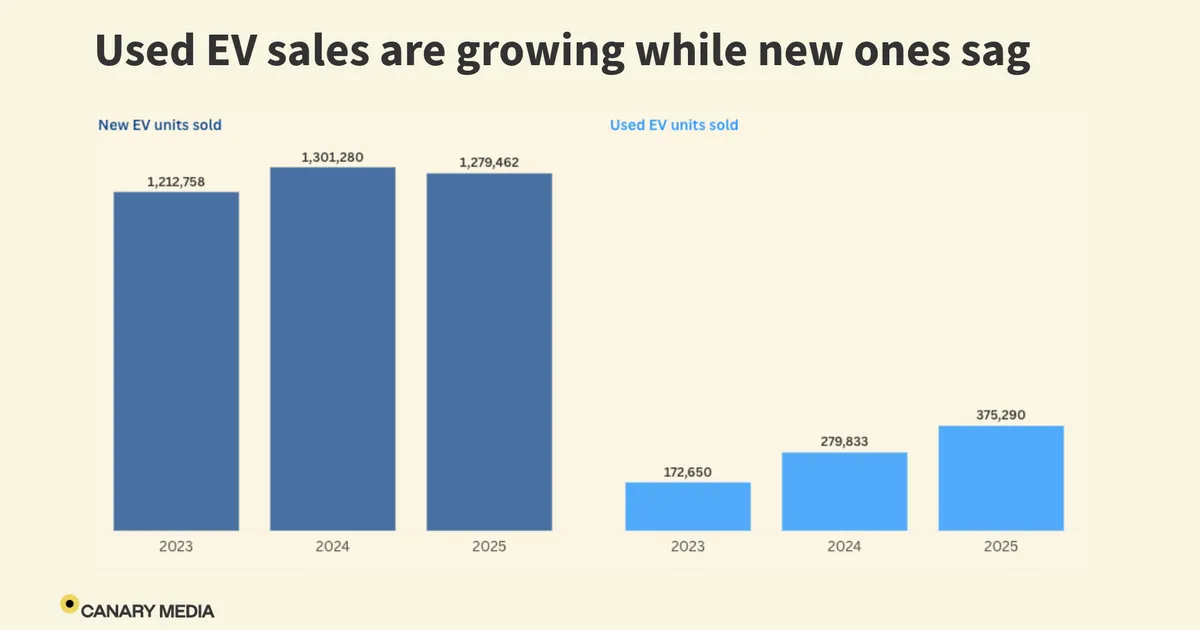
“What is different about 2026 is that for the first time ever, there’s actually a big enough used electrical vehicle market,” he said. In particular, a lot of those used EVs are coming off leases made popular by a “leasing loophole” that allowed automakers and dealers to offer a full $7,500 federal tax credit, without the income qualification and manufacturer restrictions that applied to claiming the credit on direct sales.
More than 1.1 million EVs were leased from January 2023 to September 2025, when the federal tax credit ended. Shepard said he kept a close eye on those trends when planning to buy a bigger EV. “If you track that, you’ll see that [the cars] all go back to the dealer at the same time,” he said. “They have a flood of them, and the price drops a lot.”
And the latest vintages of used EVs offer an impressive value when compared with their gas-powered equivalents, Case said. Recurrent’s latest data indicates that a used EV is a year newer and has nearly 30,000 fewer miles than a similarly priced used gas car.
“When you compare what you’re getting for each of those, this is not an apples to apples — it’s a crappy apple versus a really awesome apple,” he said.
At least 68% of used EVs that Recurrent is tracking are 2022 models or later, which offer newer technology features than the average 6.5-year-old used internal combustion engine vehicle, Case added. Almost all those newer EVs remain under battery and powertrain warranties that tend to offer eight years or 100,000 miles of coverage, he said — and that’s for a class of vehicle that already costs about 40% less to maintain than a conventional car.