This is an excerpt. The full article includes a live interactive LSM-tree simulator — perform PUT and DELETE operations, watch the MemTable fill up and flush to disk, inspect sparse indices and Bloom Filters, and trigger leveled compaction to merge SSTables in real time. Read the full interactive version →
The Write Bottleneck: B-Trees vs. LSM-Trees
Traditional relational databases use B-Trees to index data. While B-Trees excel at random read lookups, they perform poorly for write-heavy workloads. This is because every write requires updating arbitrary pages on disk, resulting in expensive random disk I/O.
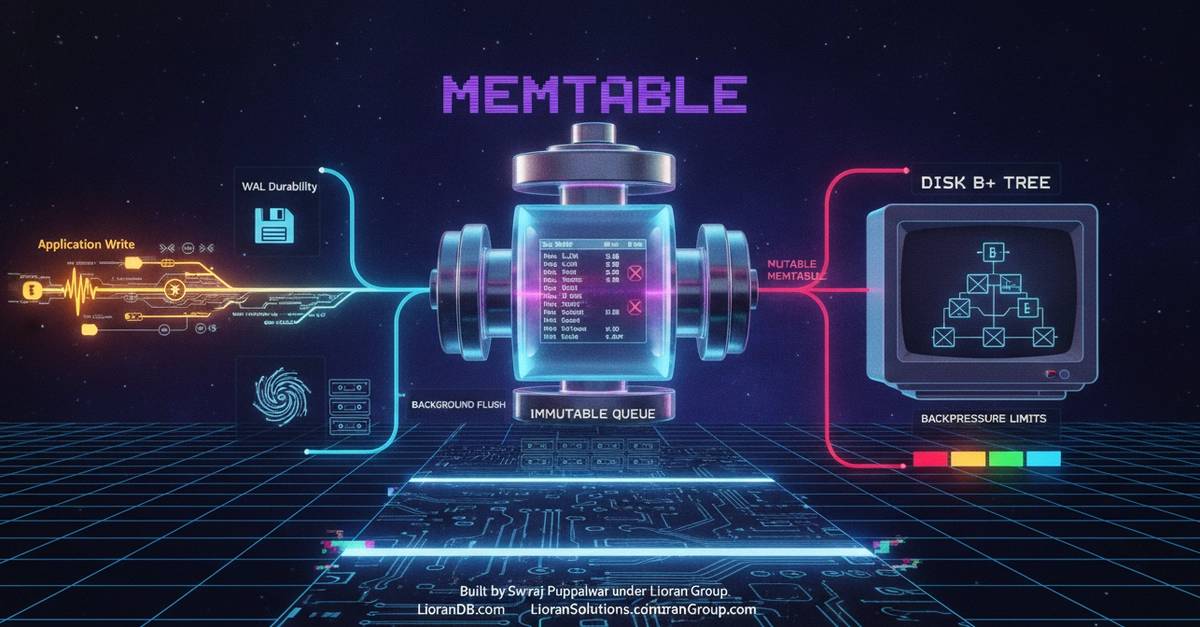
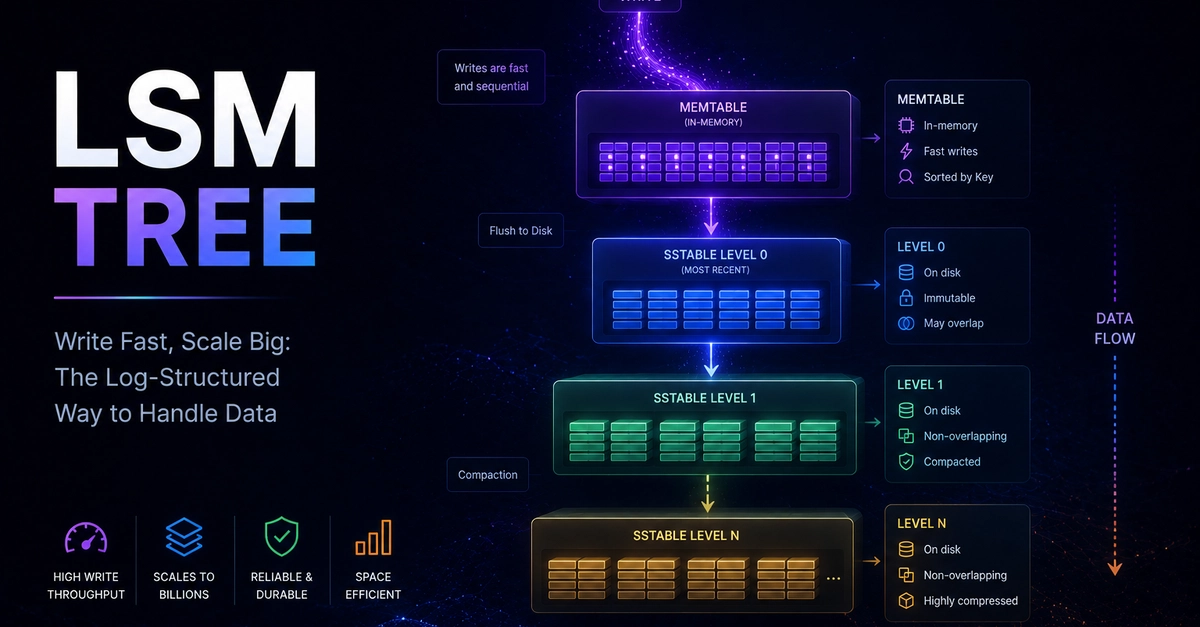
Log-Structured Merge-Trees (LSM-Trees) solve this write bottleneck. Instead of updating records in place, an LSM-tree appends all writes sequentially.
By transforming random writes into sequential disk append operations, LSM-trees deliver massive write throughput. This makes them the foundation of modern high-performance databases like RocksDB, Cassandra, and InfluxDB.