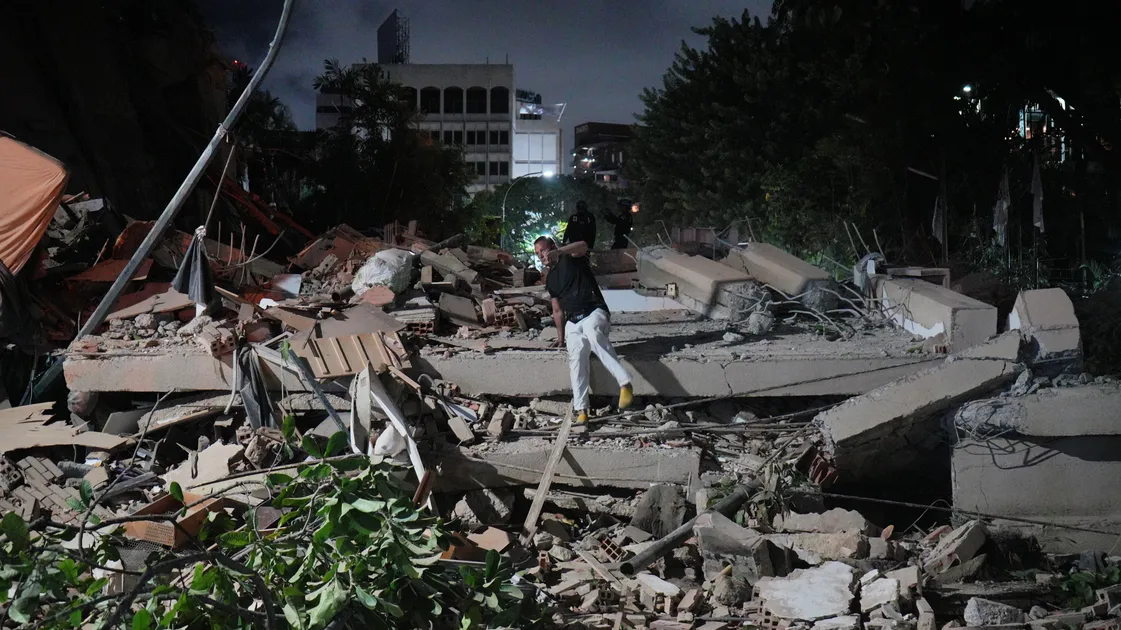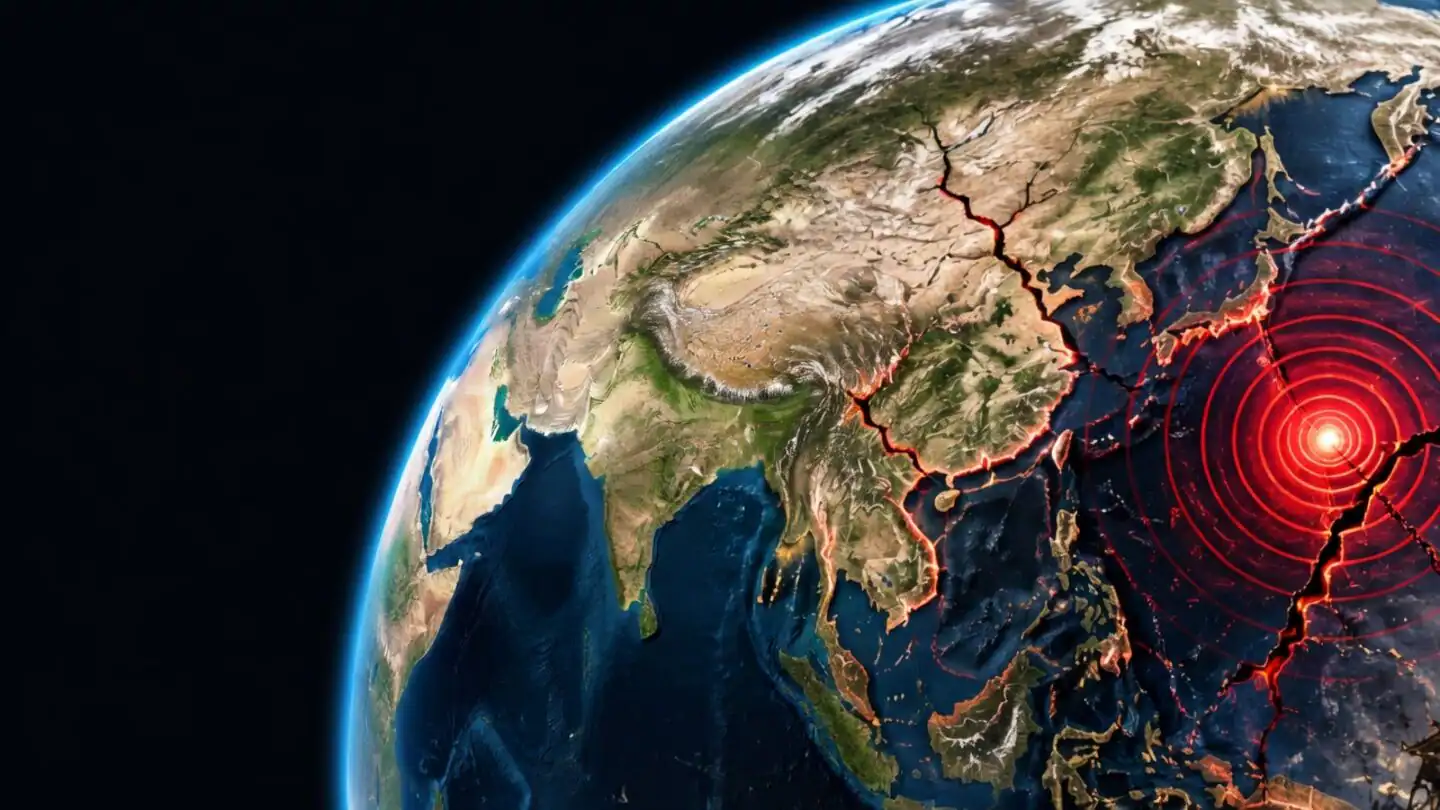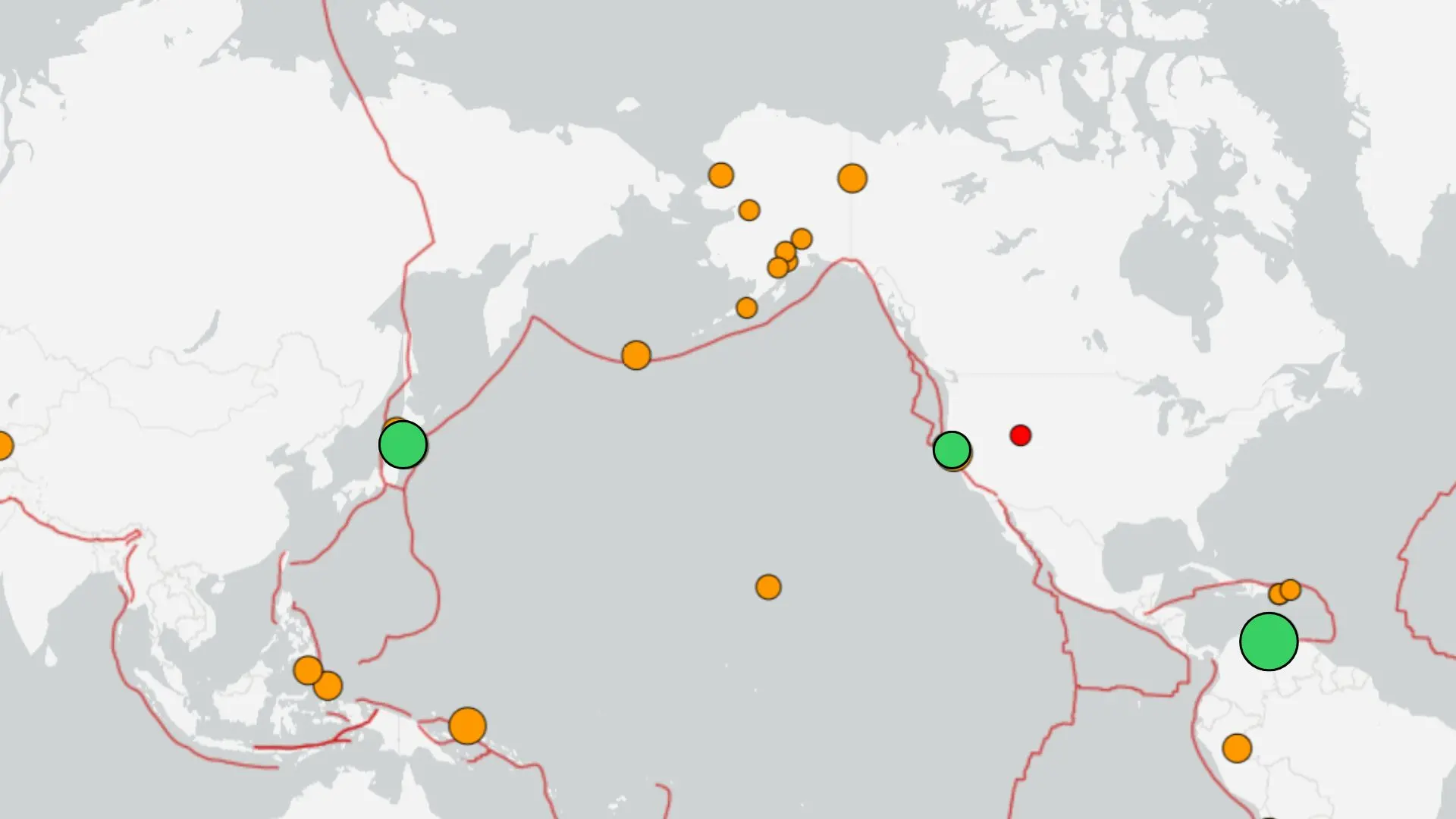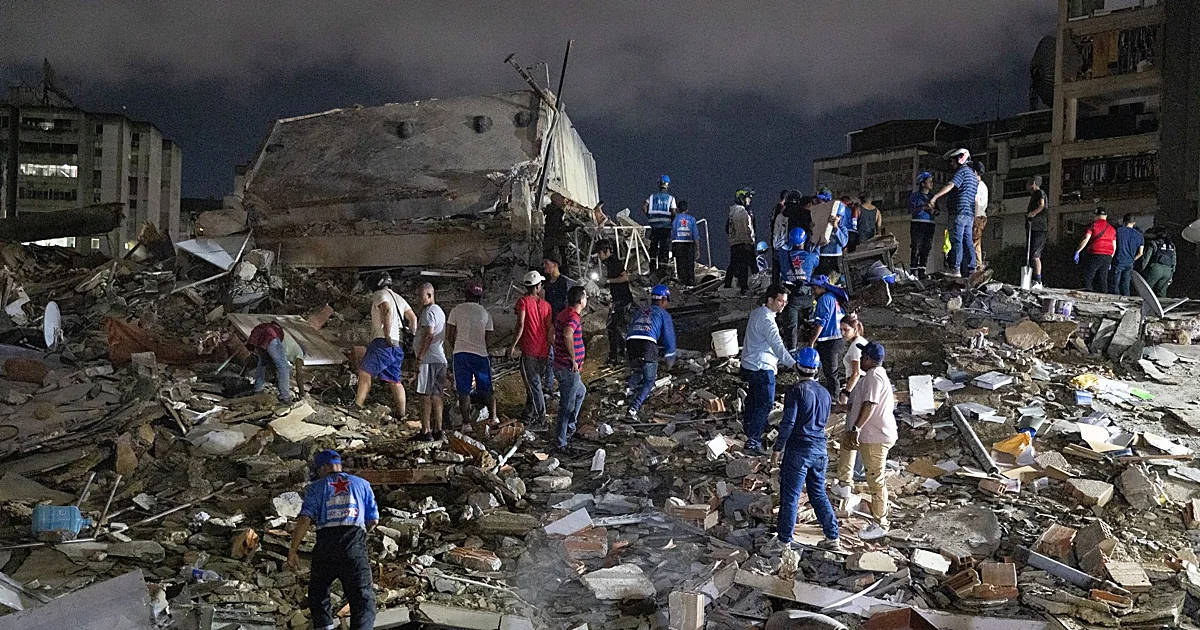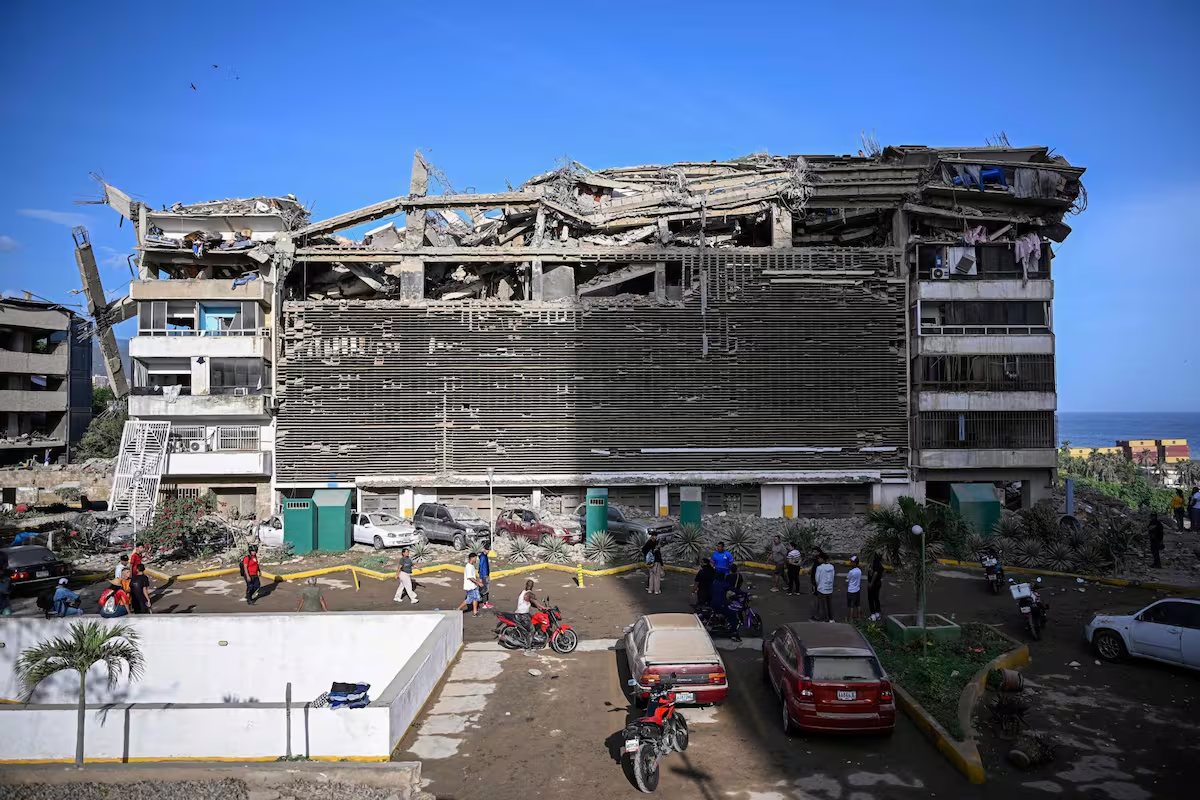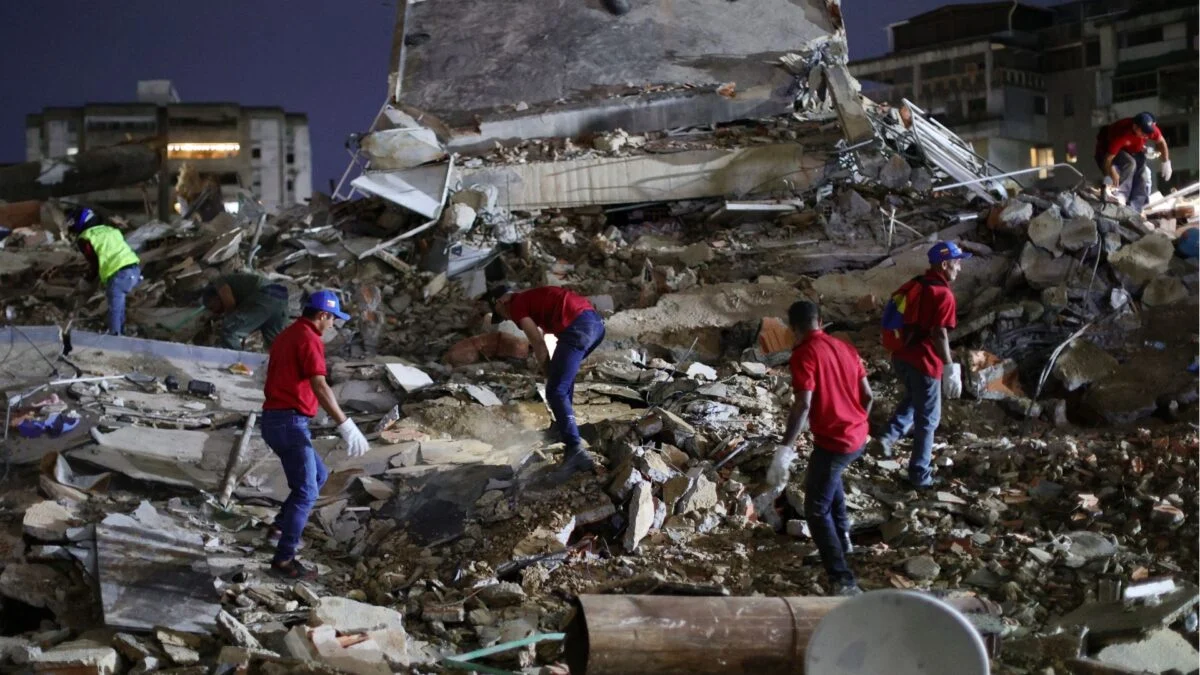
At 11:10 a.m. ET on Wednesday, a magnitude 5.6 earthquake struck Northern California, near the small city of Ukiah. Then, at 6:04 p.m. ET, an M7.2 foreshock rocked the northeast coast of Venezuela, immediately followed by an M7.5 mainshock. Minutes later, an M6.9 temblor hit offshore of Kuji, Japan. It was an exceptional day of seismic activity. The quakes in California and Japan caused no major damage but did result in some injuries. Unfortunately, the situation in Venezuela is far worse. The M7.2 and M7.5 doublet—a pair of similar-magnitude earthquakes that are causally linked but seismologically distinct—destroyed buildings across the northern coastal state of La Guaira and the capital city of Caracas. As of 9 a.m. ET on Thursday, at least 164 deaths and nearly 1,000 injuries have been reported, according to the Associated Press. “Dozens of buildings have collapsed there… and we are currently carrying out intensive rescue operations to save lives,” Acting President Delcy Rodríguez reportedly said Thursday morning.
When four large earthquakes strike within less than eight hours of each other, it’s natural to wonder if they were connected. Let’s dive into the seismic mechanics of these events. Coincidence or connection? First, a brief primer on what causes earthquakes. Most quakes occur when there is a sudden release of built-up pressure along fault lines, or fractures, in Earth’s crust. These fractures are the boundaries between independently moving slabs of crust. As those slabs grind against each other, friction can cause them to become locked in place. Eventually, so much pressure accumulates along the fault that the slabs suddenly slip, triggering an earthquake.