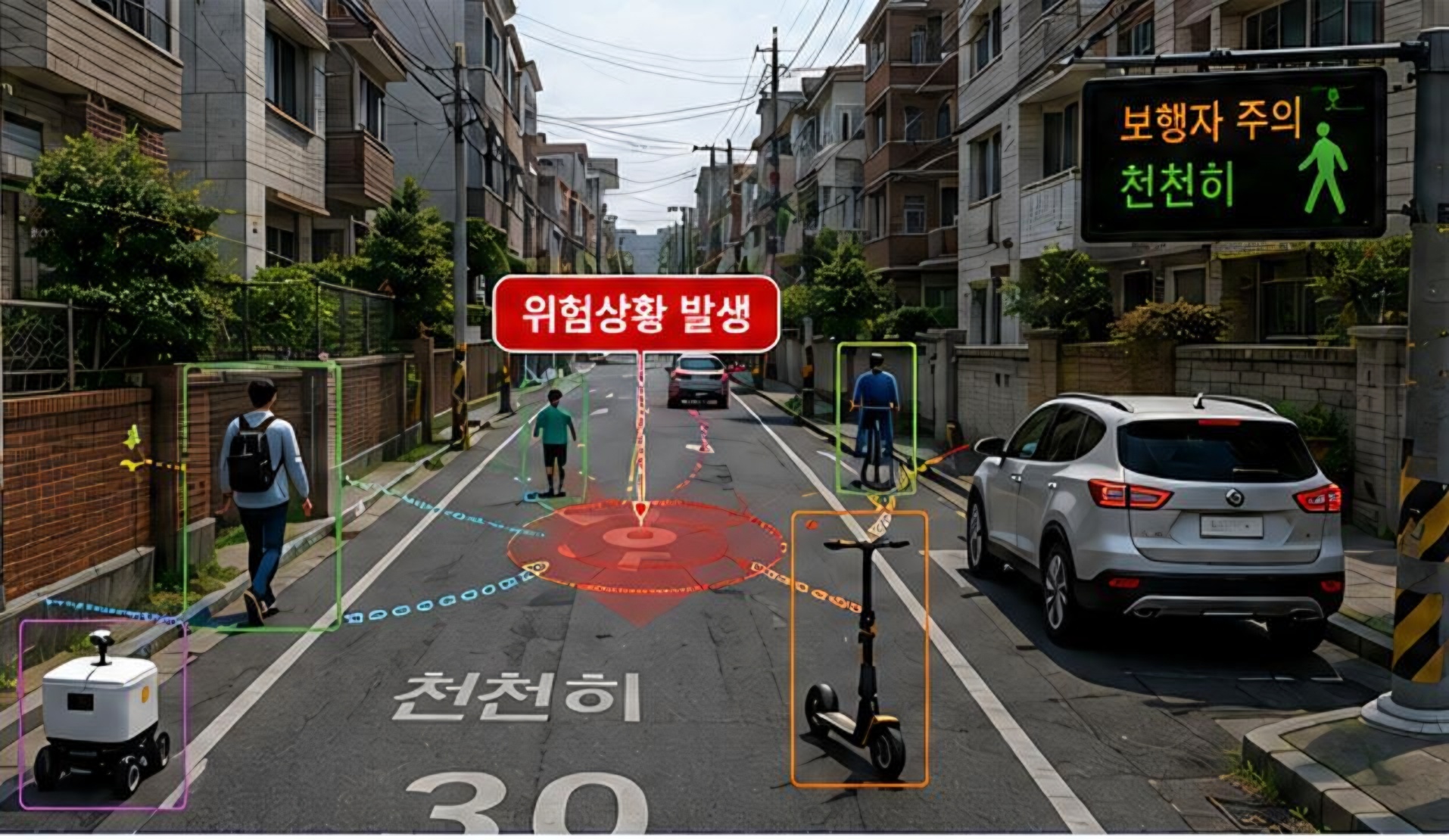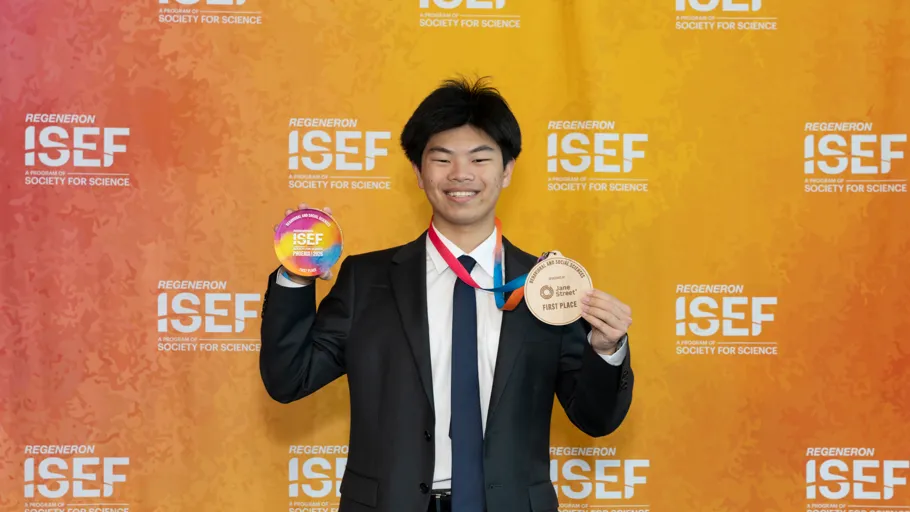
Jay Jung, 18, grew up with his grandparents in South Korea. Walking around Seoul with them as an elementary schooler, he noticed they often couldn't keep up with the pedestrian crossing signals, struggling to cross the street in time before cars came whooshing by."Whenever I would go with them to the local grocery store or the local park, I would realize that we were not even halfway and then the light just suddenly turns red," Jung said."Once I noticed it, it was really hard to not notice it," he said. "Making more inclusive and accessible spaces has been one of my priorities for a couple years now."The ill-timed crosswalk lights bothered him, but Jung didn't think he could do much about it until he found his passion for technology in middle school. Now a high schooler at Phillips Academy, a boarding school in Massachusetts, Jung has actualized his vision to keep his grandparents safe on crosswalks − and has a medal and $6,000 to show for it. He won the Behavioral and Social Sciences award at this year's Regeneron International Science and Engineering Fair, the world's largest international pre-college science competition, for his invention, SmartBlink, an AI-powered adaptive traffic light system that can detect real-time pedestrian movement."I want to collaborate with different tech companies to ensure the mass production of these systems are available," he said.Teen scientist wants to address individual community needsInstead of catering to automobile traffic like typical intersection signal systems, Jung said, SmartBlink adjusts crossing signal times based on the slowest pedestrian's pace.For example, Jung said, if a crosswalk signal usually lasts 20 seconds, but SmartBlink predicts one pedestrian will take 34 seconds based on their first few strides, the system would automatically add 14 more seconds to the crossing signal.Why? "To make sure that this pedestrian doesn't feel rushed and knows that they're safe crossing," Jung said.Jung, who is going into his senior year of high school, said SmartBlink can detect pedestrians using wheelchairs, crutches or canes, too. He adjusted his algorithm to be able to work in different lighting, so it's usable during any time of day or night.His invention hasn't been implemented at any crosswalks yet, but Jung said his next step is to pilot SmartBlink with local governments in various communities."We want to design specific solutions for each community because each community has different needs and different conditions," he said.Madeline Mitchell's role covering women and the caregiving economy at USA TODAY is supported by a partnership with Pivotal and Journalism Funding Partners. Funders do not provide editorial input.Reach Madeline at memitchell@usatoday.com and @maddiemitch_ on X.
The surprising invention this teen came up with to help his grandparents cross the street
Jay Jung, 18, invented SmartBlink, an AI-powered adaptive traffic light system that can help people of all abilities safely cross the street.
435 words~2 min read