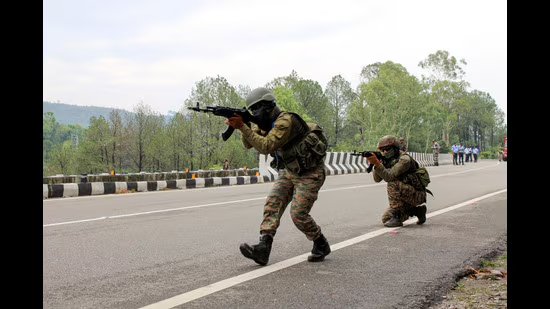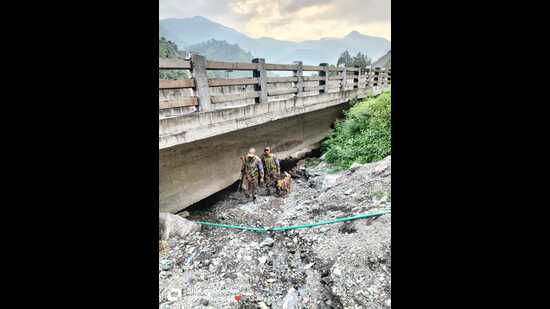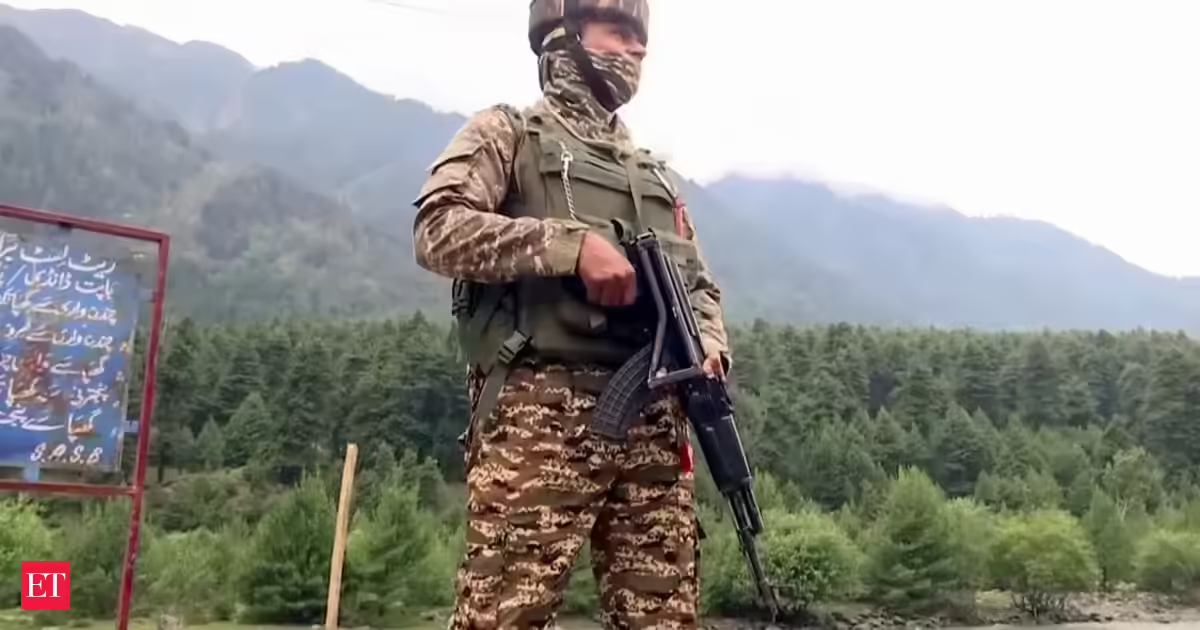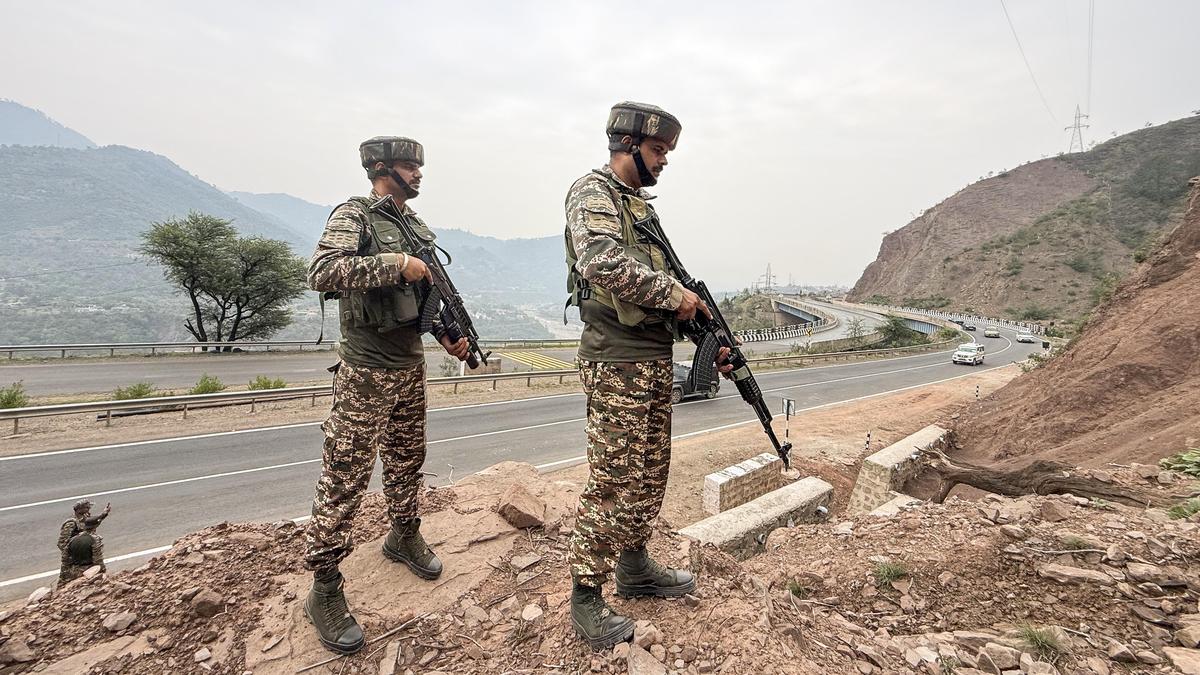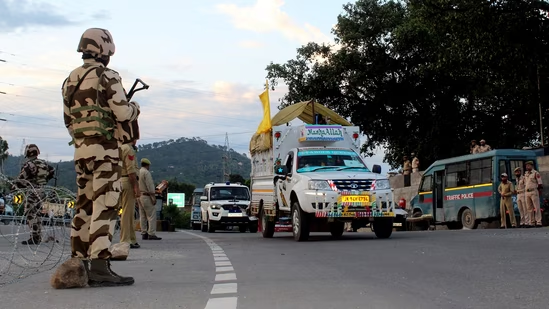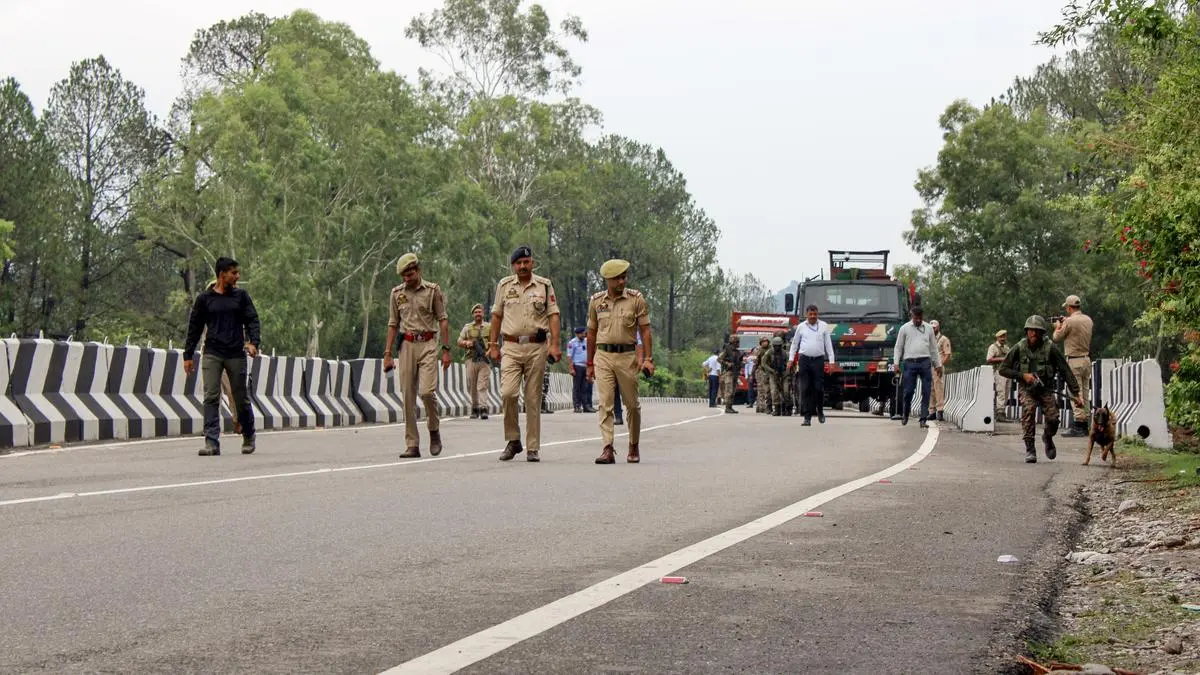
Security personnel with K9 Dog Squad conduct a mock drill at Tikri (Manthal) on the Jammu-Srinagar National Highway (NH-44) to enhance counter-terror preparedness for the annual Amarnath Yatra, in Udhampur
| Photo Credit:
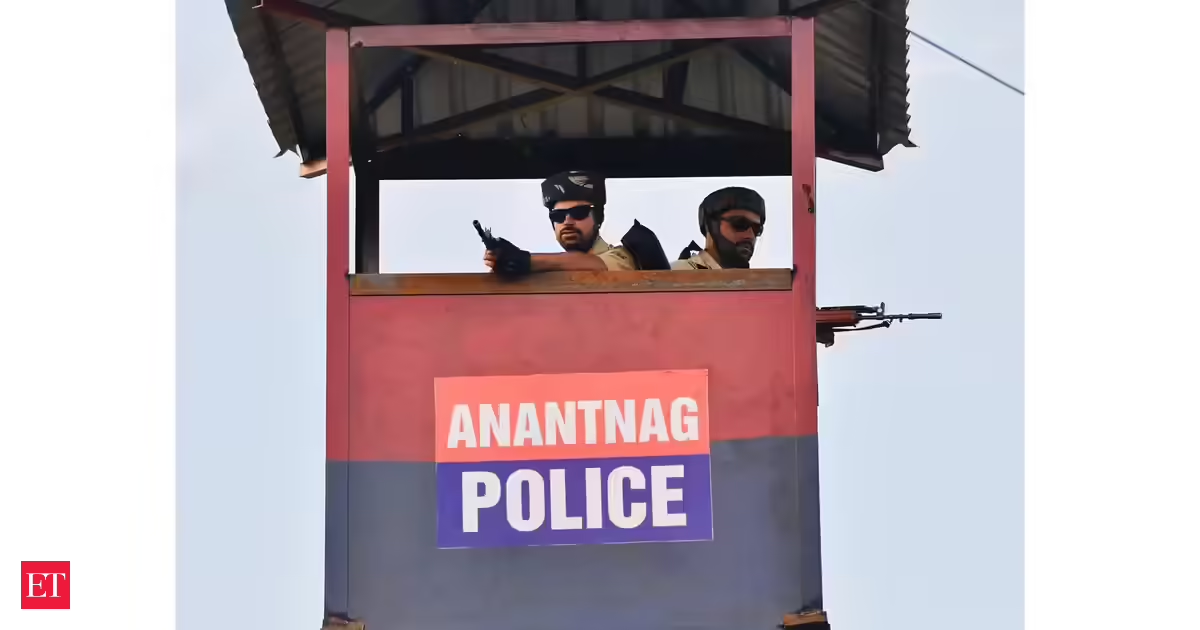
For decades, security during the annual Amarnath Yatra meant thousands of personnel manning checkpoints, patrolling mountain tracks and guarding the twin pilgrimage routes through Pahalgam and Baltal. While those traditional layers remain intact, this year’s pilgrimage marks a notable shift, with technology becoming an integral part of the security architecture.Ahead of the 57-day pilgrimage beginning on July 3, authorities have deployed artificial intelligence-enabled surveillance systems, facial recognition cameras, QR code-based digital identification, integrated command centres and real-time monitoring to strengthen security across Jammu and Kashmir.Officials said the focus is on creating a technology-assisted security network capable of detecting threats faster, improving coordination and reducing response time. A blend of human and technological intelligence has been put in place to prevent disruptions and enhance pilgrim safety.Following last year’s attack on tourists in Pahalgam, security agencies have strengthened both conventional and technology-driven security measures to proactively counter potential threats.High-definition CCTV cameras equipped with facial recognition software have been installed at strategic locations, including base camps, registration centres, transit points and vulnerable stretches along the Yatra routes. Security officials said the cameras transmit live feeds to integrated control rooms, enabling multiple agencies to monitor pilgrim movement in real time. The system can identify suspicious activity, track crowd density and generate alerts about unusual movements.QR-codes Another key feature this year is the introduction of QR code-based digital identification for service providers, including pony operators, porters, vendors and tent operators.Abdul Waheed Wani, president of the Pahalgam Ponywallas Union, said all pony operators have been issued special QR codes. “Once scanned, all details, including address, phone number and Aadhaar information, become available,” Wani added.Authorities believe the digital verification system will help prevent impersonation, streamline identity checks and improve accountability among those working along the pilgrimage routes.Published on June 25, 2026