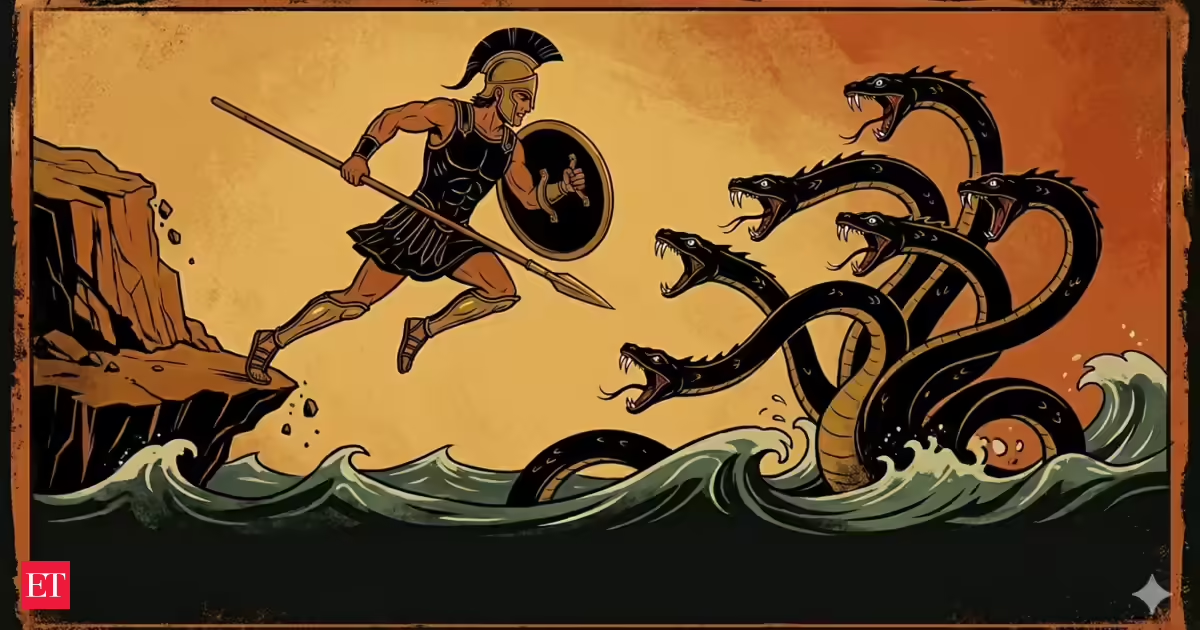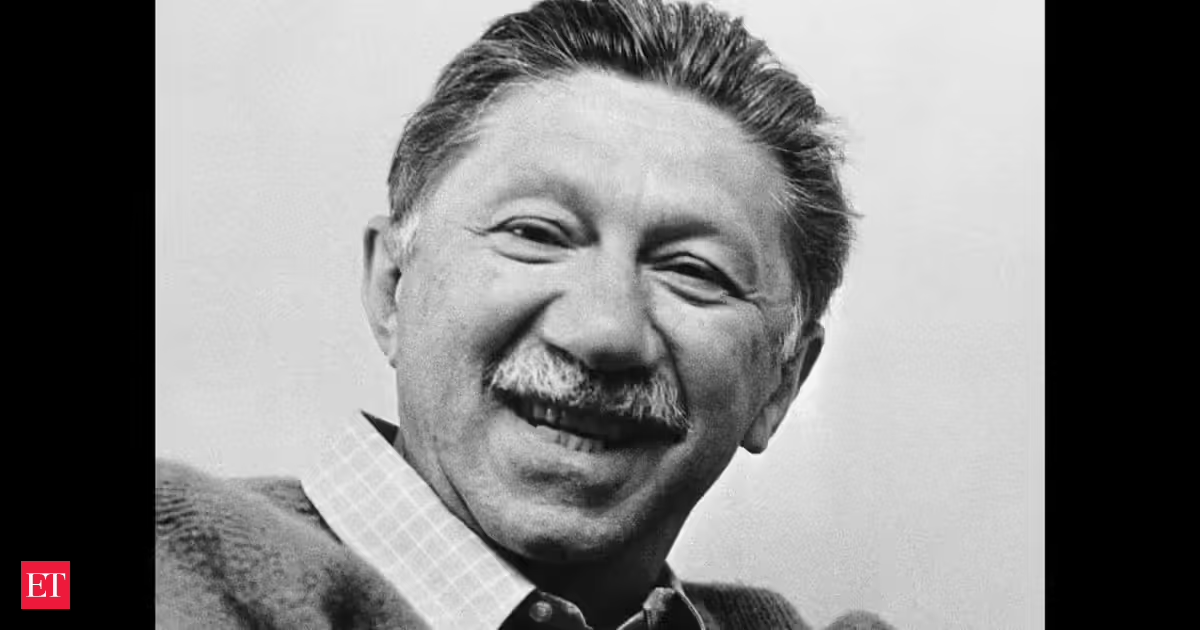
(AI image used for representational purposes only)"One can choose to go back toward safety or forward toward growth. Growth must be chosen again and again; fear must be overcome again and again."The saying captures a familiar human struggle — the choice between staying with what feels comfortable and stepping into something uncertain. It compares life to a path where people repeatedly face moments that require a decision: remain in a familiar place or move ahead despite fear.The quote is widely associated with psychologist Abraham Maslow, whose work explored human motivation, personal development and the desire to reach one’s full potential. Maslow’s ideas around self-actualisation focused on the process of becoming the best version of oneself, a journey that requires people to move beyond comfort and confront their limitations.The meaning of the saying lies in the contrast between safety and growth. Safety represents the familiar — routines, habits and choices that reduce uncertainty. Growth represents change, learning and experiences that may feel uncomfortable because they require people to take risks or face challenges.The quote suggests that growth is rarely a one-time achievement. People do not overcome fear once and leave it behind forever. New situations bring new uncertainties, and each stage of life can require another choice to move forward.This idea appears in everyday decisions. A student choosing a difficult subject, a person changing careers after years in one field, or someone starting something new after repeated failures all face the same question: should they remain where they feel secure or take a step into the unknown?The struggle is especially visible in professional life. An employee may have an opportunity to take on greater responsibility, learn a new skill or move into a different role. The safer choice may be to continue with what they already know, while growth may require accepting the possibility of mistakes and challenges. Many career changes happen because people decide that comfort alone is no longer enough.The saying also applies to personal relationships and emotional growth. People often hold on to familiar patterns because change can feel difficult. Learning to communicate better, setting boundaries or leaving situations that no longer help them grow can require the same courage as taking any external risk.The idea behind the quote does not suggest that comfort has no value. Safety can provide stability and recovery. The challenge comes when fear begins making decisions on a person’s behalf and prevents them from exploring new possibilities.Maslow’s broader ideas focused on the belief that human beings have a natural desire to develop their abilities and pursue meaningful goals. The saying reflects that process by showing growth as an active choice rather than something that happens automatically.The reason the quote continues to connect with people is because the conflict between comfort and change appears throughout life. Every new stage brings situations where people must decide whether to stay with what they already know or take a step towards something different.The message of the saying is simple: growth often begins at the point where familiarity ends. Choosing progress requires facing fear repeatedly, because every new challenge brings a new opportunity to move forward.
A powerful quote on choosing courage over fear: 'One can choose to go back toward safety or ... '
"One can choose to go back toward safety or forward toward growth. Growth must be chosen again and again; fear must be overcome again and again."
518 words~2 min read