A volunteer-powered airlift is flying nearly 1,000 Special Olympics athletes and coaches to Minnesota, easing travel stress ahead of the 2026 USA Games.Show Caption
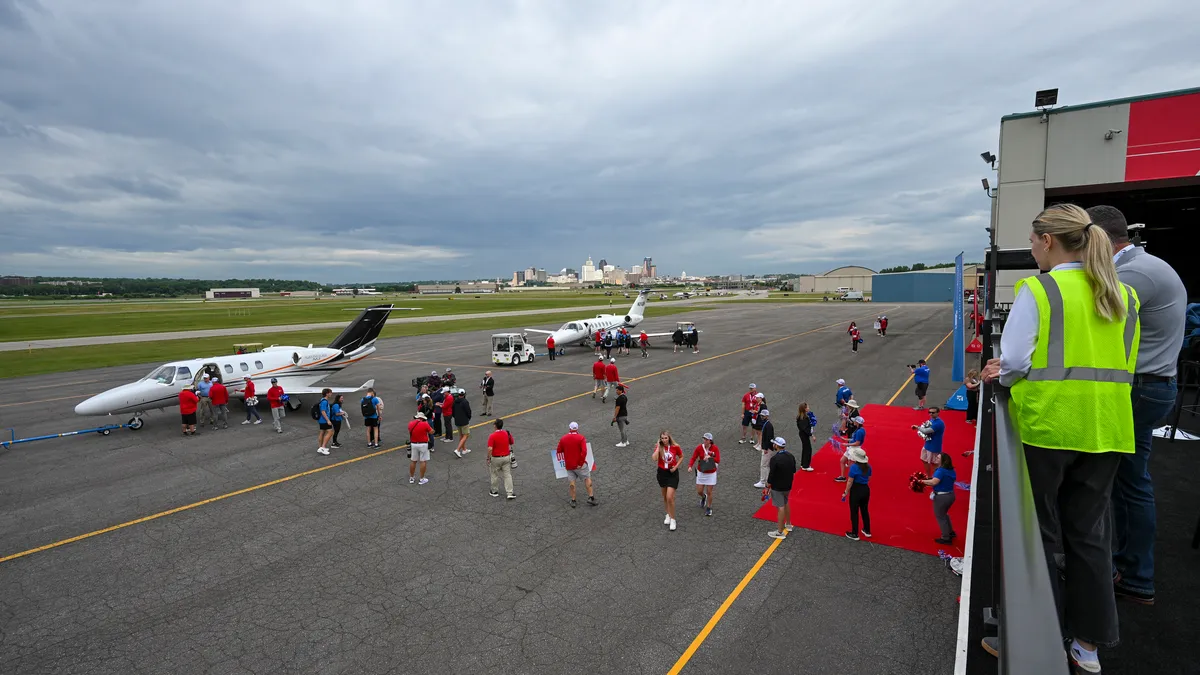
Textron Aviation organizes a private airlift to transport Special Olympics athletes to the games.The effort involves around 120 private planes and transports nearly 1,000 athletes and coaches free of charge.The airlift began 40 years ago and is made possible by volunteer pilots and aircraft owners.Nicole Henderson is an athlete. She competes in bocce and bowling and has won gold medals in her sports. She also competes in swimming, alpine skiing, basketball and track and field. Like any athlete, traveling for competitions can be a stressful experience for Henderson, so she was excited to take a private flight to the Special Olympics, where she’s competing in bocce and bowling this summer. “I’m a little nervous and excited and happy, and proud to do this,” Henderson told USA TODAY. She and her husband are among nearly 1,000 athletes and coaches who will get a private plane to the Special Olympics this year. The air lift is organized by Textron Aviation, a Wichita-based general aviation manufacturer that brings together small aircraft owners and operators to help get Special Olympics athletes to the games. “It’s giving back. All the other flights that we’re on, you’re supporting the mission of the company,” Christopher Clawson, a pilot for Prent Corporation in Janesville, Wisconsin, told USA TODAY. “This is a true way to use our aircraft to give back to our community.” This is the first Special Olympics airlift Clawson is participating in, and he flew seven athletes from a flag football team and two of their coaches from Indianapolis to St. Paul on June 19 as part of the effort. Why the Special Olympics airlift exists Travel can be stressful for anybody, but for athletes on their way to competition who also have special accessibility needs, there are additional levels of complication. Ron Draper, the CEO of Textron Aviation, said that the first airlift started 40 years ago to help a few athletes get from Kansas to the games. “The first one was a few airplanes to get the athletes to the games,” Draper said. “That generated the idea, what if we did an on-purpose planned lift for them?” The effort grew over the years in nine successive airlifts and now comprises around 120 private planes and helps transport close to a thousand athletes and their coaches. Private flights help take the stress out of transportation for the athletes who participate, allowing them to focus on their sport going into the competition. Ahead of the games, athlete delegations are surveyed about their interest in participating, and they’re then assigned to available seats once aircraft volunteer rosters are finalized, according to Textron Aviation. “All these owners, all these operators, all these corporate departments, they’re using their resources, paying for the fuel, the pilots and whatnot,” Clawson said. None of the participating athletes have to pay for their flights. Pilots and airplane operators are always excited to participate in the effort, according to Draper. “We don’t have to assign people. We just ask for volunteers, and we get hundreds of company employees who volunteer for this. They really enjoy the satisfaction of the event and participating,” he said. How operators prepare The Special Olympics airlift takes years of planning to pull off. With more than a hundred planes landing one by one every few minutes, it requires coordination with the Federal Aviation Administration, local airport authorities, pilots and athletes. Textron and the participating pilots also have to coordinate with the Special Olympics organizers to make sure all the athletes are accommodated appropriately. "When there’s an athlete that needs special help, whether it’s noise reduction or mobility issues... Special Olympics really works on that for us,” Draper said. Still, he acknowledged, not all of the athletes are able to take advantage of private flights. “Most of these aircraft we really can’t take wheelchairs in them,” because they are too small, Draper said. “I wish we could fly 100% of the athletes; we’re probably only flying 20% of the athletes, offsetting their costs.” Those who rely on custom mobility devices still have to fly commercial or find another way to get to the games, and risk damage to their wheelchairs in the process. But for the athletes like Henderson who can take advantage of the airlift, it’s a much less stressful way to travel. Where to watch the Special Olympics The Special Olympics are taking place in Minnesota, primarily in and around the Twin Cities, through June 26. Information about how to attend events in person is available through the Special Olympics, and broadcasts are available primarily on ESPN+. For athletes like Henderson, the whole experience of the games is uplifting. “It’s like being part of a family. You get to cheer your teammates on, the coaches get to cheer us on, and it’s given me the strength to be myself and be part of a family and get married,” she said. Zach Wichter is a travel reporter and writes the Cruising Altitude column for USA TODAY. He is based in New York and you can reach him at zwichter@usatoday.com.