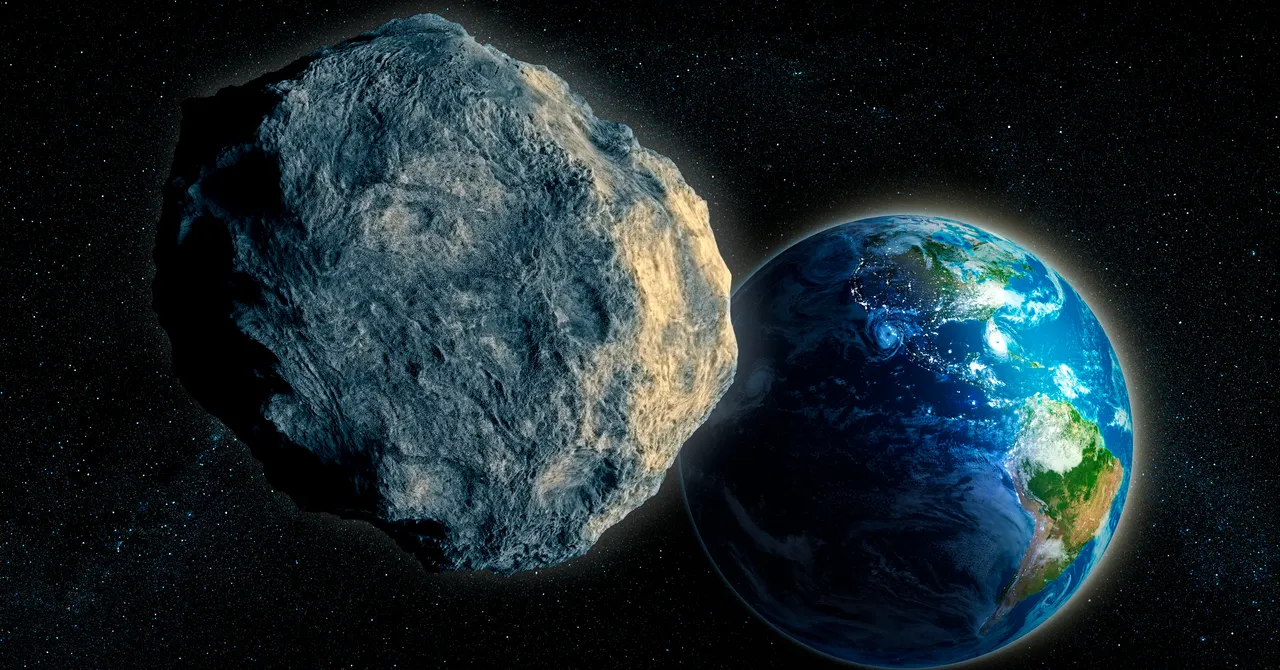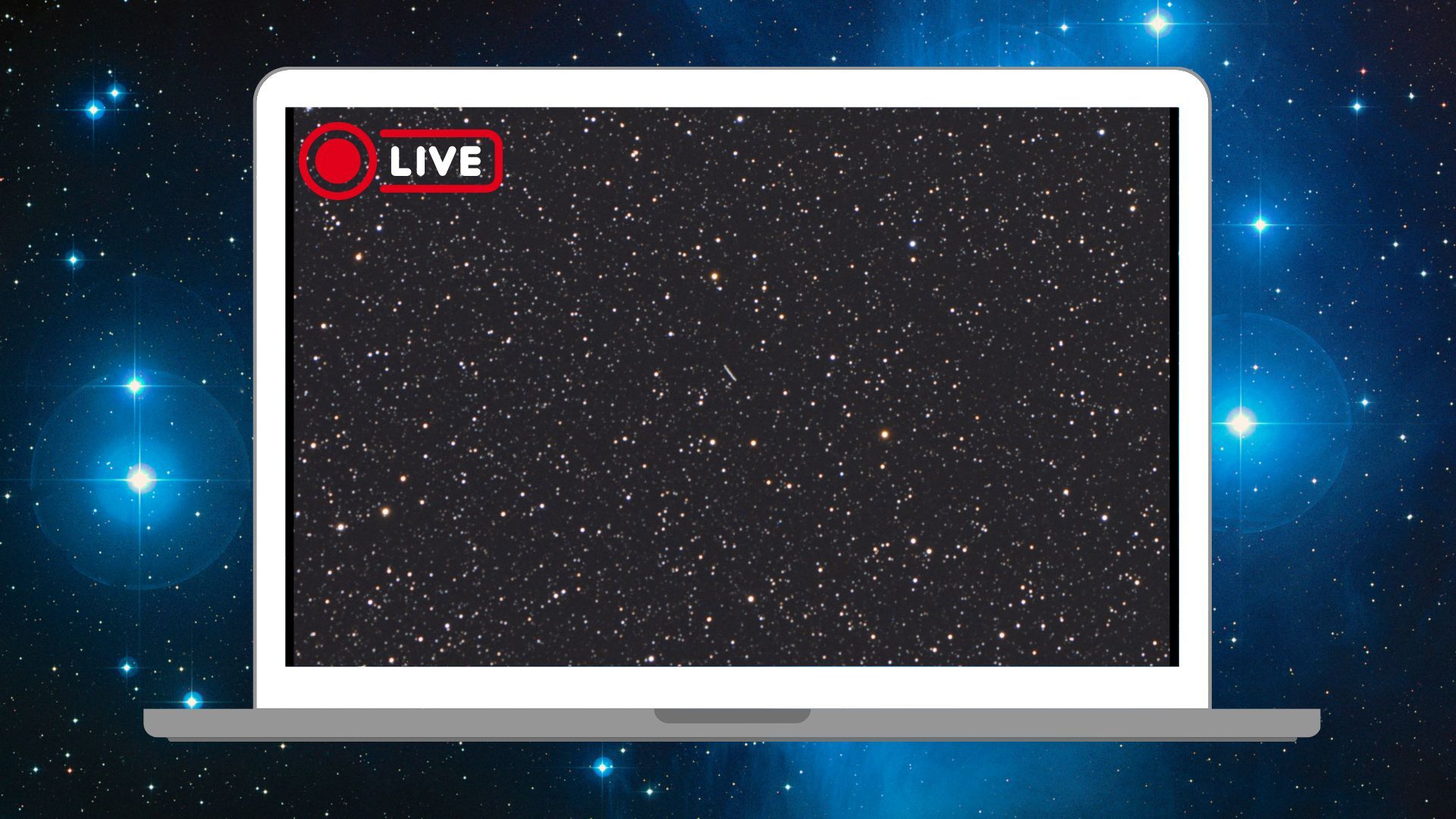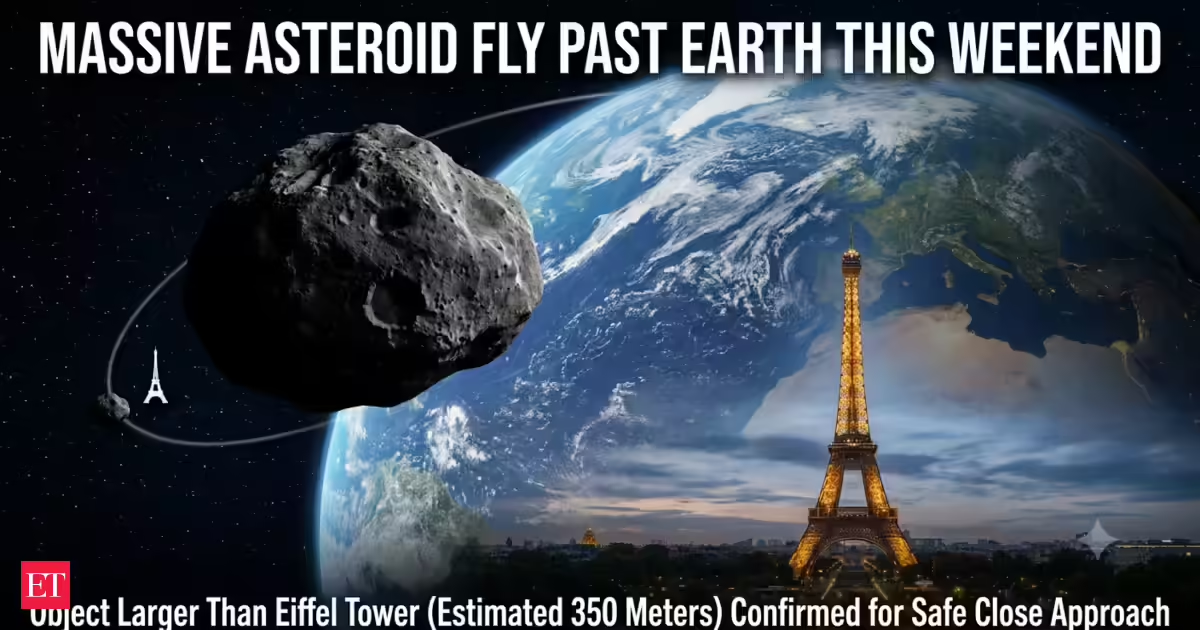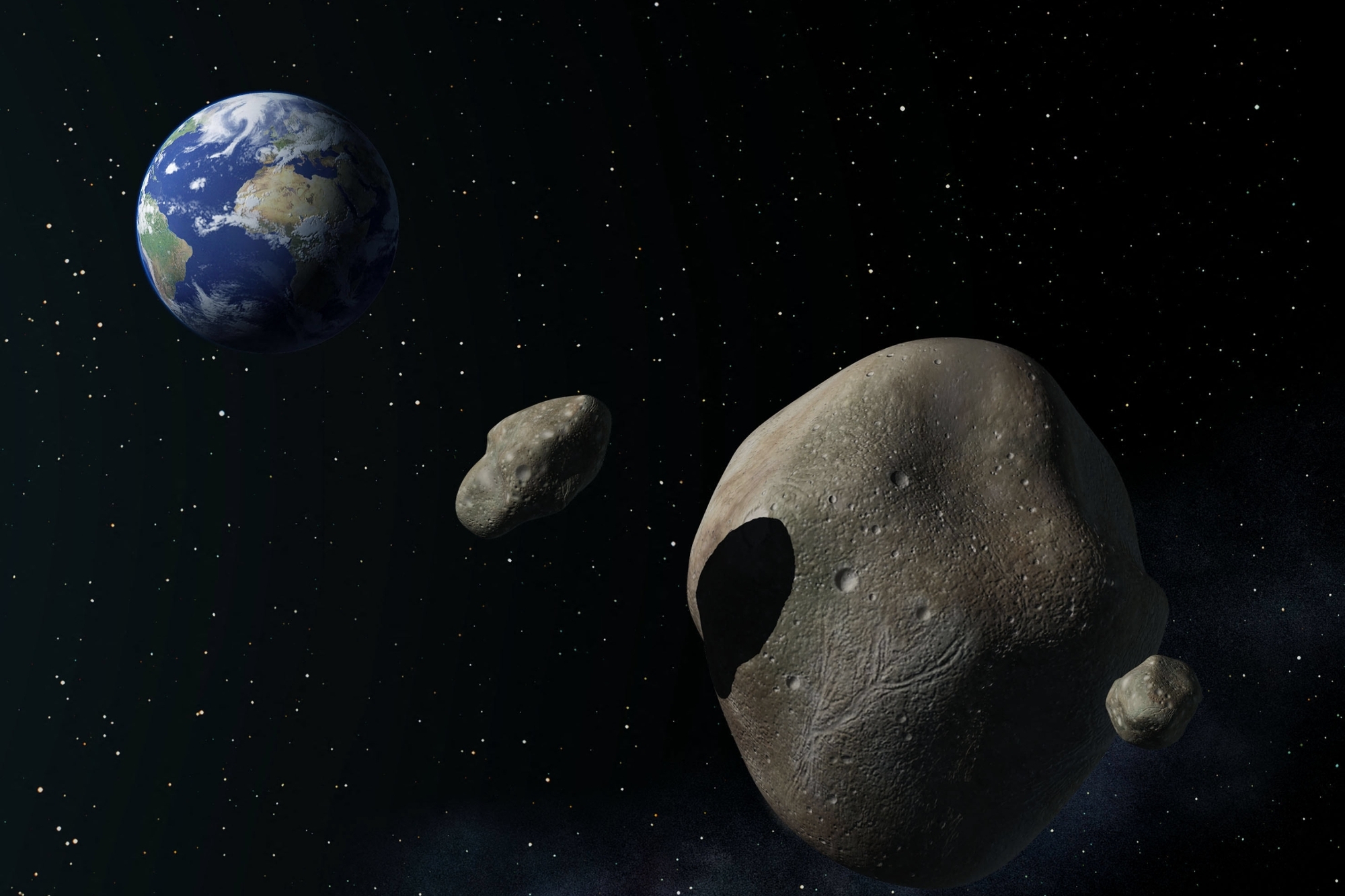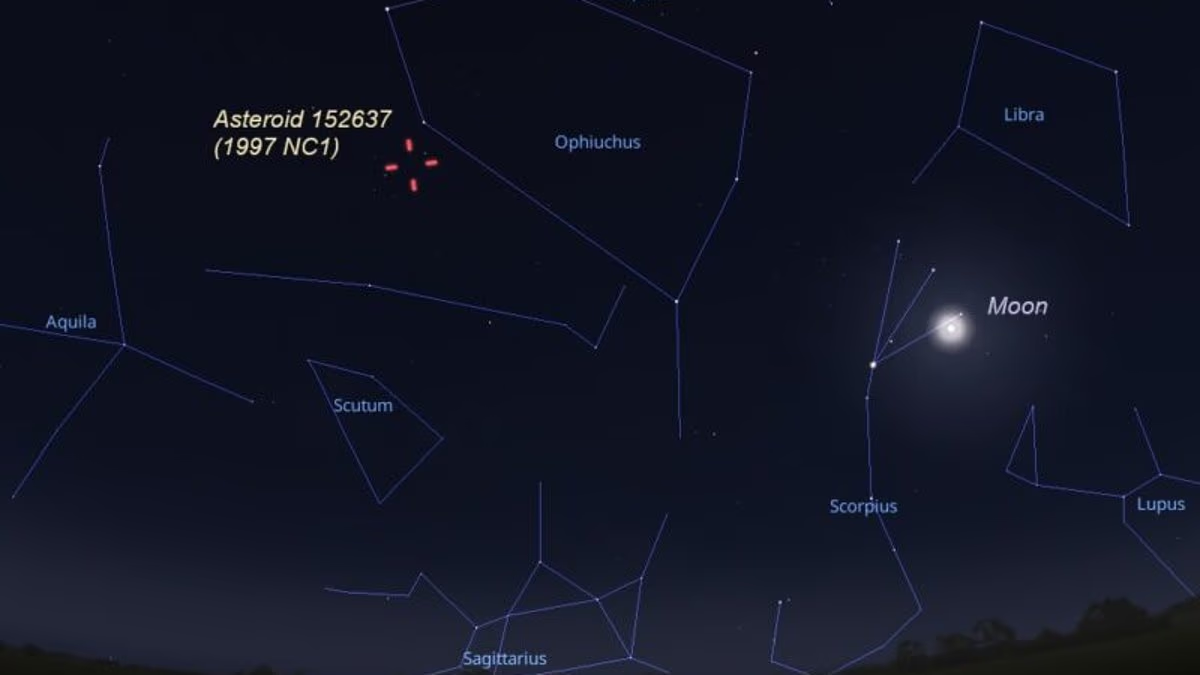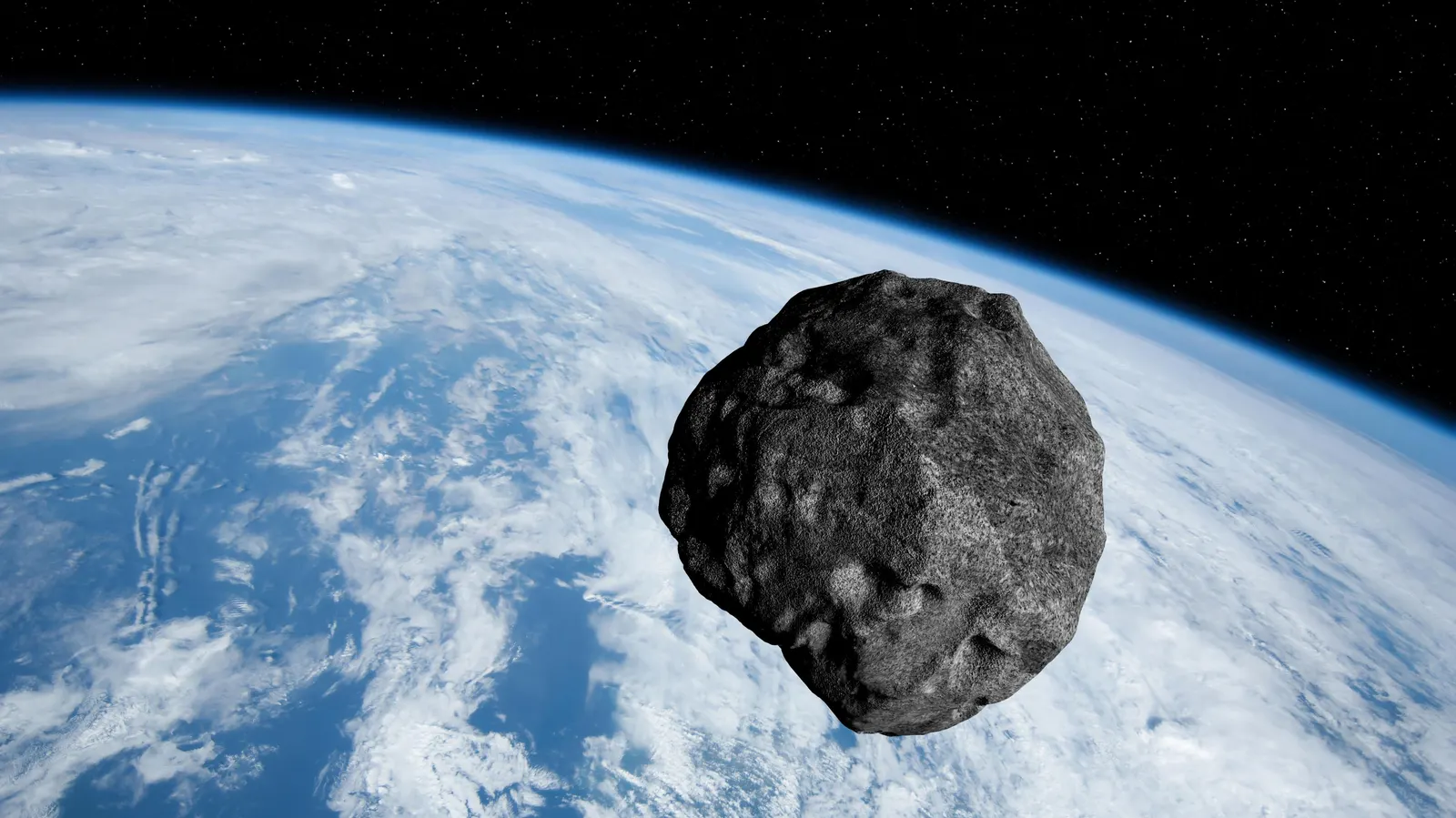
ToplineAn unusually large near-Earth asteroid will make a close but safe approach to Earth this weekend, giving skywatchers a rare chance to follow a mile-wide object as it moves through space near our planet. Asteroid (152637) 1997 NC1 will pass closest to Earth on Saturday, June 27, 2026, coming within about 1.6 million miles (2.6 million kilometers), or almost seven times the average distance to the moon. The encounter will be entirely safe, but the asteroid’s size and brightness make it unusual.An unusually large near-Earth asteroid, (152637) 1997 NC1, will make a close but safe approach to Earth this weekend.gettyKey FactsAsteroid (152637) 1997 NC1 was discovered in 1997 by the NEAT survey. It’s thought to be between 2,300 and 5,250 feet (710 and 1,600 meters) in diameter.Any asteroid larger than 460 feet (140 meters) in diameter and whose orbit approaches Earth’s orbit within 4.66 million miles (7.5 million kilometers) is called “potentially hazardous.”It is an Aten-type asteroid, a near-Earth object that spends most of its time inside Earth’s orbit while following an Earth-crossing path. The European Space Agency’s NEO Coordination Center lists the closest approach at 11:14 UTC (7:14 a.m. EDT) on Saturday, June 27, with the asteroid passing 1,590,375 miles (2,559,461 kilometers) from Earth’s surface, or 6.66 lunar distances. ESA gives the estimated impact probability as zero.1997 NC1 will remain brighter than magnitude 11.5 from Thursday, June 25, to Wednesday, July 1, moving from the constellation Lyra in the northern sky to the constellation Norma in the southern hemisphere.The picture above comes from a single 120-second exposure, remotely taken on June 19, 2026, with the “Elena” (PlaneWave 17″ + Paramount MEII + SBIG STL-6303E) robotic unit available as part of the Virtual Telescope Project in Manciano, Italy.The Virtual Telescope Project / Gianluca Masi Why This Rare Asteroid Flyby Is Getting Attention1997 NC1 could be about five times the height of the Eiffel Tower, placing it among the larger near-Earth objects to make a relatively close pass by Earth. An asteroid of this size comes this close to Earth only roughly once every decade, making this weekend’s flyby a rare observing opportunity rather than a routine close approach. ESA lists 1997 NC1’s previous close encounter as June 29, 1993, and its next as June 27, 2088.How To Watch Asteroid 1997 NC1 OnlineThe easiest way to see asteroid 1997 NC1 will be online. The Virtual Telescope Project will show the asteroid live on Friday, June 26, and Saturday, June 27, with both broadcasts beginning at 23:00 UTC (7 p.m. EDT). The online observations will feature live telescope views and commentary from astrophysicist Gianluca Masi, founder and director of the project.Can You See Asteroid 1997 NC1 With A Telescope?Some observers may also be able to see the asteroid directly with suitable equipment. ESA lists the asteroid’s peak brightness at around magnitude 10, saying it is theoretically observable with small telescopes or even large binoculars under dark skies, although the bright nearby “Strawberry Moon” — which turns full on Monday, June 29 — may interfere. “The upcoming flyby of (152637) 1997 NC1 will be truly remarkable”, said Masi in an email. “People will have the opportunity to see it visually through a small telescope or even good binoculars, particularly when it will peak in brightness on 28 June at 00:00 UTC, reaching magnitude 10.1.” He said a modest 4-inch, or 100 mm, telescope should show the asteroid as it travels across the field of view. At the time of the flyby, it is expected to move across the stars at about 40 arcseconds per minute, making its motion relatively easy to notice through a telescope. Further reading
How To Watch A Massive Mile-Wide Asteroid This Weekend During A Rare Flyby
Giant asteroid 1997 NC1, possibly up to a mile wide, will safely pass Earth this weekend, with live online streams on Friday, June 26 and Saturday, June 27.
604 words~3 min read