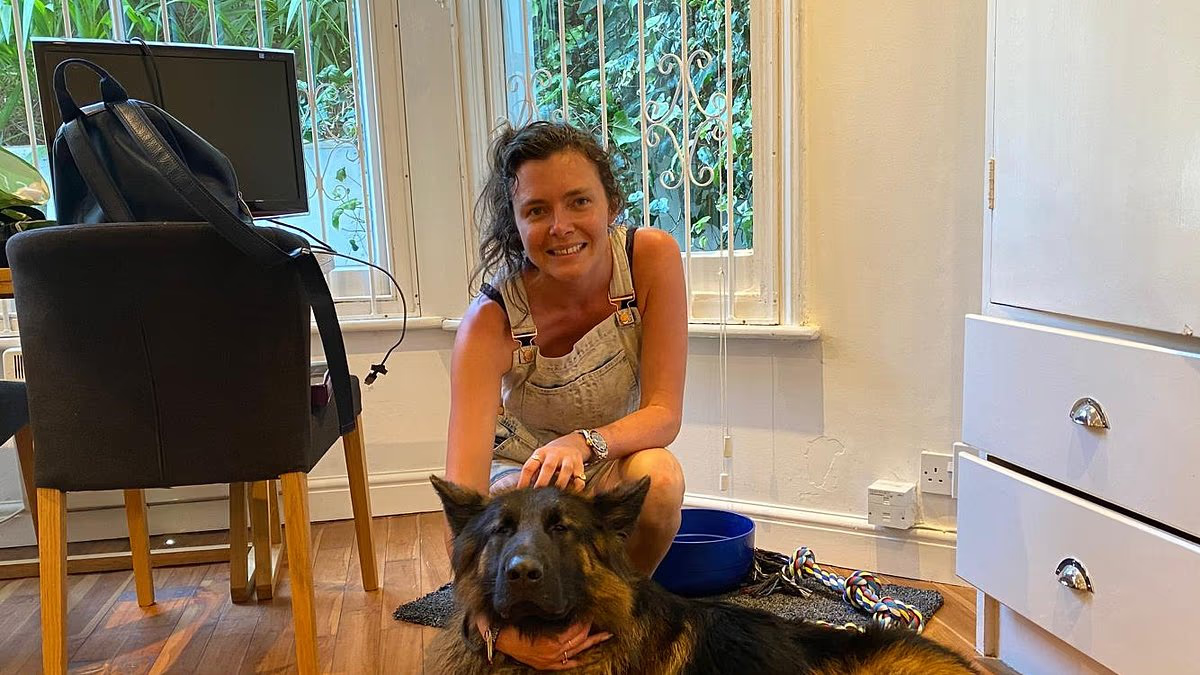
Once upon a time, not so long ago, the rule was fairly simple when it came to property: buy in a good location, sit on it for a while, then sell it for a profit.Better still, get yourself a fixer-upper in an up-and-coming area where your return would be even higher, virtually guaranteed. It was the safest and most responsible way to invest in our future – or so we millennials were led to believe.My boomer parents purchased a derelict house in Notting Hill in the early nineties, before the Richard Curtis movie catapulted the neighbourhood to fame, for £460,000. By the time they sold it a decade later it was worth £2million.So it was a no-brainer when my brother and I each inherited £50,000 in our early 30s as to what we should do with it. Not wanting to gamble on bitcoin or stocks or start a business – all things my parents would have warned were reckless – we set about looking for a property to buy.How wrong we were. We might as well have blown the cash on lottery tickets.My brother was living in the US and was happy for his half of the money to be tied up in the property with mine. So I found a tatty studio in Brook Green, west London; an area that was already established but still rising in popularity. Annabel Fenwick Elliott in her flat in Brook Green, west London, which she bought for £285,000 in 2020 We secured it for what I thought was a bargain – £285,000 – in 2020, just before the pandemic put the property market on hold.We used the £100,000 as a deposit and I took out a mortgage with a five-year fixed interest rate, which worked out to be about £650 a month. With bills on top, I was at the upper limit of my budget and living pretty much hand to mouth. But I was in the enviable position – or so I assumed – of at least having something to show for it eventually. Renters aren’t so lucky.I spent about £25,000 on renovating the space – ripping out the ancient heating system in favour of a new boiler, remedying the damp and revamping the kitchen and bathroom. I got the furniture second hand where I could, or from IKEA, and was really proud of how the space looked in the end.I was single at the time and working for a newspaper in London. The plan was always to live in the studio until perhaps I was ready to meet someone and start a family. At which point I would sell up, pocket the profit and buy something bigger, somewhere rural.Then Covid hit and everything changed. Given I was now working from home, I did what so many others did and bolted from London in favour of a quieter (and much happier) life in the countryside.I heard through the grapevine that a friend-of-a-friend was looking to temporarily rent a studio in west London. He had excellent references and it seemed like the perfect solution while we waited until the dust settled over repeated lockdowns.It was a fairly informal rental agreement (what a mistake!) and I only charged him what it was costing me a month (another error!). It wasn’t my aim to skim anything off the top, but simply to break even and have someone trustworthy living there.Months rolled into years and my life was taking a different course. I never returned to the office and went freelance after meeting my husband, a German pilot, so that I could continue working remotely from wherever his job took him.My tenant’s fortunes, meanwhile, were spiralling downwards. There were mental health troubles and substance abuse, and what had started out as such a handy arrangement turned bitter. My bills were going up every year but the tenant couldn’t pay enough rent for me to cover the costs. When my five-year fixed interest rate expired last May and my mortgage doubled to more than £1,200 a month, I had no choice but to sell.I was bleeding cash every month and it took the best part of a year to successfully evict the tenant, who didn’t want to leave. When it came to selling, the property market was dismal, having taken a beating over the pandemic, and with Labour’s new housing policies looming there were no signs of improvement in sight.In particular, the Renters’ Rights Act, which came into force in May of this year, has made it even harder for landlords to get rid of problematic tenants, so they were selling up in droves, and the market was flooded with properties just like mine.Six years into this ordeal and I have come to the conclusion that it’s just not worth the risk of renting out a property in the UK any more, whether you’re a landlord with multiple accommodations or just a homeowner like I was, looking for a temporary arrangement. I was stunned by how tricky it was to get my tenant out, even after our contract had expired and he was essentially squatting. And that was before the new laws came in.Even if my mortgage hadn’t doubled, and I had opted to wait until the market might recover, I would have been very wary about renting the studio out again, for fear of being burned once more.So we listed it at £310,000 and knocked the price down further the longer it festered on the market unsold. Eventually we had an offer for £267,000 and I was advised by multiple agents to take it at the end of last year.It was a tough choice, but we were backed into a corner. I had a three-year-old and was pregnant with my second. We’re planning to relocate to the US, and my husband and I needed to pool our assets to make that happen.In total, my brother and I lost more than £40,000. Had I known I would be gambling with that money, I never would have done it. My mother feels terrible for persuading us it would be the safest way to stash it, not that I blame her.Flipping houses was always a notion I found hugely appealing. Back in my parents’ day it was also lucrative – but those days are over. I can’t help but feel we millennials somewhat drew the short straw; between two financial crashes, a global pandemic and worsening cost-of-living crisis.Who knows what the situation will be by the time my children are ready to flee the nest, but I can only hope their fortunes are better. And my advice for anyone looking to invest in property? Not now, not under this government, and not unless you know you won’t have to sell it for the foreseeable future.
How I finally shifted my unsellable flat: ANNABEL FENWICK ELLIOTT
Once upon a time, not so long ago, the rule was fairly simple when it came to property: buy in a good location, sit on it for a while, then sell it for a profit.
1,126 words~5 min read