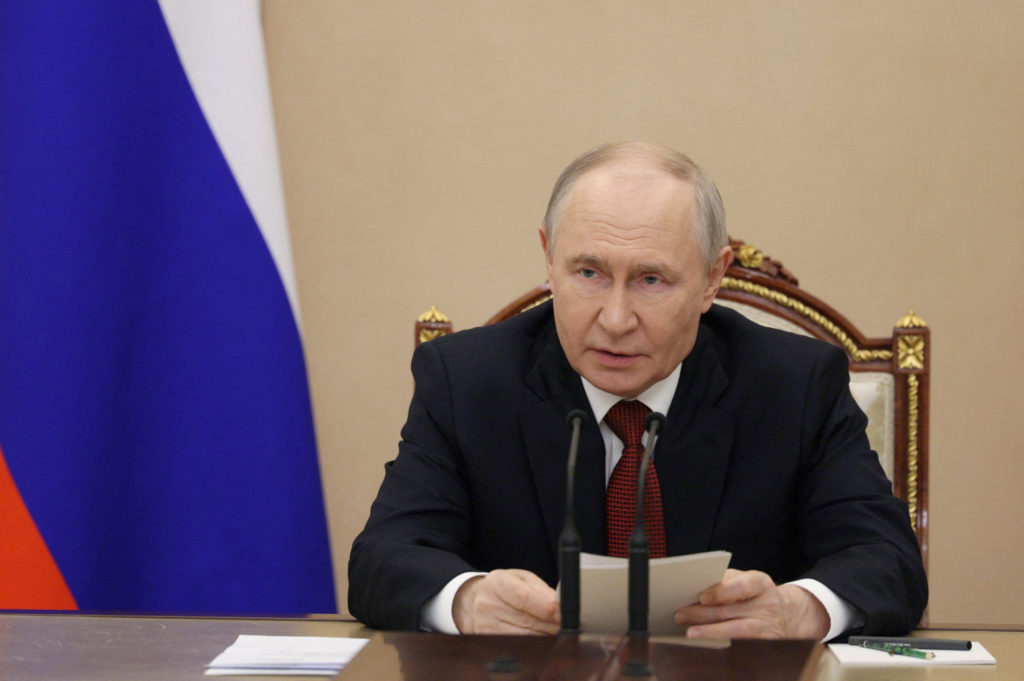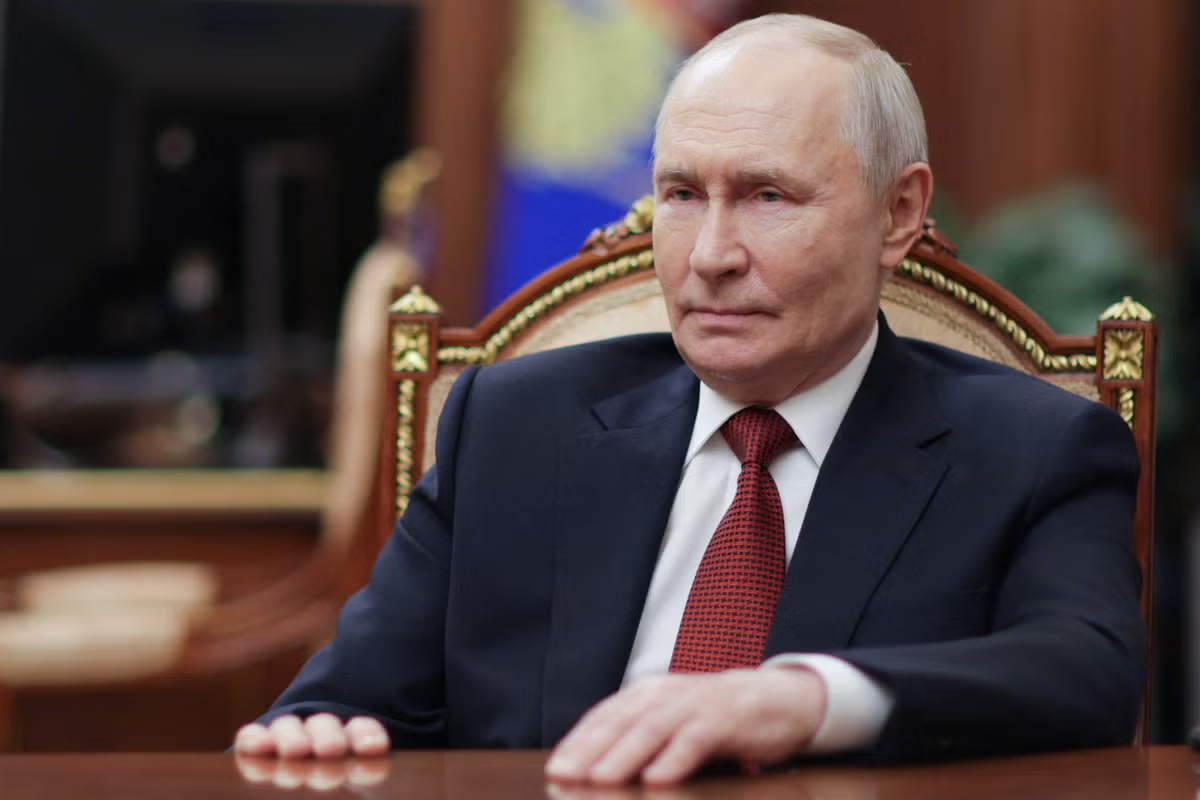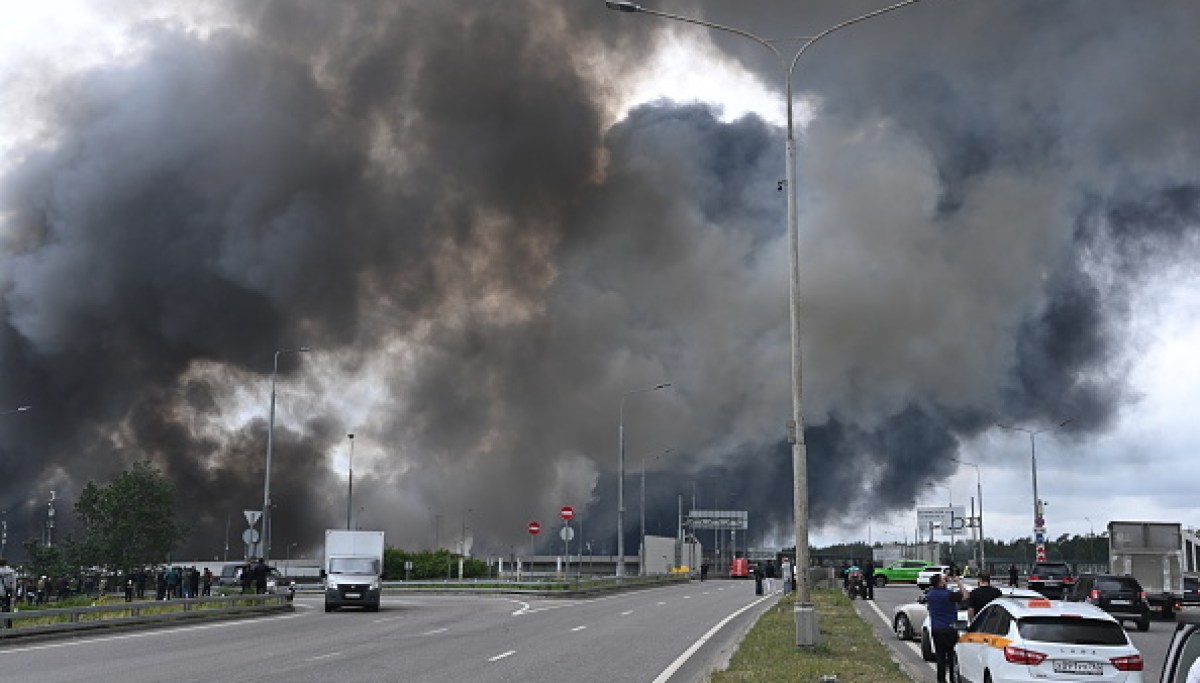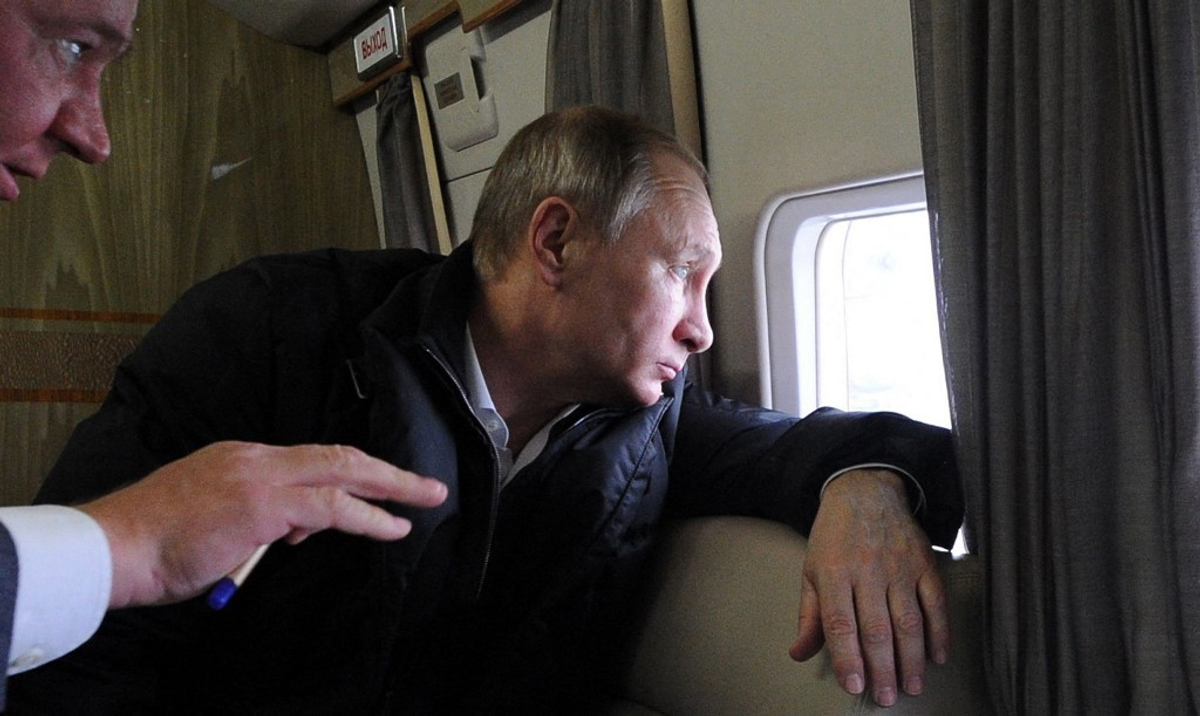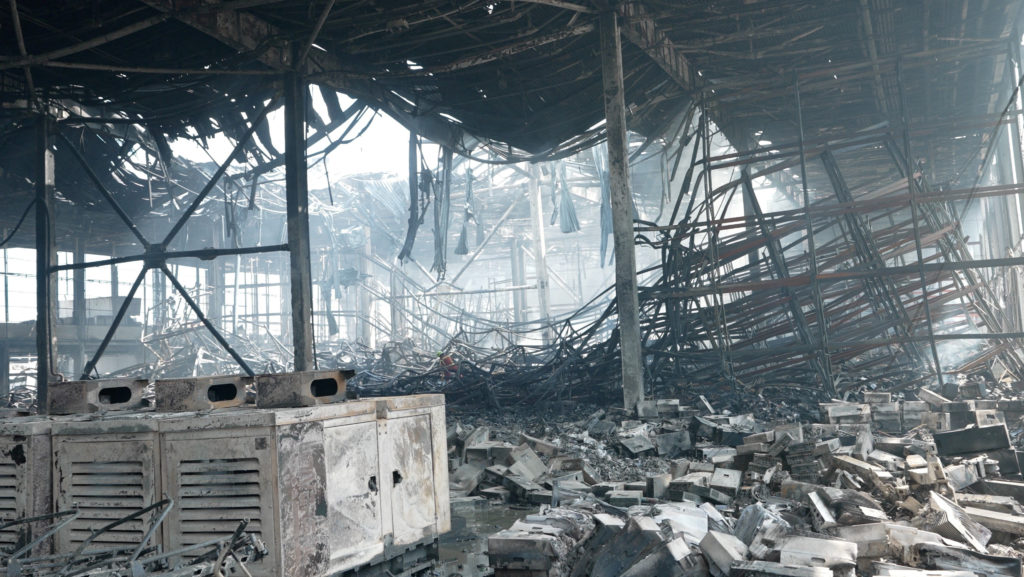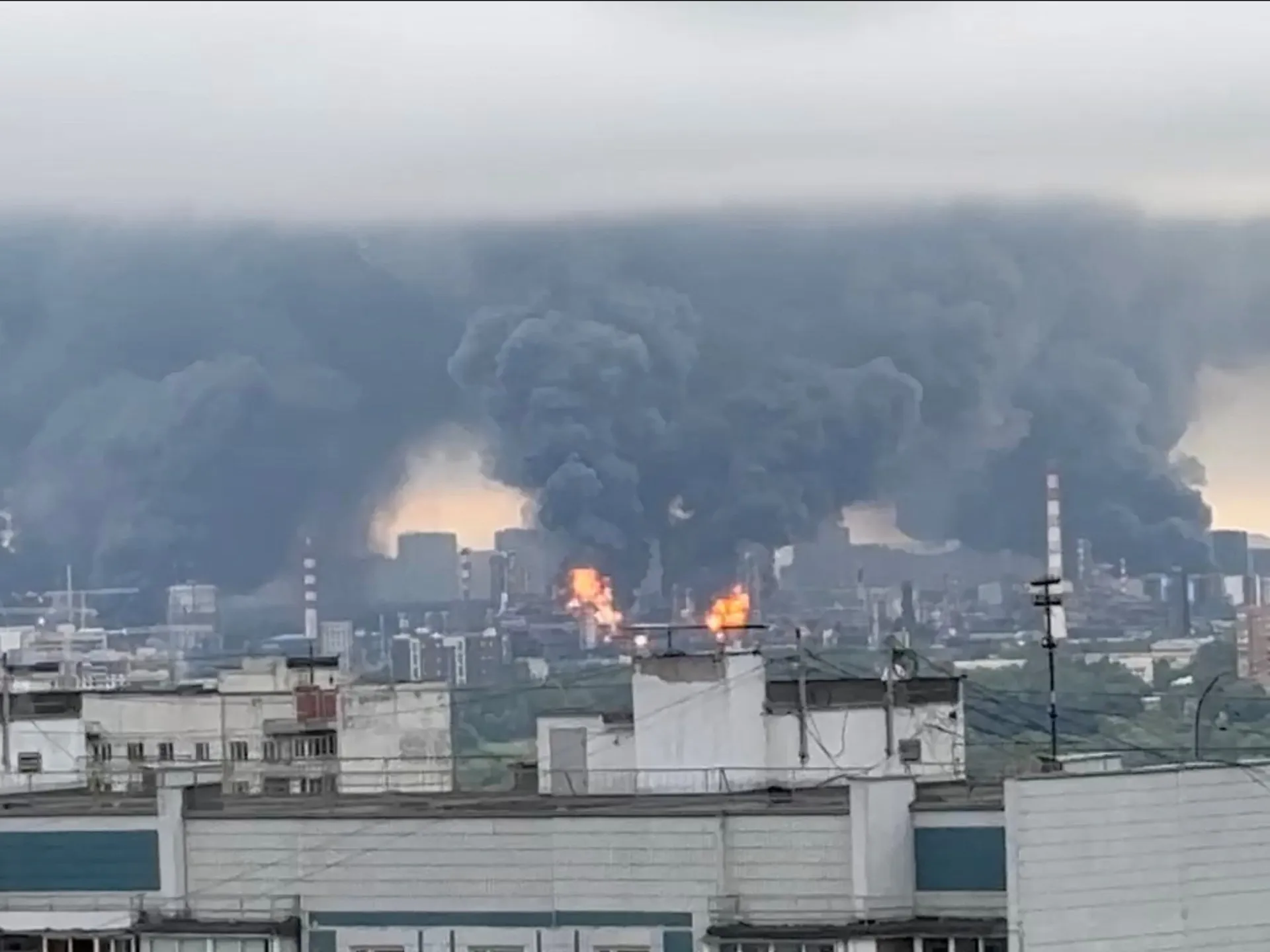
OIL’S NOT WELL IN MOSCOW: The social media platform X is filled with videos these days showing Russian refineries, arms factories, and supply routes being hit by Ukraine’s middle-range drones and missiles. Ukraine has also been focusing on strangling the occupied Crimean peninsula, cutting the mainland route used to bring food and fuel into the popular tourist resort, and sparking an exodus and long traffic jams on the only bridge that links Crimea to the Russian mainland.At a Kremlin meeting this week, Russia’s Deputy Prime Minister Alexander Novak reported to President Vladimir Putin that the “current situation on the fuel market … is challenging but manageable” and details the emergency measures that were being implemented.“We have adopted a total ban on the export of petroleum and aviation turbine fuel. We are also considering a total ban on the export of diesel fuel,” Novak said. “All oil refineries have maximized their production capacity, shortened repair and maintenance times, and postponed scheduled repair and maintenance works.”
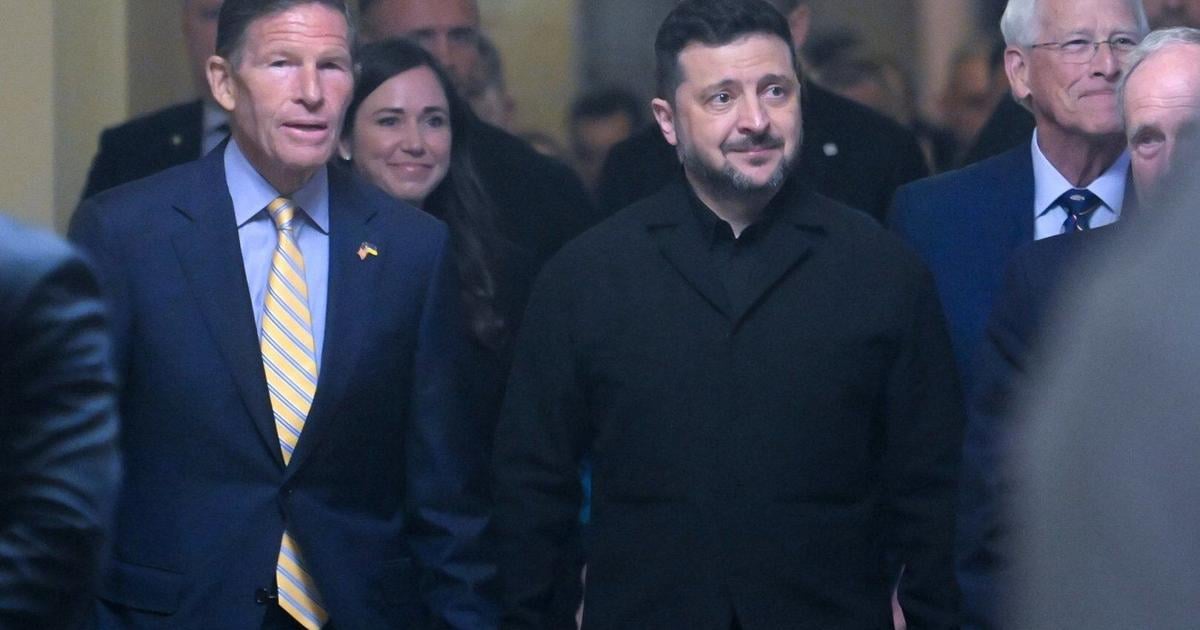
In what it calls an exclusive, Reuters is reporting that the Moscow oil refinery in Kapotnya — one of the largest oil processing facilities in the country and the key fuel supplier for the Moscow region — has been severely damaged by recent Ukrainian drone strikes, and will be offline until at least the end of the year.Ukrainian drones struck the refinery twice this month — on June 16 and June 18 — knocking out both primary oil processing units in succession, Reuters reports.RUSSIA IS LEARNING CRIMEA DOESN’T PAYZELENSKY: RUSSIA IS FEELING THE PAIN: In his nightly video address, Ukrainian President Volodymyr Zelensky said that internal documents obtained by Ukraine’s intelligence services show that “our pressure campaign is being felt painfully by the Russian leadership.”“Right now, our military is taking out targets that sustain Russia’s war effort both in the temporarily occupied territory of Ukraine and on Russia’s own territory – the very things that make this war and Russian aggression possible in the first place,” Zelensky said. “The Russian leadership is now pulling more air defense assets to Moscow, Valdai, and Putin’s bridge across the Kerch Strait – at the expense of air defense elsewhere.”“There are many difficulties — all because Putin refuses to end his war and to hear our proposals for a meeting, genuine negotiations, and a dignified peace,” Zelensky said. Putin, meanwhile, has refused to meet Zelensky anywhere in Moscow, and at the meeting with his government ministers, he continued to insist Russia was winning. Zelensky, Putin said, is trying to create “an illusion of a position of strength,” while “In fact, on the ground, there is a completely different reality.” “These attacks do not change anything and cannot affect what is taking place on the front along the line of contact,” Putin insisted. “Russian troops are advancing, liberating one community after another, one territory at a time.”“Putin’s June 23 reference to the alleged ‘battlefield realities’ ignores, however, the fact that Russia’s rate of advance has been steadily declining since November 2025,” the Institute for the Study of War said in an assessment this week. “Ukraine’s intermediate-range strike campaign is increasingly inhibiting Russian logistics across occupied Ukraine in ways that are beginning to manifest on the front line.”TRUMP: ZELENSKY ‘DOING PRETTY WELL’: President Donald Trump — who is not always a fan of President Zelensky — had some grudging praise yesterday for how Ukraine is taking it to Russia at the moment.At a White House meeting with NATO Secretary-General Mark Rutte, a reporter asked, “Mr. President, you like winners. Do you think President Zelensky is winning right now?“Well, he’s doing pretty well. Look, no matter how you look at it, he’s doing pretty well. He’s holding his own at least. A lot of people dying on both sides. But I think he’s doing pretty well,” Trump replied. “Look, you have to say he’s courageous. He’s got great equipment, but he’s got great men. He’s got fighters.”Rutte praised Trump for continuing to support Ukraine by allowing arms sales to continue, even as he has cut off most direct aid. “The fact that Ukraine stays strong in the fight, that you still provide all the stuff they need, paid for by European and Canadian allies. Fair enough. But very important for them to stay in the fight and all the other things the United States is doing.”OPINION: RUSSIA’S DEEP CRIMEA CRISIS WILL ONLY GET WORSEGood Thursday morning and welcome to Jamie McIntyre’s Daily on Defense, written and compiled by Washington Examiner National Security Senior Writer Jamie McIntyre (@jamiejmcintyre) and edited by Christopher Tremoglie. Email here with tips, suggestions, calendar items, and anything else. Sign up or read current and back issues at DailyonDefense.com. CLICK HERE TO SIGN UP OR READ BACK ISSUES OF DAILY ON DEFENSEHAPPENING TODAY: A REVERSAL ON WAR POWERS: In another display of the power Trump holds over Republicans in Congress, after Trump upbraided senators who helped pass a war powers resolution rebuking Trump for failing to get Congress to approve the Iran War, two of the chastised lawmakers caved in a re-vote that was held late last night.Trump crowed about it on Truth Social. “Wow! The Senate just changed its vote on Iran from 50-48 against, to 50-47 for. Rand Paul and Bill Cassidy changed. Thank you to Leader John Thune, Lindsey Graham, Bernie Moreno, and all. This vote puts Iran on notice!”In a heated session behind closed doors at a Capitol Hill lunch with GOP senators, Trump called Republicans who voted against him “losers,” and singled out Cassidy, who just lost his primary to a Trump-endorsed candidate, as a “lunatic.”Cassidy told Trump in the meeting that he voted for the war powers resolution because “You have not told the American people what’s going on. It was supposed to last for four weeks, it’s lasted four months. Our original objectives have not been achieved. And I want to know what’s going on.” Hours later, Cassidy was given a personal briefing at the White House from Vice President JD Vance and envoy Steve Witkoff.“I want to thank Vice President Vance and Special Envoy Witkoff for the thorough briefing this afternoon on Iran. I appreciate the quick invitation to the White House to address many of my concerns,” Cassidy posted on X, before returning to Capitol Hill to reverse his vote.The actual vote total against the resolution was 47-50-1, as Rand Paul voted present. “My opinion on the debate over war and executive power has not changed and I have voted that way several times, Paul said on X. “But since hostilities seem to be over and the President asked me to give consideration to his negotiating position, I will do so. My vote of present is a way to give the President more space and leverage to negotiate a lasting peace.”INSIDE TRUMP’S EXPLOSIVE MEETING WITH SENATE REPUBLICANSRUTTE TOUTS ‘TRUMP TRILLION’: NATO Secretary-General Mark Rutte showed up for his Oval Office meeting armed with charts and graphs that were designed to slather President Trump with praise as the savior of the trans-Atlantic alliance by single-handedly engineering a massive reinvestment in NATO defense capabilities.“I start with this chart. This chart is about the Trump trillion,” Rutte said as he got up from his seat and moved to poster size cheats resting on easels. “The Trump trillion shows you the increase Europeans and Canadians are paying into defense since you took office in 2017.”“Trump 45 plus Trump 47, a total of extra spending by the Europeans and the Canadians of $1.2 trillion,” Rutte said. “I’m also absolutely convinced that you being President of the United States, being consistently pushing for something which, since Eisenhower, has not been achieved, which is the Europeans equalizing their defense spending with the United States, this is your evidence.”And Rutte’s sales pitch was aimed at convincing Trump that America is the big beneficiary of increased spending by NATO nations. “Half of all their defense spending when it comes to defense industrial output is spent in the United States, 112,000 jobs,” Rutte said. “Last year, they spent $54 billion on U.S. defense industrial output.”Rutte also attempted to smooth over Trump’s irritation with NATO allies, who he complained were not there for him during the Iran War, ahead of next month’s leaders’ summit in Ankara, Turkey. “I do agree there is reason for disappointment, absolutely,’ Rutte said. “But my argument is this. These are isolated cases. When you look at the overall — take for example Germany. From day one, they delivered on their bilateral commitments.”Asked what he expects from NATO, Trump replied. “Give us a little kiss. We don’t want much”“I just want their loyalty. We don’t need their money. We don’t need anything,” Trump said. ‘We have the most powerful military in the world by far. But I just want loyalty. You know, we’re so loyal to them.”THE RUNDOWN: Washington Examiner: Trump celebrates nation’s ‘250-year triumph’ at Great American State Fair openingWashington Examiner: White House requests $67 billion in supplemental Pentagon funding after Iran warWashington Examiner: Hegseth sells reconciliation and supplemental to Republicans as necessary for defense securityWashington Examiner: GOP praises senior US military officer after unexpected retirement announcementWashington Examiner: Trump says he doesn’t think US was responsible for fatal strike on Iranian schoolWashington Examiner: US lets Iran trash-talk as long as Tehran officials keep their commitments to peace dealWashington Examiner: Top Iranian negotiator calls deal a ‘declaration of US defeat’Washington Examiner: Chris Wright says US can control oil flows through Strait of Hormuz even if Iran deal failsWashington Examiner: Iranians tied to Revolutionary Guard crossing US-Canada border illegally trigger new concernsWashington Examiner: GOP senators switch votes to reject measure curbing Trump’s war powersWashington Examiner: Inside Trump’s explosive meeting with Senate RepublicansWashington Examiner: Pentagon reinstates mandatory flu shots after outbreak at Air Force baseWashington Examiner: Man arrested by Reflecting Pool says he’ll contest obscenity chargeWashington Examiner: Mexico eyes sending oil after Cuba enacts major liberalization under pressure from TrumpWashington Examiner: Trump claims gas should be $2.25, blames price gougingWashington Examiner: Can the US cancel Iran’s Hormuz get out of jail free card?Washington Examiner: Opinion: The Iran deal falls apart on one question: Who’s in charge in Tehran?AP: Senate Republicans reject war powers resolution after Trump berates them at Capitol meetingThe Hill: GOP Fiscal Hawks Largely Unmoved by Hegseth’s Defense Dollars PitchReuters: US, UK, France, Germany Raise Alarm About Chinese Patrols off Eastern TaiwanWall Street Journal: Ukraine’s Most Potent Weapon Is the Soldiers Who Refuse to QuitAP: US Congress welcomes Taiwan’s parliamentary leader to Washington, affirms support for the islandWall Street Journal: Lockheed Martin Gets More Than $35 Billion US Contract for THAAD SystemsAir & Space Forces Magazine: House Bill Cuts USAF’s Plan for More Parts, Flying HoursBreaking Defense: Pentagon Races to Spend $152B Reconciliation Pot—or Face CutsAir & Space Forces Magazine: Budget Supplemental Would Give Pentagon Billions for Epic Fury, Munitions, Space Force ProgramsAxios: Lockheed Eyes Air Force Test of Extreme-Range Missile by Year’s EndAviation Week: Six F-35Bs Delivered to Marines So Far Without New RadarsBreaking Defense: Air Force Could Spend $1.5B, Get ‘Doomsday Plane’ Data in T-7 Engine ‘Horse Trade’Air & Space Forces Magazine: Chinese AI Agents Could Challenge Air and Space Operations, PlanningMilitary.com: Lawmaker Wants to Let Cannabis-Failed Recruits into Air Force & Marines—Just Like Army & NavyAir & Space Forces Magazine: Space Force Gives Boeing $2 Billion for Pair of Narrowband Communication SatellitesThe War Zone: Pocket Fleet of Unseen MQ-1 Predators Still Flying in Specialized RoleDefenseScoop: Pentagon Taps Casepoint’s AI Products to Enhance Classified Legal OpsTHE CALENDAR:THURSDAY | JUNE 25 7 a.m. — Association of the U.S. Army daylong “Hot Topic” on Army acquisition and contracting: “Accelerating Solutions for Today Fight,” with Maj. Gen. Douglas Lowrey, commanding general of U.S. Army Contracting Command https://www.ausa.org/events/hot-topic/army-acquisition-and-contracting7:45 a.m. 300 First St. SE — National Institute for Deterrence Studies seminar on Columbia-class and Ohio-class submarine program, with Rear Adm. Todd Weeks, Navy program executive officer for strategic submarines https://thinkdeterrence.com/events/rear-admiral-todd-weeks-live-at-the-capitol-hill-club/9:30 a.m. G-50 Dirksen — Senate Armed Services Committee hearing on Jules Hurst III to be Defense undersecretary (comptroller); Richard O’Malley to be deputy Defense undersecretary for acquisition and sustainment; Roger Mason to be director, National Reconnaissance Office; and Erich Hernandez-Baquero to be assistant secretary of the Air Force for space acquisition and integration http://www.armed-services.senate.gov10 a.m. 2358-C Rayburn — House Appropriations Homeland Security Subcommittee hearing: “Oversight Hearing – Department of Homeland Security,” with testimony from Homeland Security Secretary Markwayne Mullin; and Deputy Homeland Security Secretary Troy Edgar http://appropriations.house.gov11 a.m. 1333 H St. NW — Center for American Progress book discussion: Lethal Autonomy: The Future of Warfare Whether We Like It or Not, with author Frank Kendall, former Air Force secretary https://www.americanprogress.org/events/lethal-autonomy1:30 p.m. 1201 Pennsylvania Ave. NW — Hudson Institute discussion: “Navigating Competition in the Central Arctic Ocean, with Scott Highleyman, Ocean Conservancy senior adviser; Bryan Clark, director, Hudson Center for Defense Concepts and Technology; and Michael Roberts, senior fellow, Hudson Center for Defense Concepts and Technology https://www.hudson.org/events/navigating-competition-central-arctic-ocean2 p.m. G-50 Dirksen — Commission on Security and Cooperation in Europe briefing: “Russia Tech Authoritarianism on the Occupied Territories of Ukraine, with Iryna Adam, research associate, Atlantic Council Digital Forensic Research Lab; Maksym Beznosiuk, analyst at the Jamestown Foundation and GLOBSEC associate fellow; and Steven Feldstein, senior fellow, Carnegie Endowment for International Peace https://www.youtube.com/live/R0h33K7rw7QFRIDAY | JUNE 26 12:30 p.m. 1400 L St. NW— Atlantic Council Indo-Pacific Security Initiative virtual discussion: “Frontlines of the South China Sea,” a fireside chat with Philippine Coast Guard Rear Adm. Jay Tarriela https://www.atlanticcouncil.org/event/frontlines-of-the-south-china-sea-fireside-chat