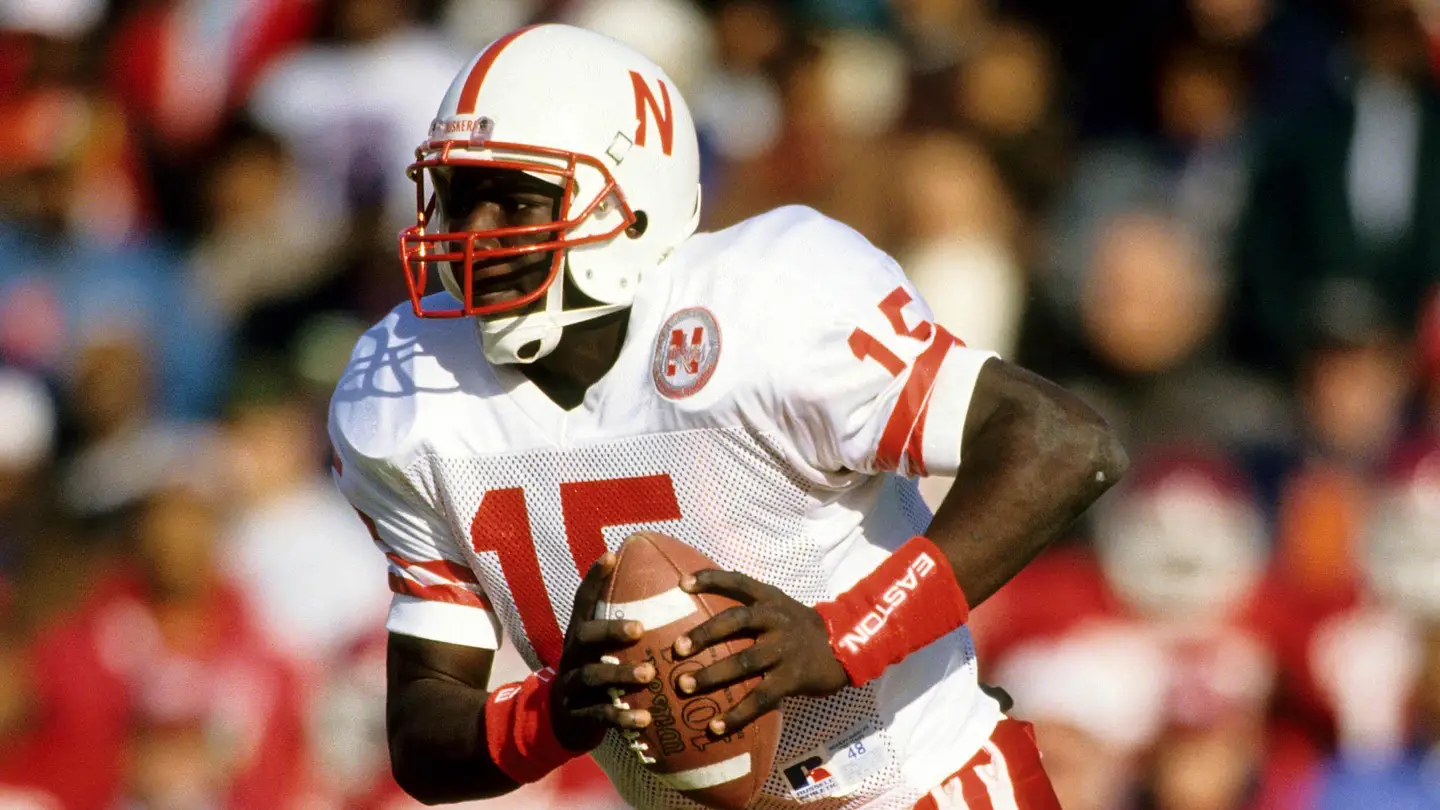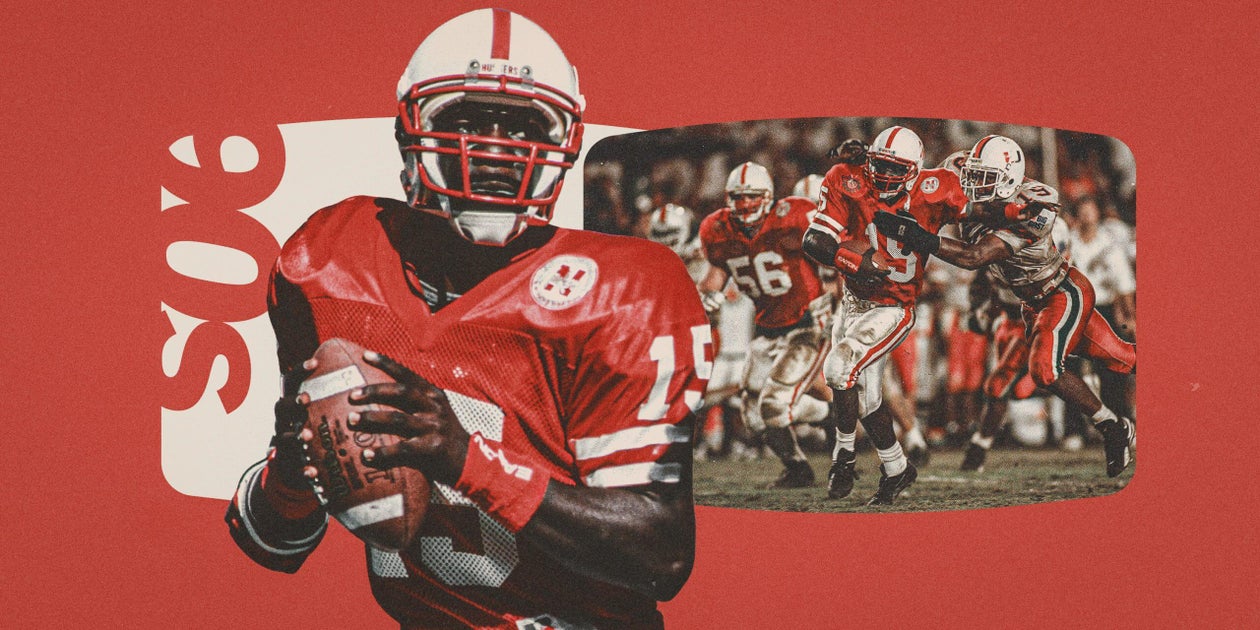
Editor’s note: As the World Cup continues in the United States for the first time since 1994, The Athletic is looking back at college sports in the 1990s and how much has changed since then. Join us for a couple of weeks of offseason football and basketball nostalgia.Jeff Makovicka won two national championships and played for a third as a hard-charging Nebraska fullback. He competed during an era in Lincoln that’s almost unimaginable for a generation of fans more than 30 years after his time in college.With five daughters, a group of their boyfriends and a son-in-law to occupy his conversations, Makovicka has often heard some version of a singular question: How were you guys so good?“I always start with this,” he said. “Let me tell you the story about the greatest college football player never to win the Heisman Trophy. I tell everyone, all the time, with what he meant for the program and how good he was, it’s a travesty that he didn’t win it.”Tommie Frazier, the greatest quarterback to play at Nebraska, won 31 of 32 starts in the regular season and bowl games against Miami and Florida with national championships at stake.But numbers do not capture his greatness. At his peak 1995 form for a team that scored 53.2 points per game, Frazier totaled 1,966 yards in an 11-0 regular season. That figure today does not crack the top 25 in school history.Frazier’s utter dominance was undeniable when he torched Steve Spurrier and the Gators for 199 rushing yards and 105 passing in a 62-24 Fiesta Bowl romp — three weeks after Eddie George edged Frazier in the Heisman balloting.“Watching him play and run the option, it’s just amazing that I had somebody like that to look up to,” said Eric Crouch, the 2001 Heisman winner at Nebraska. “His toughness and the way that he ran the ball and led his team, I was trying to do the exact same thing.”Sports Illustrated named Frazier to its 85-man All-Century Team.Among the stars on Nebraska’s five national championship teams, Frazier and 1972 Heisman winner Johnny Rodgers enjoyed the most iconic careers. Frazier spurned Notre Dame and coach Lou Holtz as a high school All-American out of Bradenton, Fla., and in 1992 became the first true freshman to start at quarterback for Nebraska.He helped guide the Huskers to three consecutive unbeaten regular seasons. In 1994, he spent three months on the sideline while being treated for dangerous blood clots in his right leg. Frazier returned to lead Nebraska to a come-from-behind win against Miami in the Orange Bowl to secure coach Tom Osborne’s first national title.He was not always loved. The Huskers never selected Frazier as a captain. But he was universally respected.“He spoke his mind,” Osborne said. “And he was just as hard on himself as he was on everybody else. He really did not want to lose. And he expected the best out of other people.”Frazier’s perseverance to battle the blood clots in that junior season impressed his coach the most.“The doctors told us that he might not ever play again,” Osborne said. “I remember, it hit him pretty hard. But he never complained.”Others admired Frazier’s various intangibles and athleticism required to operate Nebraska’s run-heavy offense.In 30-plus years of covering college football, I’ve never seen an athlete more determined to win. In trying to assess Frazier’s most memorable attributes, I went to his old teammates for insight.The question was simple. What did Frazier mean to them?“He was the catalyst for our championships,” said Troy Dumas, a linebacker from 1991 to 1994. “That is for sure. I don’t think we would have gotten over those humps without him.“A lot of people, including myself, mistook his confidence for arrogance. But after being around him, the confidence was undeniable. It rubbed off on other people. Being a defensive player, I could see what he brought to the offense was almost magical.”One word surfaced repeatedly: Competitor.What struck Rob Zatechka most in August 1992 was the confidence that Frazier exuded. His command of the huddle from his first week on campus was uncanny.“That’s probably kind of vague,” said Zatechka, an offensive tackle from 1990 to 1994. “But I just mean that some guys have that ability to step into a huddle and take charge, where you all say, ‘OK, here’s the field general. Here’s the quarterback.’ You almost never saw that from a freshman, true freshman at that. And I just remember thinking in fall camp, ‘Oh my gosh, whatever it is, he got it.’”Osborne hesitated to start Frazier right away. Mike Grant, a fifth-year senior, had put in time, redshirting in 1991 as three older quarterbacks completed their careers. The coach rewarded Grant’s loyalty.After five games, though, Frazier’s time arrived. His first start came at Missouri. Late in the fourth quarter, Nebraska led by three points and faced a fourth-and-goal at the Tigers’ 5-yard line.Osborne called his number. Frazier rolled right and planted his foot at the 3-yard line, then dove over a group of Mizzou defenders to score.“Full-on airborne,” Zatechka said.Frazier’s disregard for his body stunned the sophomore lineman.“The thought that went through my mind,” Zatechka said, “was, ‘He’s either too young and inexperienced to know that he shouldn’t be able to go make those plays, or we’ve got ourselves a quarterback.’”Nebraska QB Tommie Frazier didn’t lose a game after his sophomore season. (Tom G. Lynn / Time Life Pictures / Getty Images)Clarity came soon. Nebraska went to the Orange Bowl after that 1992 season to face Florida State, a heavy favorite. The Huskers had lost five consecutive bowl games, including two against the Seminoles and two against Miami.On an option keeper early in the game, Frazier took a big hit from an FSU defender.“He got up,” said Abdul Muhammad, a wingback from 1991 to 1994, “and he told the guy, ‘You’re going to have to do that all game. I’m coming all game.’ I just remember that. I never heard a quarterback talk like that to the other team. For him to be a freshman, I knew then.“And to do that against Florida State, one of the dominant teams at that time, that was different.”Florida State won that first meeting 27-14. A year later in the Orange Bowl, Frazier as a sophomore outplayed Heisman winner Charlie Ward. But FSU kicked a field goal with 21 seconds to play and Nebraska missed from 45 as time expired. The Huskers lost 18-16, the final defeat of Frazier’s career.“I knew we were headed in the right direction,” Muhammad said. “I knew we had a chance to win championships.”Practices got more violent with Frazier in charge of the offense.“I would define Tommie as the blueprint,” said Clester Johnson, a wingback from 1991 to 1995. “What I mean by that, he had such strong leadership qualities. He wasn’t afraid. He wasn’t afraid to be himself.”Johnson came to Lincoln one year before Frazier, out of Bellevue, Neb. While redshirting in 1991, Johnson played quarterback and practiced with the scout team. He didn’t pay attention to recruiting hype. So when Frazier arrived, Johnson didn’t know what to expect.“I realized I wasn’t half the player he was,” Johnson said. “He had it. He had it mentally.”Makovicka, the fullback who lamented Frazier’s Heisman defeat, spent a short time in 1996 with the Houston Oilers. He shared part of a suite in training camp with George, the 1995 Heisman-winning running back out of Ohio State.George was a “wonderful guy,” Makovicka said. But George quizzed Makovicka about Nebraska. About the Huskers’ winning culture. Makovicka talked to him about Frazier. George never said it in their conversations, but Makovicka got the feeling that George felt fortunate voters made their choice before — and not after — Frazier’s final statement.“What’s so special is that he wasn’t just a competitor,” Makovicka said. “He was an apex competitor.”
Why Nebraska’s Tommie Frazier was college football’s defining player of the ’90s
“Let me tell you the story about the greatest college football player never to win the Heisman Trophy," said one teammate.
1,304 words~6 min read