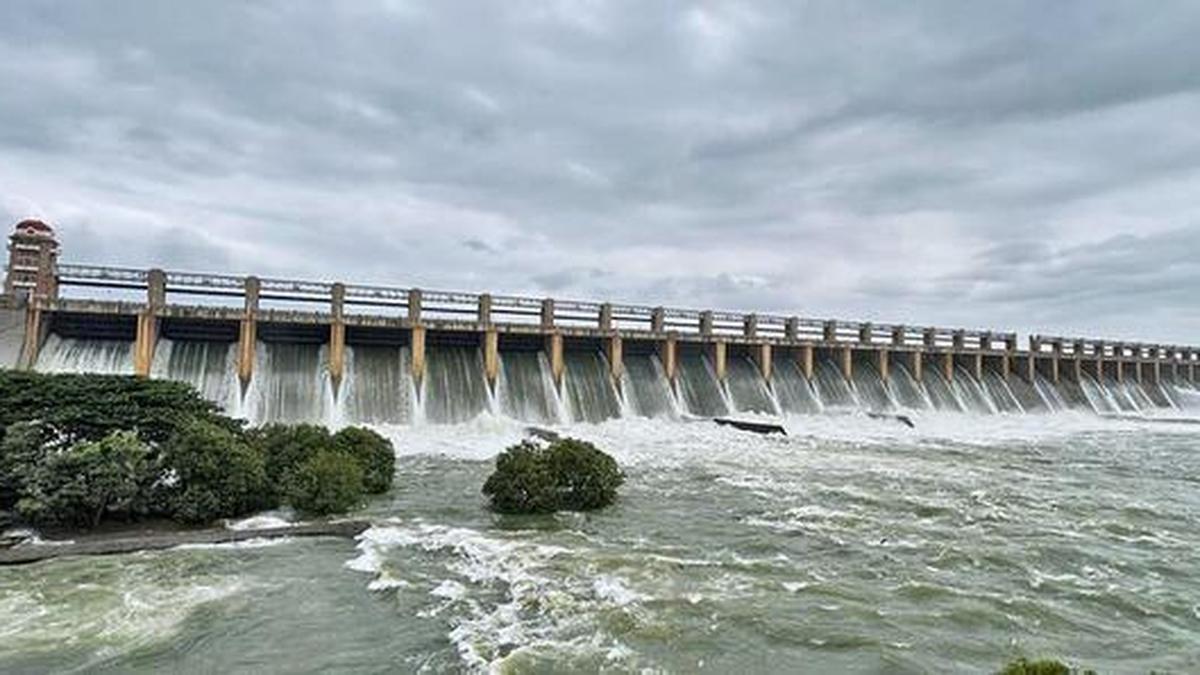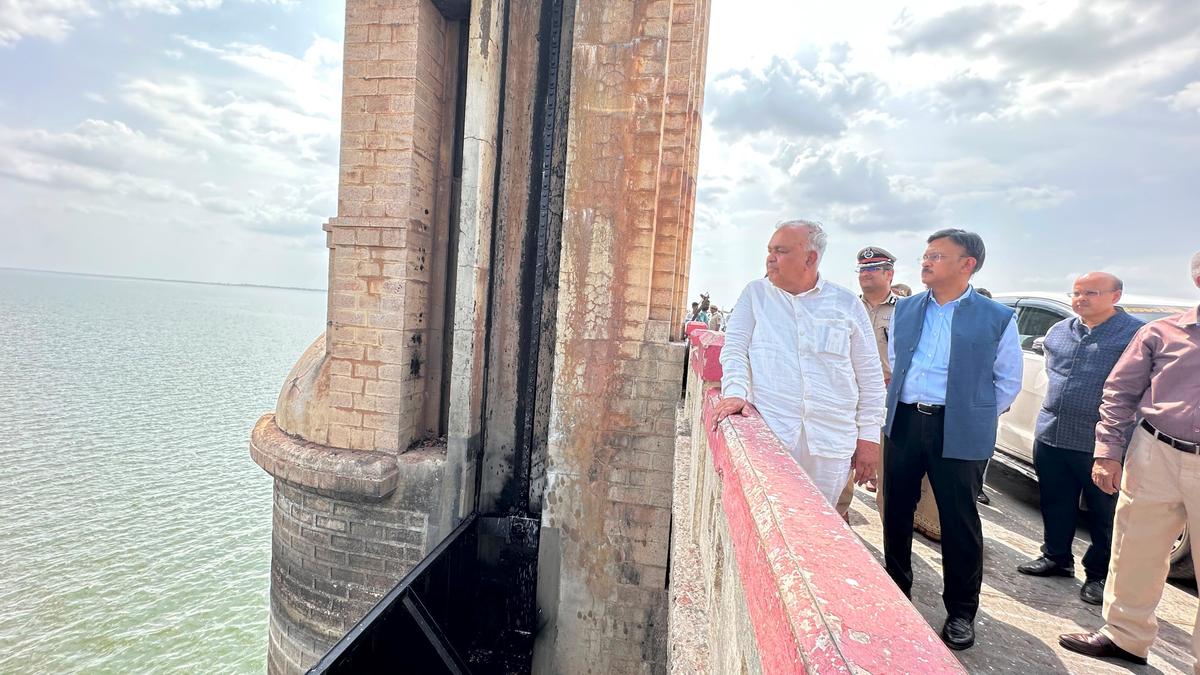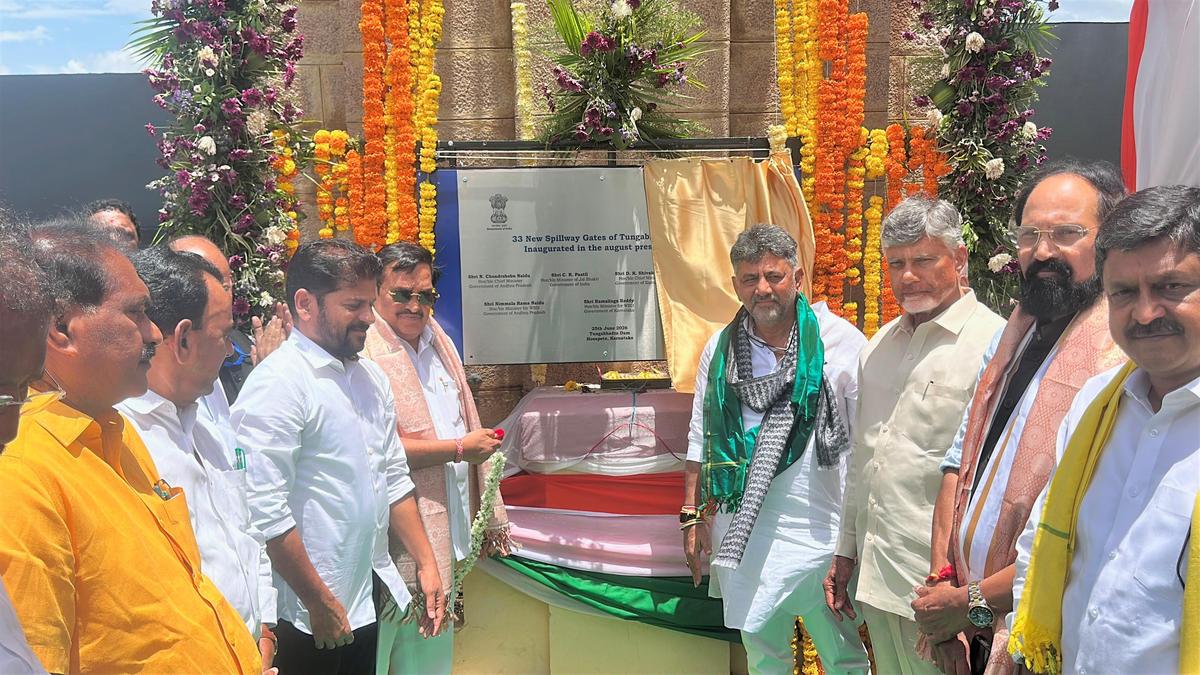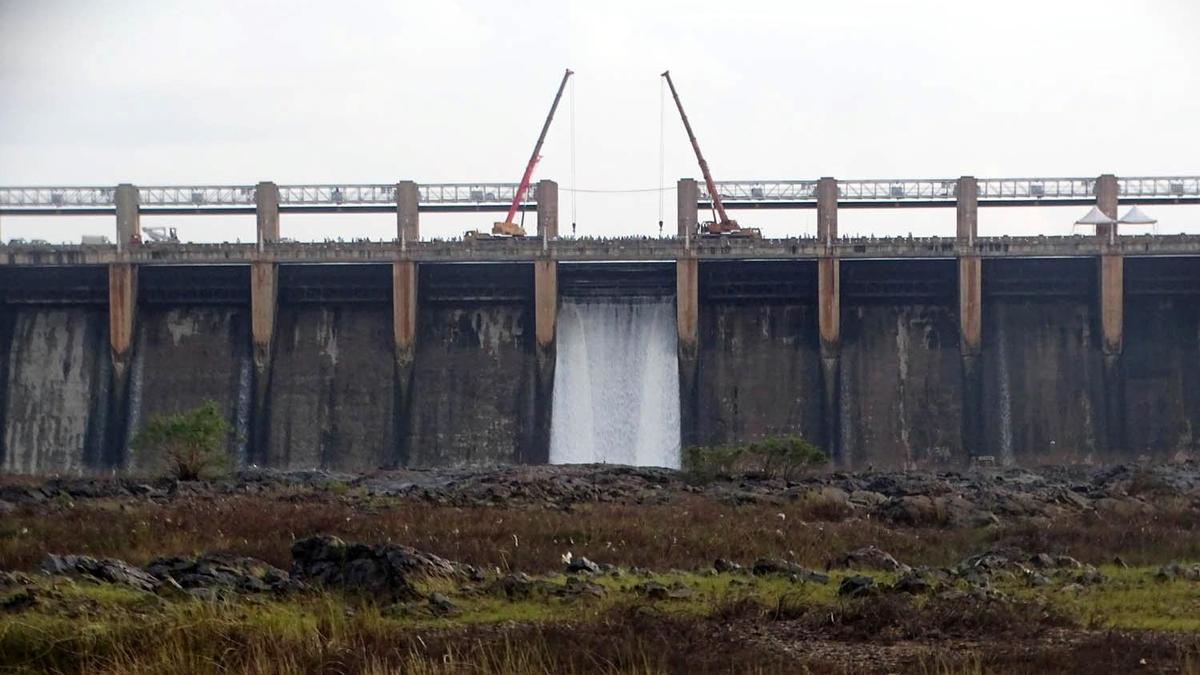
Tungabhadra dam wears a festive look in the run-up to the inauguration of the 33 newly-replaced crest gates, near Hosapete in Vijayanagara district of Karnataka, on June 25, 2026.
| Photo Credit: SPECIAL ARRANGEMENT
The inauguration of the newly-installed crest gates at the Tungabhadra reservoir on June 25 marks the formal end of a prolonged phase of anxiety, emergency repairs, and large-scale rehabilitation triggered by the washing away of one of the dam’s spillway gates in August 2024.What began as a sudden structural failure in one bay of the historic reservoir soon grew into a much wider concern over the health of the entire gate system at one of south India’s most important inter-State irrigation projects. The crisis eventually led to a decision to replace all 33 crest gates of the dam, an exercise now completed at a cost of about ₹51 crore.Back in 1940s and 1950sThe Tungabhadra project, built near Mallapur village in Hosapete taluk of Vijayanagara district in north Karnataka, is an inter-State irrigation project serving Karnataka, Andhra Pradesh and Telangana. Work on the project began in 1945, and water was first released into the canals in 1953. The spillway gates were installed in 1955, and had remained in operation for nearly 69 years.The crisis came on the night of August 10, 2024, when Spillway Gate No. 19 was washed away from its groove around 10.50 p.m. when the reservoir was close to its capacity. The incident caused a sudden release of water through the damaged bay, and immediately raised fears over the safety of the ageing spillway system. With the command area looking at a promising agricultural season after a difficult drought year, the possibility of losing a large volume of stored water triggered anxiety among farmers dependent on the reservoir for irrigation.The immediate challenge before the authorities was not only to manage the emergency at the damaged bay, but also to save as much water as possible for irrigation. Technical teams initially faced the prospect bringing down the water level in the reservoir to the minimum possible to carry out repairs. Instead, engineers led by hydro-mechanical expert N. Kannaiah Naidu moved towards the more difficult alternative of installing a temporary stop-log arrangement at the damaged gate bay, so that a substantial amount of water could be retained without excessive drawdown.Temporary stop gateFollowing visits to the reservoir by the State leadership in the days after the incident, directions were issued to take up the stop-log work immediately in consultation with gate-design experts and fabrication firms. The temporary stop-log gate for Gate No. 19 was installed within seven days, on August 17, 2024. On that day, the reservoir was holding 71.35 tmcft of water. This helped retain water, and ensured irrigation water supply for both the 2024 kharif and rabi crops.