(Image credit: Future)
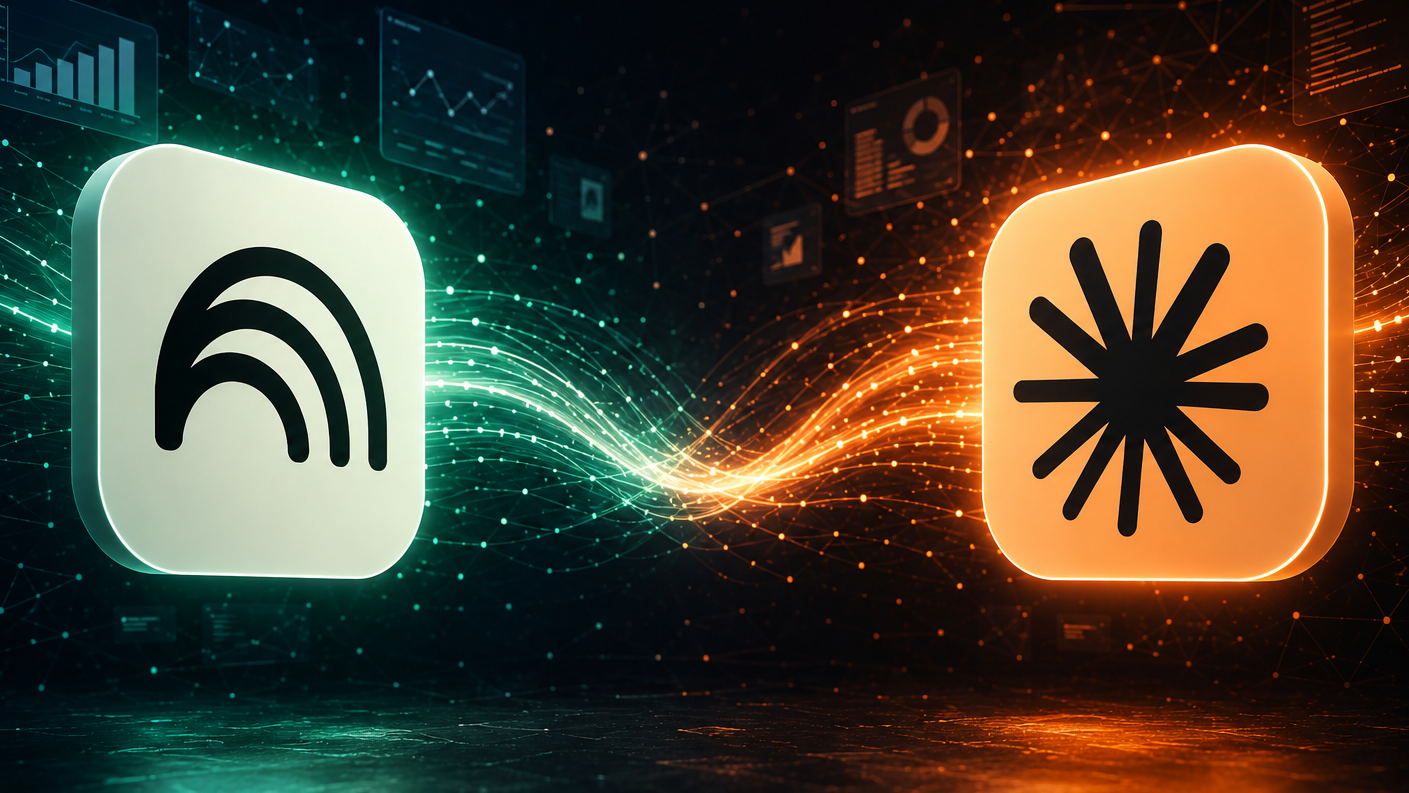
I spent the past few weeks testing a setup that lets Claude reach directly into information stored inside NotebookLM, Google's AI-powered research and note-taking tool. Instead of manually shuttling research between two browser tabs, Claude can reference material I've already collected and use it to answer questions, draft content, and connect ideas across sources.Here's how it works.TL:DRConnecting Claude with NotebookLM is simple. Under the hood, the bridge is something called MCP — the Model Context Protocol, an open standard for letting AI applications talk to outside systems.While it sounds complex, it's essentially a universal adapter that everyday users can already access through the Claude for Desktop app or simple GitHub community plug-ins.Why NotebookLM is different If you haven't used NotebookLM before, the simplest way to describe it is an AI-powered research binder. You upload documents, articles, PDFs, transcripts and notes, and NotebookLM builds a knowledge base around them. It can also pull directly from the internet when prompted.NotebookLM has caught on with students, academics, journalists and analysts because it easily ties specific materials together, particularly for research, rather than unsourced generalizations a typical chatbot might produce. In other words, NotebookLM is hyper-specific and focused, delivering citations and sources for deep research. On its own, NotebookLM is already genuinely useful. I lean on it constantly to organize research, compress hundred-page reports into something readable and surface connections that even shift my mindset.Get instant access to breaking news, the hottest reviews, great deals and helpful tips.But it has a ceiling. NotebookLM is excellent at retrieval and summary, and noticeably weaker at the things that come after: deep reasoning, structural argument, nuanced drafting, anything that requires holding a problem in mind and turning it over.But when Claude is activated with NotebookLM, the tool levels up exponentially.Claude brings the reasoning layer I was a big fan of Fable Five, even though it was short lived. But since putting NotebookLM with Claude, I feel as if I've gotten some of the power back. Connecting the two tools removes the need to go back and forth between the two for a seamless workflow. Now, rather than feeding Claude the same background over and over, I can point it at the research already organized inside NotebookLM and let it build from there.Making this happen requires a digital translator called MCP (Model Context Protocol) — an open-source standard designed to help different AI architectures speak the same language. On their own, Claude and NotebookLM operate in total isolation; they have no native way to share data. The workaround relies on a lightweight MCP server acting as a middleman. It intercepts Claude's requests, securely fetches the relevant data from your notebook, and feeds it back to the model, completely automating away the need for the clipboard.Worth saying plainly: the connectors that make this possible today are community-built and unofficial. Neither Google nor Anthropic has blessed the setup, and most of these bridges work by automating the NotebookLM interface rather than plugging into a sanctioned API. That puts the whole thing in a gray area you should weigh before pointing it at anything sensitive. You just have to understand that although the experience is remarkably smooth; the plumbing is still a hobbyist project, not a finished product.Caveats acknowledged, the workflow itself feels startlingly natural. Instead of assembling context at the start of every conversation, the context is simply already there.The ultimate research assistant Most AI conversations begin from nothing. Every new chat is a blank slate that demands you rebuild the situation — re-upload the documents, re-explain the project, re-establish what you already told it yesterday. Even if the AI has memory of your work, you have to enable it to make that happen, then remember to disable it when you want more privacy.With NotebookLM acting as the knowledge layer and Claude acting as the reasoning layer, that overhead mostly disappears. Here are a few concrete examples of what this setup has unlocked for me:I have spent a lot of time researching data centers lately. With these tools, I could ask follow-up questions about a topic such as e-waste, without re-introducing a single source. I could ask Claude to compare the arguments in three different reports sitting in the same notebook and tell me where they actually disagreed — not where they used different words for the same point.I could say, in effect, "draft a section based on what's in here," and get something grounded in my own material rather than the internet's averaged-out consensus. And because the answers traced back to specific sources, I could check the work instead of taking it on faith.For the first time, I spent less time loading information into an AI and more time thinking alongside one that already understood it. For me, this subtle shift made a world of difference because I felt like I was really collaborating with AI.What the setup actually takes