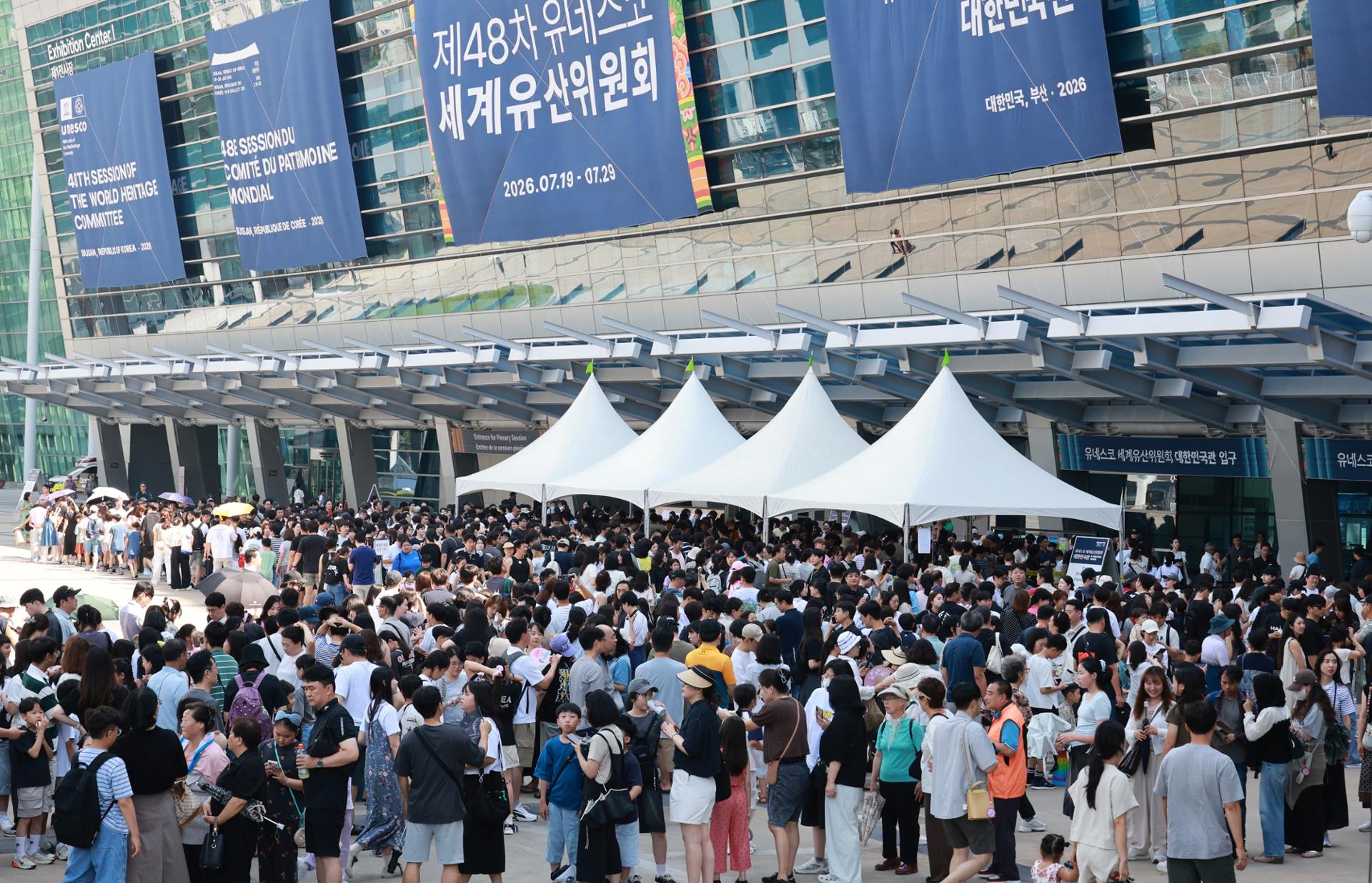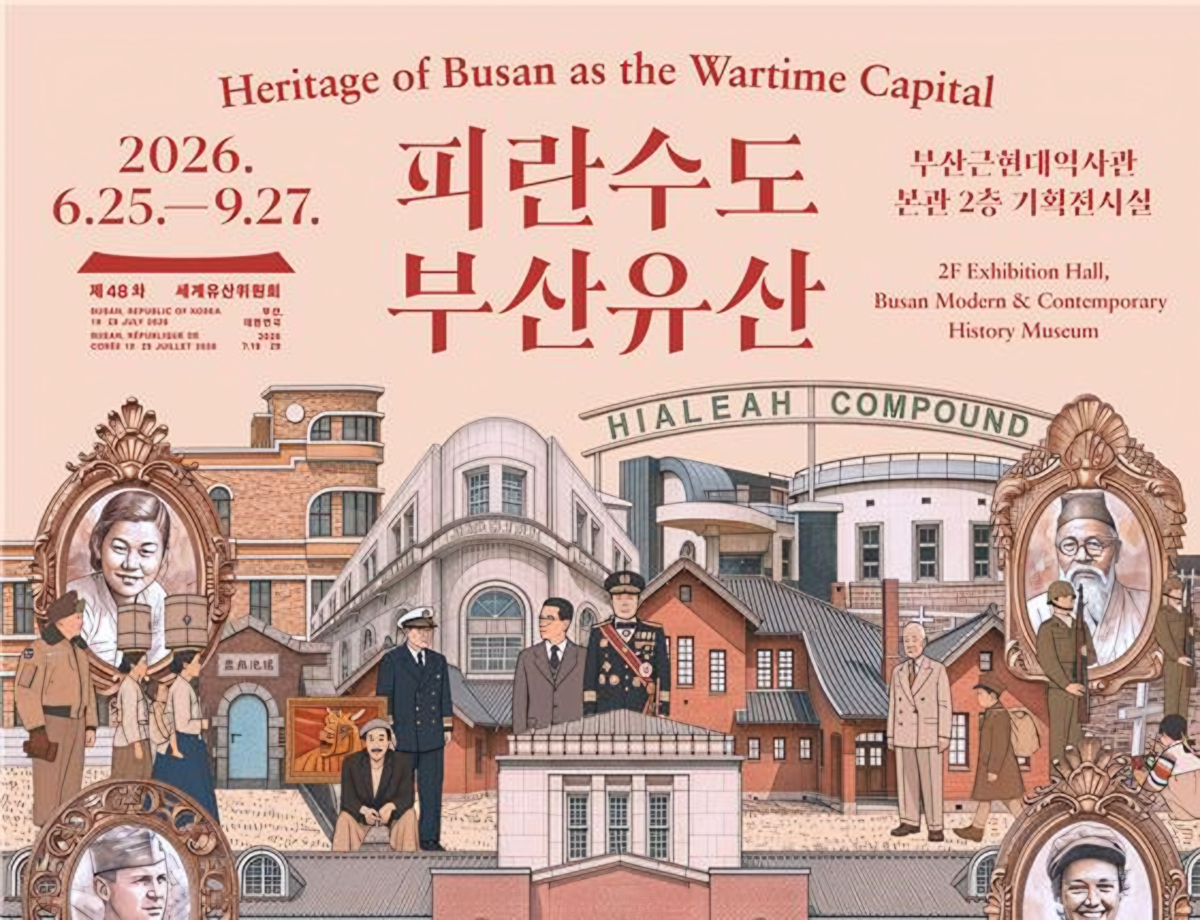
A promotional poster for the exhibition "Sites of the Busan Wartime Capital" / Courtesy of Busan Metropolitan CityThe Busan Modern & Contemporary History Museum opened a 105-day thematic exhibition today marking the 48th session of the UNESCO World Heritage Committee, which is being held in Busan.The exhibition, titled "Sites of the Busan Wartime Capital," runs through Sept. 27 in the museum's second-floor special exhibition hall.The show spotlights 11 heritage sites associated with Busan's role as Korea's provisional wartime capital during the Korean War (1950-53). When North Korean forces captured Seoul days after the war began, the South Korean government relocated to Busan, the country's southernmost major city, which served as the de facto capital for a combined 1,023 days. The sites were added to Korea's UNESCO World Heritage Priority List in November 2025, a step toward formal nomination for inscription.The exhibition is divided into three sections. The first covers sites that sustained government functions during the war, including the temporary presidential residence, the provisional central government complex and a meteorological observatory that supported national operations. The second examines refugee life, featuring sites such as the Uam-dong cattle-shed refugee settlement — a converted livestock facility — and the Ami-dong tombstone village, a hillside neighborhood built by displaced people atop a former cemetery.The third section addresses international cooperation, encompassing Busan Port Pier No. 1, the former U.S. Embassy and U.S. Information Service building, Camp Hialeah, and the United Nations Memorial Cemetery in Korea.Key artifacts on display include a Korean War-era battle map of the Nakdong River front line, an attendance log from the wartime meteorological observatory, newspapers repurposed as wallpaper in refugee housing and letters written by U.S. soldiers. Scale models of all 11 heritage sites are also presented together for the first time.Companion programs include a curator-led talk in July and an educational workshop combining Korean War history lessons with hands-on activities. All programs are free and open to the public on a first-come, first-served basis with advance registration.This article was published with the assistance of generative AI and edited by The Korea Times.
Busan museum opens exhibition on Korean War heritage sites ahead of UNESCO committee session - The Korea Times
The Busan Modern & Contemporary History Museum opened a 105-day thematic exhibition today marking the 48th session of the UNESCO World Heritage Com...
343 words~2 min read